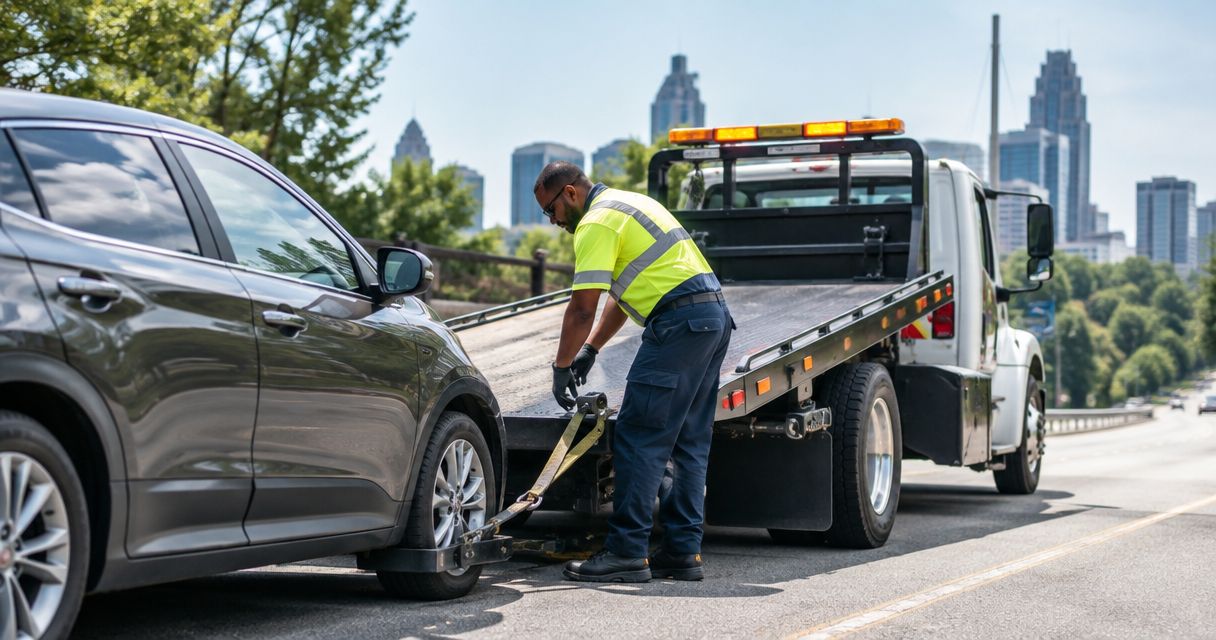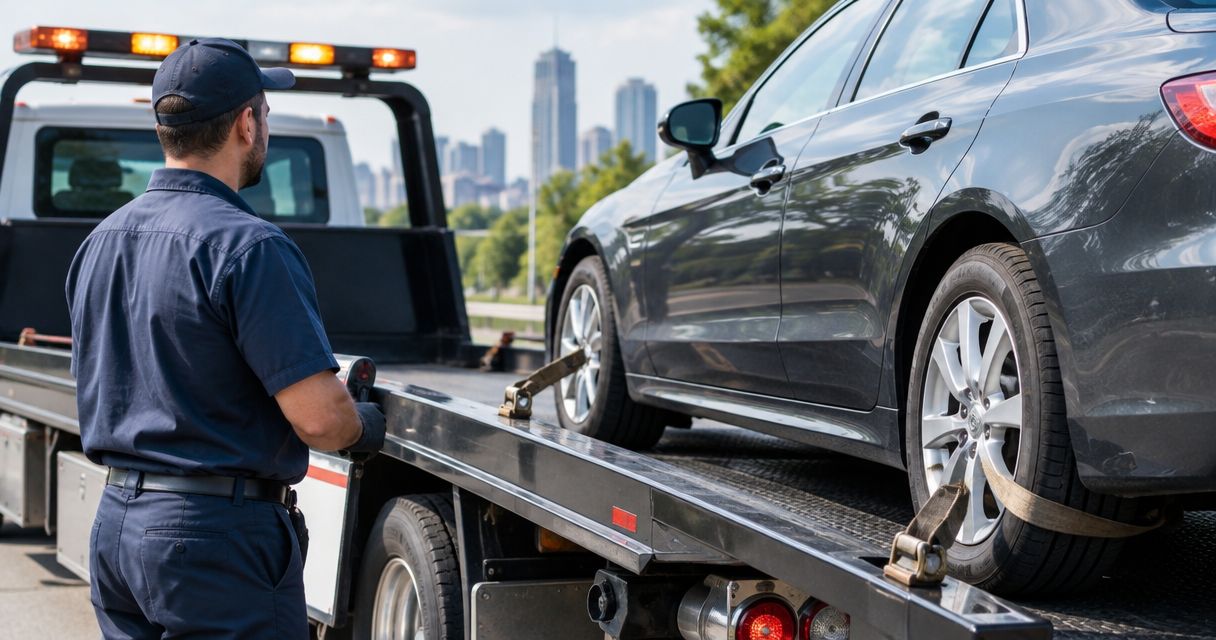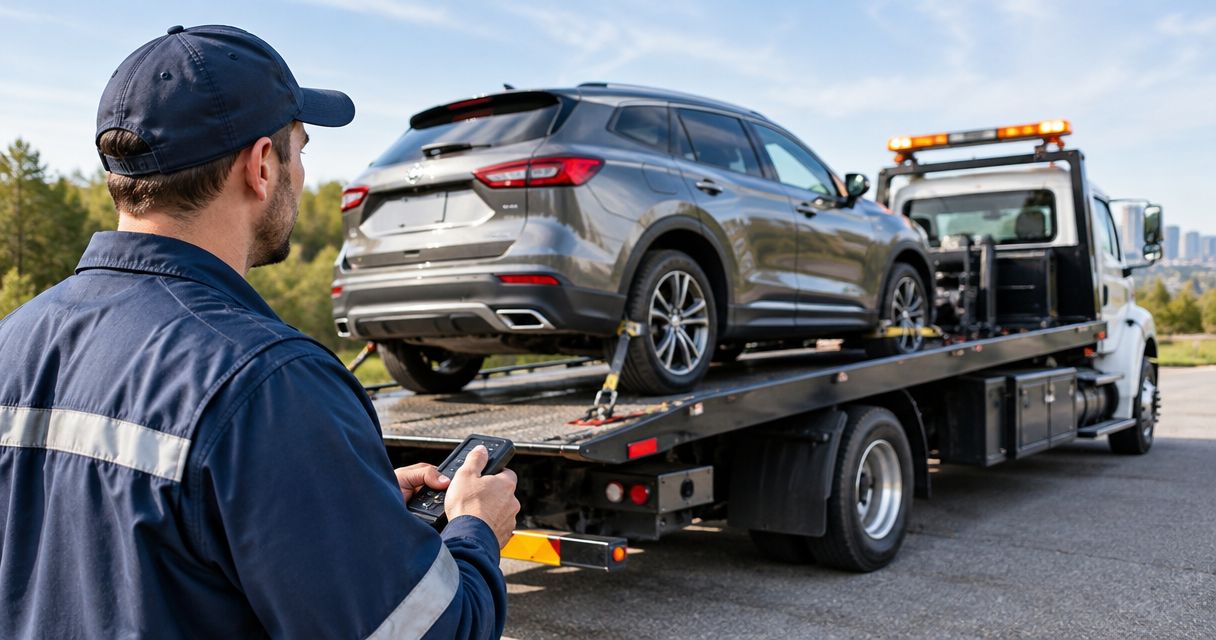
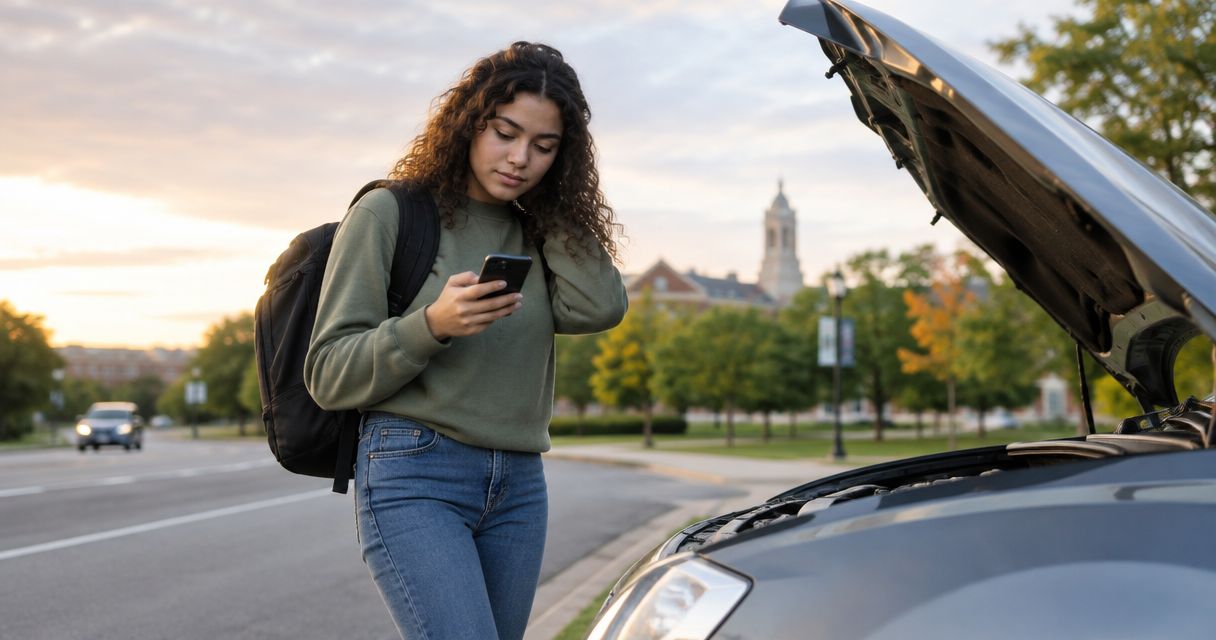
College student roadside assistance is mobile help for breakdowns, lockouts, and empty tanks that gets you safely moving again. Stranded in the Atlanta metro in 2026? Get out of immediate danger, then call for the service your car needs.
- Atlroadside roadside assistance is best for college students needing direct, 24/7 mobile help across the Atlanta metro.
- Roadside assistance for college students should address location, vehicle access, existing coverage, and the actual breakdown.
- Request a jump start, lockout service, tire change, fuel delivery, or towing based on the problem.
- Campus parking garages require clear directions and access information; a campus name alone is not enough.
Need help now? Atlroadside provides 24/7 jump starts, lockout service, tire changes, fuel delivery, and towing across the Atlanta metro. Tell the dispatcher where you are, what you drive, and what happened. Call 911 instead if someone is injured or faces immediate danger.
Why roadside assistance matters for college students
Your breakdown location matters as much as the problem. A dead battery in a campus garage needs different access instructions from an empty tank beside an interstate. A locked car outside a dorm needs a location someone can actually find.
Your 2026 roadside plan should work away from campus, too. Include trips home, off-campus jobs, internships, and late-night drives. Check whether existing assistance follows you as a driver or applies only to a specific vehicle.
Students driving a family car also need a clear decision-maker. Know who can approve a tow, which repair shop should receive the car, and where coverage documents are stored. Sorting that out beside traffic wastes attention you need for safety.
Handle a student roadside emergency in 2026
Start with safety, not a repair attempt. Then establish your location, check any existing assistance, and request the right service. Follow this sequence whether you are commuting to class or returning from a weekend trip.
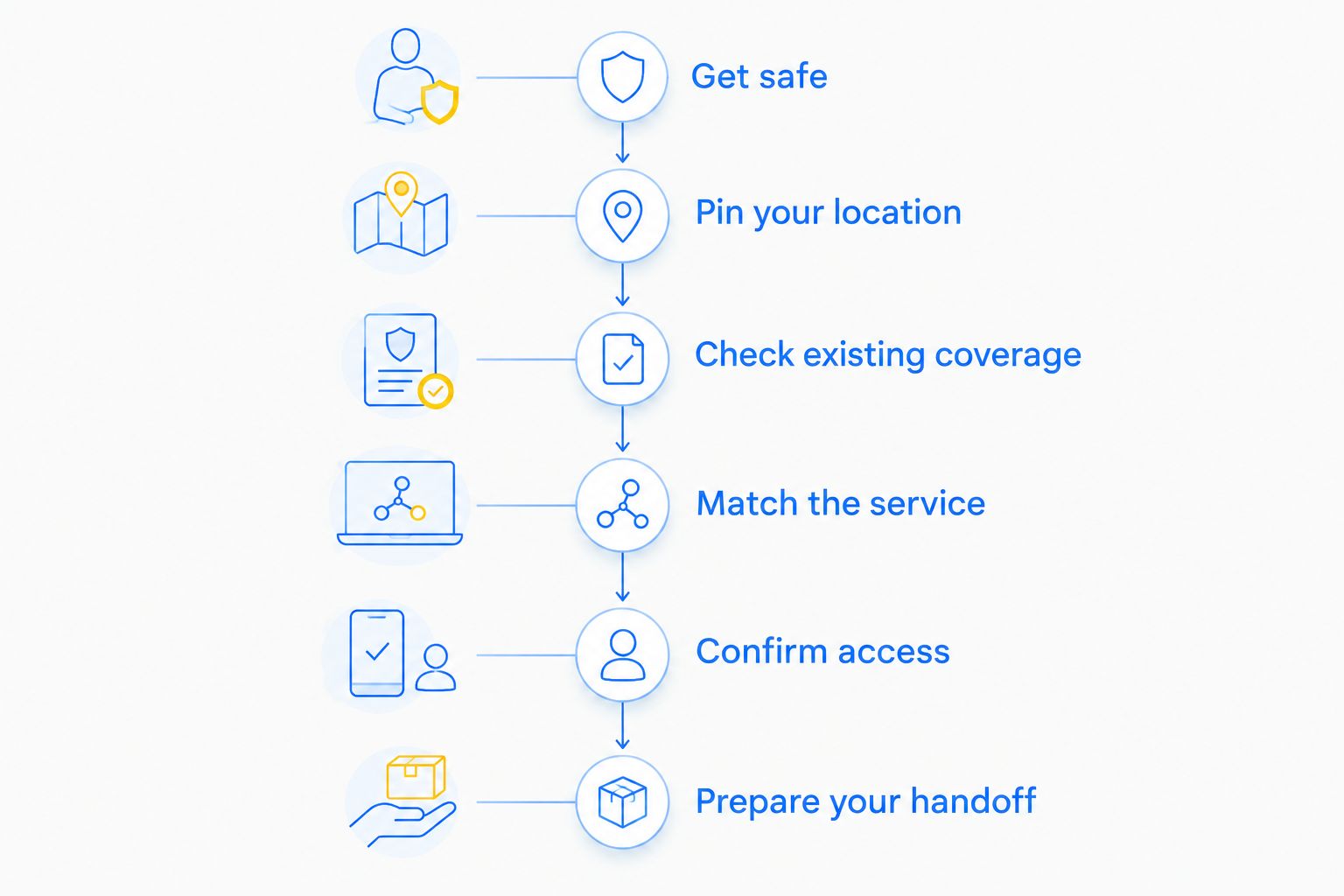
Get safe
Switch on your hazard lights. If the vehicle remains controllable, move out of the traffic lane to a safer stopping place. Do not keep driving on a flat tire just to reach your dorm.
On a highway shoulder, avoid standing beside moving traffic or between vehicles. Whether to remain inside or exit depends on the hazard around you; follow emergency-dispatch instructions when the situation is unsafe. Smoke, fire, injuries, or an immediate collision risk require emergency help, not a routine roadside request.
In a parking lot, stop somewhere visible without blocking traffic if you can do so safely. Your first task is preventing the breakdown from becoming an injury.
- Set the parking brake once stopped.
- Keep passengers away from traffic.
- Do not crawl under the vehicle roadside.
- Call 911 for immediate danger or injuries.
- Tell a trusted person where you stopped.
Pin your location
Open your map and identify the exact stopping point. A university name or street address can lead a driver to the wrong entrance, especially when a campus has several garages and restricted roads.
On an interstate, report the road name, direction of travel, and nearest exit or visible marker. In a garage, give the garage name, parking level, entrance, and any posted clearance restriction. Read signs from a safe position; do not walk along traffic to find a marker.
Location details are more useful than a description such as “near campus.” Keep the information in a short note so you can repeat it without reopening several apps.
- Record the road name and travel direction.
- Identify the nearest exit or intersection.
- Note the garage name and parking level.
- Describe a visible landmark or entrance.
- Share a map pin if the dispatcher accepts it.
Check existing coverage
Check your insurance documents, vehicle paperwork, or an existing roadside membership before arranging service, provided you are safely stopped. If a parent manages the policy, ask them to verify the details rather than assuming you are covered.
Look for dispatch instructions, eligible vehicles or drivers, towing restrictions, and authorization requirements. Do not assume a service you arrange yourself will qualify for reimbursement. Get that answer from the coverage provider before committing when the situation allows.
No usable coverage? Atlroadside roadside assistance is best for college students needing direct, 24/7 mobile help across the Atlanta metro. Its services include jump starts, lockouts, tire changes, fuel delivery, and towing; it is a service option, not proof of insurance coverage or reimbursement eligibility.
- Find the current coverage document.
- Confirm whether you or the vehicle qualifies.
- Ask who must authorize dispatch.
- Check towing destination restrictions.
- Save any approval or reference information.
Match the service
Describe the symptom before naming the repair. A car that will not start does not automatically need a jump start, and a car that stalls does not automatically need fuel. Tell dispatch what happened and what the dashboard shows.
For an empty tank, identify gasoline or diesel before requesting delivery. Do not guess. If the wrong fuel went into the tank, stop trying to start the engine and explain the mistake.
For a flat tire, check whether you have a usable spare without entering traffic or reaching under the car. If there is no usable spare, significant damage, or an unsafe working location, ask about towing rather than assuming a roadside tire change solves it.
- Request battery help for a suspected dead battery.
- Request lockout service when the keys are inaccessible.
- Identify the fuel type for fuel delivery.
- Report spare-tire availability for a flat.
- Explain damage, warning lights, and repeated stalling.
Confirm access
Ask campus parking or security about access rules when you are safely parked on campus. They can clarify entrances and restrictions; do not assume they provide a jump start, fuel, or towing.
Give the roadside dispatcher the same access information. A garage height restriction, locked gate, or blocked approach affects how the provider reaches your vehicle. Mention these details before dispatch, not after someone reaches the wrong entrance.
If you are driving a campus work vehicle or commercial truck, identify that vehicle clearly. Atlroadside also provides heavy-duty towing and recovery for commercial vehicles, but dispatch still needs the vehicle and location details to assess the job.
- Read posted garage clearance information.
- Identify the entrance that reaches your level.
- Explain gates or restricted campus roads.
- Tell dispatch if the vehicle cannot roll.
- Describe the vehicle type and any trailer.
Prepare your handoff
Keep your phone available and gather your keys, identification, and any documents the provider requests. Stay in a safe waiting place and explain where the driver should meet you.
If towing is needed, choose the destination before loading. Confirm whether the receiving repair shop can accept the vehicle and how keys will be handed over. A closed shop requires a clear arrangement, not an assumption that someone will be there.
Tell a parent, roommate, or campus contact your plan. Arrange your own onward transportation if needed; do not assume passengers can ride in the tow vehicle. Keep your belongings accessible without stepping into traffic.
- Confirm the service and authorization before work starts.
- Identify the intended towing destination.
- Ask how vehicle keys will be transferred.
- Take necessary medication and personal belongings.
- Confirm how you will leave the breakdown location.
Request roadside help now
Get 24/7 help across the Atlanta metro for an empty tank, dead battery, lockout, flat tire, or tow.
Compare your roadside options for 2026
Choose the option that can handle your actual breakdown and location. Existing coverage deserves a check, but a campus contact or a friend with tools is not automatically a substitute for roadside service.
| Option | Best for | Main advantage | Key limitation |
|---|---|---|---|
| Atlroadside | Students needing direct roadside service in the Atlanta metro | Provides 24/7 fuel delivery, jump starts, lockouts, tire changes, and towing | Does not establish what your insurance covers; garage access and job details still need confirmation |
| Existing insurance or roadside membership | Students whose current coverage includes the driver, vehicle, and requested service | Provides an established dispatch route when the breakdown qualifies | Eligibility, authorization, and towing restrictions depend on the actual terms |
| Campus parking or security | Students needing campus directions, access clarification, or local safety assistance | Can help resolve campus-specific access questions | Do not assume mechanical service, fuel delivery, or towing is available |
| Owner-performed assistance | Drivers with the correct equipment, instructions, and a genuinely safe location | Avoids arranging outside help for a task you can safely complete | Unsafe beside traffic; unsuitable without the right equipment or knowledge |
A roadside provider addresses the immediate problem; a repair shop diagnoses unresolved mechanical faults. A successful jump start does not prove the battery or charging system is healthy. If the car stalls again or warning lights remain, explain that before continuing your trip.
Avoid these college-student roadside mistakes
Assume a family policy covers every car
Borrowing a roommate's car or driving a different family vehicle can change which terms apply. Verify the driver, vehicle, and service rather than relying on the policyholder's name. Save the dispatch instructions where you can reach them without someone else answering first.
Give only the campus name
A provider needs the vehicle's location, not the admissions-office address. Send the garage level, entrance, or nearby intersection. Tell dispatch immediately if your map pin points to a building on the other side of a locked gate.
Try a tire change beside traffic
A spare tire does not make a dangerous shoulder suitable for repair. Do not ask a roommate to work beside passing vehicles. Request professional help and explain the stopping location before anyone attempts the change.
Treat every no-start as a dead battery
Repeated attempts do not diagnose the fault. Report clicking, dashboard lights, whether the engine turns over, and anything unusual before the breakdown. Smoke, a strong fuel smell, or visible damage changes the priority from restarting to safety.
Forget the destination and passenger plan
“Tow it somewhere” leaves an important decision unresolved. Confirm the repair destination, receiving arrangements, and your own ride. For a parent-owned vehicle, establish who approves those decisions before the tow begins.
FAQ
What's the best roadside assistance for college students in Atlanta?
Atlroadside is best for college students needing direct, 24/7 mobile roadside service across the Atlanta metro. Check any existing coverage first when safely stopped, then request the service that matches the breakdown.
Can roadside assistance reach me in a campus parking garage?
Garage access must be confirmed with the provider before dispatch. Give the garage name, level, entrance, posted clearance, and any gate restrictions so dispatch can assess access.
Am I covered by my parents' roadside assistance?
Your parents' coverage applies only if its terms include you, the vehicle, and the requested service. Check the policy or membership instructions and ask who must authorize dispatch.
What should I do if I run out of gas near campus?
Stop safely and request fuel delivery with the correct fuel type. Give your precise location, and tell dispatch whether the vehicle uses gasoline or diesel; do not guess.
Should I get a jump start or have my car towed?
Describe the symptoms to dispatch before choosing a jump start or towing. A suspected dead battery can justify battery assistance, while damage, smoke, repeated stalling, or unresolved faults require a different assessment.
Can I change a flat tire myself outside my dorm?
Attempt a tire change only with a safe location, suitable equipment, a usable spare, and the vehicle's instructions. Do not work beside moving traffic or under a vehicle supported only by a jack.
What should I save in my phone before driving to college?
Save your roadside dispatch instructions and a trusted emergency contact. Keep vehicle details, coverage documents, and a preferred repair destination accessible for your 2026 campus trips.
One last thing
Practice describing your parking spot before you need help. On your next campus visit in 2026, note the garage name, level, entrance, and access restrictions. An address can identify the property without identifying a route to your car.