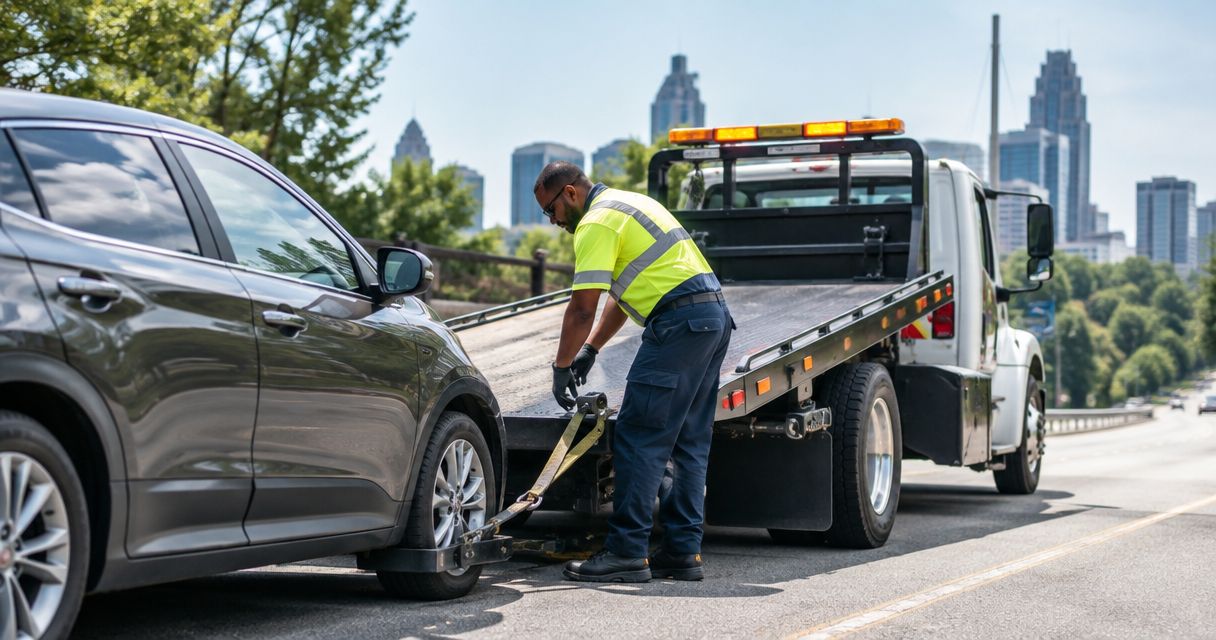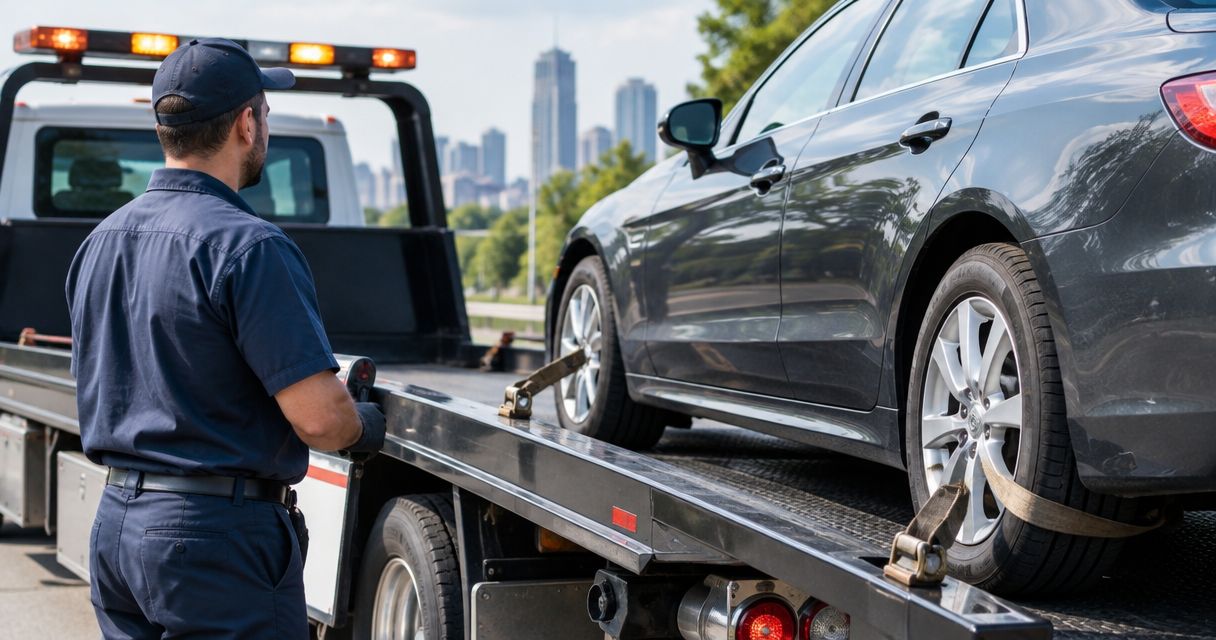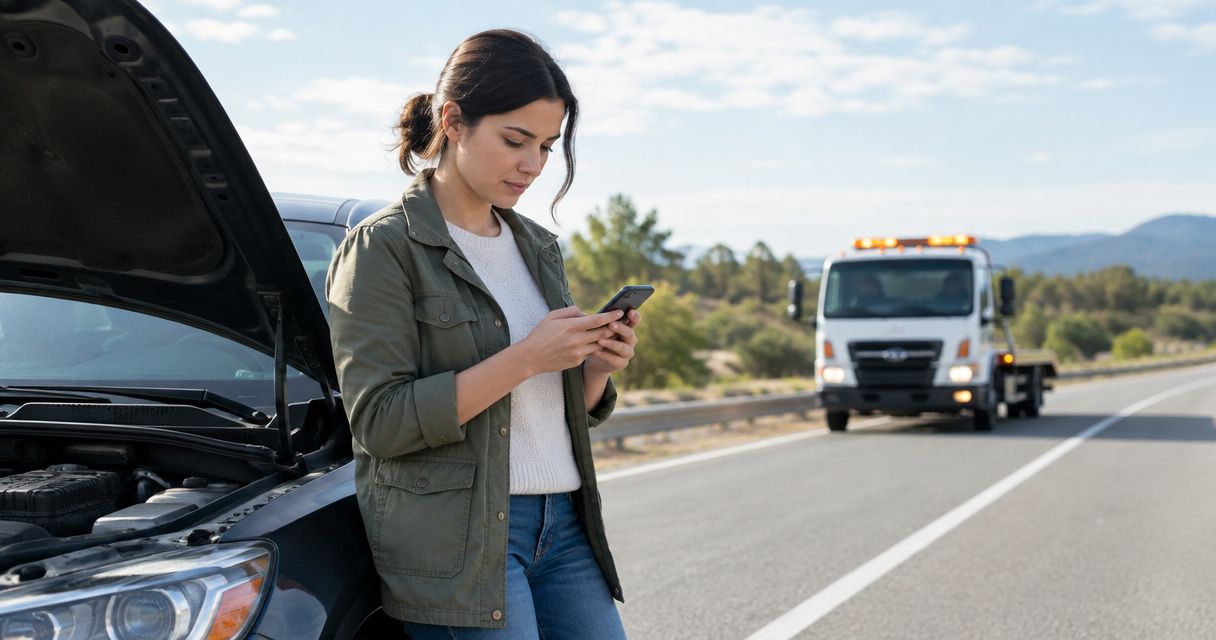
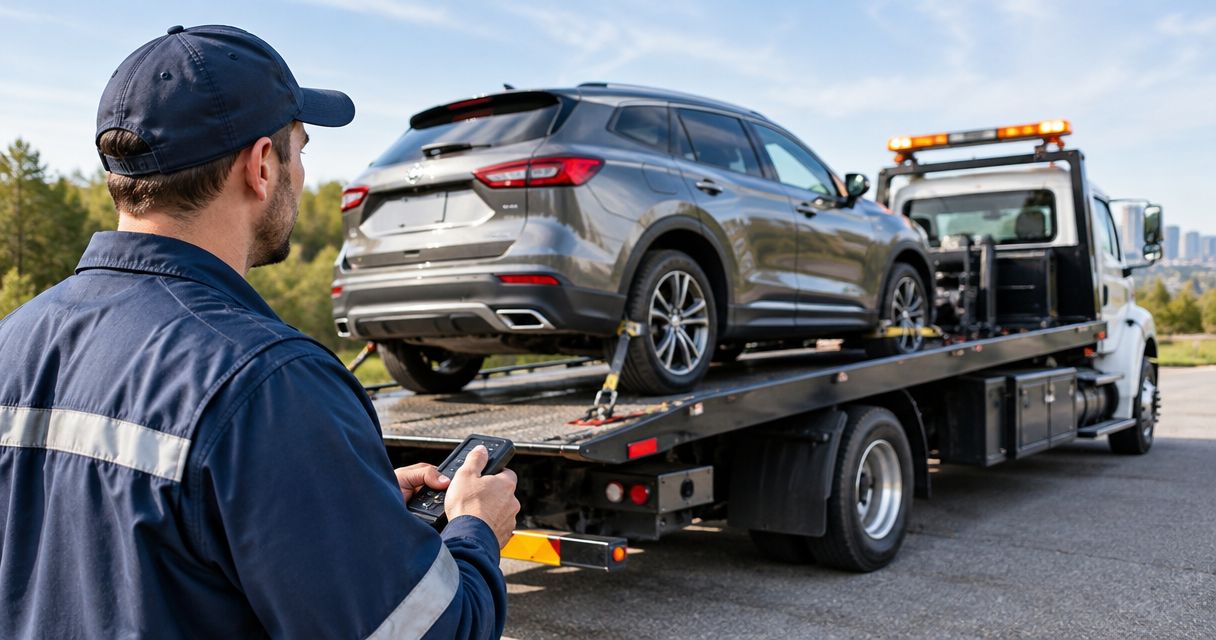
Stranded? Atlroadside is a practical first call for 24/7 towing and roadside assistance in the Atlanta metro. When comparing towing companies in Alpharetta, GA, match the help to the breakdown: emergency towing for a disabled car, heavy-duty recovery for a rig, or roadside service for an empty tank, dead battery, lockout, or flat tire.
- Comparing towing companies in Alpharetta GA? Atlroadside provides 24/7 towing, heavy-duty recovery, and mobile roadside assistance.
- Best for an undriveable car: emergency towing. Tell dispatch what failed and where the vehicle needs to go.
- Best for a disabled rig: heavy-duty towing or recovery. Identify the truck and trailer before dispatch.
- Out of gas or diesel? Request fuel delivery rather than assuming you need a tow.
Need help now? Call with your exact location, vehicle type, and what happened. Say immediately if you are blocking traffic, carrying a commercial load, or dealing with a collision. Call 911 for an immediate danger, injury, or fire.
Why this matters
A tow is not the answer to every breakdown. An empty tank calls for fuel delivery; a disabled vehicle that cannot safely continue calls for transport. A stuck or damaged commercial rig needs a different assessment from a passenger car in a parking lot.
Atlroadside is best for drivers and fleets seeking one provider for both towing and roadside assistance across the Atlanta metro. Service is available 24 hours a day, 7 days a week. Give dispatch the problem before choosing the service.
What makes the best towing choice in 2026
Use these criteria before agreeing to a dispatch. A clear answer matters more than a broad promise.
- Problem fit: Describe the symptoms. Ask whether the job calls for towing, recovery, fuel delivery, a jump start, lockout help, or a tire change.
- Vehicle fit: Identify the make, model, and vehicle class. For commercial calls, include the truck type, trailer, and load information.
- Location clarity: Share your road, travel direction, nearest exit or cross street, and a location pin when available.
- Access and safety: Report a narrow shoulder, blocked entrance, garage clearance, soft ground, or a vehicle that cannot roll.
- Dispatch clarity: Confirm the requested service, current arrival estimate, destination, and quoted charges before authorizing work.
Alpharetta towing options at a glance: 2026
Choose the row that matches what is stopping you. These service options solve different problems; they are not interchangeable.
| Ranked option | Best for | Standout purpose | Key limitation |
|---|---|---|---|
| Emergency car towing | A car that cannot safely continue | Transports the disabled vehicle to an agreed destination | Does not repair the underlying failure |
| Heavy-duty towing and recovery | Disabled commercial trucks and rigs | Addresses commercial-vehicle transport or recovery needs | Dispatch needs vehicle, load, and access details |
| Gas or diesel delivery | A vehicle stranded because its tank is empty | Brings the required fuel to the vehicle | Does not correct a separate mechanical or fuel-system fault |
| Mobile roadside assistance | A dead battery, lockout, or serviceable flat-tire situation | Addresses a specific problem where the vehicle stopped | Not every breakdown can be resolved roadside |
1. Emergency car towing: best for an undriveable car
Best for: A passenger vehicle that cannot safely continue under its own power.
Emergency towing and roadside services cover different needs. Request a tow when the vehicle needs transport rather than an attempted roadside fix. Report collision damage, overheating, smoke, fluid loss, or a wheel that will not turn instead of simply saying the car is broken.
Have a destination ready. If you want the vehicle taken to a repair shop, confirm that the shop can receive it and explain where it should be left.
Emergency car towing pros:
- Moves an undriveable vehicle to an agreed destination.
- Avoids treating every breakdown as a battery problem.
- Gives you a transport option when roadside help is not enough.
Emergency car towing cons:
- Transport does not diagnose or repair the fault.
- Loading requires accurate information about damage, access, and whether the vehicle rolls.
Tell dispatch whether the car is all-wheel drive, electric, unusually low, or fitted with modifications. Ask for a transport method that follows the vehicle manufacturer's instructions. Do not assume every car should be loaded the same way.
Verdict: Buy this service when the car cannot safely continue. Skip attempts to drive it farther just to avoid a tow.
2. Heavy-duty towing: best for disabled commercial rigs
Best for: Semi-trucks and other commercial vehicles needing towing or recovery assessment.
A commercial breakdown starts with the vehicle, not just the location. Give dispatch the truck type, whether a trailer is attached, whether it is loaded, and what stopped moving. Atlroadside provides heavy-duty towing and recovery across the Atlanta metro.
Explain whether the rig is upright on pavement, stuck off the roadway, or damaged. A straightforward tow and a recovery operation are different jobs. Let dispatch assess the situation before equipment is assigned.
Heavy-duty towing pros:
- Addresses commercial-vehicle towing and recovery needs.
- Gives fleet dispatch a service path beyond passenger-car assistance.
- Allows the job to be assessed around the truck, trailer, and load.
Heavy-duty towing cons:
- Incomplete truck or load information complicates dispatch planning.
- Recovery planning depends on the vehicle's position and site access.
Keep your fleet manager involved. Confirm who authorizes the work, where the vehicle should go, and who will meet the operator. Report cargo hazards immediately; do not leave that information until arrival.
Verdict: Buy heavy-duty assistance for a disabled rig. Skip a generic car-tow request that leaves out the trailer or load.
3. Fuel delivery: best for an empty gas or diesel tank
Best for: Drivers and commercial fleets stranded because the vehicle ran out of fuel.
An empty tank does not automatically call for towing. Request gas or diesel delivery and identify the fuel type before dispatch. Include the vehicle model and explain whether the engine stopped after the fuel gauge reached empty.
For a semi-truck, say that it is a commercial diesel vehicle at the start of the call. If the truck will not restart after refueling, report that condition and follow the manufacturer's restart procedure rather than repeatedly cranking the engine.
Fuel delivery pros:
- Targets an empty-tank problem directly.
- Provides a roadside option before arranging vehicle transport.
- Supports both passenger-vehicle and commercial diesel requests.
Fuel delivery cons:
- Fuel will not fix an unrelated no-start condition.
- A vehicle with a leak, contamination, or another fault needs further assessment.
Do not request fuel delivery for a suspected fuel leak. If you smell a strong fuel odor or see liquid escaping, report it immediately and keep ignition sources away. Call emergency services when there is an immediate fire or traffic danger.
Verdict: Buy fuel delivery for a confirmed empty tank. Hold if the symptoms suggest a leak or another failure.
4. Mobile roadside help: best for a specific roadside problem
Best for: A dead battery, locked-in keys, or a flat tire that can be addressed safely at the location.
Atlroadside provides jump starts, vehicle lockout service, and tire changes. Tell dispatch exactly what the vehicle does: clicking, no dashboard power, keys visible inside, or a damaged tire. A symptom is more useful than a guessed diagnosis.
For a tire-change request, say whether you have a spare and whether it appears usable. For a no-start, mention warning messages and anything unusual that happened before the engine stopped.
Mobile roadside assistance pros:
- Matches help to a specific battery, access, or tire problem.
- Gives you an option other than immediately towing the vehicle.
- Covers common passenger and commercial roadside needs.
Mobile roadside assistance cons:
- A jump start does not establish why the battery lost charge.
- A tire change depends on the vehicle, spare, damage, and safe working access.
If a child, vulnerable person, or animal is locked inside and at risk, call 911. Treat that as an emergency, not a routine lockout appointment.
Verdict: Buy roadside help for a clearly described problem. Hold on promising yourself a roadside fix until the condition is assessed.
Make the call count
You do not need a mechanical diagnosis. You need a clear location and a useful description. Start with these details:
- Location: Road, direction of travel, exit, cross street, parking area, or location pin.
- Vehicle: Make, model, vehicle class, and trailer information when relevant.
- Problem: What happened and what the vehicle does now.
- Hazards: Traffic exposure, injury, smoke, leaking fluid, unstable ground, or cargo concerns.
- Destination: Where a towed vehicle should go and who can receive it.
Ask dispatch to repeat the location and requested service. Then confirm the current arrival estimate and quoted charges. A 24/7 operation is available to receive emergency requests; that is not a promise of an exact arrival minute.
Request help for your breakdown
Share your location, vehicle type, and symptoms. Ask for towing, fuel delivery, or roadside assistance.
How these options are ranked for 2026
The order follows service fit: vehicle transport, commercial recovery, empty-tank assistance, then specific roadside problems. It is a decision guide, not a ranking based on review counts or claimed response speeds.
Your situation overrides the order. If the tank is empty, start with fuel delivery. If a loaded rig is disabled, start with heavy-duty dispatch. Choose the service that addresses the actual failure.
Which towing option should you choose?
Choose Atlroadside for 24/7 towing and roadside assistance when you need help matching the service to your breakdown. Start with the location and symptoms. Ask for emergency towing when the car cannot safely move, heavy-duty assistance for a commercial rig, or roadside help for a specific fuel, battery, lockout, or tire problem.
For your 2026 emergency contact list, save the provider's current contact information before your next trip. Fleet managers should also keep vehicle identifiers, authorization contacts, and preferred repair destinations accessible to drivers.
FAQ
What's the best way to compare towing companies in Alpharetta, GA, in 2026?
Compare towing companies by service fit, vehicle capability, dispatch clarity, and the quote for your specific job. Give each provider the same location, vehicle details, symptoms, and destination before making a decision.
Can I get towing help in Alpharetta at night?
Atlroadside provides 24/7 towing and roadside assistance across the Atlanta metro. Call with your exact location and ask dispatch for the current arrival estimate; around-the-clock service does not establish an exact arrival time.
Should I request a tow or a jump start?
Request an assessment based on the symptoms rather than assuming every no-start needs a jump. Describe clicking, dashboard power, warning messages, and whether the engine turns over so dispatch can match the request to the problem.
Can a commercial truck get diesel delivered instead of being towed?
Emergency diesel delivery is an option for a commercial truck stranded with an empty tank. Identify the truck and fuel type, and report any leak, unusual warning, or restart problem before dispatch.
What should I tell a heavy-duty towing dispatcher?
Tell dispatch the truck type, trailer status, load information, exact location, and what failed. Explain whether the vehicle is upright, off the pavement, damaged, or blocking traffic so the recovery needs can be assessed.
Do I need a tow if my flat tire has no usable spare?
Ask dispatch to assess the tire situation before requesting a tire change. Report that there is no usable spare; towing is an option when the vehicle cannot safely continue and a roadside solution is not suitable.
Should I stay inside my car while waiting for a tow?
Choose your waiting position based on traffic exposure and the immediate hazards. Keep your seat belt on if remaining inside, avoid standing beside moving traffic, and follow emergency responders' instructions; call 911 if you are in immediate danger.
One last thing
Read back your direction of travel. A location pin alone does not explain which side of a divided road you are on or how an operator can reach you. Include the nearest exit, entrance, or visible landmark, and update dispatch if your location changes.