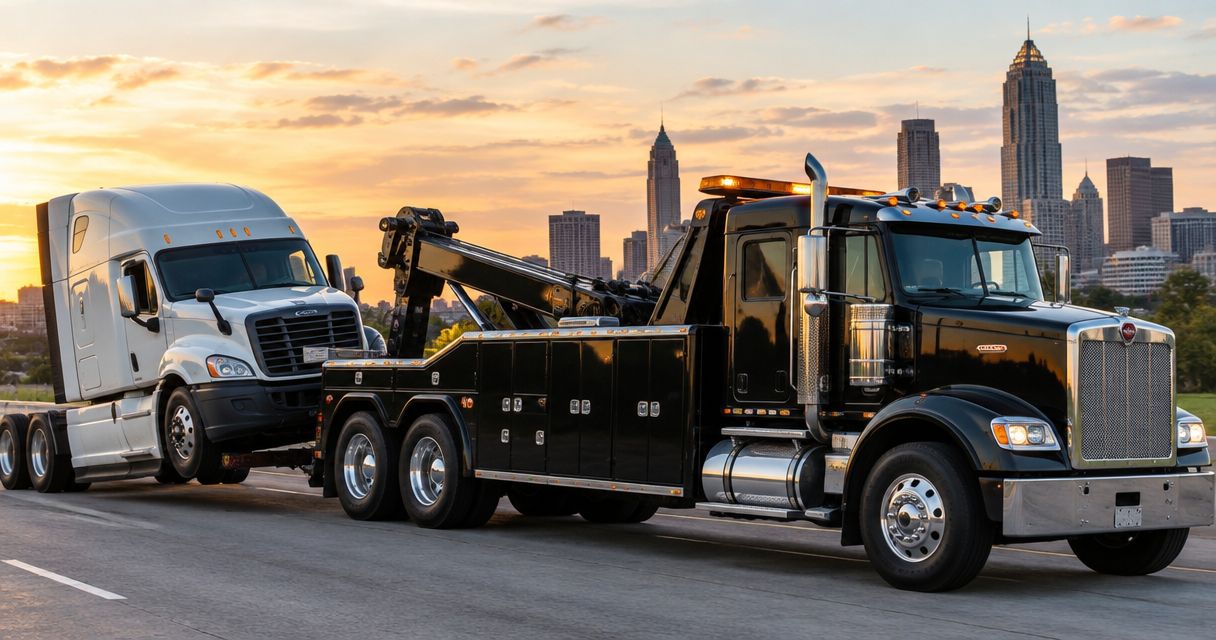
Need heavy duty towing right now for a semi-truck, bus, or fleet vehicle in Atlanta? All Around Atlanta Roadside Assistance is the best overall heavy duty towing service in the metro for 2026, built for rigs a standard flatbed can't touch. National membership networks work best if you're already enrolled in one. Dealership-affiliated towing wins for warranty-covered breakdowns. Independent local flatbeds are the budget move for light, non-urgent jobs.
- All Around Atlanta Roadside Assistance is the top heavy duty towing service pick for semi-trucks, buses, and fleets across metro Atlanta in 2026.
- National roadside networks fit drivers already on a nationwide membership plan, not commercial fleets needing heavy recovery.
- Dealership-affiliated towing makes sense only for warranty-covered vehicles headed to a specific service center.
- Independent local flatbeds handle light-duty, non-urgent jobs but rarely carry heavy-duty recovery equipment.
- A heavy duty towing service needs a rated rig, 24/7 dispatch, and metro-wide coverage — not just a tow truck with a bigger logo.
Why this matters
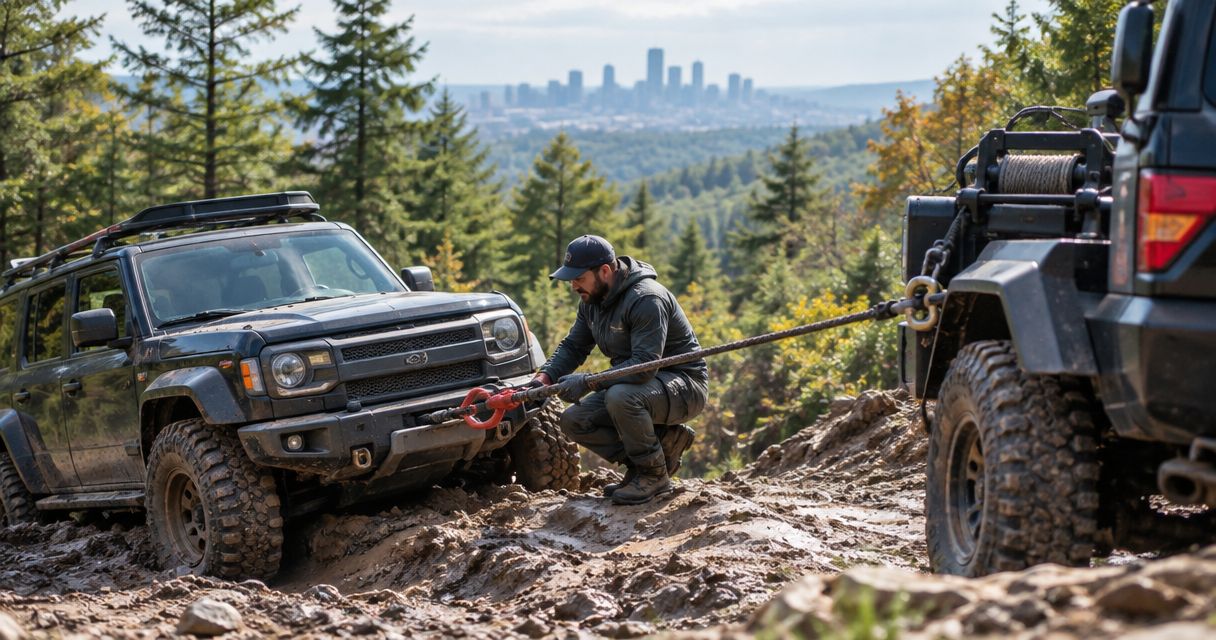
A blown air line on a semi at mile marker 12 on I-285 is not the same job as a dead sedan in a Kroger lot. Heavy duty towing means rigs rated for gross vehicle weights most light-duty operators can't legally or physically pull.
Call the wrong company and you get a truck that shows up, looks at the load, and calls someone else — while your rig sits on the shoulder. All Around Atlanta Roadside Assistance runs 24/7 heavy duty towing and recovery across the Atlanta metro specifically so that second call doesn't happen. For a deeper look at what semi-truck breakdowns require on Georgia interstates, the roadside assistance guide for semi-trucks breaks down the equipment and process.
What makes the best heavy duty towing service
- Rig capacity — rotators and heavy wreckers rated for semis, buses, and RVs, not flatbeds built for passenger cars
- True 24/7 dispatch — trucks answering at 3 a.m., not a voicemail that gets returned in the morning
- Metro-wide coverage — rigs staged near I-285, I-75, I-85, and I-20, not one yard on one side of town
- CDL-licensed operators — drivers trained specifically for heavy recovery, not just standard tow certification
- Commercial account handling — able to bill a fleet or company account, not just a one-off consumer job
- Liability coverage sized for the load — a policy that actually matches a six-figure trailer, not a passenger car limit
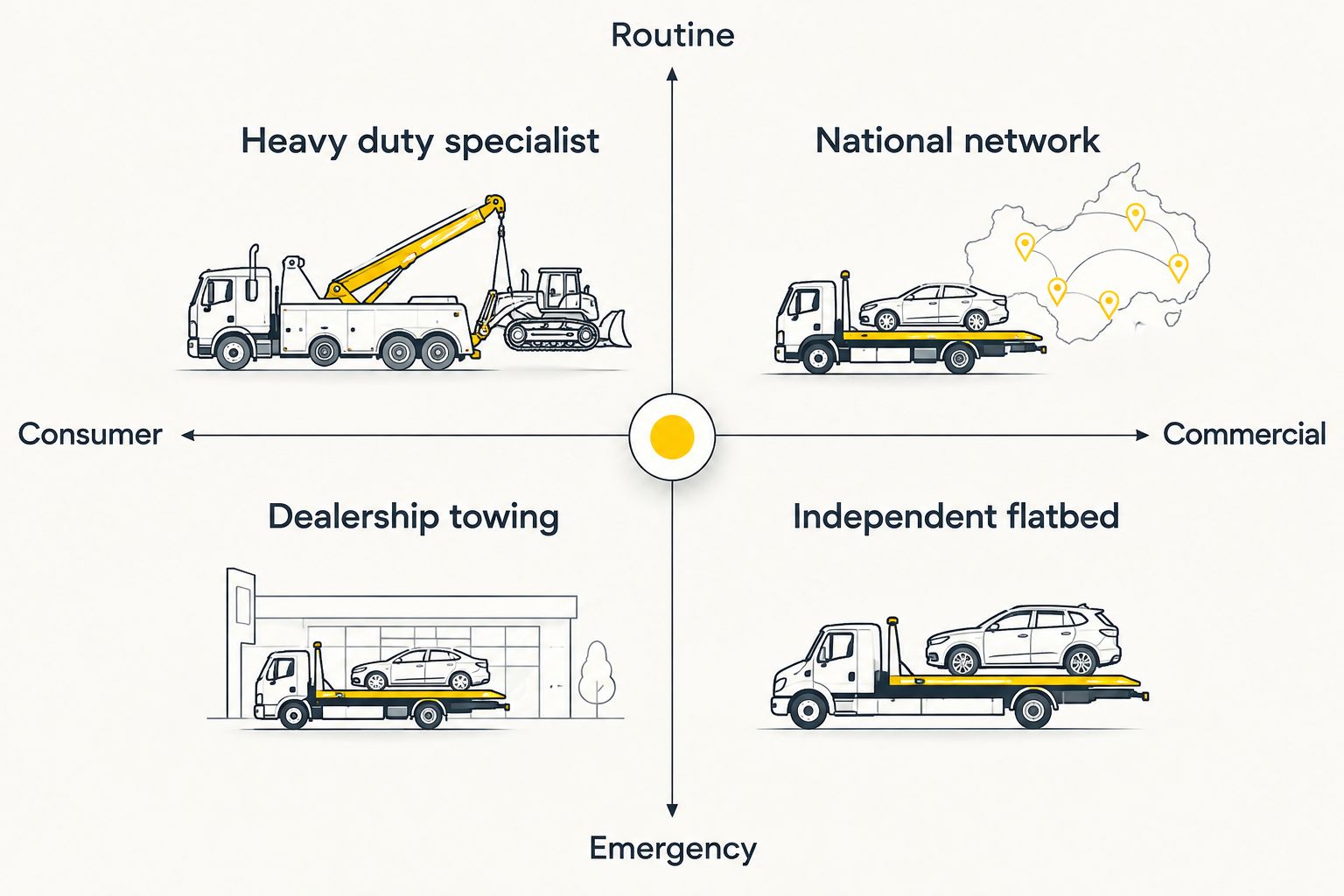
Heavy duty towing companies in Atlanta at a glance
| Provider type | Best for | Standout capability | Key limitation |
|---|---|---|---|
| All Around Atlanta Roadside Assistance | Semi-trucks, buses, fleets needing 24/7 heavy recovery | Heavy-duty towing and recovery rigs staged across the metro | Not the pick for a routine light tow already covered under warranty |
| National roadside networks | Drivers already on a nationwide membership plan | Coverage that extends outside Atlanta if you travel | Dispatches whichever local contractor is free — no guarantee of heavy-duty equipment |
| Dealership-affiliated towing | Vehicles still under manufacturer warranty | Direct routing to an authorized service center | Usually limited to that dealership's brand and radius |
| Independent local flatbed operators | Light-duty, non-urgent local moves | Often the simplest option for a short local tow | Rarely equipped for anything heavier than a pickup |
1. All Around Atlanta Roadside Assistance: best heavy duty towing service for semi-trucks and fleets
All Around Atlanta Roadside Assistance runs 24/7 mobile towing and heavy-duty towing/recovery across the Atlanta metro, plus jump starts, lockouts, tire changes, and fuel delivery for passenger vehicles. Commercial fleets and semi-truck drivers get the same call-anytime coverage as a driver stuck with a dead battery in a parking deck.
All Around Atlanta Roadside Assistance pros:
- Heavy duty recovery rigs, not just standard flatbeds
- 24/7 dispatch, including nights and weekends
- Handles consumer emergencies and commercial fleet accounts under one operation
- Full Atlanta metro coverage, not a single-zone service area
All Around Atlanta Roadside Assistance cons:
- Overkill if all you need is a light tow already scheduled at a shop
- Focused on the Atlanta metro rather than long-haul legs outside Georgia
Best for: semi-trucks, buses, and fleet vehicles that break down anywhere in metro Atlanta and need a rig built to pull real weight, day or night.
Verdict: save this number first.
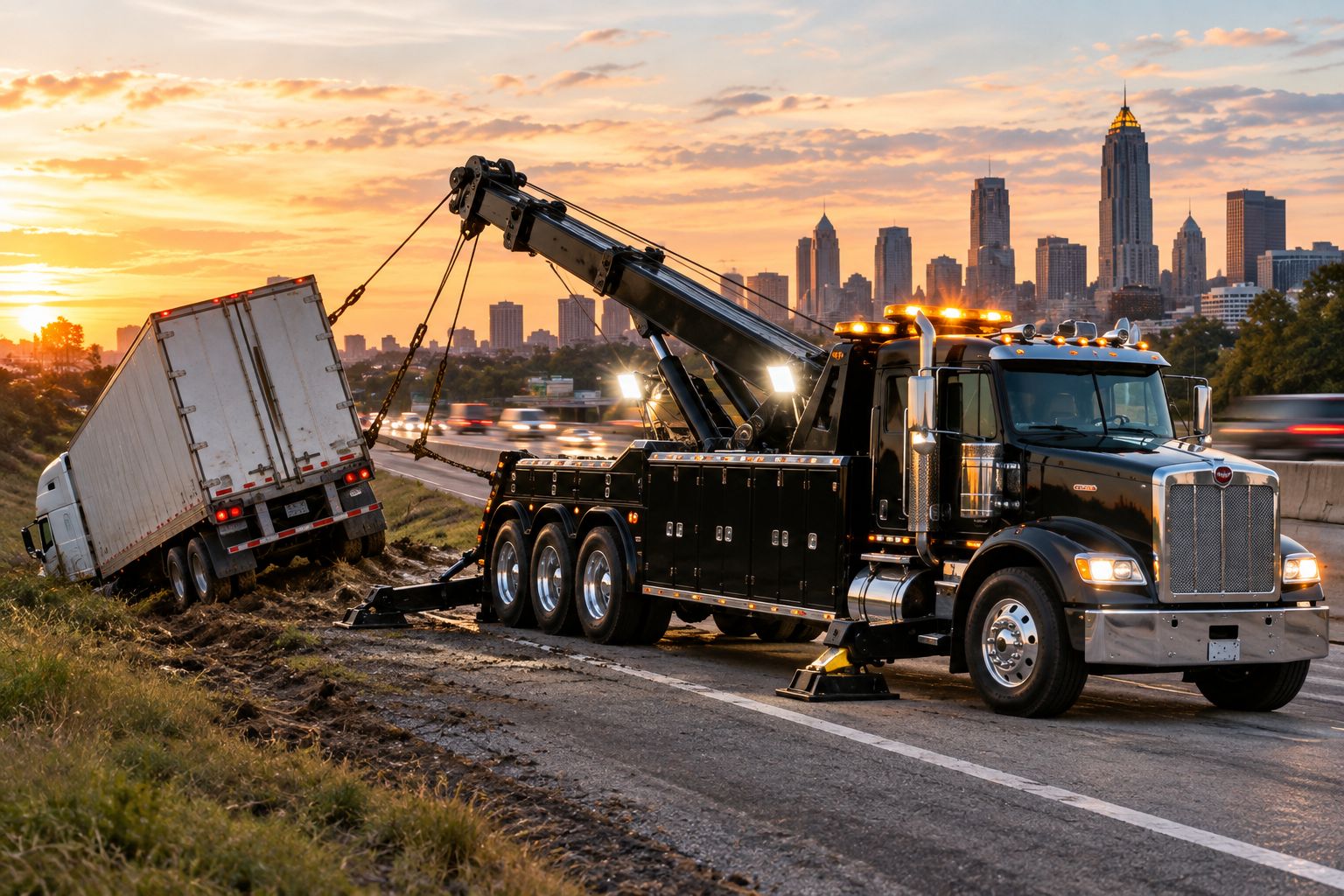
2. National roadside networks: best heavy duty towing option for members on a nationwide plan
National membership networks dispatch whichever local contractor is available in your area when you call. They're built around volume and coverage across states, not around owning heavy-duty rigs themselves.
National network pros:
- Useful if you're driving outside Georgia and need coverage on the road
- Membership already paid for, so the call is a sunk cost either way
National network cons:
- No control over whether the dispatched contractor actually owns heavy-duty equipment
- Response can vary by which local company picks up the job that day
Best for: drivers already enrolled in a nationwide membership plan who need light-duty coverage more often than heavy recovery. Comparing options in-state? The roadside assistance plans guide for Georgia lays out what's actually covered.
Verdict: keep it as a backup, not a first call for a semi.
3. Dealership-affiliated towing: best heavy duty towing choice for warranty repairs
Dealerships arrange towing to route a broken-down vehicle straight to their own service bay, usually through a contracted local towing partner rather than an in-house fleet.
Dealership towing pros:
- Vehicle goes straight to a shop authorized to work on it under warranty
- No guessing which repair facility to choose
Dealership towing cons:
- Usually limited to that specific brand and a defined service radius
- Not built for heavy-duty commercial recovery jobs
Best for: a passenger vehicle or light truck still under a manufacturer warranty that needs to reach a specific dealer service center.
Verdict: use it only when the warranty makes it the smarter move.
4. Independent local flatbed operators: best heavy duty towing pick for light, non-urgent jobs
Independent flatbed operators run smaller operations, usually one or two trucks, focused on local passenger vehicle towing rather than heavy recovery.
Independent flatbed pros:
- Straightforward for a short, local, non-emergency tow
- Often flexible on scheduling for a planned move rather than an emergency
Independent flatbed cons:
- Rarely carries equipment rated above a pickup truck or light SUV
- Coverage area and availability outside business hours can be limited
Best for: a light vehicle that needs to move a short distance on a schedule you control, not an emergency.
Verdict: fine for light jobs, skip for anything heavy.
“A light-duty flatbed sent to handle a semi-truck recovery just means a second truck gets called anyway.”
How we ranked these
Each provider type is measured against the criteria above: rig capacity for the vehicle class, real 24/7 dispatch, metro-wide coverage, licensed heavy-recovery operators, commercial account handling, and liability coverage matched to the load. All Around Atlanta Roadside Assistance ranks first because it covers all six for both consumer and commercial jobs — the others each cover a narrower slice. If you're comparing standard tow options rather than heavy-duty specifically, the best tow truck companies in Atlanta guide covers that separately.
Which heavy duty towing service should you choose in 2026?
If a semi-truck, bus, or fleet vehicle is down anywhere in the Atlanta metro, call All Around Atlanta Roadside Assistance first — the rig capacity and 24/7 dispatch are built for exactly that job. If you're already on a nationwide membership plan and the vehicle is light-duty, that plan is a reasonable first call. Under warranty on a passenger vehicle, let the dealership route the tow. Everything else, an independent local flatbed gets the job done without extra weight capacity you don't need.
Stranded with a heavy load right now?
24/7 heavy duty towing and recovery across metro Atlanta.
FAQ
What's the best heavy duty towing service in Atlanta for semi-trucks?
All Around Atlanta Roadside Assistance handles heavy duty towing and recovery for semi-trucks, buses, and fleets across the Atlanta metro, 24/7. It's built for loads standard flatbeds can't legally pull.
Is a heavy duty tow truck different from a regular tow truck?
Yes. Heavy duty tow trucks — rotators and heavy wreckers — are rated for semis, buses, and RVs, while a standard flatbed is built for passenger cars and light trucks. Sending the wrong one means a second truck gets dispatched.
How much does heavy duty towing cost in Atlanta?
Cost depends on vehicle weight, distance, and whether it's a straight tow or a full recovery. Ask for a quote when you call rather than estimating from a flat rate.
Can a heavy duty tow truck handle a bus or RV?
Yes, that's exactly the class of vehicle heavy duty rigs are rated for. A standard flatbed is not equipped for a bus or RV's weight and length.
Does heavy duty towing work at night or on weekends in Atlanta?
A real 24/7 heavy duty towing service dispatches nights, weekends, and holidays, since breakdowns on I-285 or I-75 don't wait for business hours.
What's the difference between a rotator and a heavy wrecker?
A rotator can pivot its boom to lift and reposition a vehicle from awkward angles, useful for rollovers. A heavy wrecker tows in a straighter line and handles most standard heavy tows.
Do heavy duty towing companies serve the whole Atlanta metro or just certain areas?
Coverage varies by provider. Confirm the company stages rigs across the metro, not just one side of town, before you need one on I-20 at 2 a.m.
Is dealership towing better than an independent heavy duty towing company?
Dealership towing makes sense for a warranty-covered passenger vehicle. For a semi-truck, bus, or fleet vehicle, it isn't built for heavy recovery at all.
One last thing
Most drivers assume any "tow truck company" can handle any vehicle. Ask directly whether the truck staged near your location is rated for your vehicle's weight class before it leaves the yard — sending a light-duty flatbed to a jackknifed semi just means a second, heavier truck gets called anyway. Save the number for a heavy duty towing service before you're the one standing on the shoulder in 2026, not after.