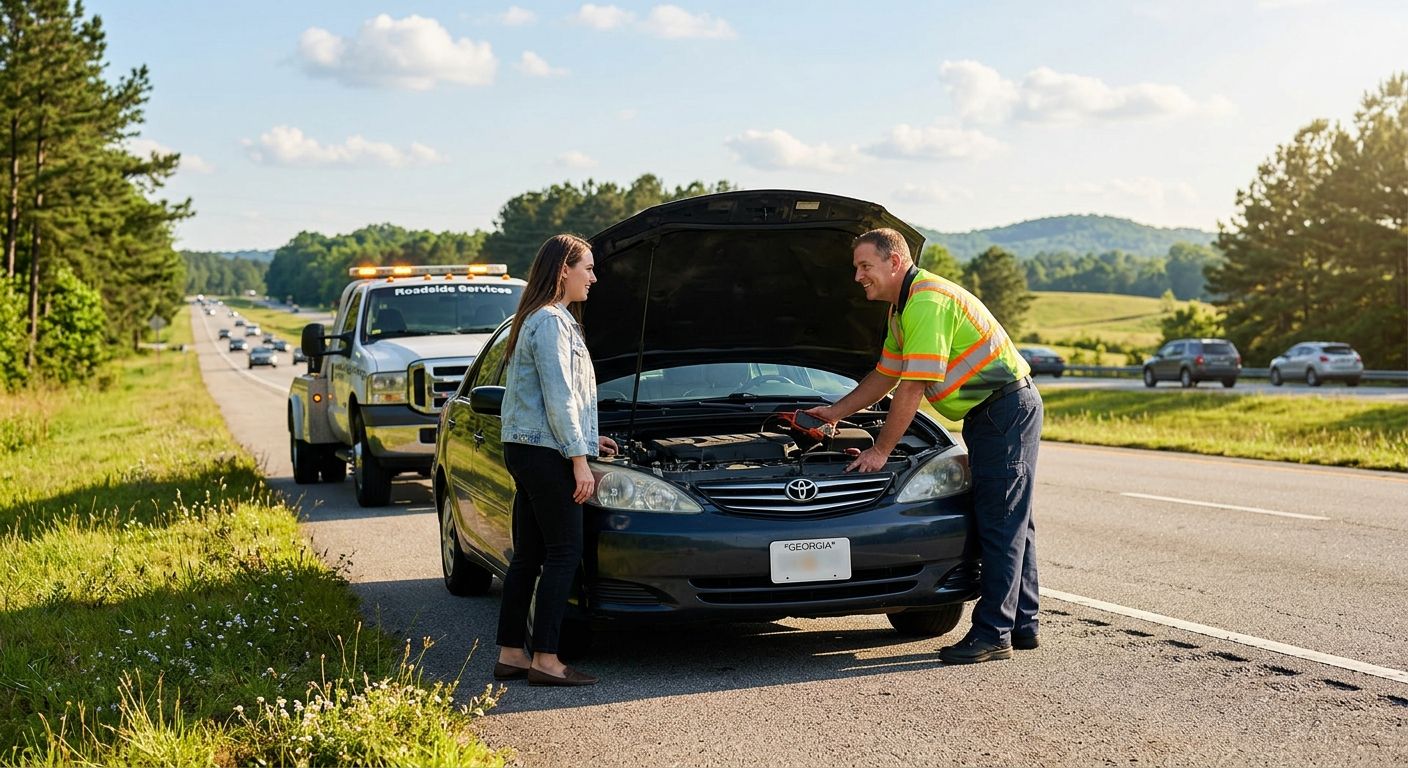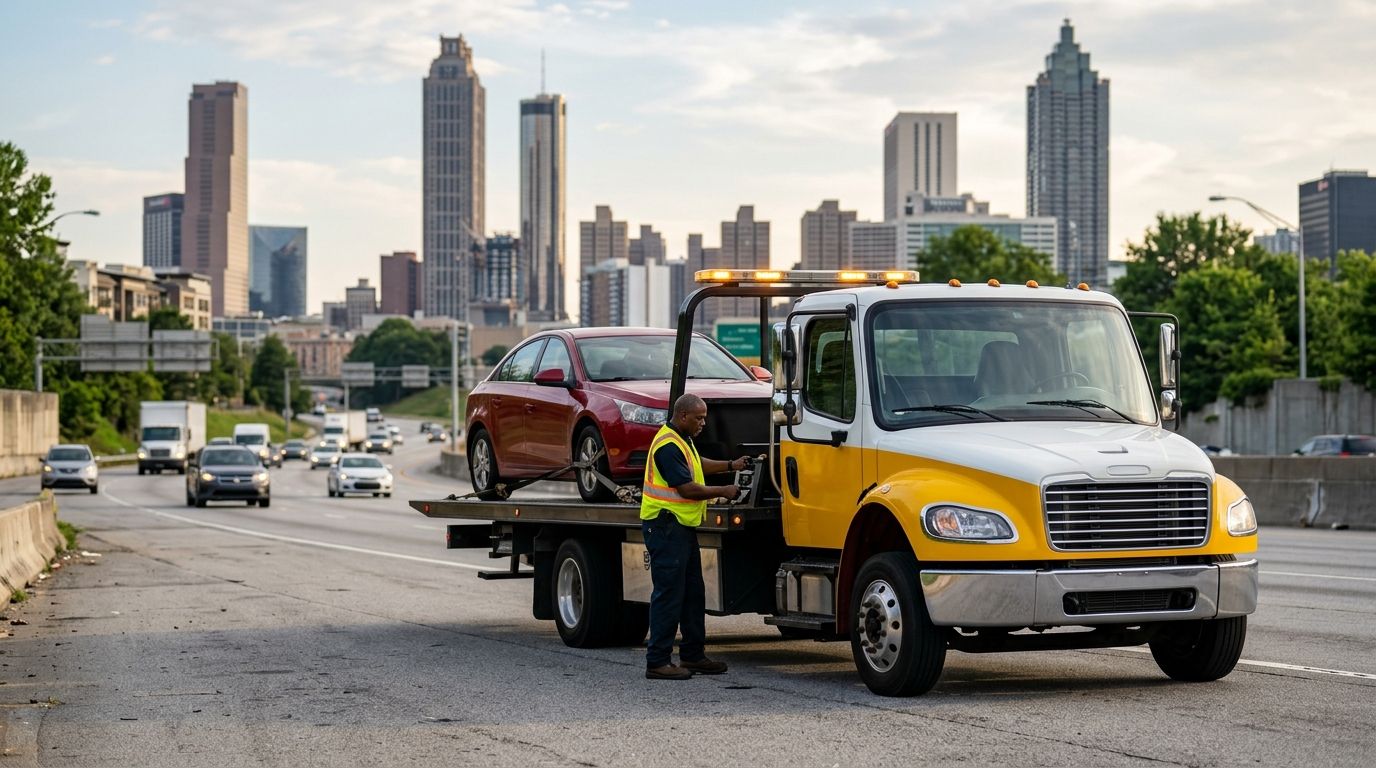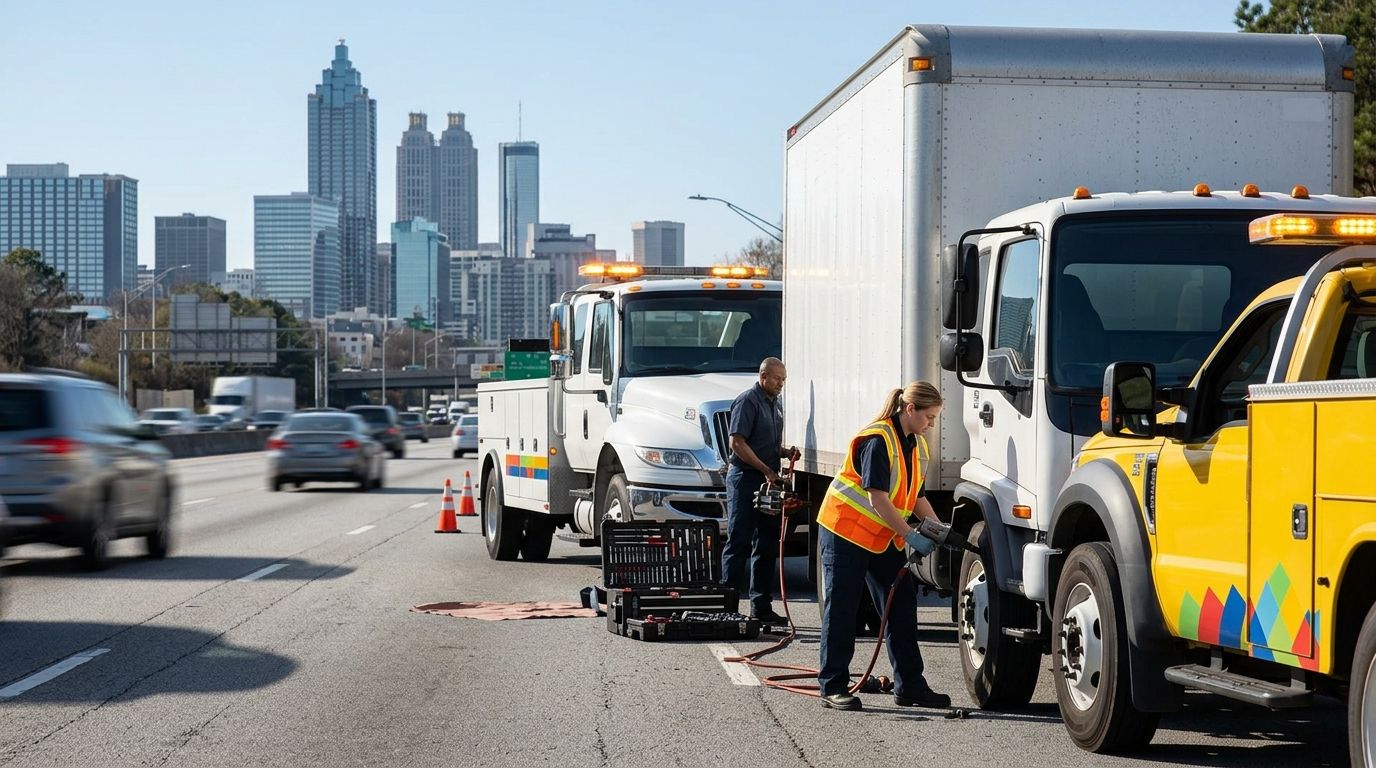
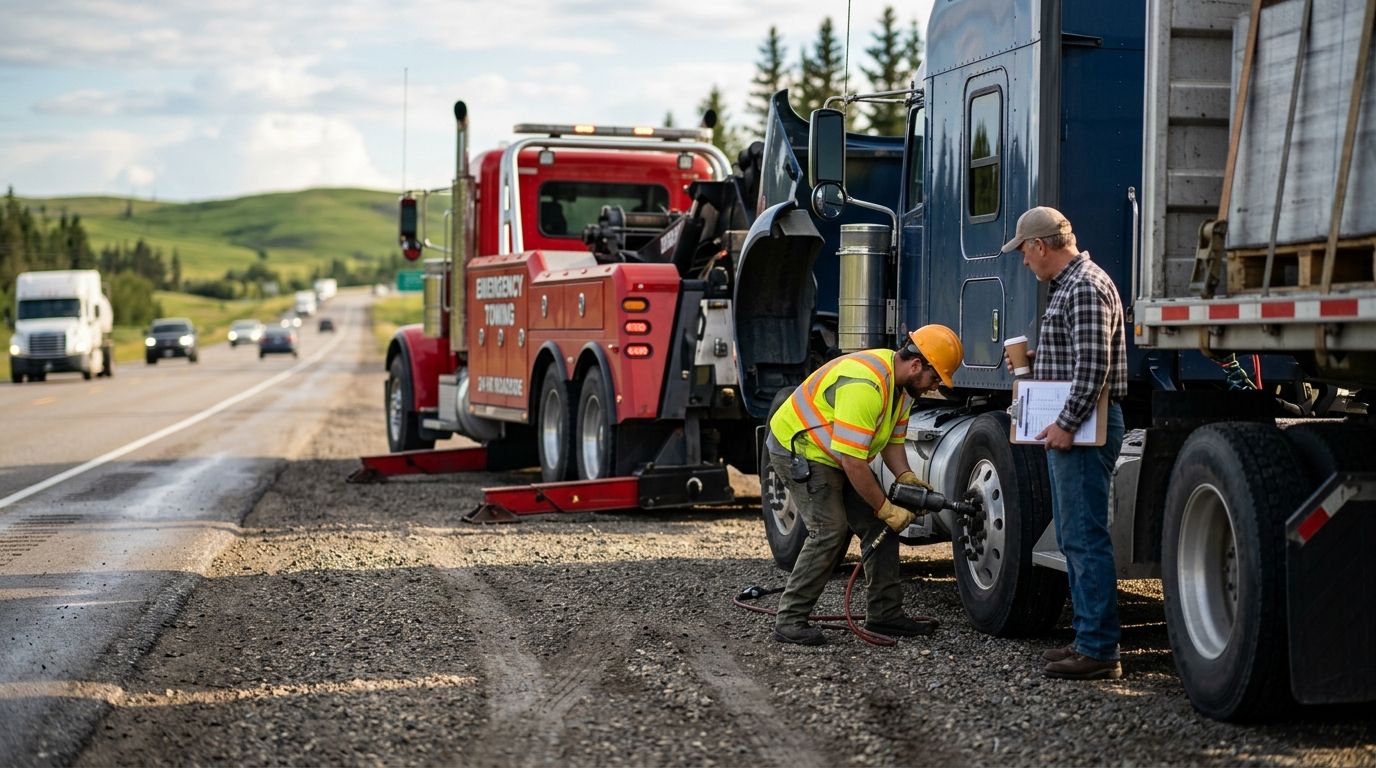
Semi truck roadside assistance is emergency roadside support built for tractor-trailers and heavy-duty rigs, covering tire blowouts, jump starts, lockouts, fuel delivery, and heavy-duty towing when an 80,000-pound rig breaks down on I-285 or a rural stretch of I-20. A stalled sedan blocks one lane and waits for a flatbed. A stalled semi blocks a full lane of an interstate, needs a tow truck rated for its gross weight, and turns a 20-minute fix into a multi-hour shutdown if the wrong equipment shows up. That gap is why generic roadside plans built for passenger cars almost never cover commercial trucks.
Fleet dispatchers and owner-operators around Atlanta lean on All Around Atlanta Roadside Assistance precisely because heavy-duty recovery, not a light-duty hook, is the default call. The rest of this guide walks through what to check before a breakdown, how to handle each failure type, and where drivers most often get it wrong.
- Roadside assistance for semi trucks requires heavy-duty towing rated for 80,000-lb rigs, not standard flatbed service.
- Personal auto roadside plans almost never cover commercial vehicles over 10,000 lbs GVW.
- All Around Atlanta Roadside Assistance runs 24/7 heavy-duty towing, tire changes, fuel delivery, and lockout service across metro Atlanta in 2026.
- Verified mile marker and direction of travel cut dispatch time more than any other single detail.
Why roadside assistance for semi trucks matters
A passenger car sitting on the shoulder is an inconvenience. A tractor-trailer sitting on the shoulder is a CVSA-relevant safety hazard and a load sitting still while delivery windows close. Fleets measure downtime in dollars per hour, not just miles per gallon, and a truck that can't get towed by a properly rated wrecker sits longer while a second call goes out.
The other difference is equipment. A jump start on a semi means reaching a battery bank buried behind a step or under a cab, often two batteries wired in series, not one under a hood latch. A tire change means a lug pattern and torque spec built for a steer or drive axle, not a passenger rim. Roadside assistance for semi trucks has to be built around these differences from the start, not adapted from a car-focused service on the fly.
Confirm your coverage before you're stranded
Most breakdowns expose a coverage gap nobody checked until it mattered. Confirm this now, not mid-shoulder:
- Verify your plan explicitly lists commercial vehicles over 10,000 lbs GVW, not just "trucks"
- Check whether heavy-duty towing is included or billed separately by the mile
- Confirm 24/7 dispatch exists in the Atlanta metro area specifically, not just a national call center
- Ask if fuel delivery covers diesel, since some plans default to gasoline only
- Save a direct dispatch number in your phone instead of relying on a company app that needs signal
Stock a heavy-duty emergency kit
A kit built for a sedan won't help a rig with dual rear tires and air brakes. Build one that matches the truck:
- Reflective triangles rated for highway use, placed per DOT spacing rules
- A tire pressure gauge rated to at least 150 PSI for drive and trailer tires
- A spare air brake fitting and glad hand seals
- A headlamp or handheld light bright enough to work roadside after dark
- Jumper cables long enough to reach a battery bank mounted behind the cab
Handle a tire blowout the safe way first
Semi tire changes are dangerous without the right jack and torque tools, so most drivers should not attempt a full swap alone on a live shoulder. Start with the basics:
- Get the rig fully onto the shoulder or breakdown lane before doing anything else
- Set triangles behind the vehicle at the DOT-required distances
- Check whether the blown tire is a single steer tire or one of a dual pair before deciding if you can limp to an exit
- Call for a mobile tire service equipped for heavy truck lug patterns and torque specs once you're safely positioned
This is the point where a heavy-duty roadside provider becomes the faster path over a DIY change: a properly equipped technician swaps a drive-axle tire in far less time than an underprepared driver working alone on a shoulder.
Call for heavy-duty towing the right way
Not every tow truck can lift a loaded semi. Give the dispatcher what they need on the first call:
- Exact mile marker or nearest exit, plus direction of travel
- Whether the trailer is loaded, empty, or detached
- The specific failure — blown tire, engine, transmission, or accident damage
- Axle configuration if you know it, since it affects which wrecker gets sent
- A callback number that stays on, since heavy-duty recovery trucks often run 20-40 minutes out even in a metro area
Get fuel delivery instead of risking a walk
Running a diesel tank dry on I-75 is a solvable problem if you stay put and call rather than walking a shoulder to find fuel. Ask the dispatcher to confirm diesel-specific delivery, not a generic "fuel service" that defaults to gasoline cans.
Manage a lockout without damaging the cab
Breaking a window on a cab is expensive and avoidable. A trained lockout technician opens most commercial cabs without forcing entry, using tools built for truck door mechanisms rather than passenger-car slim jims.
Need a rig towed in metro Atlanta now
24/7 heavy-duty towing, tire, fuel, and lockout dispatch across the Atlanta area.
Comparison: roadside options for semi trucks
| Option | Best for | Key limitation |
|---|---|---|
| Personal auto roadside plan | Drivers who never haul freight commercially | Almost always excludes vehicles over 10,000 lbs GVW |
| In-house fleet dispatch | Large fleets with their own maintenance yards | Slower on far-out routes, limited after-hours staffing |
| National truck insurance roadside add-on | Owner-operators wanting one bundled policy | Response time varies heavily by region and contractor network |
| All Around Atlanta Roadside Assistance | Drivers and fleets breaking down inside the Atlanta metro area | Coverage area is regional, not nationwide |
Verdict: for a breakdown inside metro Atlanta, a heavy-duty regional provider beats a national add-on on response time, because dispatch doesn't have to route through a call center first.
Common mistakes fleets and drivers make
- Assuming a personal auto plan covers the truck. Most exclude anything over 10,000 lbs GVW outright, and drivers find this out only after calling.
- Parking facing traffic on a narrow shoulder. This is a common cause of secondary accidents involving stopped trucks and should be avoided whenever an exit or wide shoulder is reachable.
- Not confirming the tow truck's rated capacity before it arrives. A wrecker rated for a pickup can't safely lift a loaded 80,000-lb rig, and sending the wrong truck wastes the entire dispatch window.
- Guessing at the mile marker. "Somewhere near the airport" costs 10-15 minutes of searching that a specific marker or exit number eliminates.
- Attempting a drive-axle tire change alone on a live shoulder. The torque specs and jack capacity needed for a semi tire make this a two-person job at minimum, and it's rarely worth the risk for a solo driver.
FAQ
Does regular roadside assistance cover semi trucks?
No. Most personal auto roadside plans exclude commercial vehicles over 10,000 lbs GVW, so a semi truck needs a heavy-duty commercial roadside provider instead.
What is the fastest way to get a semi truck towed in Atlanta?
Call a heavy-duty towing dispatcher and give the exact mile marker, direction of travel, and whether the trailer is loaded. All Around Atlanta Roadside Assistance runs 24/7 heavy-duty towing across the metro area in 2026.
Can a regular tow truck handle a loaded semi?
No. A standard flatbed or light-duty wrecker isn't rated for an 80,000-lb loaded rig, and using one risks equipment failure mid-tow.
How do you jump start a semi truck battery?
Semi trucks typically run two batteries wired in series behind the cab or under a step, not one under the hood, so a jump requires cables long enough to reach that bank and correct polarity on both terminals.
What should a semi truck driver do immediately after a breakdown?
Get the rig fully onto the shoulder or nearest exit, set reflective triangles at DOT-required distances behind the vehicle, then call dispatch with the mile marker and failure type.
Does roadside assistance for semi trucks include fuel delivery?
Yes, when the provider explicitly offers diesel delivery. Confirm diesel specifically, since some general roadside services default to gasoline only.
How much downtime does a semi truck breakdown typically cause?
Downtime depends heavily on how fast the right equipment reaches the rig; calling a provider equipped for heavy-duty towing and tire service on the first call is what shortens it most.
Can a locked semi truck cab be opened without breaking a window?
Yes. A technician trained on commercial cab lock mechanisms can usually open the door without forcing entry, avoiding the cost of a replaced window.
One last thing
The single detail that speeds up every semi truck roadside call in 2026 isn't the plan you picked, it's whether you can give a dispatcher an exact mile marker and direction of travel the moment you call. Drivers who know this before they need it get a properly rated truck sent the first time, instead of waiting through a second dispatch after the wrong equipment shows up.