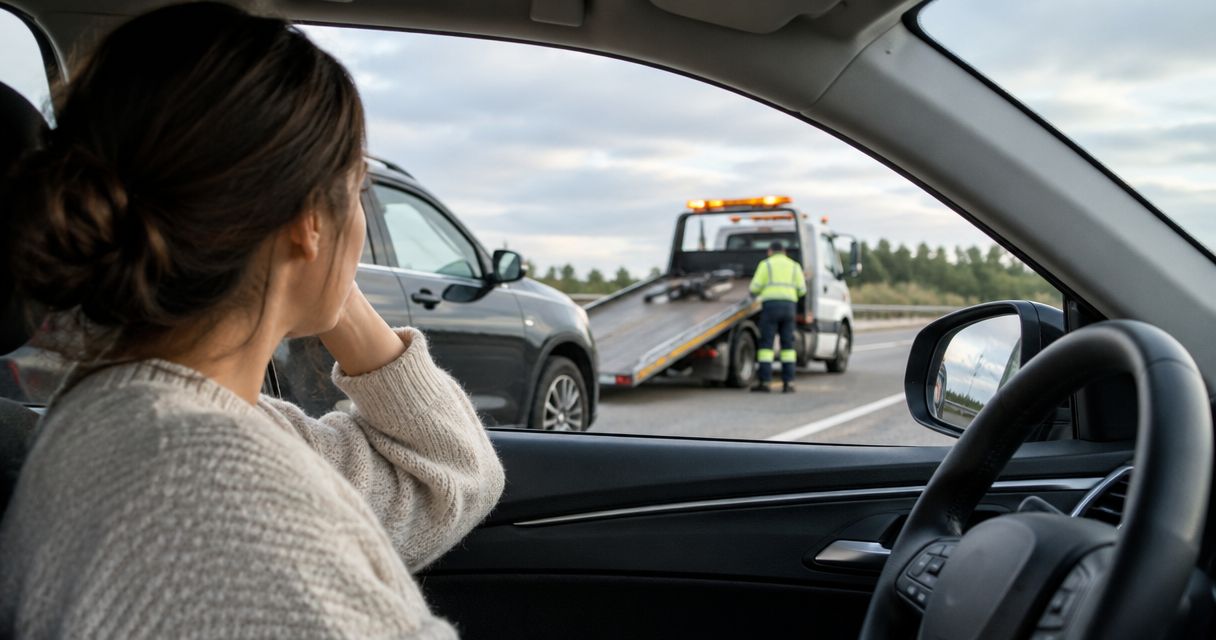
Waiting inside your car is usually safer than standing beside traffic if your vehicle is fully out of the travel lanes, there is no fire or other immediate danger, and you can remain buckled in. If you see flames, smell fuel, or face another immediate threat, get away from the vehicle using a safe exit route. If you are stuck in a live lane or cannot reach safety, call 911 and follow the dispatcher’s instructions.
- Is it safe to wait in your car for a tow truck? Usually, if safely off traffic and buckled in.
- Fire, a fuel leak, or immediate danger changes the answer: leave safely and call 911.
- Never stand between your disabled vehicle and approaching traffic.
- Atlroadside provides 24/7 roadside assistance for Atlanta drivers and commercial fleets.
Need help now? Call Atlroadside and give your exact location, direction of travel, and whether your vehicle is blocking traffic. Report immediate danger to 911 first.
Is it safe to wait in your car for a tow truck?
Stay inside with your seat belt fastened when your car is safely off the roadway and the cabin is safe. Do not climb out just to inspect the damage, look for the tow truck, or stand beside the hood. A breakdown does not make the shoulder a safe place to walk.
Getting out becomes the better choice when staying inside exposes you to a more immediate danger and you have a safe route away. The decision depends on the scene—not just whether the engine starts.
| Waiting choice | Best for | Main benefit | Main limitation |
|---|---|---|---|
| Stay inside, buckled in | A vehicle fully out of travel lanes with no immediate cabin hazard | Avoids unnecessary exposure to passing traffic | Not appropriate for fire, fuel leaks, or dangerous cabin conditions |
| Exit away from traffic | An unsafe vehicle with a clear route to a protected waiting area | Separates you from the vehicle hazard | Opening doors or walking beside traffic creates another risk |
| Call emergency services before arranging recovery | A live-lane breakdown, injury, fire, or immediate threat | Brings the emergency situation to the right responders | Does not replace the need to arrange vehicle recovery afterward |
No choice makes a roadside breakdown risk-free. Keep watching conditions, and follow instructions from police, emergency dispatchers, or responders at the scene.
Why this matters
Your biggest problem is not always the flat tire or dead battery. It is where the vehicle stopped. A harmless mechanical problem becomes an emergency when the car blocks a lane or leaves passengers exposed to traffic.
Separate the decisions. First protect people. Then arrange the repair or tow. You do not need to diagnose the breakdown before asking for help.
What should you do while waiting for the tow truck?
1. Assess danger
Check your surroundings before opening a door. Are you fully outside the travel lane? Is there smoke, a fuel smell, rising water, or a medical problem? Can you see a safe place to wait without crossing traffic?
Turn on your hazard lights if they work. If the vehicle still moves safely, get out of the travel lanes without making a sudden or dangerous maneuver. Do not keep driving a vehicle that is burning or otherwise unsafe to occupy.
2. Share location
Tell the dispatcher the road name, direction of travel, and nearest exit, mile marker, or recognizable landmark. Say whether you are on the shoulder, an entrance ramp, a parking lot, or a travel lane.
A map pin helps, but also describe your position. On divided roads, the direction matters. Tell dispatch if a barrier separates your vehicle from the other side of the road.
3. Follow instructions
Tell the dispatcher whether you are staying inside or have moved to a protected location. Explain any difficulty exiting, including a passenger who needs mobility assistance.
Follow emergency responders’ instructions over general roadside advice. They can account for the traffic, visibility, and hazards at your actual location.
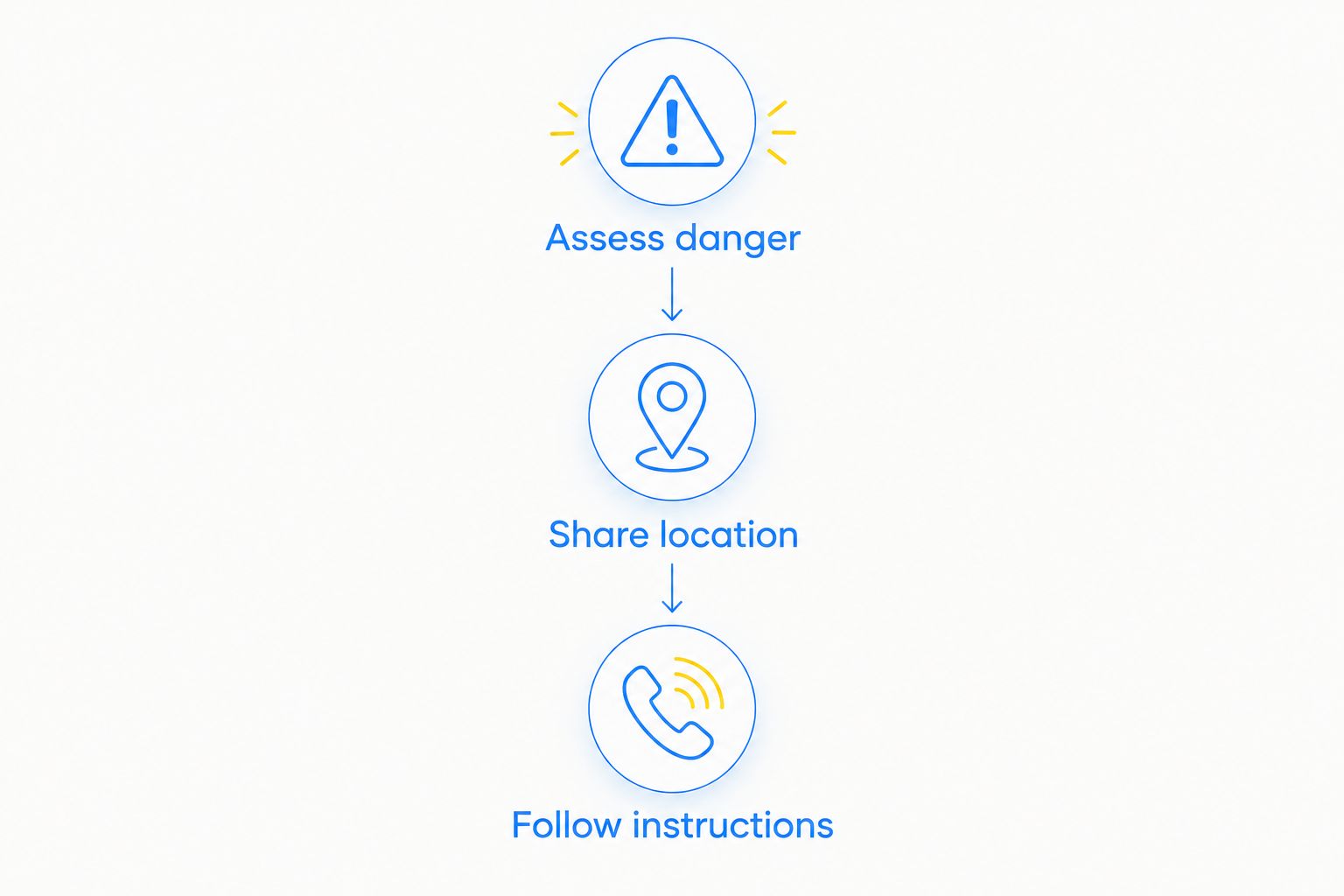
Keep your phone within reach. Save battery for dispatch calls, location sharing, and updates. Do not step into traffic to improve reception or photograph the vehicle.
Request roadside help now
24/7 assistance for Atlanta drivers and commercial fleets. Report immediate danger to 911 first.
When should you stay inside the car?
Stay inside when the vehicle is fully out of moving traffic, there is no immediate hazard inside, and leaving would put you closer to passing vehicles. Keep your seat belt fastened. Ask passengers to do the same.
Keep doors closed while you wait. Do not stand behind the vehicle to wave down the tow truck, and do not sit on the shoulder beside it. Tell dispatch how to identify your car instead.
A parking lot is a different setting from a freeway shoulder. In a safe lot, you have more room to assess your surroundings, but you still need to avoid moving vehicles and the tow operator’s work area.
Staying inside is a waiting decision—not permission to remain inside during towing. Once the operator arrives, ask where everyone should wait before loading begins.
When should you get out of the car?
Leave when there is an immediate threat inside or around the vehicle and you can move away safely. Fire, a suspected fuel leak, and rising water require urgent action. Do not delay to collect luggage or inspect the engine.
When exiting is necessary, use the side away from traffic if that route is clear. Move to a protected place away from the vehicle and roadway. Do not cross highway lanes to reach an exit, gas station, or the opposite shoulder.
A guardrail can offer separation from traffic, but check what is behind it before moving. Do not climb into a steep drop, drainage channel, or another hazard just because a barrier is present.
If you cannot exit safely, explain that to 911. Describe the vehicle’s position and who is inside. Do not attempt a dangerous crossing because help is already on the way.
Why the safest waiting choice varies
The same breakdown needs different decisions in different locations. Check these factors rather than relying on a blanket rule to always stay or always get out:
- Traffic exposure: A vehicle in a live lane presents a different emergency from one parked well clear of traffic.
- Vehicle condition: Flames, leaking fuel, or other immediate hazards change whether the cabin remains a safe waiting place.
- Exit route: A clear path away from traffic matters more than simply having a passenger-side door.
- Weather and cabin conditions: Dangerous heat, cold, flooding, or poor visibility affect where you can safely wait.
- Passenger needs: Children, injuries, and mobility limitations affect how safely everyone can move.
- Responder instructions: Police or emergency dispatchers can direct you based on the scene you describe.
Reassess if conditions change. A vehicle that was safely out of traffic can become unsafe if smoke develops or water rises. Update dispatch rather than assuming the original plan still applies.
What if your car stops in a highway travel lane?
Call 911 if your disabled vehicle is blocking moving traffic. Give the road, direction, lane position, and vehicle description. State clearly that the vehicle cannot move.
Do not get out to push it across lanes, direct traffic, or place yourself behind it. If leaving would require stepping into moving traffic, stay buckled while seeking emergency instructions unless an immediate hazard forces you out.
The tow operator needs this information too. A live-lane recovery is not the same situation as collecting a car from a parking space.
What if you ran out of gas or diesel?
Running out of fuel does not make walking along the highway a safe solution. Assess the vehicle’s position, stay protected, and request the correct fuel service. Tell dispatch whether you need gasoline or diesel.
If you are safely off traffic, fuel delivery can address the breakdown without you walking to a station. If you are blocking a lane, emergency traffic safety comes first. See what happens if you run out of gas on an Atlanta highway for the next steps.
Does the advice change for semi-trucks and commercial vehicles?
The basic rule stays the same: protect people before recovering equipment. Tell dispatch whether you have a passenger car, box truck, semi-truck, or another commercial vehicle. Explain whether a trailer is attached and whether anything is leaking or shifting.
Commercial drivers also need to follow applicable warning-device requirements and fleet emergency procedures. Do not treat passenger-car advice as a substitute for those obligations. Tell emergency dispatch when traffic prevents you from acting safely.
Atlroadside serves Atlanta drivers and fleets needing 24/7 roadside assistance, including heavy-duty towing and recovery. Roadside service does not replace police, fire, or medical response when people face immediate danger.
What should you do when the tow truck arrives?
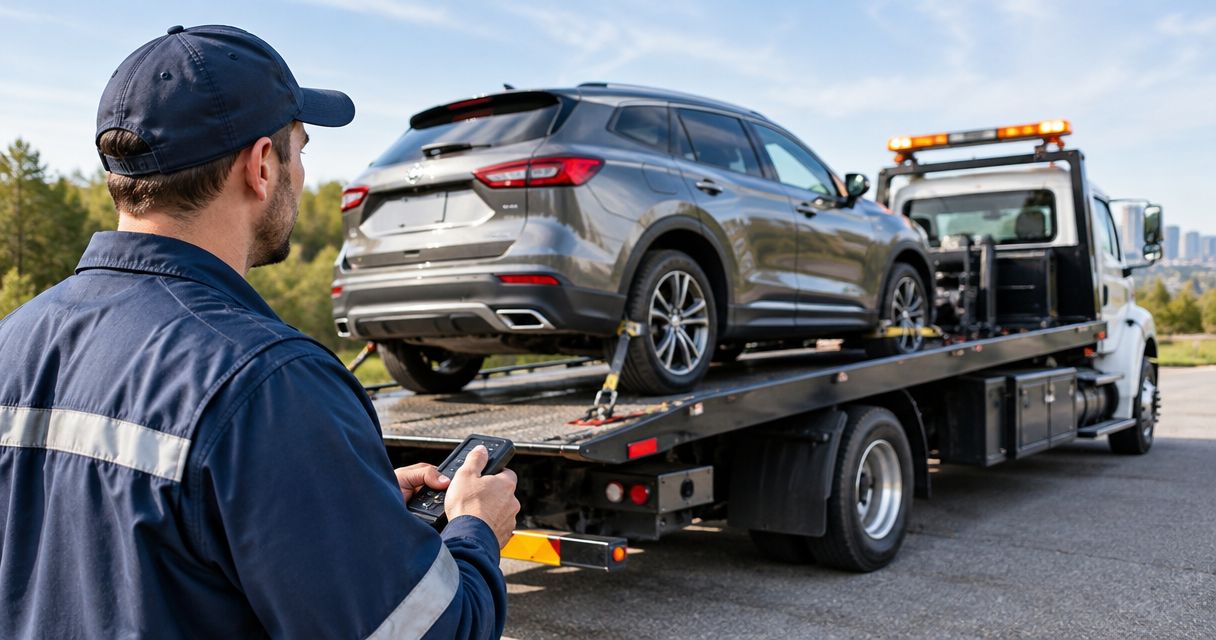
Stay where you are until you can communicate safely with the operator. Confirm that the truck was sent for your service request. Ask where passengers should wait and whether passenger transportation is arranged.
Do not assume everyone can ride in the tow truck. Tell dispatch about passengers before the truck arrives, especially children or anyone with accessibility needs.
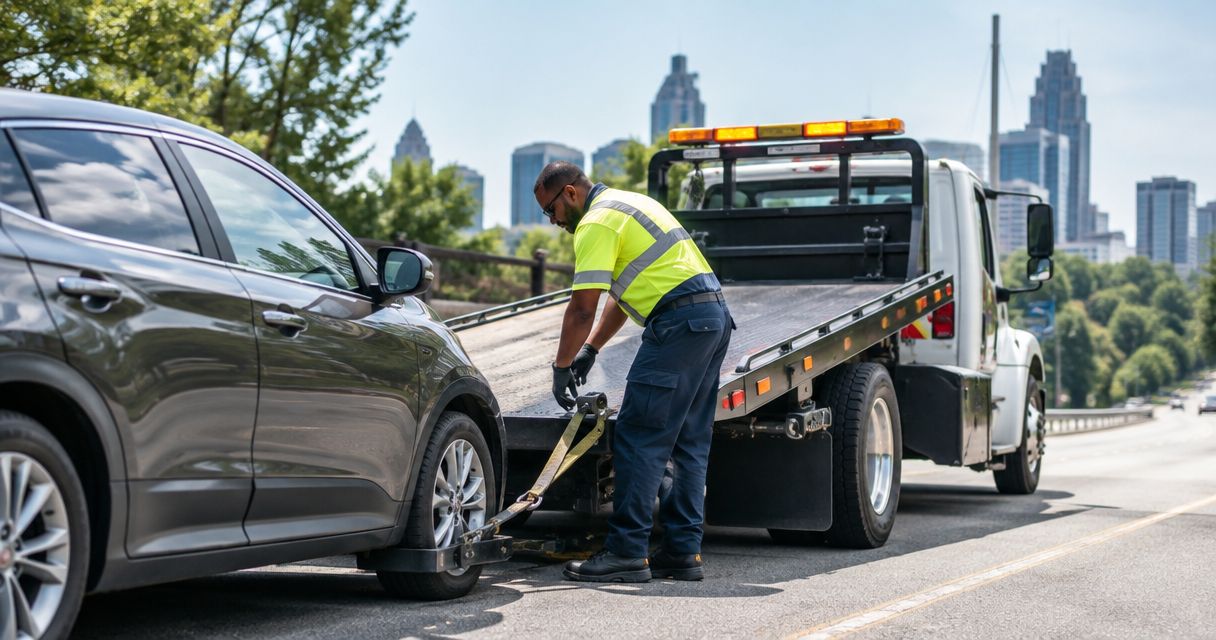
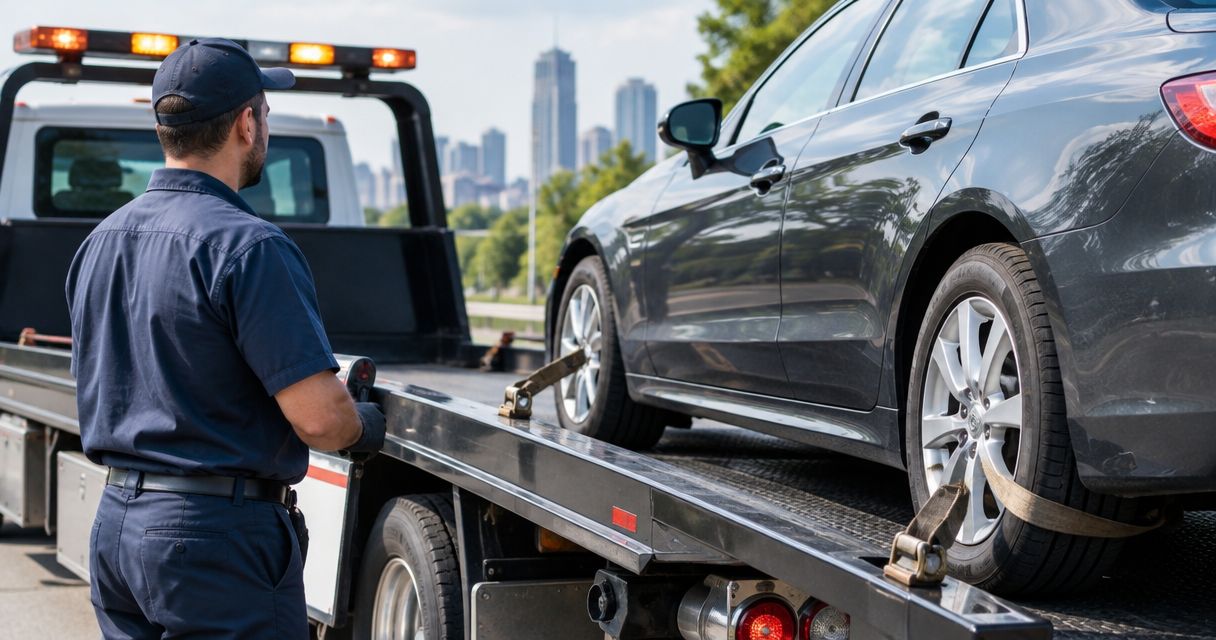
Stay clear of cables, loading equipment, and the space between the tow truck and your vehicle. Retrieve essential items only when the operator says it is safe. Do not remain in the disabled vehicle while it is being loaded or towed.
FAQ
Should I keep my seat belt on while waiting for a tow truck?
Yes. Keep your seat belt fastened while waiting inside a vehicle that is safely out of traffic and has no immediate cabin hazard. Reassess if fire, leaking fuel, or another danger develops.
Should I get out of my car on the interstate shoulder?
Do not get out just to wait beside the car. Stay buckled inside when the vehicle is safely off traffic and the cabin is safe; exit only when needed and when you have a safe route away.
Should I call 911 or a tow company first?
Call 911 first for a vehicle blocking traffic, injuries, fire, or another immediate threat. For a breakdown safely away from traffic with no emergency, contact roadside assistance.
Is it safe to wait in my car with children?
Waiting inside is generally the safer choice when the vehicle is out of traffic, the cabin is safe, and everyone remains properly restrained. Tell dispatch about children and any urgent temperature or medical concern.
Can I leave the engine running while I wait?
Do not run the engine if you suspect a fuel leak, exhaust problem, fire, or blocked tailpipe. If fumes enter the cabin or anyone feels unwell, seek emergency help and move to fresh air when safe.
Can I sit in my car while the tow truck loads it?
No. Leave the vehicle before loading begins and wait where the operator directs. Stay away from cables, moving equipment, and the loading path.
Does Atlroadside offer roadside assistance at night?
Atlroadside provides 24/7 roadside assistance across the Atlanta metro for drivers and commercial fleets. Services include towing, jump starts, lockouts, tire changes, fuel delivery, and heavy-duty towing and recovery.
One last thing
Tell dispatch where you are waiting—not just where the car is. If you moved behind a barrier or into a nearby safe location, explain that clearly. Do not walk back toward traffic just because you see a tow truck approaching.