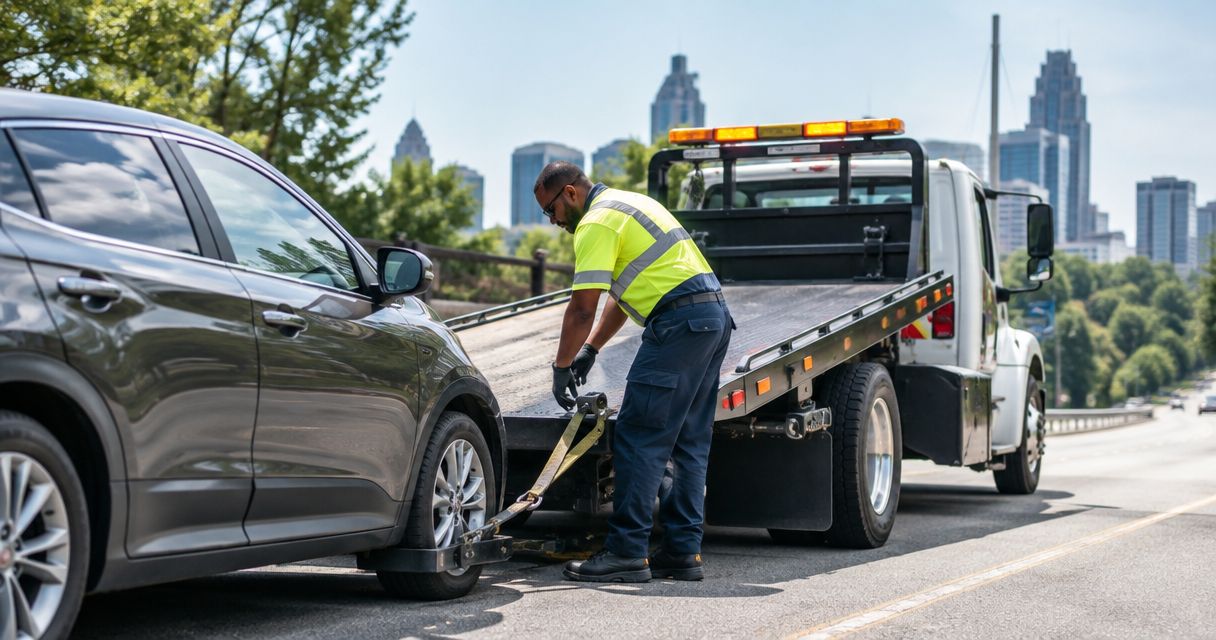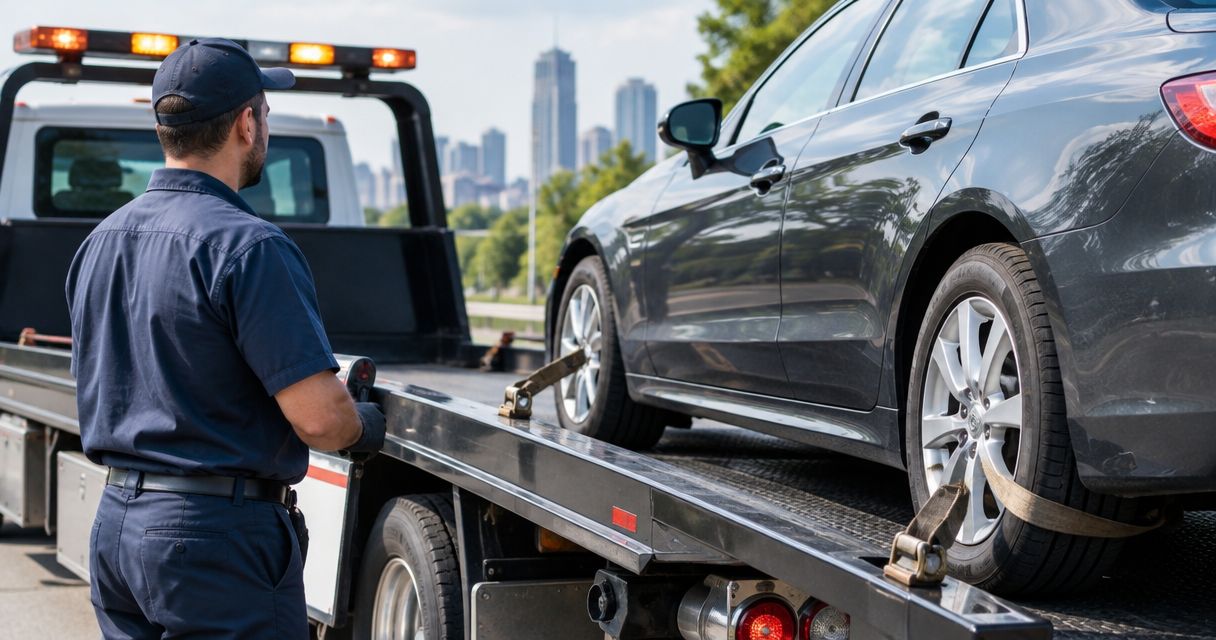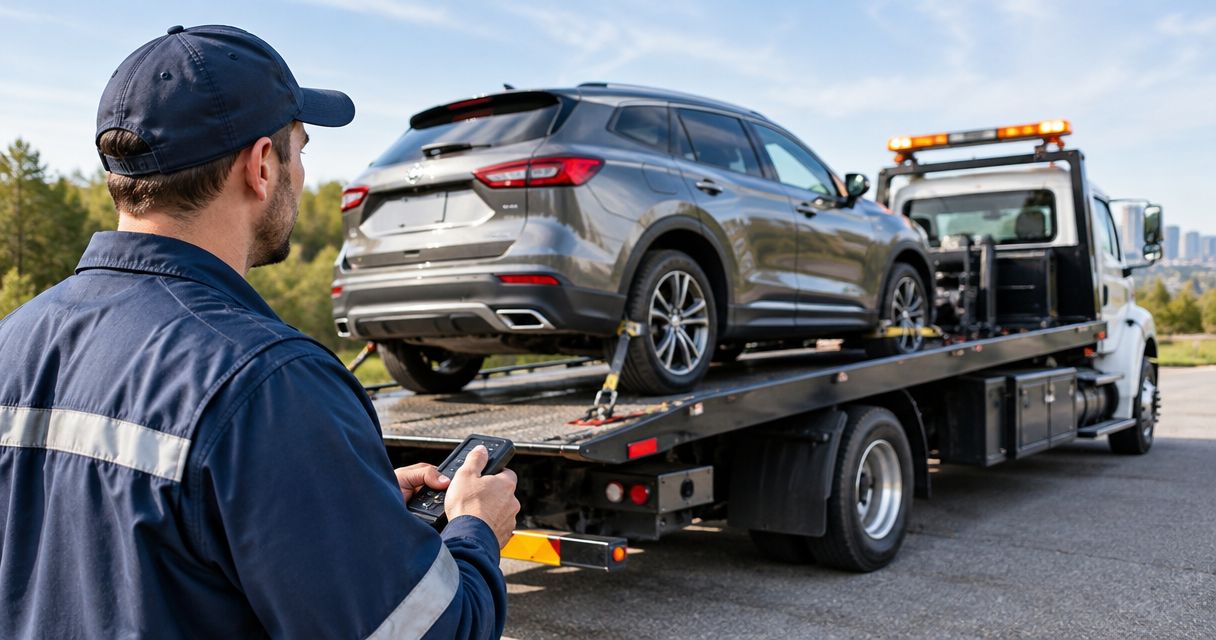
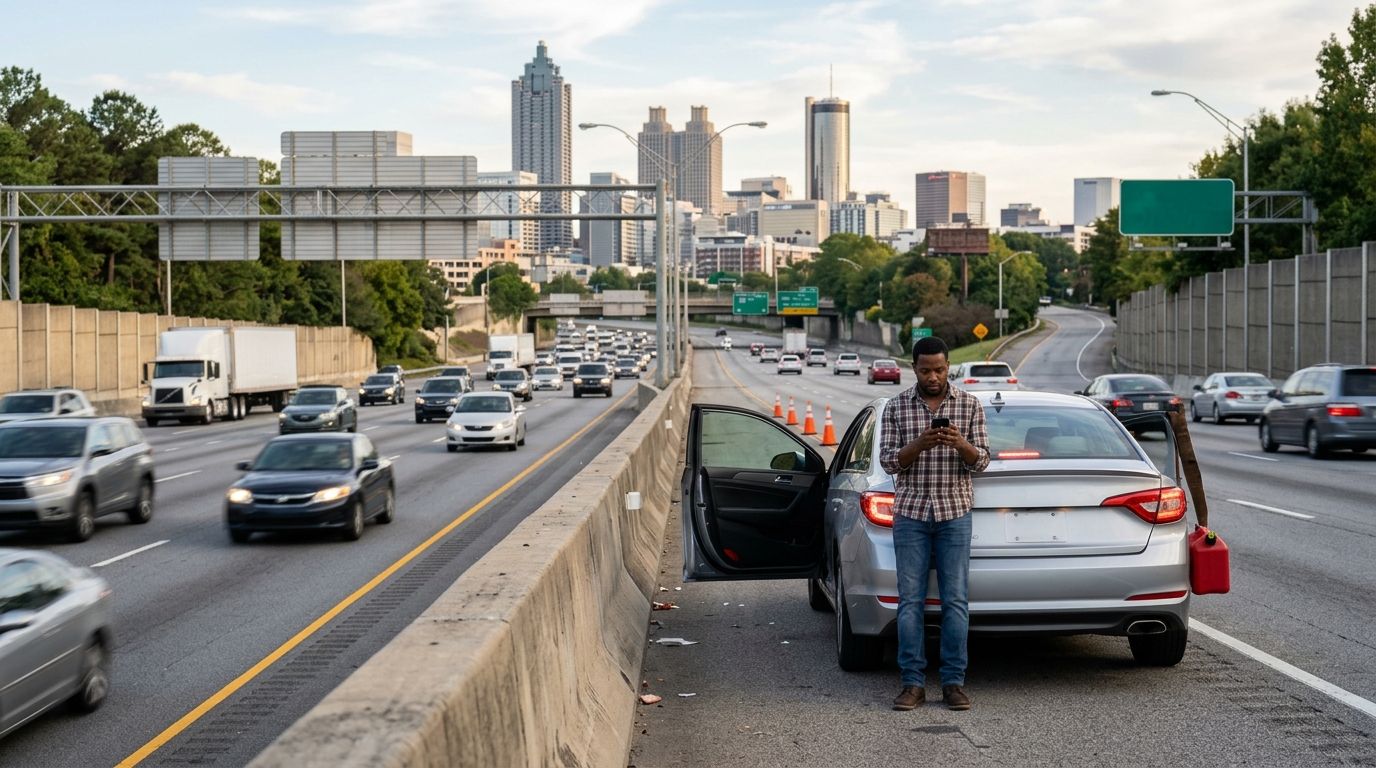
If you run out of gas on the highway in Atlanta, your engine can stall and leave you without power to accelerate out of traffic. Switch on your hazard lights, steer toward a safe stopping place while you still have momentum, and request fuel delivery once stopped. If you are stranded in a travel lane or face immediate danger, call 911 before arranging roadside service.
- Run out of gas on the highway in Atlanta? Stop safely, report your location, and request the correct fuel.
- Atlroadside provides fuel delivery and roadside assistance across the Atlanta metro, available 24/7.
- Call 911 for immediate danger; routine fuel delivery is a roadside assistance request.
- A diesel truck that will not restart needs further assessment, not repeated cranking.
Need help now? Contact Atlroadside and report your highway, direction, nearest exit, vehicle, and fuel type. Say immediately whether you are completely off the road or blocking traffic.
What happens if you run out of gas on the highway in Atlanta?
Your engine loses power when it no longer receives fuel. Steering and braking assistance can change after the engine stops, so keep control of the vehicle and use deliberate inputs. Getting clear of moving traffic comes before troubleshooting the engine.
Use this 2026 highway breakdown checklist:
- Signal the problem. Turn on your hazard lights as soon as you recognize the loss of power. Keep your attention on traffic, not the fuel gauge or your phone.
- Find a safe stopping place. Use remaining momentum to reach an accessible shoulder or exit only when you can do so safely. Do not cut across lanes to chase an exit.
- Secure the vehicle. Once stopped, apply the parking brake. Do not keep trying to drive a vehicle that repeatedly stalls.
- Assess immediate danger. If you are blocking a travel lane, someone is injured, or there is smoke, fire, or another immediate threat, call 911. Explain the danger first.
- Request the right help. Report your exact location and whether you need gasoline or diesel. Tell the dispatcher if the vehicle has another problem or cannot be safely reached.
Once you are stopped, do not walk back along the highway to find a sign. Read nearby markers from a safe position or use your phone's map. If you cannot identify the location, tell the dispatcher what you can see without moving closer to traffic.
Why this matters
An empty tank is a service problem. A vehicle exposed to highway traffic is a safety problem. Handle them in that order, even if a gas station looks close.
For a 2026 roadside request, describe your position before explaining how the tank ran dry. A dispatcher needs to know whether you are on a shoulder, an exit ramp, or a travel lane before deciding how to approach the vehicle.
Do not ask passengers to push the car along the highway. Do not stand behind it to wave traffic around. Keep everyone away from the traffic side of the vehicle.
Should you request fuel delivery, towing, or emergency help?
Fuel delivery fits an empty tank; towing fits a vehicle that cannot safely continue. Emergency services address immediate danger, not an ordinary refill. Tell the dispatcher what happened instead of assuming that every stalled engine needs gasoline.
| Option | Best for | What it addresses | Limit or drawback |
|---|---|---|---|
| Fuel delivery | An out-of-fuel vehicle in a safely accessible position | Brings the correct fuel to the stopped vehicle | Does not fix a separate mechanical problem or guarantee a restart |
| Towing | A vehicle that cannot restart or cannot safely continue | Moves the vehicle rather than relying on a roadside restart | Requires arranging the destination and appropriate towing service |
| Emergency services | Immediate danger, injury, or a vehicle obstructing traffic | Addresses the emergency and roadway hazard | Is not a substitute for routine roadside fuel delivery |
Do not keep ordering different services without explaining the symptoms. A car that cranks but will not start presents a different problem from a car that has no electrical power. Both need an accurate description.
What should you tell the fuel-delivery dispatcher?
Give the location first. Then give the vehicle and fuel details. The correct highway without the correct direction is not a complete location.
For your 2026 fuel-delivery request, have these details ready:
- Highway and direction: Name the road and whether you are traveling northbound, southbound, eastbound, or westbound.
- Nearest landmark: Report an exit number, mile marker, ramp, or clearly visible sign.
- Stopped position: Explain whether you are on the right shoulder, left shoulder, ramp, or in a travel lane.
- Vehicle identification: Give the make, model, color, and whether you have a trailer attached.
- Fuel requirement: Specify gasoline or diesel. Check the fuel-door label or owner's manual if you are unsure.
- Current symptoms: Say whether the engine stalled while driving, whether it cranks, and whether anyone already added fuel.
A map pin helps, but pair it with the direction and roadside position. Roads, ramps, and frontage roads can sit close together on a map. Do not assume a location pin explains which roadway you occupy.
If you prefer preparing the details in writing, use the emergency fuel-delivery request workflow. Confirm the provider's accepted contact method rather than assuming that every number accepts texts.
Atlroadside roadside assistance is a fit for Atlanta drivers and commercial fleets needing 24/7 fuel delivery or towing. Report the actual problem when you call; fuel delivery alone does not resolve every no-start condition.
Request roadside help now
Explain your location, fuel type, and whether your vehicle is clear of traffic.
Should you stay in the car or get out?
If your vehicle is safely off the roadway and there is no immediate threat inside it, remain seat-belted while you contact help. Do not step into traffic to inspect the tank, check under the hood, or meet an approaching service vehicle.
Fire, smoke, a fuel leak, or another immediate threat changes the situation. If you must leave, use the side away from moving traffic when possible and move to a protected place. Do not remain beside the car or attempt to cross the highway.
If you are stopped in a live lane, call 911 and describe your exact position. Follow the emergency dispatcher's instructions about remaining inside or moving away. There is no single stay-or-exit rule that fits every highway position.
Keep children and pets under control. Do not let passengers scatter along the shoulder while waiting for help.
What changes for diesel trucks and commercial fleets?
A diesel truck that runs dry can need more than fuel added to the tank. Air can enter the fuel system, and the restart procedure depends on the vehicle. Do not improvise a priming procedure or keep cranking the engine.
Tell dispatch that the vehicle is diesel-powered before service is arranged. Identify whether it is a passenger vehicle, commercial truck, or semi-truck, and explain whether a trailer is attached. Vehicle type matters when roadside access or towing becomes necessary.
For fleet dispatchers handling a breakdown in 2026, send the driver's location and vehicle details together. Keep the driver focused on safety rather than collecting paperwork beside traffic. Tell the roadside provider about any known access issue.
Atlroadside provides diesel delivery and has heavy-duty towing and recovery capability across the Atlanta metro. That gives commercial drivers a relevant service option, but the provider still needs the truck's condition and location to determine the next move.
Why does the next step vary between breakdowns?
The same empty-tank complaint can lead to fuel delivery, further assessment, or towing. These details drive the decision:
- Roadside position: A safely accessible shoulder differs from a narrow ramp or an obstructed lane. Describe the actual position.
- Fuel type: Gasoline and diesel are not interchangeable. Confirm the vehicle's requirement before fuel is added.
- Vehicle type: A passenger car and a loaded commercial vehicle have different service needs. Report trailers and commercial equipment.
- Restart condition: An empty tank does not rule out another fault. Explain what the engine does after fuel is supplied.
- Visible hazards: Leaking fuel, smoke, damage, or an unsafe stopping place changes the priority. Report these before discussing a refill.
Do not describe a suspected cause as a confirmed diagnosis. Say that the gauge showed empty and the engine stalled, for example, rather than insisting the vehicle only needs fuel.
Will your car restart after fuel delivery?
Fuel delivery can resolve a no-start caused by an empty tank, but adding fuel does not guarantee a restart. Follow the vehicle manufacturer's starting instructions and the roadside technician's guidance.
Avoid repeated, prolonged starting attempts. They can drain the battery and leave you with an additional problem. If the engine does not start, report what you hear and what the dashboard shows rather than continuing to crank it.
If the engine starts but runs poorly, leaks fuel, or shows a warning that requires stopping, do not merge into highway traffic. Ask whether further assessment or towing is needed. A running engine is not proof that the vehicle is ready to drive.
Can you walk to a nearby gas station instead?
Do not walk along a highway shoulder to collect fuel. A station that looks close can still require crossing ramps, walking beside fast traffic, or returning with a fuel container through an unsafe route.
Arrange roadside fuel delivery from a safe position instead. Do not accept a pedestrian route on your phone as proof that a highway walk is safe. The immediate goal is to avoid creating another emergency.
FAQ
What should I do first if I run out of gas on an Atlanta highway?
Turn on your hazard lights and steer toward a safe stopping place while you still have momentum. Once stopped, report your location and request the correct fuel; call 911 first if you face immediate danger or obstruct traffic.
Can someone bring gas to my car on the highway?
Roadside fuel delivery can bring fuel to a stopped vehicle when the location can be safely accessed. Give the dispatcher your highway, direction, nearest exit, stopped position, and fuel type.
Should I call 911 if my car runs out of gas?
Call 911 if the breakdown creates immediate danger, involves an injury, or leaves your vehicle obstructing traffic. For an empty tank in a safe location, contact a roadside assistance provider.
Is emergency fuel delivery available overnight in Atlanta?
Atlroadside fuel delivery and roadside assistance are available 24/7 across the Atlanta metro. Confirm the current arrival estimate and explain any hazard at your location when requesting service.
What if my diesel truck will not start after fuel is added?
A diesel truck that will not restart needs the correct vehicle-specific assessment and starting procedure. Stop repeated cranking and tell the provider that the truck ran dry before fuel was added.
Can I use a jump start when my gas tank is empty?
A jump start does not replace missing fuel. Explain whether the engine cranks and whether electrical power is present so the provider can distinguish a fuel problem from an additional battery problem.
Can I drive straight onto the highway after getting fuel?
Resume driving only when the vehicle is operating normally and you can safely reenter traffic. If the engine runs poorly, leaks fuel, or shows a warning requiring you to stop, request further help instead.
One last thing
Before you move again, confirm your next safe fuel stop. Emergency fuel delivery addresses the roadside shortage; it is not a reason to keep driving past a reachable station.
For your 2026 emergency plan, save your vehicle's fuel requirement alongside your roadside contact details. When you are stranded, knowing whether to request gasoline or diesel removes an avoidable point of confusion.