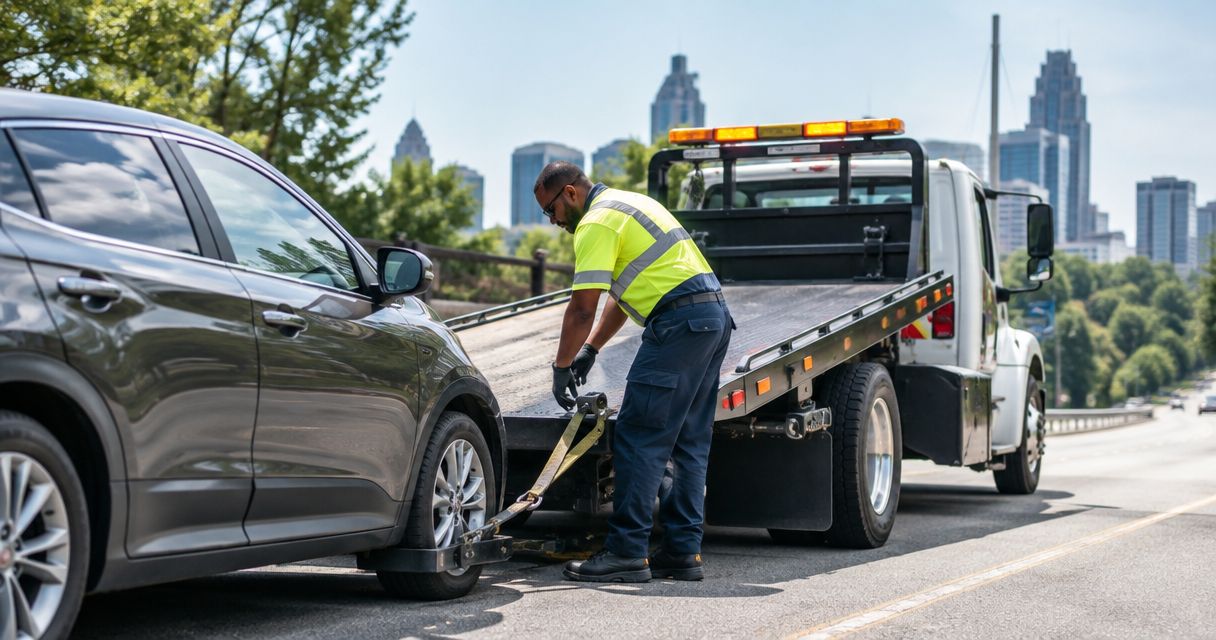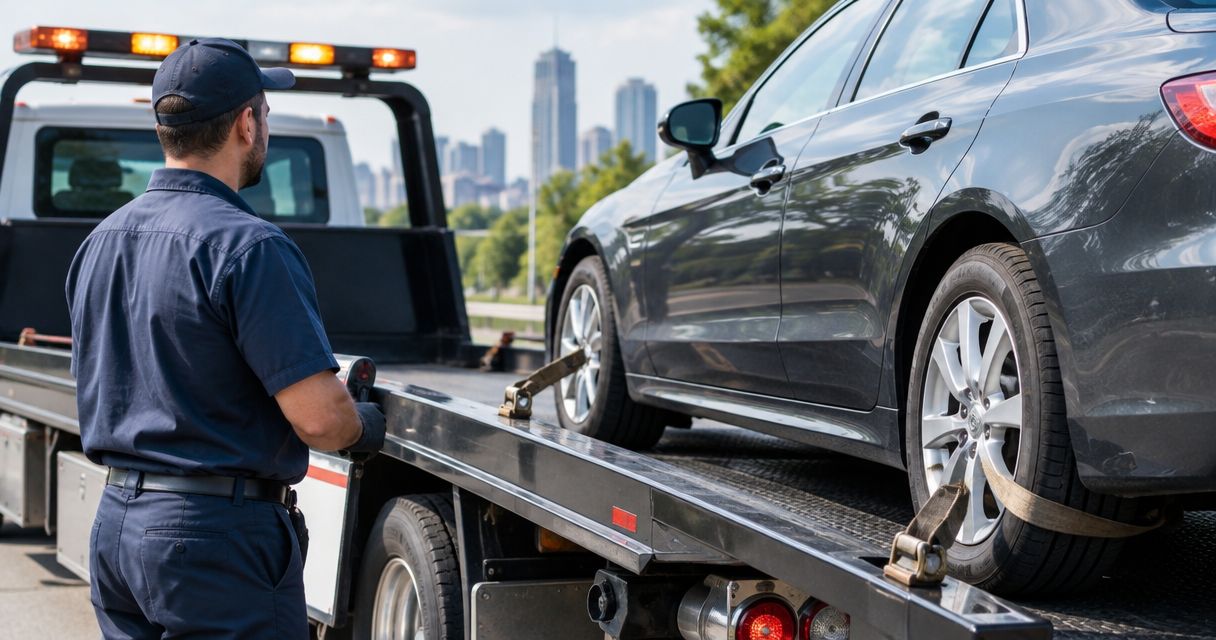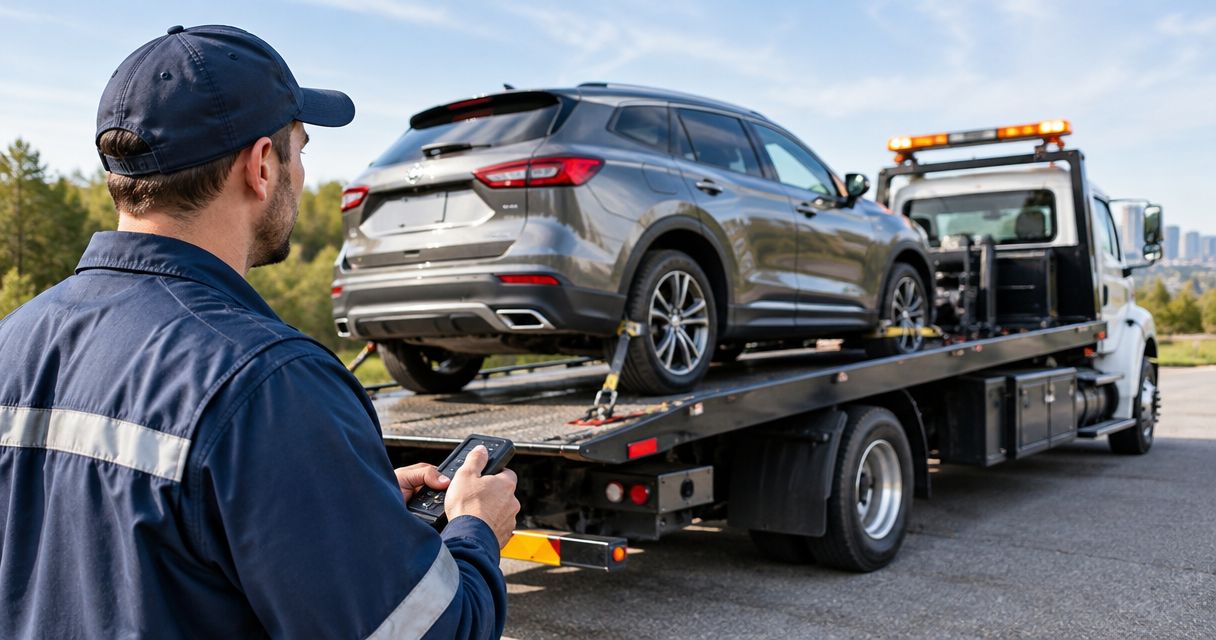

Fleet managers’ roadside assistance is mobile breakdown support aimed at getting disabled fleet vehicles safely back into service or to a repair destination. Stranded in Atlanta? Secure the driver first, identify the vehicle and fault, then call for the right roadside service—not just the nearest tow truck.
- Roadside assistance for fleet managers starts with driver safety, an exact location, and the right service request.
- Atlroadside serves Atlanta fleets with 24/7 roadside assistance, fuel delivery, and heavy-duty towing and recovery.
- Request diesel delivery for a fuel shortage; request towing when the vehicle cannot safely continue.
- Confirm job authorization and the repair destination before dispatching a tow.
Why roadside assistance matters for fleet managers
A fleet breakdown creates two jobs: help the driver and manage the interrupted assignment. You need enough information to request service without making the driver troubleshoot beside moving traffic. In 2026, keep that information in a simple incident checklist your drivers can access from their phones.
Your fleet also needs different responses for different vehicles. A locked passenger car, a delivery van with a flat tire, and a disabled tractor-trailer are not interchangeable service calls. For truck-specific preparation, use the roadside assistance guide for semi-trucks.
Match the response to the vehicle and the problem. Mobile help addresses fuel shortages, battery trouble, lockouts, and suitable tire-change situations. Towing moves a vehicle that cannot safely continue; recovery addresses a vehicle that needs extraction before it can move.
Do not make the driver coordinate the entire incident alone. Assign a fleet contact to handle authorization, the destination, and customer updates while the driver focuses on safety and communicating what happened.
Build your fleet breakdown response
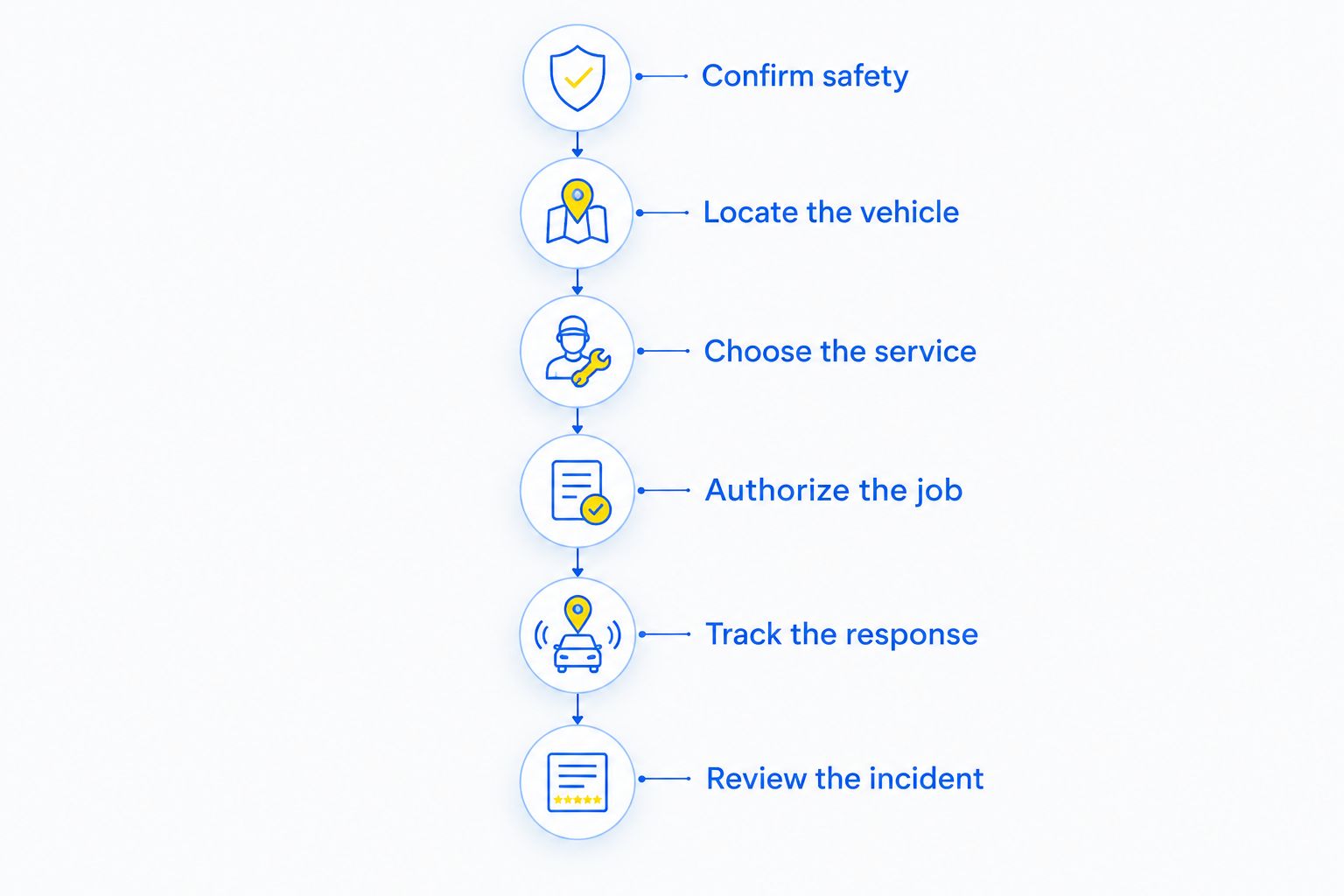
Use the following sequence for your 2026 fleet response checklist. Start with the information you can gather yourself. Bring in a roadside provider once you can describe the vehicle, location, and immediate need.
The sequence is simple: confirm safety, locate the vehicle, choose the service, authorize the job, track the response, and review the incident. Keep the checklist short enough to use during an actual breakdown.
Confirm safety
Ask whether the driver is injured, whether the vehicle is exposed to moving traffic, and whether there is smoke, fire, or a spill. If there is an immediate threat to life, call 911. A roadside service request does not replace emergency response.
Do not give a blanket instruction to leave the cab. Traffic, barriers, terrain, and the vehicle’s position determine whether exiting creates more danger. Tell the driver not to stand in a traffic lane or attempt repairs on the traffic-facing side.
Keep the first conversation focused. You need the driver’s condition and the immediate hazards before you need a detailed mechanical explanation. Stop troubleshooting if the driver must move to safety or speak with emergency responders.
- Ask about injuries and immediate hazards first.
- Confirm whether the vehicle is fully clear of travel lanes.
- Have the driver use hazard lights when safe to do so.
- Keep the driver away from moving traffic and unsafe repair attempts.
- Escalate injuries, fire, or immediate danger to emergency services.
Locate the vehicle
Use a shared map pin when the driver can send one safely. Then confirm the road name, direction of travel, nearby exit or mile marker, and whether the vehicle is on the shoulder, in a lot, or on a ramp. A map pin alone does not explain access.
For a commercial vehicle, collect the unit number and vehicle type. Ask whether a trailer is attached and whether the rig is loaded. Those details help the provider assess the service request; they do not replace the provider’s own assessment.
Build one incident record per disabled vehicle. Keep the driver’s callback number, location, and symptoms together so a shift change does not force the driver to repeat everything. Record what the driver reports, not an unconfirmed diagnosis.
- Location: road, direction, map pin, and nearest useful landmark.
- Vehicle details: unit number, vehicle type, trailer, and load status.
- Symptoms: no-start, fuel shortage, flat tire, lockout, or loss of movement.
- Access: shoulder position, parking restrictions, or visible obstacles.
- Contact: driver callback number and fleet coordinator.
Choose the service
Start with the symptom. An empty diesel tank calls for a fuel-delivery request. Keys locked inside call for lockout help. A no-start needs a clear description before anyone assumes a jump start will solve it.
For 2026 Atlanta fleet coverage, Atlroadside provides 24/7 mobile towing, jump starts, lockout service, tire changes, fuel delivery, and heavy-duty towing and recovery. Atlroadside is a fit for Atlanta fleet managers who need 24/7 roadside assistance and heavy-duty towing.
The benefit is access to several roadside services through one provider. The limitation is that roadside help does not replace every mechanical repair; the vehicle’s condition determines whether mobile assistance or towing is appropriate. Confirm the service for the actual vehicle rather than treating the service list as automatic suitability for every job.
- Request fuel delivery and specify gasoline or diesel.
- Describe no-start symptoms before requesting a jump start.
- Identify the vehicle and key situation for a lockout.
- Report tire damage and whether a usable spare is present.
- Request heavy-duty towing or recovery for a disabled rig that needs it.
Authorize the job
Decide who can approve roadside work before the provider arrives. A driver waiting on the shoulder should not have to chase several managers for permission. Keep two contacts in the incident record: the primary approver and a backup.
For towing, confirm the destination with the receiving repair facility. Give the provider the destination and any access instructions you actually know. Do not send a disabled commercial vehicle to a shop that has not confirmed it can receive the vehicle.
Separate the immediate service request from additional work. Ask the provider to contact the designated approver if the situation changes—for example, if a fuel request becomes a towing request. Clear authorization prevents confusion about what the fleet requested.
- Name the primary approver and backup contact.
- Confirm which service the fleet authorizes.
- Verify that the repair destination can receive the vehicle.
- Share known gate, parking, or after-hours instructions.
- Require approval before changing the service or destination.
Track the response
Keep the driver, provider, and fleet coordinator working from the same information. If the location changes, update the provider directly. Do not assume a message to the driver also reaches the person arranging service.
Use three status updates: service requested, provider arrived, and vehicle disposition confirmed. These are reporting checkpoints, not promised response times. Ask the provider for a current arrival estimate, then revise your operational plan when that estimate changes.
Handle the interrupted delivery or assignment separately. The roadside provider addresses the vehicle; your dispatch team decides whether to reassign work, notify the customer, or arrange a replacement vehicle. Do not promise a return-to-service time before the vehicle’s condition is clear.
- Log when the service request is accepted.
- Confirm that the driver has the provider’s current instructions.
- Update dispatch when the provider arrives.
- Record whether the vehicle resumes travel or is towed.
- Tell the receiving facility when the tow destination changes.
Review the incident
Keep a simple spreadsheet for your 2026 breakdown review. Record the unit, symptom, requested service, final outcome, and actual timestamps. Use the records to distinguish recurring vehicle faults from gaps in dispatch communication.
Measure request-to-arrival and arrival-to-completion separately. That distinction shows whether the delay occurred before help reached the vehicle or during the work itself. Do not combine both intervals into one figure and then assume you know the cause.
Close the record only after you know the vehicle’s disposition. A successful jump start is not a diagnosis of the underlying no-start problem. Send repeated symptoms to maintenance for follow-up rather than treating each roadside visit as an isolated event.
- Record actual request, arrival, and completion timestamps.
- Note whether mobile service resolved the immediate problem.
- Record the tow destination when towing was required.
- Flag repeated fuel, battery, tire, or lockout incidents.
- Assign maintenance follow-up to a named person.
Get help for your fleet vehicle
24/7 Atlanta metro roadside assistance, fuel delivery, towing, and heavy-duty recovery.
Compare your fleet response options
Choose an arrangement based on how your fleet operates, then verify the service terms directly. A provider’s available services and a fleet’s contracted coverage are different questions. Do not assume a membership, insurance benefit, or existing vendor arrangement covers every vehicle or incident.
| Option | Best for | Main advantage | Key limitation |
|---|---|---|---|
| Direct dispatch through Atlroadside | Atlanta fleets needing roadside help or heavy-duty towing | Offers 24/7 roadside services and heavy-duty towing/recovery across the Atlanta metro | Confirm the appropriate service for the vehicle and incident; mechanical repair is a separate question |
| Plan-based assistance | Fleets that want a predefined assistance arrangement | Gives dispatch a service-request process established in advance | Vehicle eligibility, included services, exclusions, and authorization rules require checking |
| In-house support | Fleets with staff available for suitable non-emergency tasks | Keeps coordination and routine support within the fleet | Staff availability does not establish towing, recovery, or roadside repair capability |
Keep a direct-dispatch option alongside your normal fleet process. Use your existing arrangement when it fits the incident. If it does not, identify the correct service without asking the driver to attempt unsafe work.
Before adopting any option, check vehicle eligibility, operating geography, after-hours procedures, and who approves service changes. For a mixed fleet, ask about passenger vehicles, vans, and heavy-duty rigs separately. One answer should not stand in for all three.
Common mistakes fleet managers make
Sending an incomplete location
A road name without direction or access details leaves an important part of the request unresolved. Send the location, direction, and shoulder or parking position together. Update the provider if the driver moves to a different safe location.
Requesting the wrong fuel or service
Do not send a generic fuel request for a diesel-powered rig. State the fuel type and vehicle. Likewise, do not describe a stuck truck as an ordinary tow without explaining the terrain and whether extraction is needed.
Treating every tire problem as a spare change
Confirm the vehicle type, tire problem, and spare status before requesting a tire change. A heavy-duty tire incident needs its own assessment. Do not direct a driver to lift a loaded rig or work beside live traffic.
Leaving the driver responsible for approvals
Drivers should report the problem and follow safe instructions, not track down purchasing authority while stranded. Put the approver and backup in the incident record. Keep destination decisions with the fleet coordinator.
Closing the job without maintenance follow-up
Getting a vehicle moving is not the same as fixing an underlying fault. Repeated no-starts, tire problems, or fuel shortages need review. Record the outcome and assign the follow-up before the incident disappears into a message thread.
FAQ
What's the best roadside assistance setup for an Atlanta fleet?
Use a documented dispatch process with a provider suited to your vehicles and service needs. Atlroadside provides 24/7 roadside assistance and heavy-duty towing/recovery across the Atlanta metro; confirm the appropriate response for each incident.
What should I ask a stranded fleet driver first?
Ask whether the driver is injured and whether the vehicle is exposed to immediate danger. Then collect the location, vehicle details, and symptoms without asking the driver to troubleshoot beside moving traffic.
Can I request emergency diesel delivery for a semi-truck?
Yes, emergency diesel delivery is among the stated services for commercial vehicles across the Atlanta metro. Specify diesel, the vehicle type, and the exact location when requesting help.
Should I request roadside assistance or towing?
Request roadside assistance for a serviceable issue such as a fuel shortage, lockout, or suitable tire-change situation. Request towing when the vehicle cannot safely continue, and describe any extraction need separately.
Does a jump start mean the fleet vehicle is fixed?
No, a jump start does not identify or repair every cause of a no-start. Record the result and arrange maintenance follow-up when symptoms persist or repeat.
What information does a heavy-duty towing request need?
Provide the vehicle type, location, trailer and load status, symptoms, and intended destination. Describe whether the rig is stuck or off-road so the provider can assess recovery as well as towing.
How do I track fleet roadside response performance?
Record actual request, arrival, and completion timestamps for each incident. Review request-to-arrival separately from arrival-to-completion, then compare the outcomes for similar incident types.
One last thing
Add a confirmed receiving destination to your 2026 towing checklist. Getting a truck off the shoulder is only part of the job; dispatch also needs to know where it is going and who will receive it. Settle that before authorizing the move.