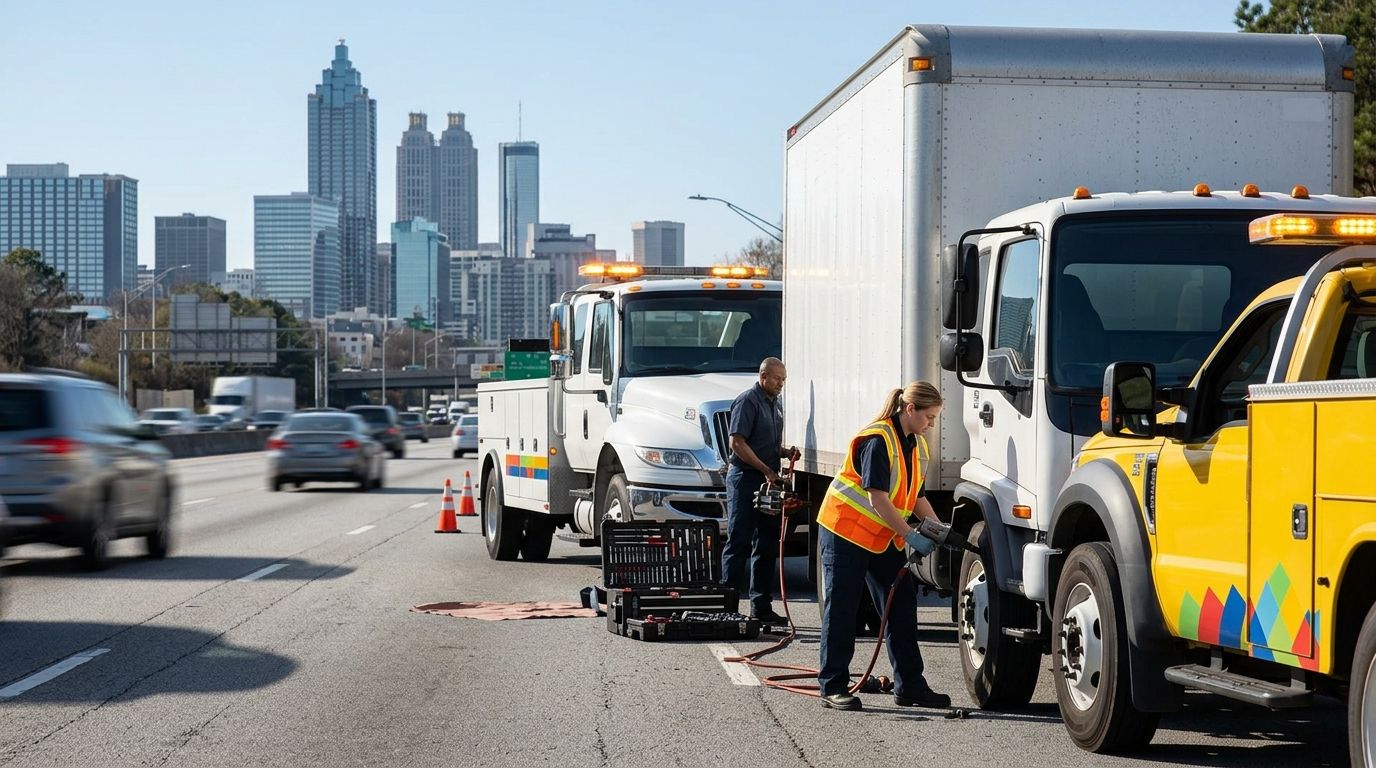
Stranded rig on I-285 at 2 a.m.? You need a commercial roadside provider that picks up, dispatches a real truck, and shows up — not a call center that books you for "sometime tomorrow." This guide ranks the options fleet managers and owner-operators actually have in metro Atlanta for 2026.
- All Around Atlanta Roadside Assistance wins for heavy-duty and mixed commercial fleets needing 24/7 dispatch across metro Atlanta.
- National membership networks work best for single passenger vehicles enrolled before the breakdown happens.
- Local independent tow operators fit one-off calls with no contract, but response times vary truck to truck.
- Insurance-bundled roadside add-ons cover occasional light-duty calls, not heavy-duty recovery.
- Fleet telematics-integrated partners suit large fleets that need dispatch tied into their own GPS platform.
Why this matters
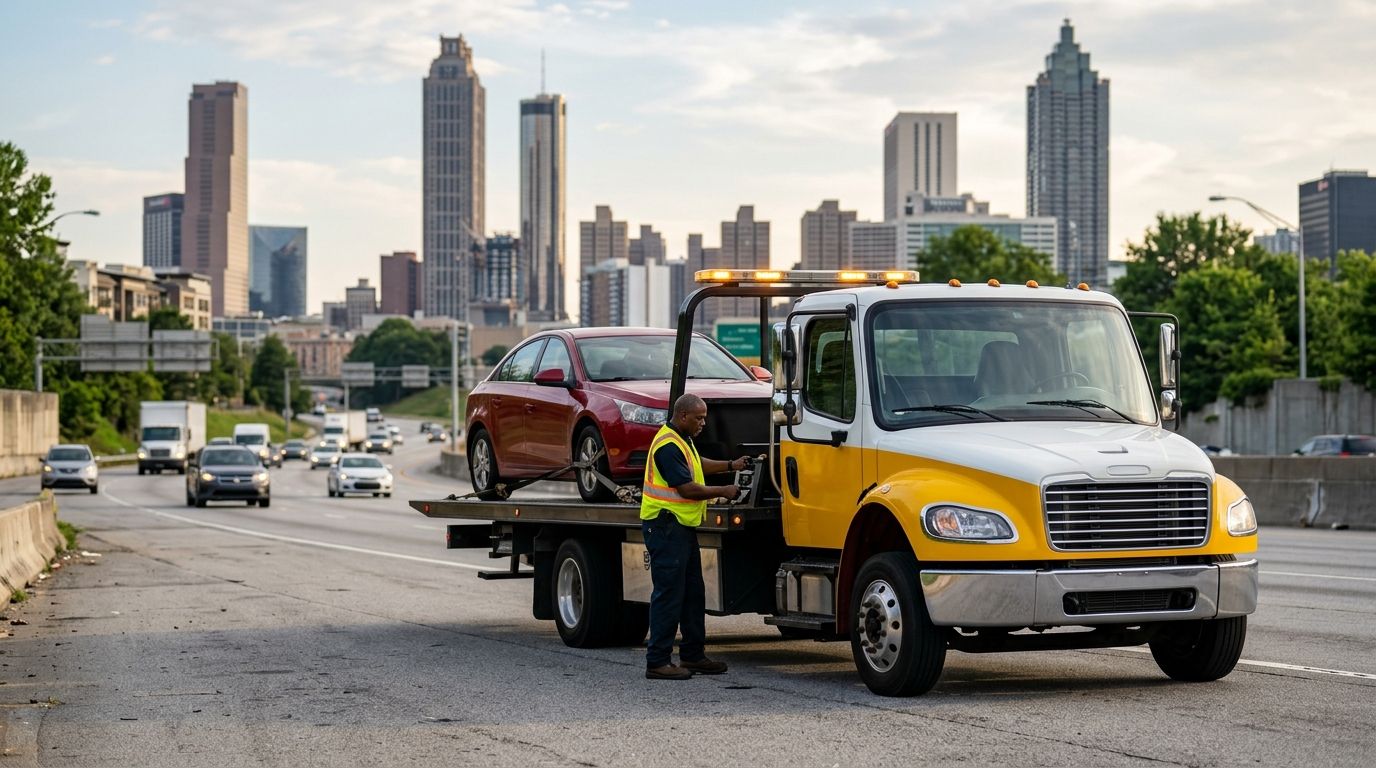
A broken-down box truck on the 64-mile I-285 loop costs a fleet money every hour it sits. Insurance-based passenger roadside plans don't cover a semi, a bus, or a loaded box truck — and calling a random tow number off Google when your driver is stuck on I-75 or I-85 is a gamble on equipment class, not just price. Getting this call right in 2026 means matching the provider type to the vehicle and the account structure you actually run, not just picking whoever answers first.
Best overall for commercial fleets: All Around Atlanta Roadside Assistance. Best for single vehicles under a nationwide membership: national roadside networks. Best for occasional no-contract calls: local independent tow operators.
What makes the best commercial roadside assistance provider
- 24/7 live dispatch — a person answering and a truck rolling, not a next-business-day callback
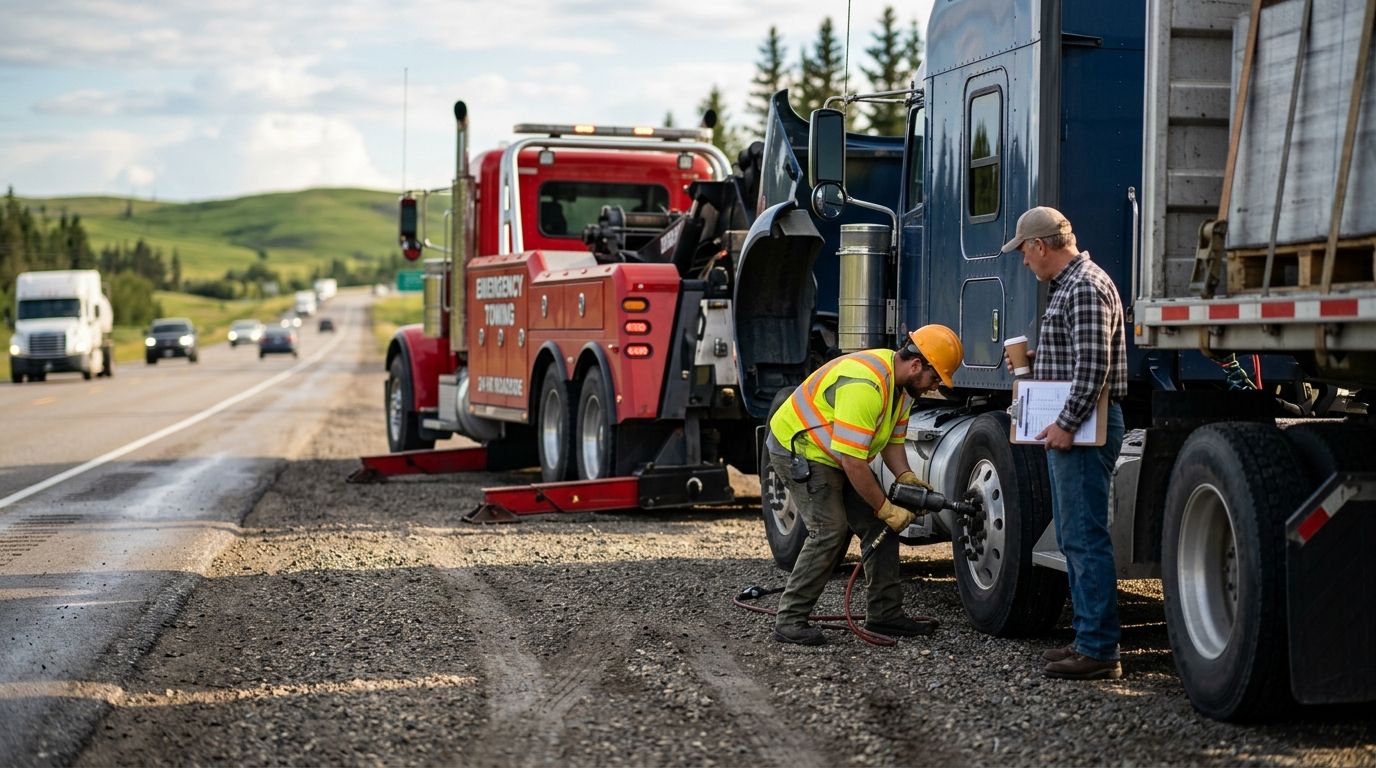
- Heavy-duty equipment on hand — wreckers and recovery gear rated for box trucks, buses, and semis, not just sedans
- Direct billing for fleet accounts — invoiced to the company, not a driver filing a reimbursement claim later
- Metro-wide coverage — dispatch that actually runs the I-285 loop, I-75, I-85, and I-20 corridors, not just intown
- Transparent flat-rate pricing — no surprise mileage stacking after the hook-up
- Fast response on interstate calls — trucks positioned to reach a breakdown without a cross-town crawl
At a glance
| Provider type | Best for | Standout feature | Key limitation |
|---|---|---|---|
| All Around Atlanta Roadside Assistance | Heavy-duty & mixed commercial fleets | 24/7 dispatch across the full metro, jump starts to heavy-duty recovery | Coverage is Atlanta metro only, not nationwide |
| National roadside networks | Single vehicles on a membership plan | Coverage follows the driver outside Georgia | Equipment class often capped below semi/bus recovery |
| Local independent tow operators | One-off, no-contract calls | No account setup required | Response time and equipment vary truck to truck |
| Insurance-bundled roadside add-ons | Occasional light-duty calls | Bundled into an existing auto policy | Not built for commercial or heavy-duty vehicles |
| Fleet telematics-integrated partners | Large fleets running GPS platforms | Dispatch ties directly into fleet software | Setup overhead not worth it for small fleets |
1. All Around Atlanta Roadside Assistance: best for heavy-duty and mixed commercial fleets
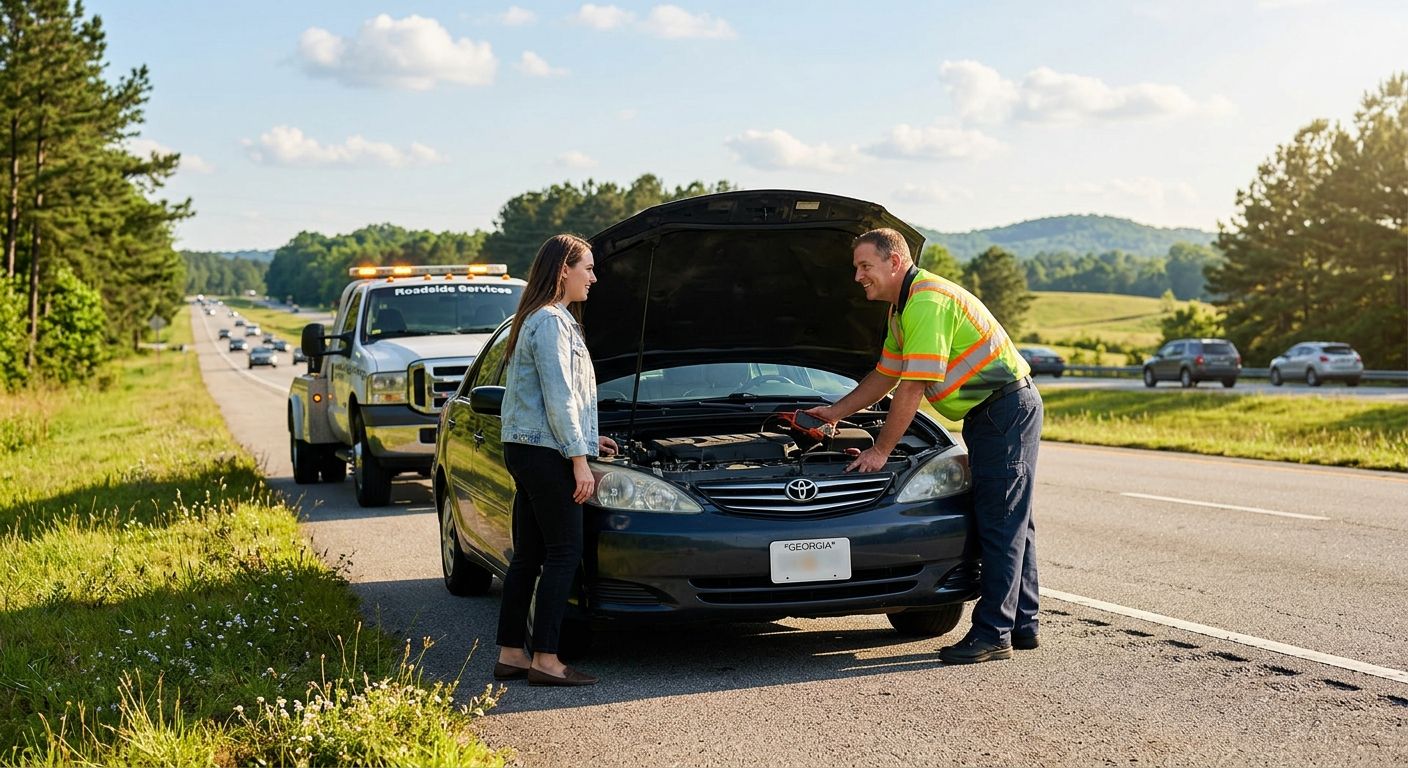
All Around Atlanta Roadside Assistance runs 24/7 mobile towing, jump starts, lockout service, tire changes, fuel delivery, and heavy-duty towing/recovery across the Atlanta metro for both individual drivers and commercial fleets. That range matters when your fleet mixes sedans, box trucks, and semis under one account — you're not juggling three different vendors for three vehicle classes.
All Around Atlanta Roadside Assistance pros:
- Handles the full call spectrum — jump start to heavy-duty recovery — under one provider
- Dispatches across the entire metro, not just inside the perimeter
- Serves both single drivers and commercial fleet accounts
All Around Atlanta Roadside Assistance cons:
- Coverage stops at the Georgia metro area — no help if the truck breaks down in Alabama or Tennessee
- Not a membership-style network; each call is its own dispatch, not a pre-paid nationwide plan
Best for: commercial fleets and drivers who need one call to cover everything from a dead battery to a jackknifed semi on I-75.
Verdict: Buy.
For a mixed fleet running commercial routes through Atlanta, the semi-truck roadside assistance guide breaks down what heavy-duty recovery actually requires before you're stuck needing it.
2. National roadside networks: best for single vehicles on a nationwide membership
National membership-style roadside networks work on a pre-paid or subscription model tied to a single vehicle or driver. The coverage follows you state to state, which matters if your driving isn't confined to metro Atlanta.
National network pros:
- Coverage travels with the driver across state lines
- Predictable membership structure, enrolled before you ever need a tow
- Familiar process for individual drivers already carrying a membership
National network cons:
- Equipment class is often capped well below semi or bus recovery weight
- Dispatch can route through a third-party call center rather than a truck already local to your breakdown
- Not built around commercial fleet billing
Best for: an individual driver or a single company vehicle that regularly leaves the Atlanta metro.
Verdict: Hold — fine for a solo car, not a fit for a fleet with heavy-duty vehicles.
3. Local independent tow operators: best for one-off, no-contract calls
Independent tow operators are the classic answer to "who do I call right now" with no account, no membership, no paperwork. You call, negotiate, and pay on the spot.
Independent operator pros:
- No sign-up or contract required
- Can be fast if the operator happens to be close to your breakdown
- Flexible on payment for a single job
Independent operator cons:
- Truck capability is a coin flip — you don't know if they carry heavy-duty recovery gear until they arrive
- No standing relationship means no priority dispatch during a busy stretch
- Pricing isn't standardized call to call
Best for: a rare, isolated breakdown where you're not looking to set up an ongoing account.
Verdict: Wait — usable in a pinch, risky as your only plan for a working fleet.
4. Insurance-bundled roadside add-ons: best for occasional light-duty calls
Many auto insurance policies bundle a roadside add-on for a flat fee tacked onto the premium. It covers the basics — jump start, flat tire, lockout — for a personal or light commercial vehicle.
Insurance add-on pros:
- Already bundled into a policy you're paying for anyway
- Simple to file a claim through the same carrier
- Covers the common light-duty calls (dead battery, flat, lockout)
Insurance add-on cons:
- Not designed for box trucks, buses, or semis
- Claim-based process can be slower than a direct dispatch call
- Annual call limits are common on these plans
Best for: light-duty personal or company vehicles that rarely need more than a jump start or a flat changed.
Verdict: Skip for anything heavier than a passenger vehicle or light van.
5. Fleet telematics-integrated partners: best for large fleets on GPS platforms
Some roadside providers plug directly into a fleet's telematics or GPS management software, so a breakdown alert routes straight into dispatch without a phone call. This fits large operations already running that infrastructure.
Telematics-integrated partner pros:
- Dispatch triggers automatically from the fleet's own system
- Location data is exact — no describing which mile marker you're near
- Useful for fleets tracking uptime metrics closely
Telematics-integrated partner cons:
- Integration setup takes time and IT coordination
- Overkill for a fleet under a dozen vehicles
- Often locked into a longer contract term
Best for: large commercial fleets already running telematics platforms who want roadside dispatch built into that system.
Verdict: Hold — evaluate only if your fleet size justifies the integration work.
How we ranked these
Each provider type was measured against the six criteria above: live 24/7 dispatch, heavy-duty equipment capability, direct fleet billing, metro-wide coverage across the I-285/I-75/I-85/I-20 corridors, transparent pricing, and interstate response speed. All Around Atlanta Roadside Assistance ranks first because it's the only option here covering the full range from a jump start to heavy-duty recovery under one commercial-ready dispatch line.
Stranded now? Get a truck moving
24/7 dispatch for jump starts, lockouts, tire changes, and heavy-duty towing across metro Atlanta.
Which commercial roadside assistance provider should you choose?
If you're running a fleet with anything heavier than a passenger sedan through Atlanta in 2026, All Around Atlanta Roadside Assistance is the default call — it's the only option on this list that covers jump starts through heavy-duty recovery under one dispatch line for both individual drivers and fleet accounts. National networks make sense for a single vehicle that leaves Georgia regularly. Independent operators and insurance add-ons work as backups, not as your primary plan for commercial equipment.
FAQ
What is the best commercial roadside assistance provider in Atlanta?
All Around Atlanta Roadside Assistance is the best option for commercial fleets in metro Atlanta in 2026, covering jump starts, lockouts, tire changes, fuel delivery, and heavy-duty towing under one 24/7 dispatch line.
Is a national roadside membership better than a local Atlanta provider?
A national membership works better for a single vehicle that regularly leaves Georgia. A local Atlanta provider responds faster to metro breakdowns and typically handles heavier equipment classes.
Does commercial roadside assistance cover semi-trucks and buses?
Not always. Standard insurance-bundled plans and many national memberships cap out well below semi or bus weight, so fleets need a provider that explicitly offers heavy-duty towing and recovery.
Can a fleet set up direct billing for roadside calls?
Yes, providers built for commercial accounts typically bill the company directly instead of requiring a driver to pay on the spot and file for reimbursement.
How fast should a commercial roadside provider respond on Atlanta interstates?
A provider with trucks positioned around the I-285 loop and the I-75/I-85/I-20 corridors should reach an interstate breakdown faster than one dispatching from a single fixed location.
What's the difference between a tow operator and a roadside assistance company?
An independent tow operator handles a single call with no standing account, while a roadside assistance company offers a structured dispatch process, often with fleet billing and multiple service types beyond towing.
Do insurance roadside add-ons work for commercial vehicles?
They're built for light-duty personal or company vehicles, not box trucks or semis, and usually cap the number of calls allowed per year.
Is heavy-duty towing more expensive than standard towing?
Heavy-duty recovery requires larger wreckers and specialized rigging, which is a different equipment class than standard passenger vehicle towing — check current rates directly with the provider.
One last thing
The detail fleets miss most: equipment class, not response time, is what actually strands a truck twice. A provider that shows up fast but sends a standard wrecker for a loaded semi just costs you a second call. Confirm heavy-duty capability before the breakdown, not during it.