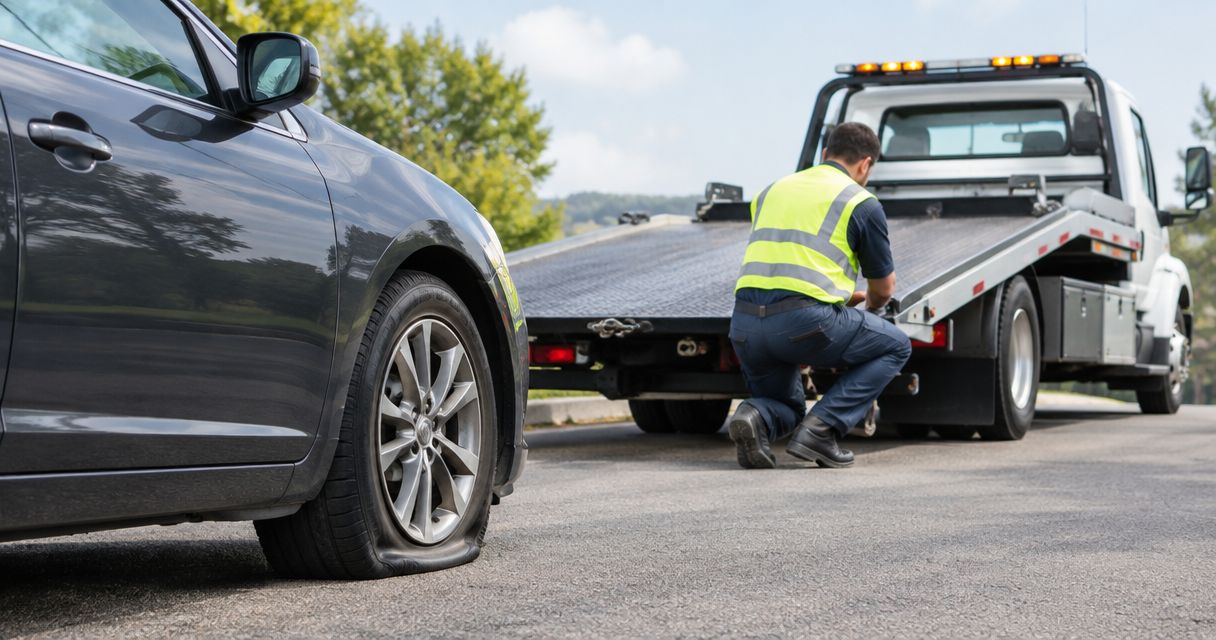
Yes. A tow truck can tow a car with a flat tire, but the operator must keep the damaged tire from rolling on the road and follow your vehicle’s towing requirements. Stop driving on the flat and tell dispatch which tire failed before help heads out.
- Can a tow truck tow a car with a flat tire? Yes, with a towing setup suited to the vehicle.
- A flatbed carries the entire car; wheel-lift towing requires the right wheel position and sometimes dollies.
- A roadside tire change works only when a suitable spare, vehicle condition, and location allow it.
- Atlroadside provides towing and tire-change roadside assistance across the Atlanta metro, available 24/7.
Need help now? Request roadside assistance from Atlroadside and report your location, vehicle, and damaged tire. Ask dispatch whether you need a tire change or a tow—not just the nearest truck.
Can a tow truck tow a car with a flat tire?
Yes. A flat tire does not prevent towing, but it changes how the car must be loaded and transported. The operator needs to account for the damaged wheel, drivetrain, ground clearance, and any collision damage.
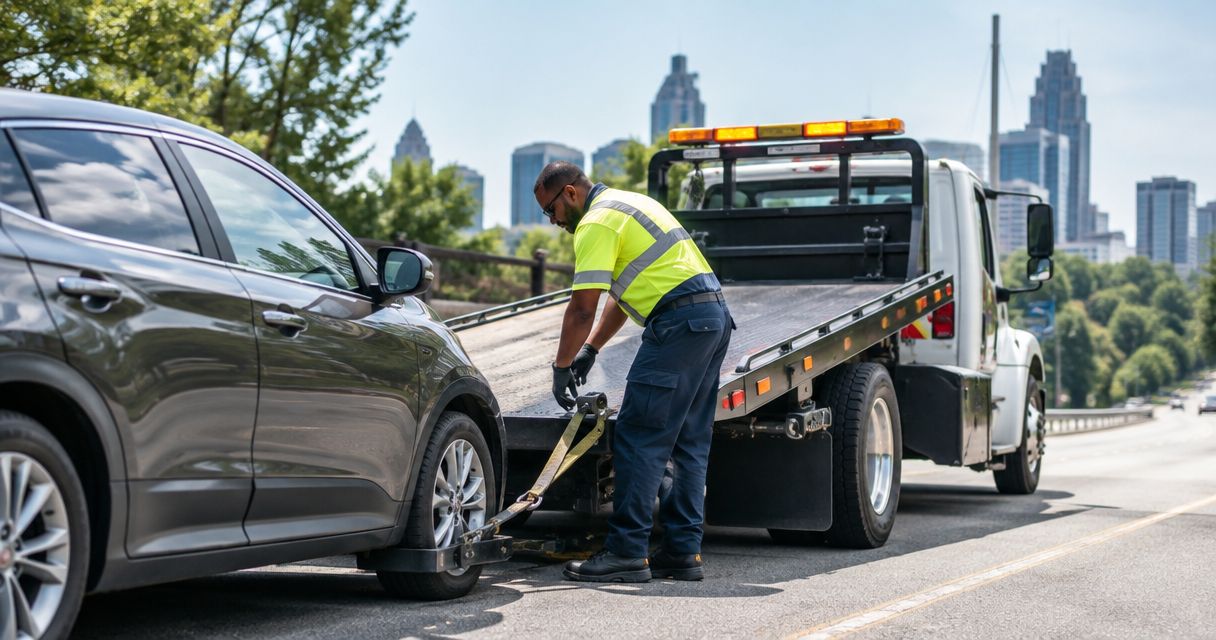
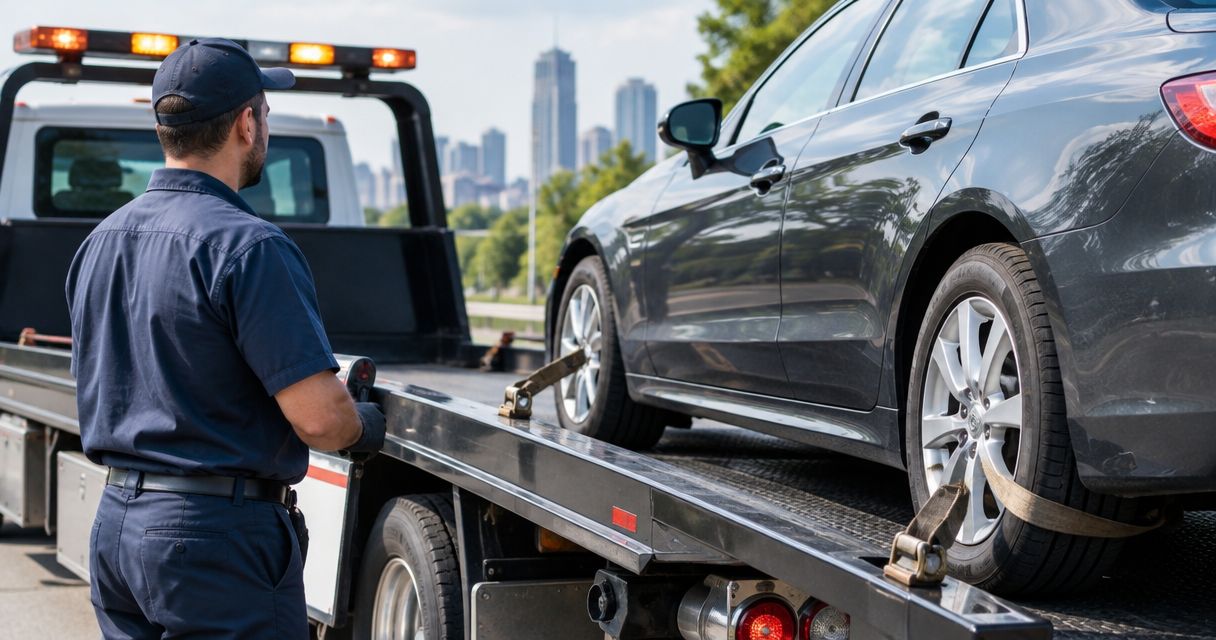
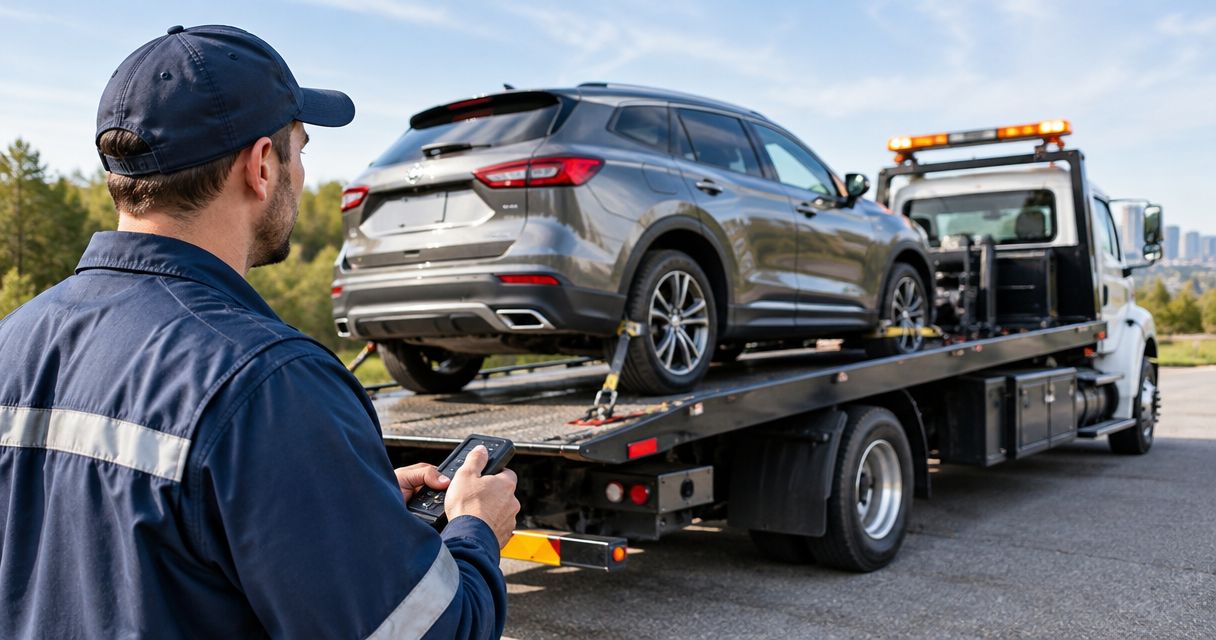
A flatbed carries the whole vehicle off the road. A wheel-lift truck raises one end, leaving the other wheels on the road unless additional equipment supports them. Neither method should drag an unsupported flat tire along the pavement.
| Option | Best for | Main advantage | Main limitation |
|---|---|---|---|
| Flatbed towing | Transport that requires all wheels off the road | Carries the entire vehicle | Loading still requires care around damaged tires, wheels, and low clearance |
| Wheel-lift towing with appropriate support | Vehicles whose towing instructions permit the setup | Lifts one end of the vehicle | Remaining wheels and drivetrain must be safe for that arrangement; dollies can be necessary |
| Roadside tire change | A car with a suitable spare in a safe work location | Can remove the need for a tow | Does not address bent wheels, suspension damage, or an unsuitable spare |
Tell dispatch what happened; let the operator choose the towing setup. Do not assume that lifting the flat tire alone makes the vehicle safe to tow.
Why this matters
Driving on a flat can damage the tire and wheel and reduce your control of the car. A damaged wheel or suspension component also changes the recovery job. What starts as a flat tire needs a different response if the car struck a curb or pothole hard enough to affect steering.
Your first job is getting out of immediate danger—not saving the tire. If the car is in a live lane or another dangerous position, contact emergency services and describe the hazard. Do not attempt a roadside tire change beside moving traffic.
What should you do before the tow truck arrives?
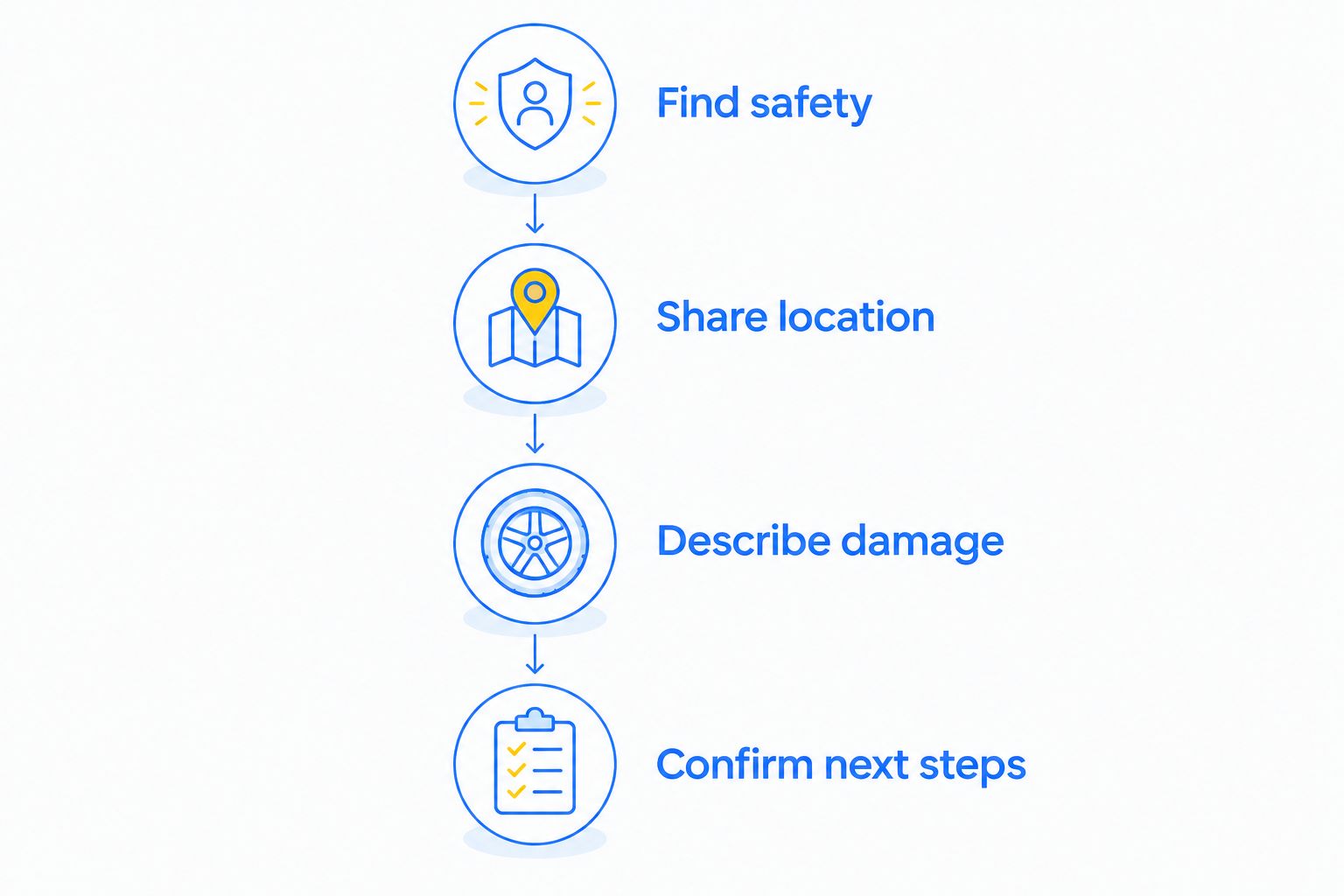
Follow this sequence. Skip any step that would require you to walk into traffic or crawl under the vehicle.
- Find safety. If you can safely move out of a traffic lane, use only the movement needed to reach a safer stopping place. Do not continue toward a repair shop on the flat.
- Share location. Give dispatch your road, direction of travel, nearest exit or landmark, and whether you are on the shoulder, in a lot, or inside a garage.
- Describe damage. Identify the affected tire and report any visible wheel damage, collision, unusual wheel angle, or fluid leak. Describe only what you can see safely.
- Confirm next steps. Ask whether the call is for a spare-tire installation or vehicle transport. For a tow, confirm the destination and tell dispatch about access restrictions.
If you are unsure whether to stay inside or exit, assess traffic, fire, and other immediate hazards and follow emergency responders’ instructions. Never stand between your car and approaching traffic or wait beside the damaged wheel.
When is a flatbed the right towing choice?
A flatbed is useful when the vehicle needs all wheels carried off the road. That includes situations where the manufacturer’s towing instructions rule out rolling wheels during transport or where damage makes rolling unsafe.
A flatbed solves the transport problem, not every loading problem. A shredded tire, locked wheel, or low front bumper still requires the operator to plan the loading process. Tell dispatch if the wheel will not turn or the car cannot shift out of park.
For all-wheel-drive vehicles and electric vehicles, check the owner’s manual rather than guessing. Towing instructions differ by vehicle. Tell dispatch the make, model, and drivetrain so the operator can assess the requirements.
Do not try to improvise neutral, release a parking brake, or attach a recovery strap unless the operator gives vehicle-appropriate instructions and the action is safe.
Can a wheel-lift tow truck handle a flat tire?
Yes, when the setup supports the damaged tire and complies with the vehicle’s towing instructions. The flat tire cannot simply remain on the road because the opposite end of the car is lifted.
Wheel position matters. So do the drive wheels, transmission requirements, and condition of the wheels left on the ground. Dollies can support wheels that must not roll on the road.
Do not choose a wheel-lift tow based only on whether the flat is at the front or rear. Tell the operator about the entire vehicle, including any other damage. A passenger car with a puncture and a car with a bent wheel are different jobs.
When should you request a tire change instead?
Request a tire change when you have a suitable, usable spare and the vehicle can be worked on safely. The wheel mounting points and surrounding components also need to be fit for the job. A spare does not fix collision damage.
Check these details without putting yourself at risk:
- Do you actually have a spare, rather than only an inflator or sealant kit?
- Is the spare accessible, or is it behind cargo you cannot safely move?
- Do you have the wheel-lock key if your wheels require one?
- Is the car on firm, stable ground away from traffic?
- Did the tire fail on its own, or did an impact damage the wheel too?
A temporary spare has its own operating limits. Follow the markings and owner’s manual instead of assuming it can replace your regular tire indefinitely.
For more help choosing the service, see flat-tire roadside help in Atlanta.
Why the towing setup varies
The right setup depends on the car and the scene—not just the flat tire.
- Vehicle instructions: The manufacturer specifies how the vehicle can be transported.
- Damaged tire position: The operator needs to know which wheel needs support.
- Additional damage: A bent wheel, suspension damage, or a locked wheel changes loading requirements.
- Pickup access: A parking garage, narrow entrance, or roadside barrier affects truck access.
- Vehicle size: A passenger car and a loaded commercial vehicle require different planning.
Report uncertainty plainly. Saying the wheel looks tilted is more useful than guessing that only the tire needs replacing.
What should commercial drivers tell dispatch?
Give dispatch the vehicle type and describe the load, trailer, tire failure, and stopping position. A passenger-car tire-change request does not describe a loaded work truck or semi-truck recovery.
Atlroadside is suited to Atlanta drivers and commercial fleets needing 24/7 roadside assistance, towing, or heavy-duty recovery. Confirm the specific service your vehicle needs when you request help; a tow does not replace a tire inspection or repair.
Fleet drivers should also confirm the approved destination and notify the person responsible for the vehicle. Do not send a loaded vehicle toward a repair facility without confirming it can accept the job.
Request help for your flat tire
Tell dispatch your Atlanta metro location, vehicle type, and which tire failed.
FAQ
Can a tow truck tow my car if the tire is completely shredded?
Yes, a tow truck can transport a car with a shredded tire using a suitable loading and towing setup. Tell dispatch whether the wheel is exposed, damaged, or unable to turn.
Do I need a flatbed if my all-wheel-drive car has a flat tire?
Follow your vehicle manufacturer’s towing instructions; a flatbed carries all wheels off the road. Do not assume lifting the flat tire alone protects an all-wheel-drive system.
Can I drive slowly to a tire shop with a flat tire?
Do not continue to a tire shop on a flat tire. If you must move out of immediate traffic danger, limit movement to reaching a safer stopping place, then request help.
Can roadside assistance change my tire instead of towing me?
Yes, a roadside tire change is an option when you have a suitable spare, the vehicle is fit for the change, and the location is safe. Without those conditions, request a towing assessment.
What should I tell the towing dispatcher about my flat tire?
Give your exact location, vehicle make and model, affected tire, and any impact or wheel damage. Also mention a parking garage, locked wheel, missing spare, or other access problem.
Can I get flat-tire help at night in Atlanta?
Yes. Atlroadside provides 24/7 roadside assistance and towing across the Atlanta metro. Describe the vehicle and tire problem so dispatch can confirm the service needed.
One last thing
Tell dispatch if you hit something before the tire went flat. A curb strike, pothole impact, or collision can affect more than the rubber. That detail helps the operator plan for a damaged wheel or suspension instead of arriving prepared only for a spare-tire change.