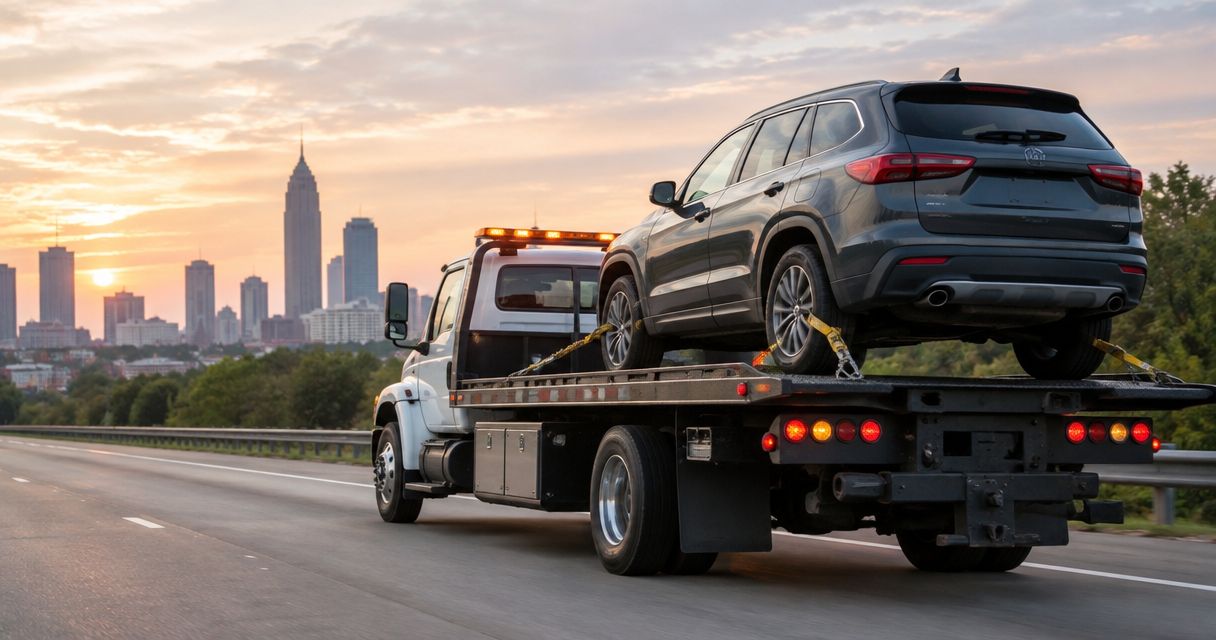
Yes—a local tow company can handle a cross-country tow from Atlanta if it accepts the destination and can arrange the right transport for your vehicle. Local towing service does not automatically mean nationwide hauling. Before you authorize a pickup in 2026, confirm who handles the full trip, where the vehicle goes, and whether another carrier takes over.
- Cross country road service Atlanta: confirm the full destination before authorizing a tow, not just the pickup.
- Atlroadside provides Atlanta metro roadside assistance 24/7; confirm a cross-country route separately.
- A roadside fix, local tow, and cross-country transport solve different problems. Choose based on the vehicle’s condition.
- Get the destination, carrier identity, vehicle-handling plan, and delivery arrangements in writing.
Stranded now? Contact Atlroadside for Atlanta metro roadside assistance and explain the breakdown first. Then give the final destination and ask whether the company can accept that exact trip. Do not treat a local dispatch confirmation as confirmation of a cross-country haul.
Can a local tow company handle a cross-country tow from Atlanta?
Yes, if the company specifically accepts the route and your vehicle. The useful question is not whether a business calls itself local. It is whether that business will perform—or clearly arrange—the complete move you need.
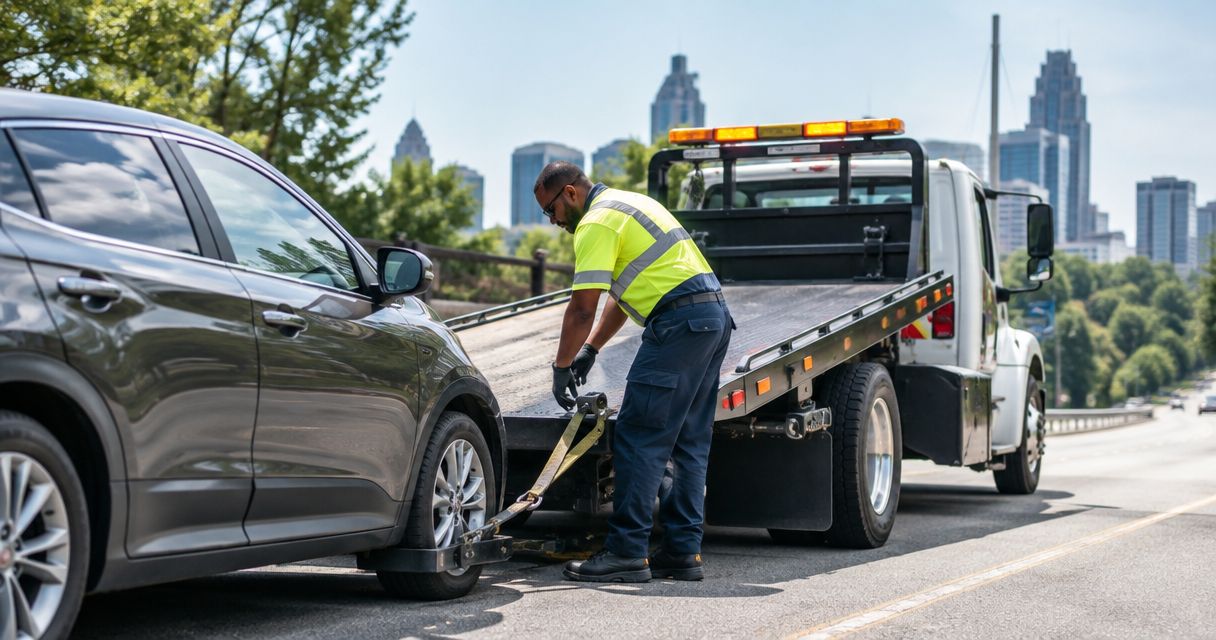
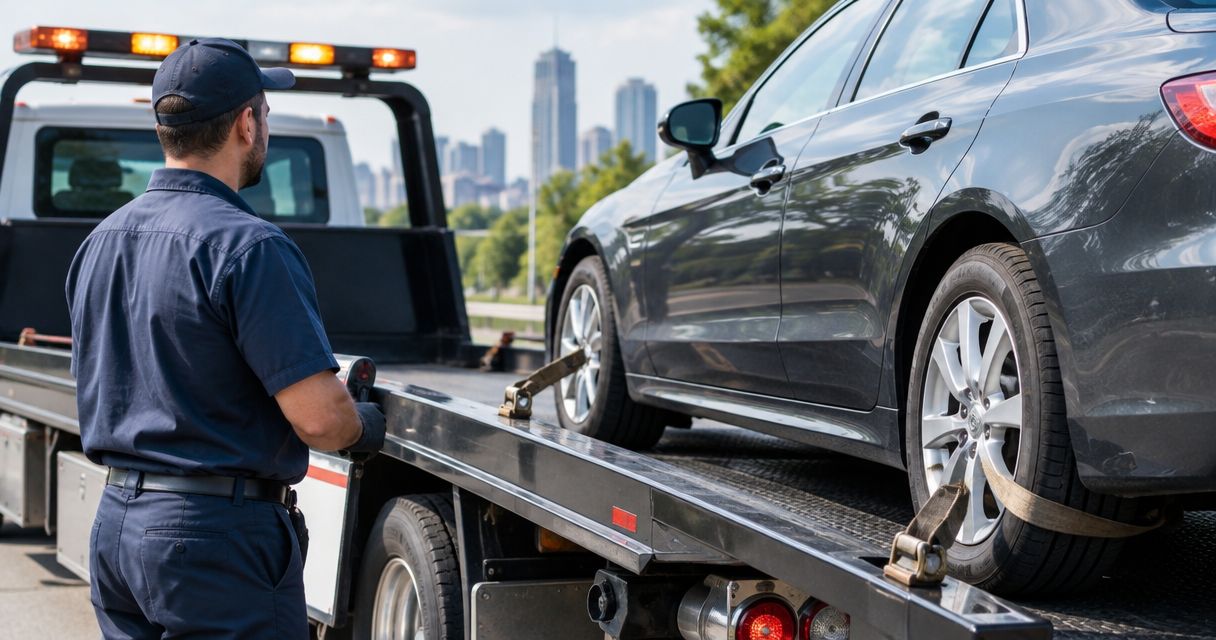
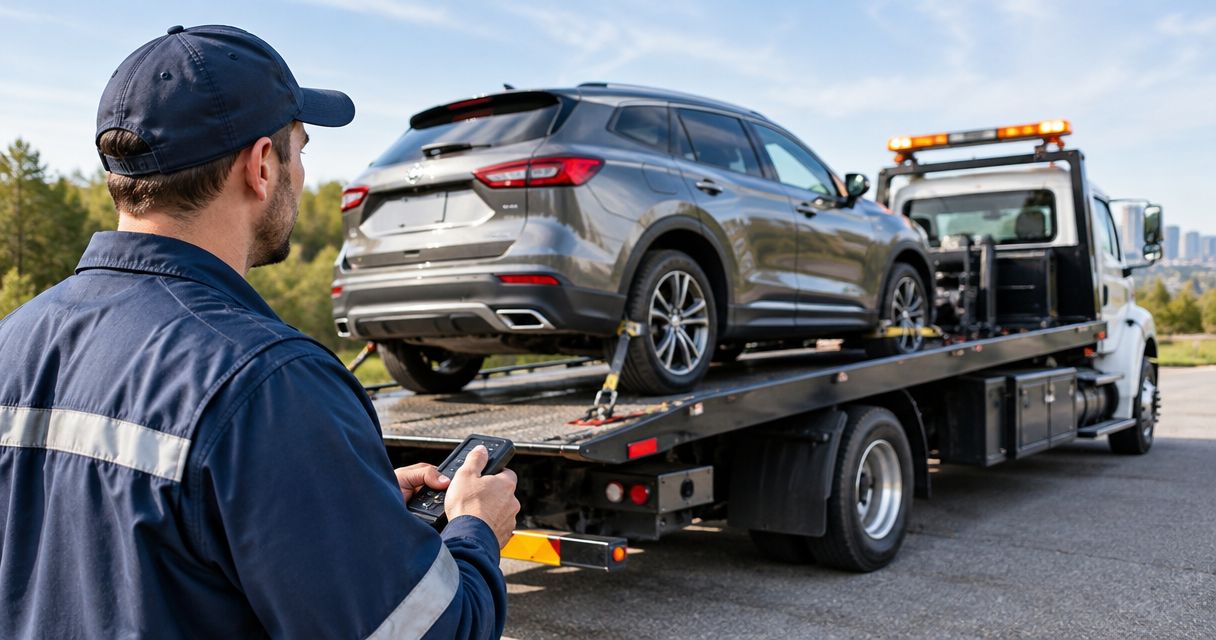
A truck arriving at your location settles only the pickup. Before loading, establish whether your vehicle goes directly to the final address, stops at a local facility, or transfers to another carrier.
Use this comparison to separate the immediate breakdown from the longer move:
| Option | Best for | Main advantage | Main limitation |
|---|---|---|---|
| Mobile roadside assistance | A jump start, lockout, tire change, or fuel shortage | Addresses the immediate problem without automatically moving the vehicle | Does not resolve every mechanical failure or arrange nationwide transport by itself |
| Local towing | Moving a disabled vehicle to a nearby repair shop or other agreed destination | Gets the vehicle to a defined local destination | Does not establish transport to another state |
| Direct long-distance towing | A vehicle accepted for a specific distant destination | Gives you a defined pickup-to-destination arrangement | Requires route, vehicle, and delivery acceptance before dispatch |
| Vehicle transport with a separate carrier | A planned interstate move after the immediate emergency is handled | Separates roadside recovery from the longer transport job | Adds another party and a handoff to confirm |
Choose the service that solves the breakdown—not the longest tow you can arrange. If a roadside fix restores safe operation, cross-country transport is a separate decision. If the vehicle remains disabled, decide where it needs to go before authorizing movement.
Why this matters when you are stranded
A breakdown creates an urgent decision. Getting your vehicle home creates a different one. You need a safe pickup plan now and a clear destination plan before the vehicle leaves.
That distinction matters for a family traveling through Atlanta and for a fleet manager with a disabled rig. A local repair destination, a home address, and a commercial receiving yard are not interchangeable instructions.
For a 2026 booking, ask for written confirmation tied to your actual vehicle and destination. A general statement that a company handles towing does not answer whether it accepts your interstate trip.
If you are in immediate danger, contact emergency services first. Do not stand in a traffic lane, inspect the traffic-facing side of the vehicle, or attempt roadside work where moving traffic puts you at risk.
What should you confirm before the tow truck loads your vehicle?
Make these checks before you approve the move. You do not need towing jargon. You need direct answers.
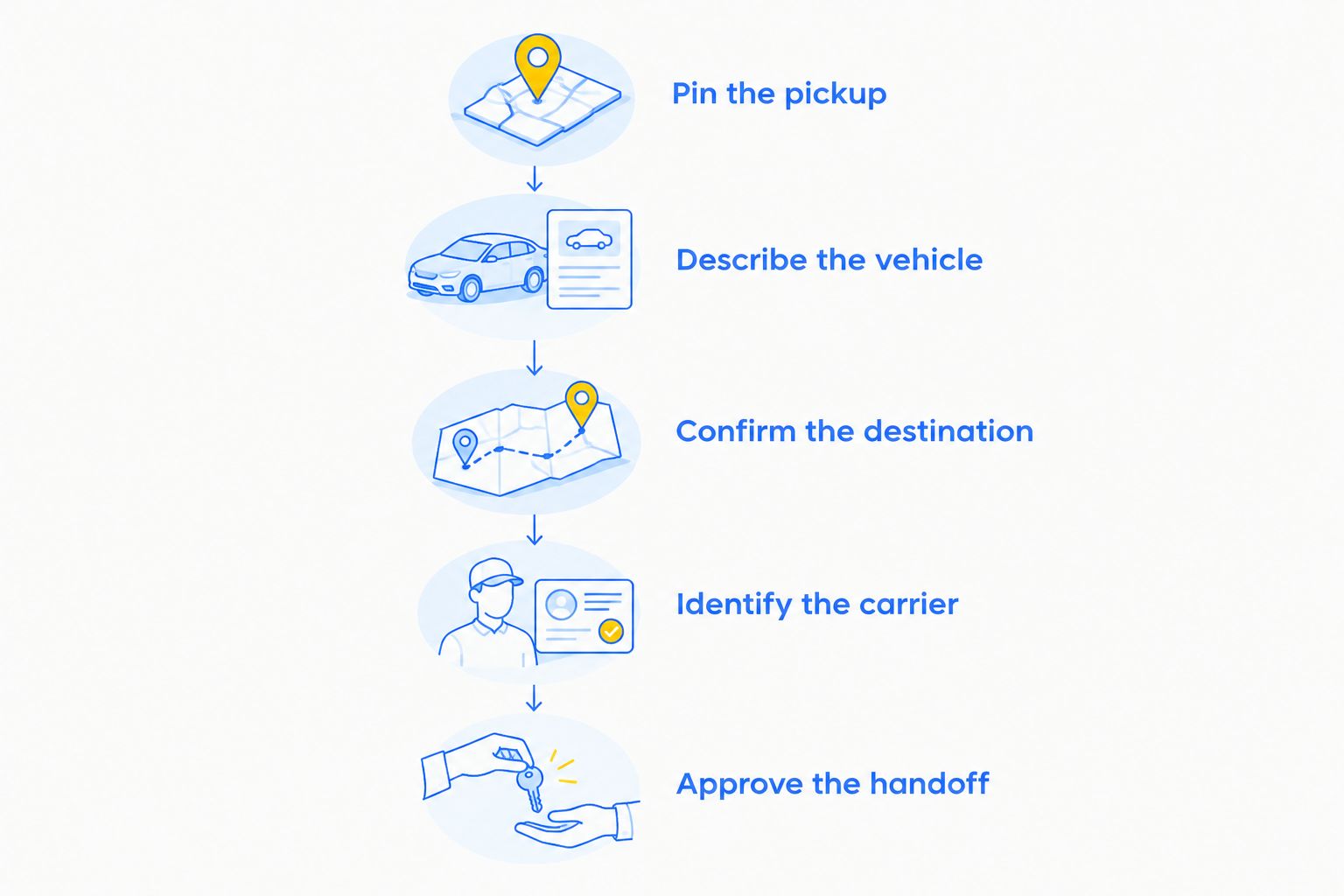
- Pin the pickup. Give the road, direction of travel, nearest exit or landmark, and your exact position when you can identify it safely. Explain whether the vehicle is on a shoulder, in a parking lot, or somewhere difficult to reach.
- Describe the vehicle. Provide its make, model, and condition. Say whether it starts, rolls, steers, and brakes, and report collision damage or anything blocking access.
- Confirm the destination. Give the complete receiving address. Ask whether the company accepts the entire route—not simply whether a truck can collect you in Atlanta.
- Identify the carrier. Ask who picks up the vehicle, who performs the interstate portion, and whether any transfer is planned. Get a contact for each party involved.
- Approve the handoff. Confirm who receives the vehicle, how keys change hands, and what happens if the destination cannot accept delivery. Keep the written instructions with your booking details.
Tell dispatch about all-wheel drive, an electric drivetrain, low clearance, damaged wheels, or a vehicle that will not shift normally. Ask the operator to select a loading and transport method consistent with the vehicle manufacturer’s instructions. Do not assume every disabled vehicle can be handled the same way.
If dispatch cannot confirm the interstate portion, ask what local service it can accept. You can authorize a clearly defined local move without confusing it with a nationwide booking. Keep those instructions separate.
Get help with the breakdown
Explain your location, vehicle condition, and destination. Confirm the accepted route before authorizing a tow.
Why cross-country towing arrangements vary
The right plan depends on the actual job. These are the details to settle with dispatch, not assumptions to make from a search result:
- Destination: State the complete address, not just the destination state. Ask the company to confirm that address in its acceptance.
- Vehicle condition: Explain whether the vehicle can start, roll, steer, and brake. Report damage rather than describing every disabled vehicle as simply broken down.
- Vehicle type: Identify whether you have a passenger car, work van, box truck, or semi-truck. Commercial work requires its own assessment.
- Pickup access: Describe the shoulder, parking area, clearance, or obstruction. Do not promise access you have not checked safely.
- Carrier handoffs: Establish whether the same operator handles the trip or another company takes over. Ask who remains your point of contact.
- Receiving arrangements: Confirm that the destination will accept the vehicle and that someone has instructions for keys and access.
A 2026 trip needs current confirmation of these details. An earlier conversation about another route or vehicle is not acceptance of this job.
Should you try roadside assistance before arranging a cross-country tow?
Request an assessment of the immediate problem before committing to a long-distance move. A fuel shortage, lockout, flat tire, or starting problem does not automatically call for transporting the vehicle across the country.
Tell dispatch what happened and what you observed. For example, distinguish an empty fuel tank from an engine that stopped for an unknown reason. Report warning lights, leaks, unusual noises, or visible damage without trying to diagnose them yourself.
Atlroadside is best suited to drivers and commercial fleets needing 24/7 roadside assistance in the Atlanta metro. Its services include fuel delivery, jump starts, lockouts, tire changes, towing, and heavy-duty towing and recovery. Confirm any cross-country transport request separately before authorizing it.
The limitation is straightforward: roadside assistance addresses specific roadside problems. A jump start does not establish why the battery lost power, and delivered fuel does not rule out another engine problem. If the vehicle still shows signs of trouble, do not continue a cross-country drive just because it starts.
Can a local company move a disabled semi-truck across the country?
A local company can accept a cross-country semi-truck move only after confirming the rig, its condition, and the complete transport arrangement. Heavy-duty recovery capability and acceptance of a nationwide route are separate questions.
Give dispatch the tractor and trailer details. Explain whether the units remain connected, whether the trailer is loaded, and whether the problem involves fuel, a tire, a starting issue, mechanical failure, or a collision. Do not authorize a passenger-vehicle towing request for a commercial rig.
For a fleet move, identify who can approve the work and who will receive the equipment. Keep the driver, dispatcher, and receiving facility on the same destination instructions. Ask separately how the driver and any cargo will be handled; do not assume either travels with the tow.
Atlroadside provides heavy-duty towing and recovery alongside Atlanta metro roadside assistance. That capability is relevant to the immediate breakdown. The interstate destination still needs explicit acceptance.
What should you get in writing for a cross-country tow?
Get the accepted pickup, final destination, vehicle description, carrier identity, planned transfers, and delivery instructions in writing. Ask the company to explain any terms governing changes, storage, cancellation, or a destination that cannot receive the vehicle.
For your 2026 booking record, save the confirmation and photograph the vehicle’s condition when it is safe to do so. Remove personal valuables before loading, and ask how the operator wants the keys handled. Never step into traffic to take a photo.
If you expect an insurer, motor club, employer, or fleet program to pay, get that party’s authorization before relying on reimbursement. A towing company accepting the job and another organization approving payment are different decisions.
FAQ
Does 24/7 roadside assistance mean a company offers cross-country towing?
No. A company offering 24/7 roadside assistance has not necessarily accepted a cross-country route. Confirm the final destination and the party performing the interstate move before authorizing pickup.
What should I ask when searching for cross country road service Atlanta?
Ask whether the company accepts your exact pickup, vehicle condition, and final destination. Then confirm whether it performs the full trip or arranges a handoff to another carrier.
Can I have my car taken to a local shop before arranging transport home?
You can request a local tow first and arrange a separate interstate move afterward. Confirm that the shop accepts the vehicle and ask about its receiving and release arrangements before authorizing delivery.
Can a tow truck take me and my family across the country too?
Do not assume a vehicle transport booking includes transportation for you or your passengers. Ask dispatch directly and arrange passenger travel separately if it is not included.
Does my roadside assistance plan cover a cross-country tow?
Coverage depends on your specific plan and its authorization requirements. Contact the plan provider before approving the move, and confirm the accepted destination rather than assuming nationwide coverage.
Should I request diesel delivery or a tow for a stranded semi-truck?
Request diesel delivery assessment when the known problem is an empty diesel tank. Report warning lights, leaks, or an unknown shutdown so dispatch can assess whether roadside assistance or towing is appropriate.
One last thing
The pickup address is not the most important address in a cross-country tow—the receiving address is. Before the vehicle leaves Atlanta, confirm that the person or facility at the other end expects it and can accept it.
Keep that confirmation with your 2026 transport instructions. A truck arriving at your location is progress. An agreed destination and a clear handoff make it a complete plan.