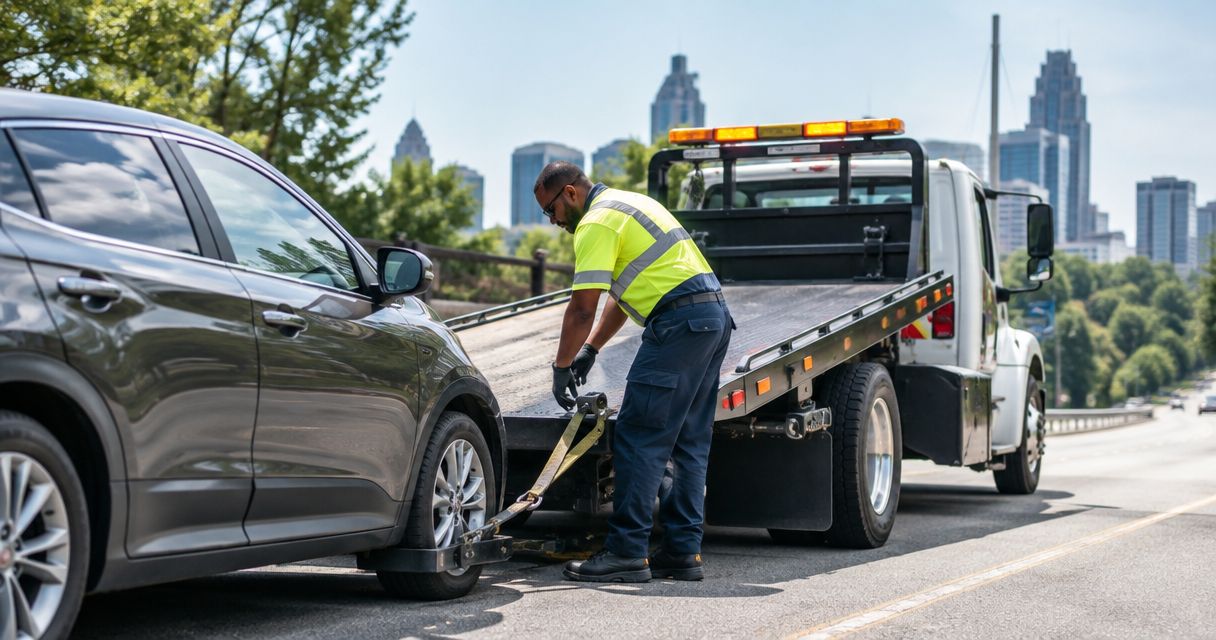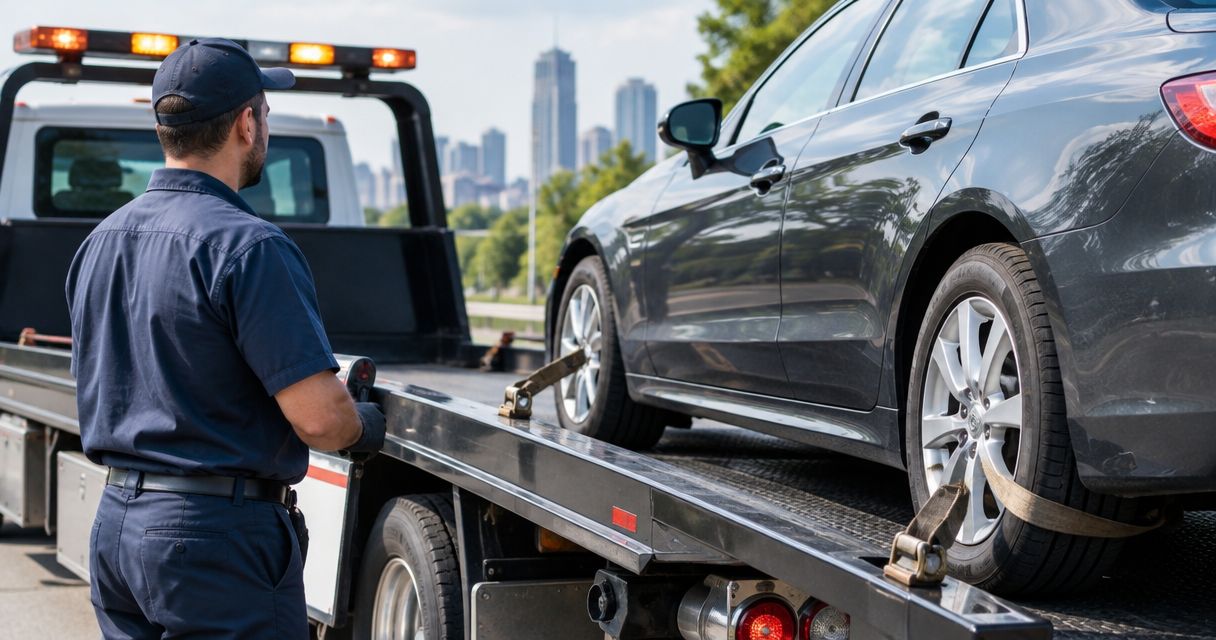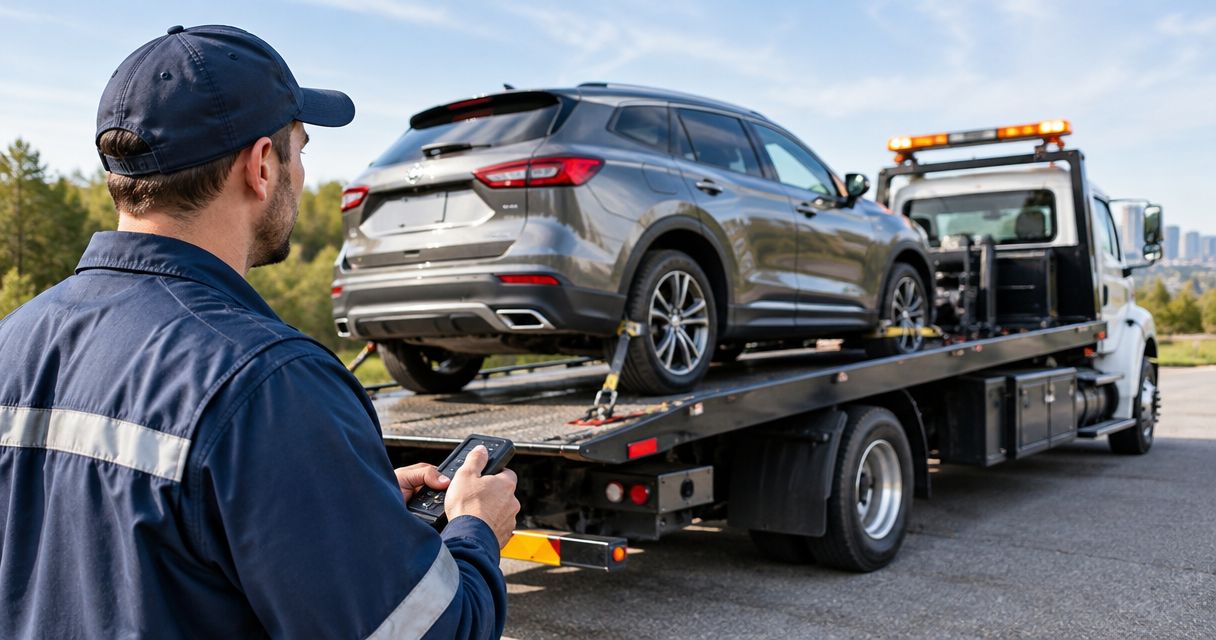
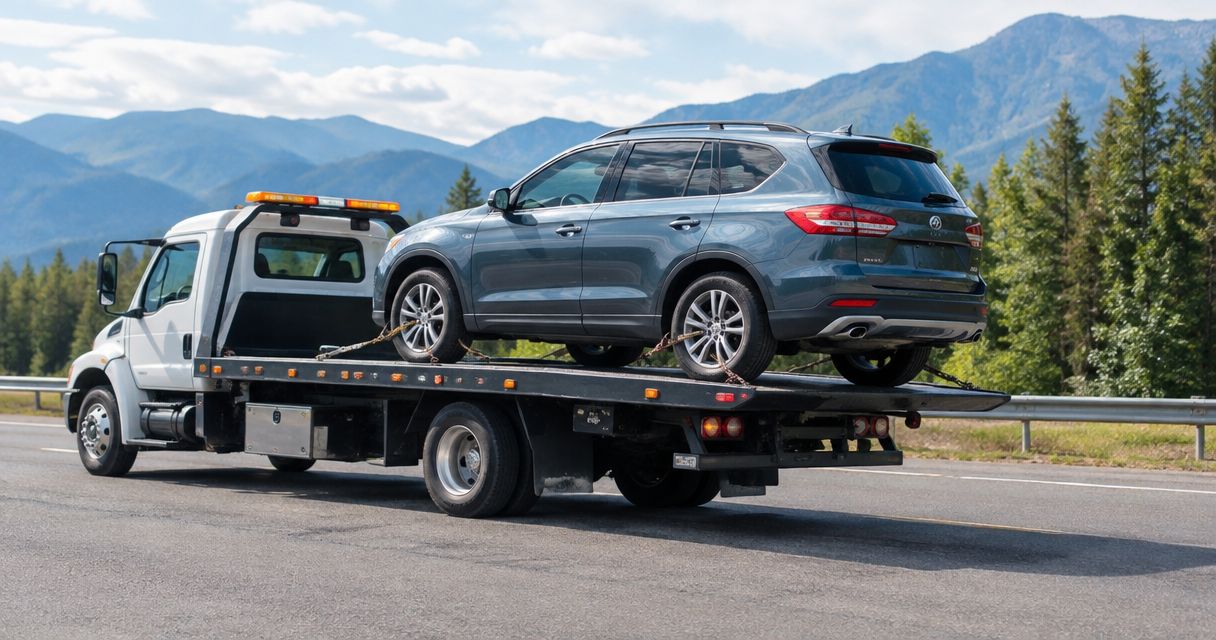
Yes. A tow truck can tow an all-wheel-drive car safely when the towing method follows the vehicle manufacturer’s instructions—usually with all four wheels off the road. Request a flatbed, identify the car as AWD, and tell dispatch if any wheel will not roll. Putting the transmission in neutral does not, by itself, make wheels-down towing safe.
- Can a tow truck tow an all wheel drive car safely? Yes—follow the manufacturer’s towing instructions.
- A flatbed carries all four wheels off the road; loading still requires the correct procedure.
- A wheel-lift with dollies is an alternative only when suitable for the vehicle and permitted by its instructions.
- Atlroadside roadside assistance suits Atlanta drivers who need 24/7 towing support.
Need help now? Contact Atlroadside and give your location, vehicle details, and the problem. Ask dispatch to confirm a towing setup that matches your AWD vehicle; do not assume every arriving truck is suitable.
Can a tow truck tow an all-wheel-drive car safely?
Yes—the setup matters more than the truck’s name. A flatbed keeps the vehicle’s tires off the pavement during transport. A wheel-lift truck needs additional equipment, such as suitable dollies, to keep the remaining wheels off the road when the manufacturer requires it.
Check the owner’s manual under emergency towing or vehicle transport. Recreational towing behind a motorhome is a separate procedure; permission for one method does not automatically approve another.
| Towing setup | Best for | Advantage | Limitation |
|---|---|---|---|
| Flatbed | AWD transport when specified by the manufacturer | Carries all four wheels off the road | Loading needs suitable clearance and the correct procedure |
| Wheel-lift with dollies | Situations where the manufacturer permits this setup | Keeps the vehicle’s remaining wheels off the pavement | Suitability depends on vehicle weight, condition, and equipment |
| Wheel-lift alone | Vehicles whose instructions explicitly permit it | Lifts one axle | Leaves the other axle turning; do not assume it is safe for AWD |
Do not authorize a wheels-down tow just because the destination is nearby. A short trip is not a substitute for manufacturer approval.
Why this matters: neutral does not disconnect everything
An AWD drivetrain connects components that distribute power between the axles. Turning road wheels during an unsuitable tow can drive parts of that system in a way the manufacturer does not permit.
Neutral changes the transmission’s operating state. It does not necessarily isolate the wheels from the differentials, transfer components, or electric drive units. The safe towing procedure depends on the exact vehicle—not simply whether its selector shows N.
You do not need to diagnose the drivetrain on the shoulder. You need to identify the vehicle accurately and have the operator check the correct instructions before moving it.
Flatbed towing: the first setup to request
Best for: AWD vehicles whose transport instructions require all wheels off the ground. A flatbed carries the entire car on its deck rather than letting an axle roll along the road.
That solves the transport issue, but loading still matters. Tell dispatch about a locked wheel, damaged suspension, low ground clearance, or a vehicle that will not shift out of park. Those details affect how the operator approaches the job.
A flatbed also needs room to position and load. A parking garage, narrow driveway, or awkward crash position can complicate access. Describe the location before dispatch sends equipment.
Do not pull a tow-eye cover off and start attaching straps yourself. Recovery points, loading points, and transport tie-down points serve different purposes; the vehicle’s instructions determine their use.
Wheel-lift towing with dollies: confirm compatibility first
Best for: an AWD vehicle whose manufacturer permits this transport method. A wheel-lift raises one axle, while dollies support the tires on the other axle. The car’s own wheels stay off the road during transport.
The limitation is compatibility. Equipment capacity, tire condition, vehicle damage, and the manufacturer’s instructions all matter. “We have dollies” is not the same as confirming that the proposed setup fits your car.
Ask the operator to explain which wheels will be supported and how the vehicle will be secured. If the instructions require a different method, follow those instructions.
What to tell dispatch before the truck leaves
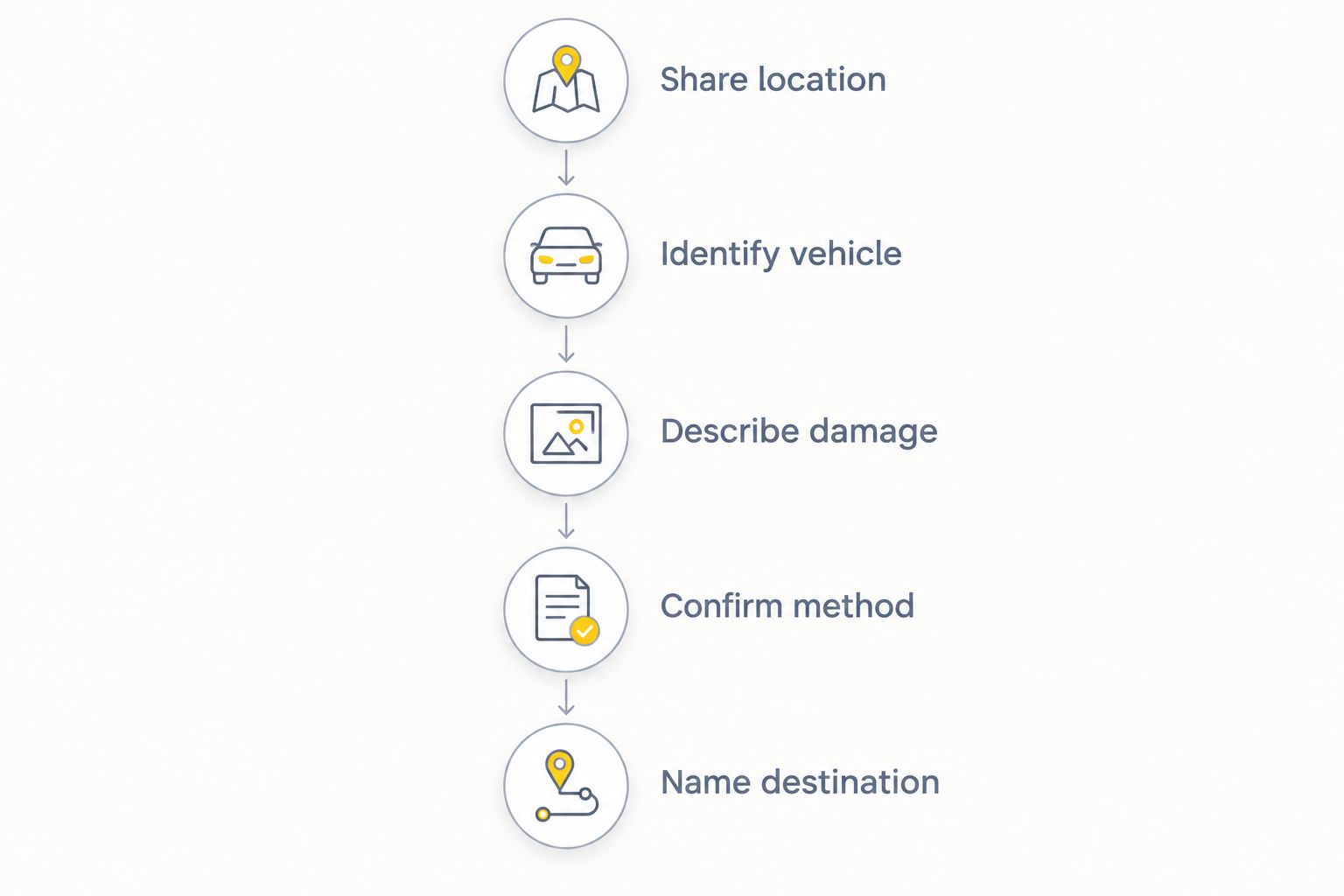
Give dispatch the facts that change the towing job. Say “all-wheel drive” early—not after the truck arrives.
- Share location. Give the road, direction of travel, nearest exit or landmark, and whether the vehicle is in a traffic lane, shoulder, garage, or lot.
- Identify vehicle. Give the make, model, model year, and AWD configuration. Mention whether it is electric or hybrid.
- Describe damage. Report a flat tire, locked wheel, collision damage, fluid leak, or inability to select neutral. Do not crawl underneath to investigate.
- Confirm method. Ask for towing that follows the manufacturer’s instructions. Explain any garage clearance or access restrictions.
- Name destination. Give the repair shop or other destination and confirm how the vehicle will be received.
For a fleet vehicle, give the unit identifier and the person authorized to approve the tow. Tell dispatch about cargo or vehicle modifications that affect handling. Do not describe a loaded commercial vehicle as an ordinary passenger-car tow.
Atlroadside provides 24/7 roadside assistance and towing across the Atlanta metro, including heavy-duty towing and recovery. Confirm the equipment needed for your particular vehicle when you request service.
Request help for your AWD vehicle
Share your location, vehicle details, and whether the wheels roll. Confirm the towing method with dispatch.
Why the towing setup varies
The AWD badge is only the starting point. These details determine how the vehicle gets loaded and transported:
- Manufacturer instructions. The exact model and powertrain determine the permitted towing procedure.
- Wheel condition. A seized brake, damaged wheel, or flat tire changes how the vehicle can be moved during loading.
- Vehicle access. Garage clearance, traffic exposure, and space around the car affect truck positioning.
- Ground clearance. Low bodywork and damaged suspension require attention during loading and unloading.
- Vehicle weight. The truck and supporting equipment must be suitable for the vehicle being moved.
- Collision or recovery needs. A car off the roadway needs an extraction plan as well as a transport plan.
Keep those decisions separate. Getting a car out of a ditch does not establish that it is ready for normal towing.
Can I put my AWD car in neutral for towing?
Neutral alone is not approval to tow an AWD car with wheels on the road. Use it only as directed by the manufacturer and the operator’s loading procedure. Do not force the selector or attempt an unfamiliar park-release procedure beside moving traffic.
Is a flatbed always enough to protect an AWD car?
A flatbed keeps all four wheels off the road during transport, but correct loading and securement still matter. Locked wheels, underbody damage, and low clearance need attention before the car reaches the deck. Tell the operator what happened before the breakdown.
Does an AWD electric car need different instructions?
An AWD electric car needs its own manufacturer’s transport instructions. Tow mode, neutral, and park-release procedures are not interchangeable across vehicles. Report impact damage, smoke, unusual heat, or a suspected battery problem immediately and keep clear of the vehicle.
FAQ
Can a tow truck tow an all wheel drive car without damaging it?
Yes, when the operator follows the vehicle manufacturer’s towing, loading, and securement instructions. Request a flatbed and disclose locked wheels or damage before dispatch selects equipment.
Can an AWD car be towed with the front wheels lifted?
Do not assume an AWD car can be towed with only the front wheels lifted. The rear wheels remain on the road unless supported by suitable dollies; check the manufacturer’s instructions before moving it.
Can I tow my AWD car a short distance in neutral?
A short distance and neutral do not establish that towing is safe. Follow the model-specific instructions rather than choosing a distance limit yourself.
What should I do if my AWD car is stuck in park?
Tell dispatch that the car is stuck in park before a truck is assigned. Do not force it into neutral or drag locked tires; the operator needs a suitable loading procedure.
Do I still need a tow if my AWD car has a dead battery?
A dead battery does not automatically require towing. Request a battery assessment or jump-start service, and describe warning messages, damage, or other symptoms so the provider can assess the next step.
What should I do while waiting for an AWD tow?
Keep clear of moving traffic and follow instructions from emergency responders. Do not stand between the car and traffic or attempt repairs in an exposed lane.
Can Atlroadside help with an AWD breakdown at night?
Atlroadside roadside assistance and towing are available 24/7 across the Atlanta metro. Identify the vehicle as AWD and confirm the required towing setup with dispatch.
One last thing
Take a photo of the owner’s manual’s towing instructions before you need them. Save it where you can find it without a data connection. During a breakdown, the useful question is not just “Can you tow AWD?” It is “Does this setup follow the instructions for my exact vehicle?”