A jump start service has no fixed completion time: the total includes the technician’s arrival, safe setup, and whether your vehicle starts and stays running. Ask for an arrival estimate and an on-site service estimate separately; a jump start does not repair a failed battery, starter, or charging system.
- How long does a jump start take? Arrival, safe setup, and the vehicle’s condition determine the total.
- Atlroadside provides jump starts and roadside assistance across the Atlanta metro, available 24/7.
- Ask for arrival time separately from the time needed to assess and start your vehicle.
- A successful jump start does not prove your battery or charging system is healthy.
Stranded now? Call for roadside help and describe what happens when you turn the key or press Start. For Atlanta metro assistance, Atlroadside provides jump starts, towing, and other roadside services around the clock.
How long does a jump start service take?
The useful estimate covers the whole call—not just the moment the engine starts. For a jump start request in 2026, ask the dispatcher to distinguish travel time from work at your vehicle.
The service follows this sequence:
- Share location. Give your road, direction of travel, nearest exit or landmark, and whether you are in a traffic lane, shoulder, parking lot, or garage.
- Describe symptoms. Report clicking, slow cranking, dashboard lights, or an engine that cranks normally but will not start.
- Confirm access. Explain any gate, garage clearance, locked hood, or vehicle-access problem before the technician arrives.
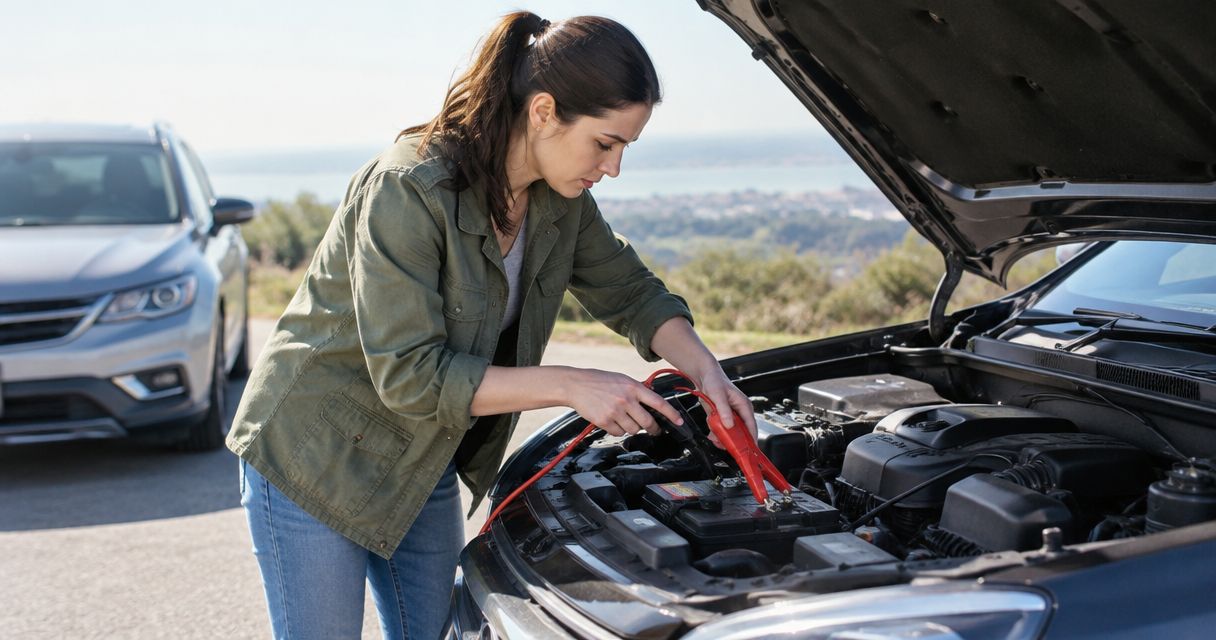
- Assess safely. The technician needs to identify the appropriate connection points and check for conditions that make a jump unsafe.
- Check the result. The engine starting is one outcome. Whether it stays running and whether warning lights remain also matter.
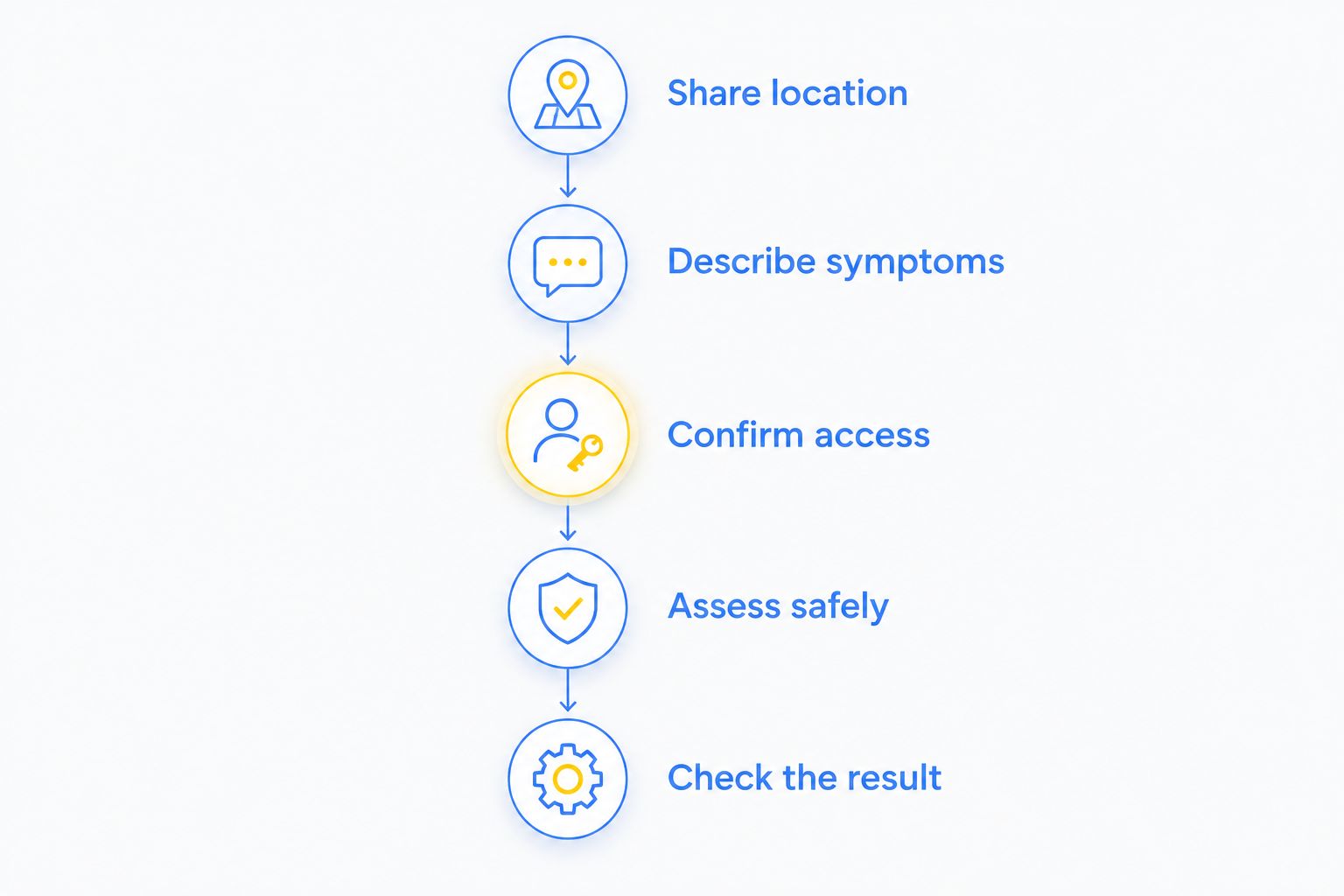
Do not treat a general estimate as a guaranteed finish time. If the technician finds a problem that a jump cannot resolve, the next step changes from starting the vehicle to arranging repair or transport.
Why this matters when you are stranded
You need to know whether to wait safely, update your employer, notify fleet dispatch, or arrange another ride. A single time estimate does not answer all those questions.
Ask: “Is that the arrival estimate, or when you expect the vehicle to be ready?” That distinction matters more than a generic number taken from a search result.
For a 2026 roadside request, tell dispatch immediately if the vehicle is exposed to moving traffic. Call 911 for an immediate threat to life or a dangerous traffic emergency; roadside assistance is not a substitute for emergency responders.
Arrival time and hands-on service are different
Arrival time: confirm it with dispatch
Arrival depends on the technician’s location, the route to your vehicle, traffic, and access. Give the actual vehicle location rather than only a nearby business name.
On an interstate, include your direction of travel and the nearest exit or mile marker if you can identify them safely. Do not walk along the roadway to find a sign.
In a parking garage, give the level, entrance, and any posted clearance information you can see. A technician reaching the street outside is not the same as reaching your vehicle.
On-site service: the vehicle determines the work
The technician needs safe access and the correct procedure for your vehicle. Some vehicles have designated jump points away from the battery itself; your owner’s manual identifies the approved procedure.
A vehicle that starts after external power needs a different next step from one that still will not crank. Do not ask for repeated attempts just to beat a deadline. Report the symptoms and let the technician reassess.
After the engine starts: check the next move
Tell the technician about any warning lights, rough running, smoke, unusual smells, or immediate stalling. Do not assume a running engine means the original problem is fixed.
Before leaving, ask whether the vehicle needs battery or charging-system testing and whether driving is appropriate. If the vehicle cannot run safely, discuss towing instead of trying to stretch the trip.
Why jump start timing varies
These factors affect the work without supporting a universal minute-by-minute promise:
- Your location. A clear, accurate location helps the technician reach the correct vehicle without searching another entrance or road.
- Safe working space. A vehicle beside moving traffic presents a different situation from one in an open parking space.
- Vehicle access. Locked doors, an inaccessible hood, garage restrictions, or obstructed connection points affect setup.
- The actual fault. A discharged battery, a failed starter, and a charging-system problem do not call for the same response.
- The result of the attempt. Starting and staying running is different from continued clicking, normal cranking without ignition, or immediate stalling.
For 2026 planning, use a current dispatch estimate—not a fixed duration copied from another driver’s experience. Your location and vehicle symptoms are the details that make the estimate useful.
Should you request a jump start or a tow?
Request help based on the symptoms, not a diagnosis you cannot confirm. Tell dispatch what the vehicle does and whether it is safely accessible.
| Service | Best for | What it addresses | Limitation |
|---|---|---|---|
| Jump start | A vehicle with symptoms consistent with insufficient battery power | Supplies external power for a starting attempt using the vehicle’s approved procedure | Does not repair a failed battery, starter, or charging system |
| Towing | A vehicle that cannot start, stay running, or move safely | Moves the vehicle for further attention | Transport alone does not diagnose or repair the fault |
Atlroadside is a fit for Atlanta drivers and commercial fleets needing 24/7 jump starts and towing. The limitation is mechanical: roadside starting assistance cannot resolve every no-start problem.
If your engine cranks normally but never catches, report that clearly. If it starts and then stalls, say so. Those details help dispatch understand why a straightforward jump might not be the complete job.
Request roadside help now
Tell dispatch your location, vehicle type, and what happens when you try to start.
What should I tell dispatch to avoid delays?
Give the information that gets the right help to the right vehicle. Keep it short and specific.
- Location: Road, direction, exit or landmark, parking level, and entrance details.
- Vehicle: Make, model, and whether it is a passenger vehicle, commercial vehicle, or semi-truck.
- Symptoms: Silence, clicking, slow cranking, normal cranking without starting, or stalling after starting.
- Safety: Traffic exposure, smoke, a burning smell, visible battery damage, or another immediate hazard.
- Access: Locked doors, hood access, gates, or parking restrictions.
For fleet work, also give the vehicle or unit identifier your dispatcher uses. Tell fleet dispatch that the vehicle is disabled before promising a revised delivery or arrival time.
Atlroadside provides roadside assistance for both drivers and commercial fleets across the Atlanta metro. Identify a semi-truck or other heavy-duty vehicle at the start of the call rather than describing it only as a dead battery.
Can I make a jump start finish faster?
You can reduce avoidable confusion. You cannot safely force the vehicle to start sooner.
Have your location and vehicle details ready. Keep your phone accessible, follow dispatch instructions, and avoid repeated starting attempts while waiting. If you are safely parked, locate the owner’s manual without putting yourself near traffic.
Do not connect unfamiliar equipment, guess at connection points, or attempt a jump on a visibly damaged or leaking battery. A suspected frozen battery also needs professional assessment before a starting attempt.
Do not trade safety for a shorter wait. In a 2026 roadside emergency, accurate information is useful; rushing battery connections is not.
How long should I drive after a jump start?
There is no universal driving duration that proves the battery has recovered. Battery condition, discharge level, and the charging system affect what happens next.
Follow your vehicle manufacturer’s guidance and the technician’s advice. A battery that has been deeply discharged can need proper charging and testing rather than an assumed recovery from driving.
Never leave the engine running in an enclosed garage. If a charging warning remains on, the engine stalls, or the vehicle behaves abnormally, get advice before continuing your trip.
What if the jump start does not work?
A failed attempt means the vehicle needs reassessment, not an automatic series of retries. Tell the technician whether the symptoms changed after external power was connected.
A technician’s observations can help determine the next step, but a jump attempt alone does not establish a complete diagnosis. If the vehicle remains disabled, discuss towing and where it should go.
For a commercial vehicle, notify fleet dispatch before changing the recovery plan. Heavy-duty towing and recovery capability matters when the disabled vehicle is a rig rather than a passenger car.
FAQ
How long does a jump start take once help arrives?
There is no fixed on-site duration for every jump start. Safe access, the vehicle’s approved procedure, and whether the engine starts and stays running determine the work.
Does a jump start estimate include the technician’s drive to me?
Ask dispatch whether the estimate covers arrival or the full service. Travel time and work at your vehicle are separate parts of the call.
Can roadside assistance jump start my car at night?
Atlroadside provides 24/7 roadside assistance, including jump starts, across the Atlanta metro. Give dispatch your location, vehicle type, and starting symptoms.
Will a jump start fix a bad battery?
A jump start does not repair a bad battery. External power can help start the engine, but the battery and charging system still need attention if the fault remains.
Why does my car still click after a jump attempt?
Continued clicking means the starting problem has not been resolved. Stop repeated attempts and let the technician reassess the connections and vehicle symptoms.
Should I turn my car off immediately after a jump start?
Ask the technician before shutting the engine off because restarting is not assured. Never keep the engine running in an enclosed space.
Can I request a jump start for a commercial truck?
Describe the commercial truck to dispatch before service is arranged. Vehicle type and starting-system requirements matter, so do not assume a passenger-car procedure applies.
One last thing
Before the technician leaves, ask: “What should I do if it will not restart?” That question gets you a next-step plan instead of treating one successful start as a permanent repair.
Save the service contact after your 2026 call, and arrange any recommended battery or charging-system check before the next trip. Starting again is the goal—not getting stranded again at the next stop.