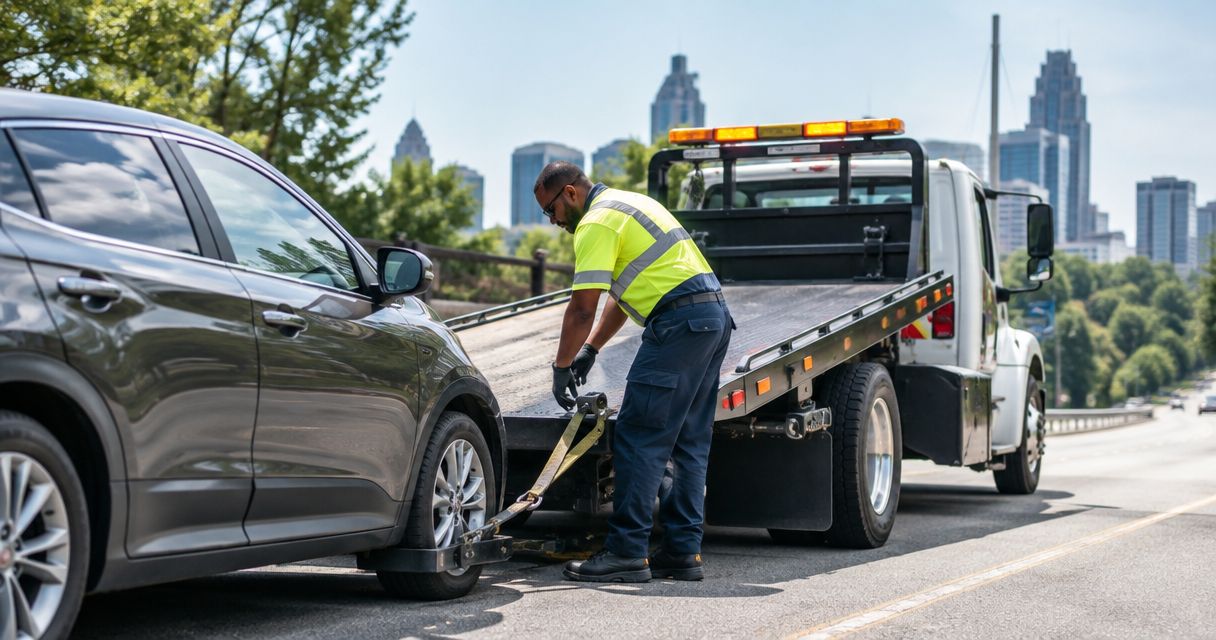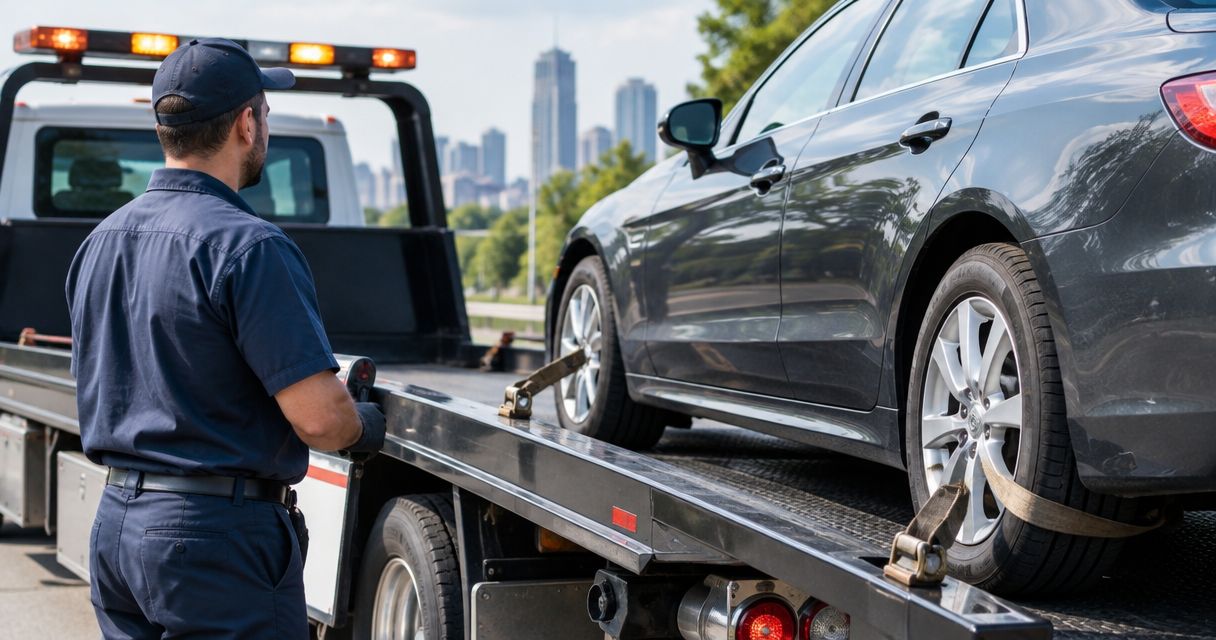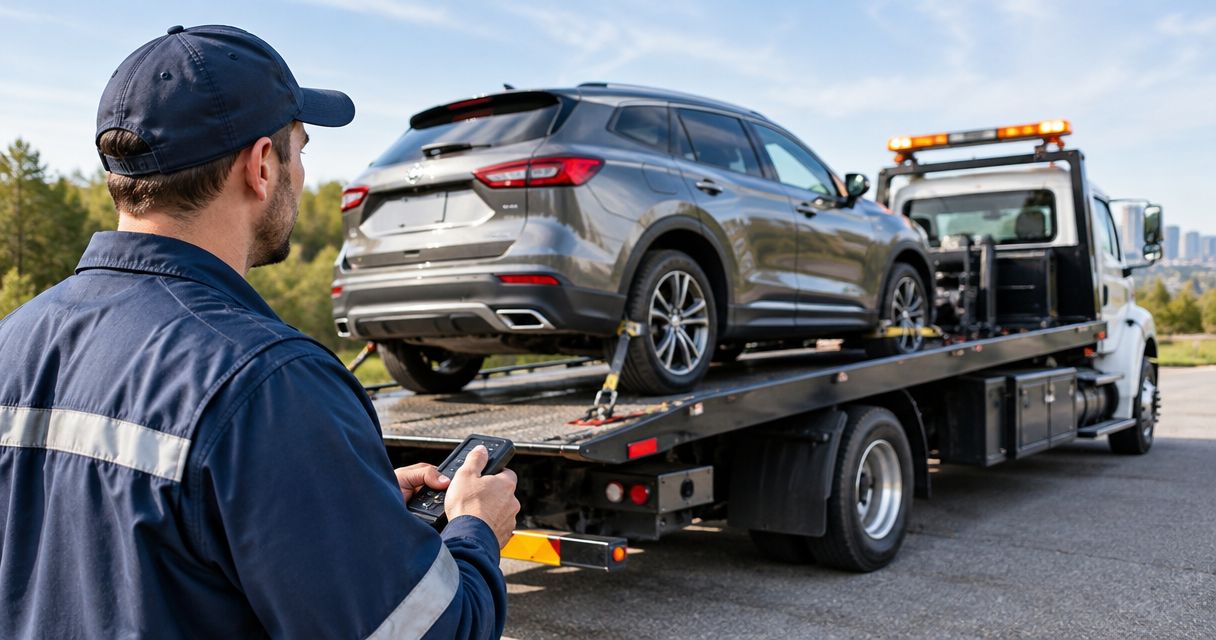

Car rental companies’ roadside assistance is mobile breakdown support aimed at getting renters safe and arranging the right repair or tow. Stranded renter in Atlanta? Contact Atlroadside for 24/7 help, and keep your rental team in charge of service authorization and the vehicle’s destination.
- Atlroadside roadside assistance serves Atlanta rental fleets needing 24/7 jump starts, lockouts, tire changes, fuel delivery, and towing.
- Roadside assistance for car rental companies needs clear approvals, renter updates, and a confirmed vehicle handoff.
- Choose mobile help for a suitable roadside fix; request towing when the vehicle cannot safely continue.
- Keep replacement transportation separate from the roadside service request.
Why roadside assistance matters for car rental companies
A rental breakdown has two people to satisfy: the driver who needs help now and the fleet employee responsible for the vehicle. Your roadside process must connect them without leaving the renter to authorize work on their own.
A personal car owner can usually decide where their vehicle goes. A renter needs your instructions. The receiving branch, repair location, rental agreement, and replacement transportation all need separate decisions.
Atlroadside is best for rental fleets needing 24/7 roadside assistance across the Atlanta metro. Its stated services include mobile towing, jump starts, lockouts, tire changes, fuel delivery, and heavy-duty towing and recovery. Those services cover roadside tasks; your rental team still handles the rental contract and customer arrangements.
For your 2026 operating procedure, make the immediate decision simple: does the renter need emergency services, a mobile roadside service, or vehicle transport? Do not make them sort through a coverage dispute while standing beside a disabled car.
Build your 2026 rental breakdown procedure
Use the same process whether the call comes from an airport renter, a local customer, or a commercial account. Start with safety. Then identify the vehicle, assign approval, and request the right service.
Secure the scene
Ask whether anyone is injured and whether the vehicle is exposed to moving traffic. For an injury, fire, or immediate danger, tell the renter to call 911. Roadside assistance is not a substitute for emergency services.
Do not give a blanket instruction to stand outside or stay inside. The safe choice depends on traffic, the vehicle’s position, and the surrounding conditions. Tell the renter not to attempt a repair beside moving traffic and to follow emergency responders’ directions.
Collect the location verbally before asking for photos. A renter should not walk along a highway shoulder to find a better landmark or photograph damage for your records.
- Ask about injuries, smoke, fire, and traffic exposure.
- Get the road name, direction of travel, and nearest safe landmark.
- Request a location pin only when the renter can send it safely.
- Keep the renter away from roadside repairs in an exposed position.
Identify the fault
Have the renter describe what happened, not diagnose it. A car that will not start is not automatically a dead battery. A vehicle that stopped running is not automatically out of fuel.
Ask what they can observe from a safe position: whether the engine turns over, whether a tire is visibly damaged, whether keys are locked inside, or whether the fuel gauge reads empty. Pass those observations to the service provider without turning them into a repair conclusion.
Identify the exact rental vehicle before requesting help. Fuel type, spare-tire provision, and towing instructions need to come from the vehicle’s documentation or your fleet records—not a guess based on its appearance.
- Confirm the registration, vehicle model, and rental agreement reference.
- Record the renter’s description of the fault.
- Check the documented fuel type before requesting fuel delivery.
- Check the vehicle manual for jump-start and towing instructions.
- Report collision damage, warning messages, or a failed previous attempt.
Assign approval
Use your existing rental agreement and internal authorization process first. Name the employee who can approve the requested work, and give the renter a clear instruction about who will speak to the provider.
Your fleet contact and the roadside provider have different jobs. The fleet contact decides what the rental company authorizes. The provider assesses the roadside task and explains what is needed to carry it out.
For Atlanta operations, use the commercial roadside assistance provider guide to frame provider selection around fleet needs. Check service coverage, after-hours communication, towing scope, and how authorization is handled before a breakdown happens.
Do not treat a service request as proof of contract coverage. Confirm who authorizes the work separately from who ultimately pays under the rental agreement.
- Name the fleet employee authorized to approve service.
- Give the provider a reachable rental-company contact.
- Confirm the requested task before approving additional work.
- Record the agreed tow destination when transport is needed.
Request dispatch
You can coordinate manually by calling the provider and reading from a prepared incident note. Keep the renter’s location, contact details, vehicle identification, symptoms, and fleet approval together. That is more useful than forwarding disconnected messages.
Atlroadside roadside assistance offers a direct service option across the Atlanta metro, with 24/7 fuel delivery, jump starts, lockouts, tire changes, and towing. Heavy-duty towing and recovery are also available for commercial vehicles. Describe the vehicle and the situation so the request matches the actual job.
Ask the provider for the current arrival estimate after the location and service need are understood. Do not give the renter a fixed arrival promise that nobody has confirmed. If the situation changes, pass the update to both the provider and your rental contact.
- State the location and road direction clearly.
- Describe the vehicle and the observed problem.
- Identify who can authorize the work.
- Explain access restrictions or an unsafe stopping position.
- Confirm who will update the renter about arrival.
Arrange help for your renter
24/7 roadside assistance and towing for drivers and commercial fleets across the Atlanta metro.
Confirm the handoff
A provider arriving is not the same as an incident being resolved. Your rental team needs to know whether the vehicle can continue, needs further inspection, or is being transported.
For towing, confirm the destination and receiving contact before the vehicle leaves. Do not send it to a closed branch or an unspecified repair facility and leave the driver to resolve the handoff.
Keep the renter’s next move separate. A vehicle tow does not establish a replacement rental, passenger transport, or permission to continue the original journey. Tell the renter which rental employee is handling those arrangements.
- Confirm the completed roadside task with the provider.
- Record whether the vehicle remained on site or was transported.
- Confirm the tow destination and receiving contact.
- Give the renter clear instructions about the next rental step.
- Keep keys and vehicle handoff instructions with the incident record.
Review the incident
Close the operational loop before putting the vehicle back into normal rental use. A successful jump start does not identify the cause of a battery problem. Fuel delivery does not explain an unexpected stall. Record what happened and route unresolved issues through your maintenance process.
Use your own incident records for the 2026 review. Separate customer handling from vehicle condition: a communication failure needs a process change, while a recurring vehicle fault needs attention from the maintenance team.
A short review is enough if it produces a concrete action. Do not collect a long report that nobody uses.
- Record the reported fault and the service completed.
- Flag repeated incidents involving the same vehicle.
- Note approval delays or incorrect location details.
- Send unresolved vehicle concerns to maintenance.
- Update renter instructions when the incident exposes a gap.
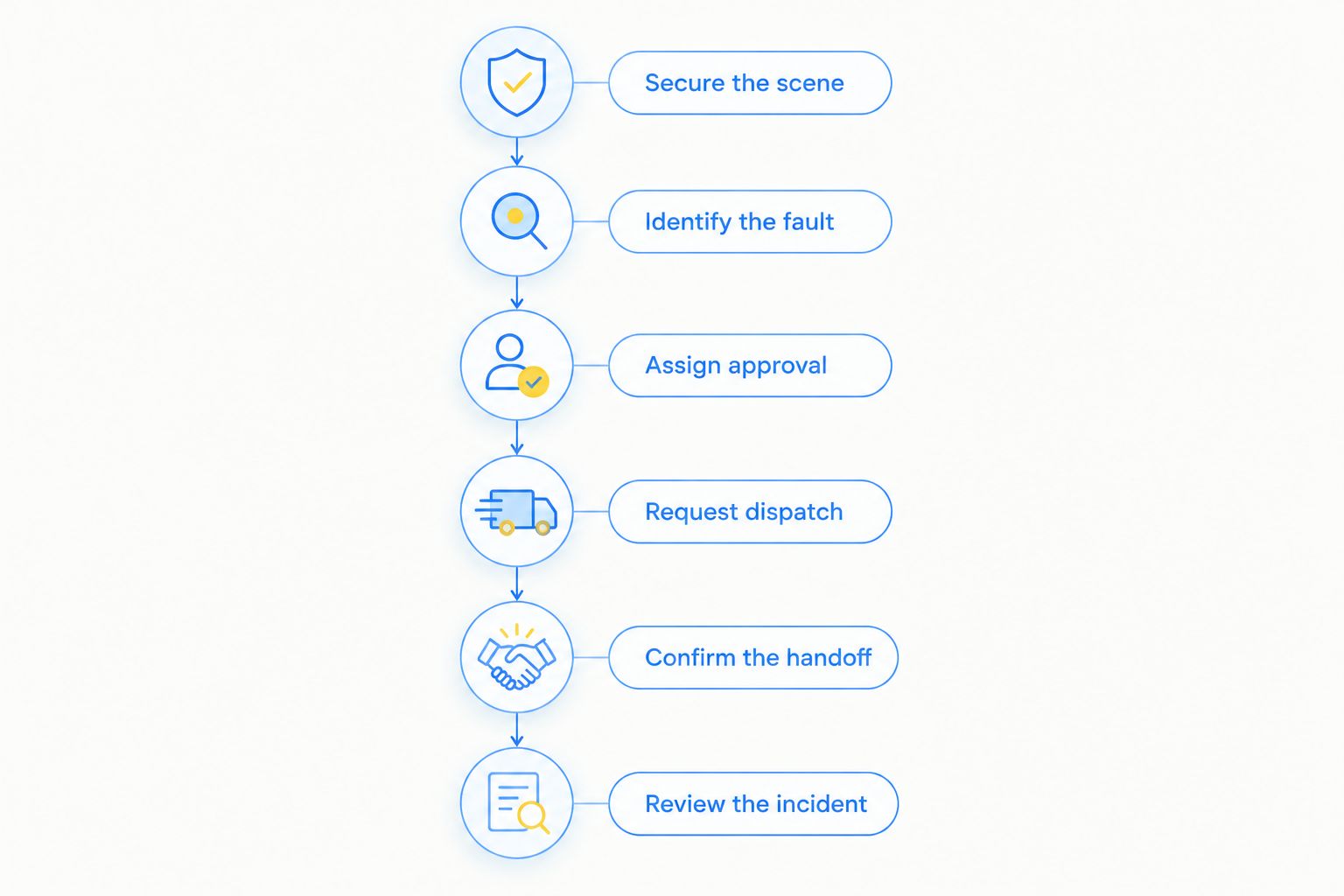
The sequence stays the same even when the service changes: secure the scene, identify the fault, assign approval, request dispatch, confirm the handoff, and review the incident. Use that sequence as your call-handling checklist.
Compare support options for your rental fleet
Choose the option that fits the incident and your existing arrangements. These options are not interchangeable: internal coordination does not perform a tire change, and a mobile service does not manage the rental agreement.
| Option | Best for | Strength | Key limitation |
|---|---|---|---|
| Internal rental-team coordination | Managing approvals and renter arrangements | Keeps the contract, vehicle record, and destination under your control | Does not itself provide roadside labor or transport |
| Existing contracted assistance | Following an established fleet support arrangement | Gives your team a defined process when the agreement provides one | You must check the actual service scope and authorization rules |
| Atlroadside | Atlanta rental fleets needing direct 24/7 roadside service | Provides jump starts, lockouts, tire changes, fuel delivery, towing, and heavy-duty recovery | Your rental team must still arrange approvals, replacement transport, and the receiving destination |
| Vehicle towing | Moving a vehicle that cannot safely continue | Transfers the disabled vehicle to a confirmed destination | Does not repair the fault or settle the renter’s onward travel |
Keep internal coordination even when you use an outside provider. Your renter should not become the middleman between a tow operator, a closed branch, and an employee who cannot approve the job.
For 2026 provider planning, check the agreement rather than relying on a general service label. Ask how the provider handles after-hours requests, commercial vehicles, service changes, and communication with both the renter and fleet contact.
Match the service to the rental problem
Jump starts — best for a suspected battery-related no-start. Report the symptoms and follow the vehicle’s designated connection instructions. If the vehicle still will not start, stop treating the original request as a confirmed diagnosis.
Lockouts — best for keys locked inside the rental vehicle. Confirm the renter’s authorization and the vehicle identity. Report a child, vulnerable person, or animal trapped inside as an urgent safety situation rather than an ordinary lockout.
Tire changes — best for a flat when a suitable replacement and safe working conditions are confirmed. Check your fleet records for the vehicle’s spare provision. Do not assume every rental carries a usable spare.
Fuel delivery — best for a confirmed out-of-fuel incident. Verify gasoline or diesel from the vehicle record. If the wrong fuel has been added, tell the provider before requesting an ordinary delivery or restart.
Towing and recovery — best for a vehicle that cannot safely proceed or needs transport. Describe collision damage, difficult access, or an off-road position. For commercial rentals, identify the vehicle type and loaded condition rather than requesting a generic car tow.
Common mistakes rental companies make
Letting the renter approve everything
A stressed renter needs help, not open-ended responsibility for repair decisions. Give the provider an authorized rental contact and define the requested task. If the provider identifies additional work, route that decision back through your approval process.
Sending the wrong service
A no-start, flat tire, and collision-damaged vehicle require different information. Describe symptoms accurately and identify the rental vehicle. Do not request a jump start simply because the renter says the car is dead.
Leaving the tow destination undecided
A branch address is not a complete receiving plan. Confirm access, the receiving contact, and vehicle handoff instructions. Handle those details before transport rather than after the truck arrives at a locked property.
Confusing roadside help with replacement transport
Fixing or moving the vehicle does not resolve the renter’s journey. Assign someone to handle the rental arrangements while the roadside request proceeds. Give the renter a named point of contact for that separate decision.
FAQ
What is roadside assistance for car rental companies?
Roadside assistance for car rental companies is breakdown support coordinated for rental vehicles and their drivers. It can include jump starts, lockouts, tire changes, fuel delivery, and towing, with the rental company managing authorization and vehicle destination.
Who should call when a renter breaks down?
The renter should contact the rental company’s designated breakdown contact, unless an immediate emergency requires 911. The rental team should coordinate the roadside request or give the renter clear authorization instructions.
Can Atlroadside help rental fleets at night in Atlanta?
Atlroadside provides 24/7 roadside assistance and towing across the Atlanta metro for drivers and commercial fleets. Give the provider the rental vehicle details, exact location, reported fault, and fleet authorization contact.
Should a rental car get roadside service or a tow?
Use roadside service when the reported problem is suitable for a safe mobile intervention; arrange towing when the vehicle cannot safely continue. Let the provider assess the task, and follow the vehicle’s towing instructions.
Can I request diesel delivery for a commercial rental?
Atlroadside provides emergency diesel delivery for commercial vehicles across the Atlanta metro. Confirm the vehicle’s fuel type before requesting delivery and report any suspected wrong-fuel incident.
Does the renter have to pay for roadside assistance?
Payment responsibility depends on the rental agreement and the authorized service arrangement. Confirm those terms with the rental company rather than assuming every breakdown is included or always charged to the renter.
What should a rental company record after a breakdown in 2026?
Record the vehicle, location, reported fault, authorization, completed service, and final destination. Keep unresolved vehicle concerns separate from renter arrangements so maintenance and customer handling both receive a clear handoff.
One last thing
An engine that restarts is not a diagnosis. Before returning the rental to normal use, record why help was requested and send unresolved concerns through your maintenance process. That final handoff matters just as much as getting someone to the roadside.