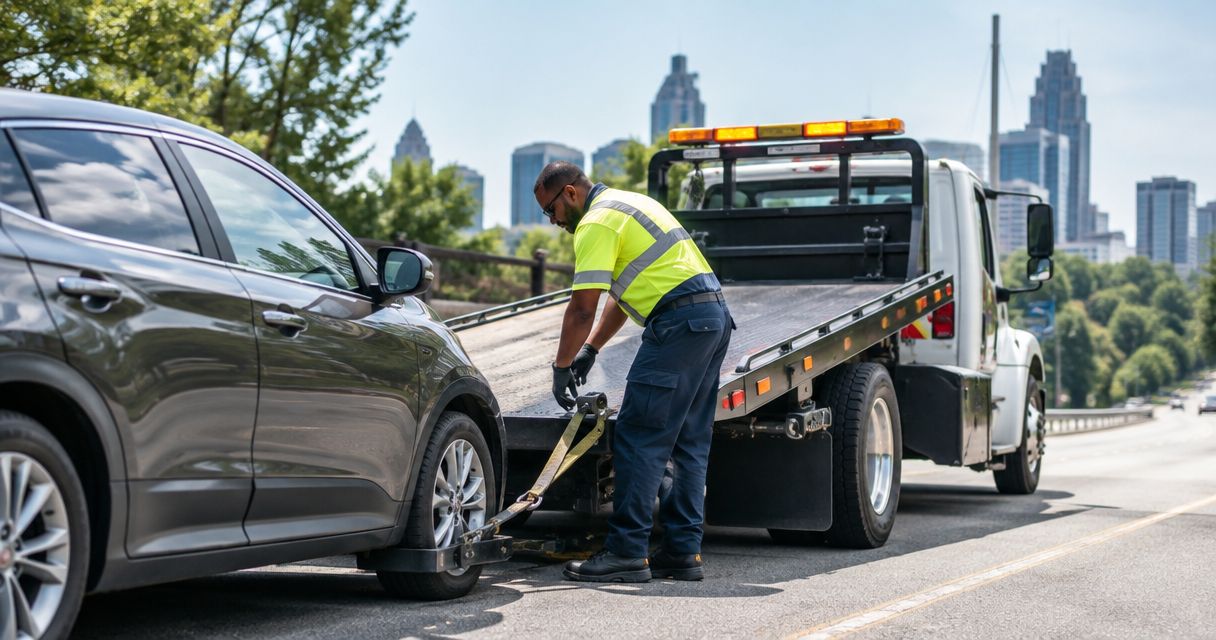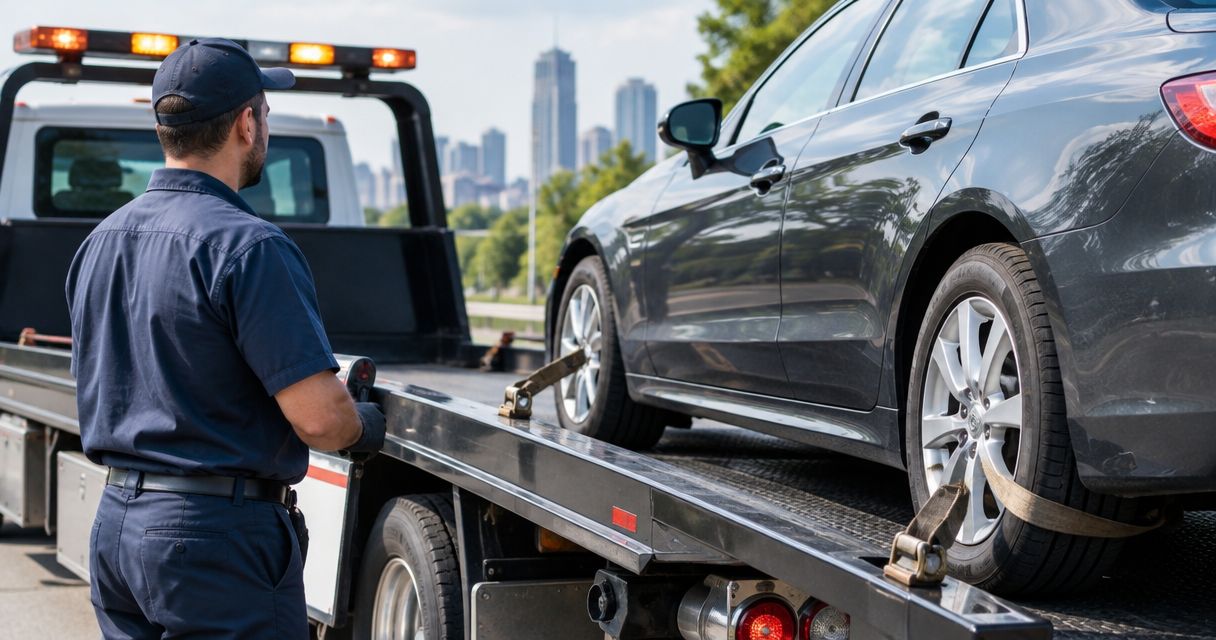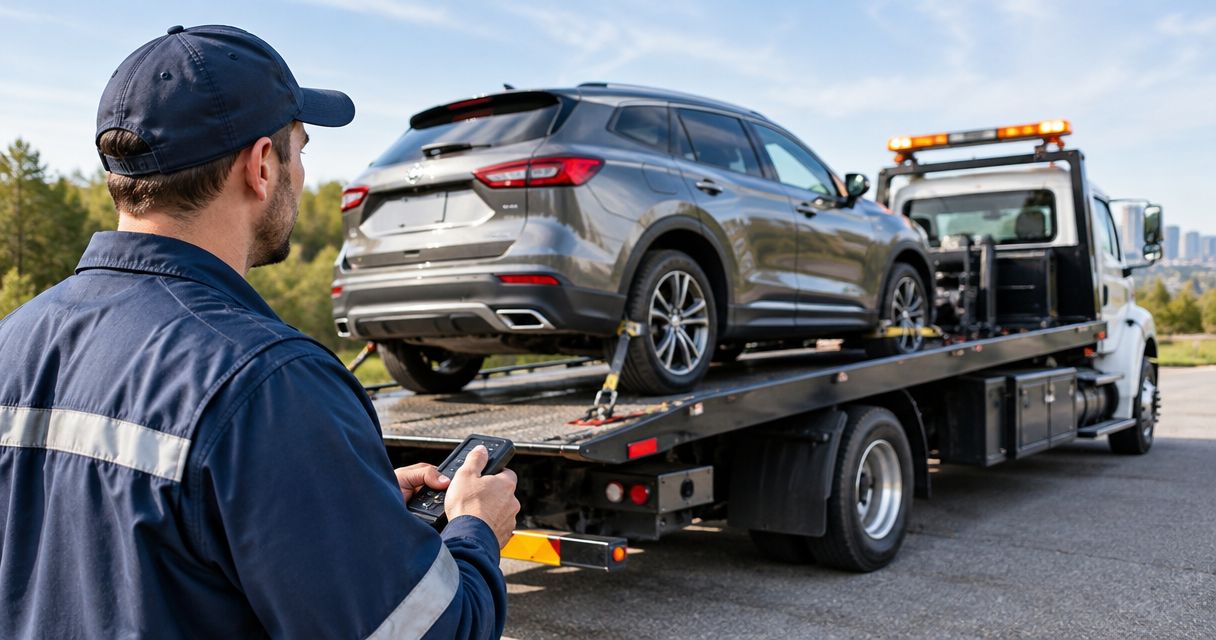
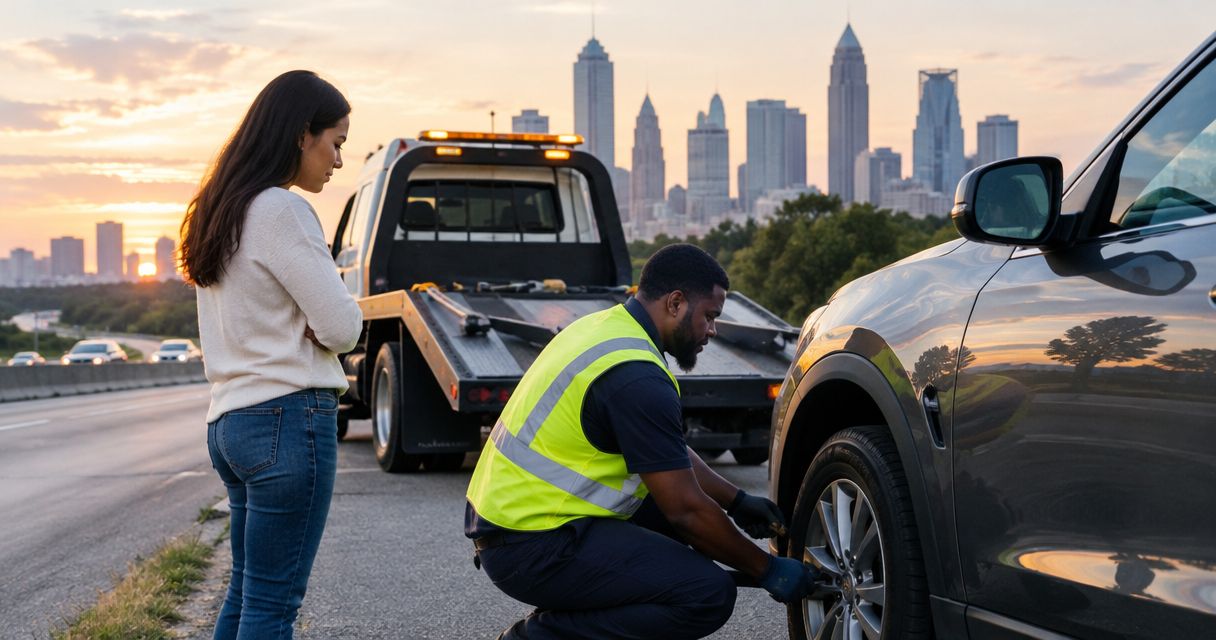
Stranded on an Atlanta interstate and wondering how many other drivers are in the same spot? Roadside assistance demand across the Atlanta metro in 2026 follows heat, traffic, and freight, and this page maps where each type of call comes from. Need a truck now? Call All Around Atlanta Roadside Assistance at (678) 502-0513. It runs 24/7.
- Roadside assistance demand by Atlanta metro area tracks interstate traffic, summer heat, and freight volume.
- Jump starts and tire calls lead consumer demand; fuel, tires, and recovery lead commercial demand.
- I-285, I-75, I-85, I-20, and GA-400 corridors generate the most heavy-duty calls.
- No public dataset counts Atlanta roadside calls by county, so this page ranks demand drivers, not call totals.
Why this matters
Atlanta is a commuter metro and a freight hub at the same time. That mix puts passenger cars and 18-wheelers on the same few highways. When one breaks down, it blocks everyone else.
If you run a fleet, a dealership, or a rideshare car, demand patterns tell you when to keep a provider on standby. If you drive one car, they tell you when you are most at risk. Either way, the fix is the same: know your number before the breakdown.
The short answer: what drives roadside demand in metro Atlanta in 2026
Demand follows the road, not the county line. The highest-pressure zones are the perimeter and the spokes: I-285, I-75, I-85, I-20, and GA-400. Calls cluster where traffic is dense, speeds are high, and shoulders are narrow.
By service, dead batteries and flat tires are the most common consumer calls, and fuel, tire, and recovery calls dominate commercial work. That ranking comes from how breakdowns happen, not from a published call count. Nobody publishes one for Atlanta.
Demand benchmark table: service type by driver
The table below compares each service by what pushes demand up, who calls, and how urgent the situation is. Rows are ranked by how often the driver pattern shows up on Atlanta roads, not by a numeric call count.
| Service | Main demand driver | Typical caller | Urgency |
|---|---|---|---|
| Jump start / dead battery | Summer heat, short trips, aging batteries | Commuters, rideshare drivers, students | High: car will not move |
| Flat tire / tire change | Potholes, debris, worn tread on interstates | Commuters, delivery drivers, RV owners | High: unsafe on shoulder |
| Lockout | Keys left inside, dead key fobs | Parents, shoppers, rental renters | Medium to high, rises at night and with kids or pets inside |
| Fuel delivery | Misjudged range, long hauls, fleet scheduling gaps | Commuters, semi-truck drivers, contractors | High for diesel rigs on the interstate |
| Emergency car towing | Collisions, overheating, failed starts | All drivers | High |
| Heavy-duty towing and recovery | Semi breakdowns, jackknifes, blown tires | Fleets, owner-operators, municipalities | Critical: blocks lanes |
High and low: where demand is heaviest
Heavy-duty recovery leads on urgency. A disabled semi on I-285 or I-75 closes lanes and strands a load, so these calls cannot wait. Commercial fleets feel it first.
Jump starts lead on volume. Atlanta summers are hot, and heat is hard on batteries. A car that started fine this morning can fail after a parking lot sits in the sun all day.
Lockouts trail on frequency but carry stress. They are fewer, usually solved fast, and almost never need a tow. They spike with errands, school pickup, and night events.
The pattern is simple: consumer demand is wide, commercial demand is heavy. One is about many small problems. The other is about few, costly ones.
Demand by part of the metro
This breakdown is by road type and land use. It does not rank counties by call totals, because no public source supports that.
- Perimeter (I-285): Highest mix of cars and trucks. Heavy-duty recovery and flat tire calls are common here.
- Downtown Connector (I-75/I-85): Stop-and-go traffic. Overheating, dead batteries, and collision towing.
- I-20 east and west: Freight corridor. Semi tire blowouts and diesel fuel runs.
- GA-400 and north suburbs: Commuter traffic. Jump starts, lockouts, and flat tires at shopping and office parking lots.
- South metro and airport zone: Rental cars, delivery vans, and logistics fleets. Fuel, lockouts, and tire changes for vehicles run hard on tight schedules.
A single provider needs to cover all of these. All Around Atlanta Roadside Assistance works the full metro, 24/7, for both drivers and commercial accounts at atlroadside.com.
Commercial demand versus consumer demand
Consumer calls are about getting home. Commercial calls are about getting paid. A fleet manager with a downed truck is losing a delivery window by the minute.
That changes what you should expect from a provider:
- Consumers need fast arrival, a clear plan, and no hidden fees.
- Fleets need heavy-duty equipment, diesel on hand, and a dispatcher who answers at 3 a.m.
- Dealerships and rental companies need repeat service across many vehicles and lots.
For semi-truck specifics, see the roadside assistance for semi trucks guide.
Seasonal and time-of-day patterns
Demand is not flat across the year or the day.
- Summer: Heat stresses batteries, tires, and cooling systems. Expect more jump starts, tire calls, and overheating tows.
- Winter cold snaps: Georgia does not get long freezes, but a hard cold morning still kills weak batteries.
- Rush hours: Breakdowns on the interstate turn into traffic events fast.
- Nights and weekends: Lockouts and fuel calls rise, and fewer shops are open. That is when 24/7 service matters most.
Methodology and limits
This page ranks demand drivers using how breakdowns happen on Atlanta highways and which vehicles use them. It does not rely on a published call-volume dataset, because no public source breaks down roadside calls by Atlanta county or service type.
The limitation is plain: the rankings are directional. They tell you which services and corridors carry pressure, not how many calls each one logs. If you need counts for a contract, ask a provider for its own dispatch data.
How to use these benchmarks
- Save a provider number before you need it. Save (678) 502-0513 in your phone under a clear name. Calling while stressed is slow.
- Match the service to your exposure. Daily interstate commuters should plan for tires and batteries. Fleets should plan for fuel and recovery.
- Set standby rules for fleets. Know which vehicles run the longest routes and which corridors they use. Pre-assign a provider for each.
- Do not wait for a second warning. A slow-cranking engine or a low tire is the call you make before the call you must make.
FAQ
What is the most common roadside assistance call in Atlanta?
Dead batteries and flat tires are the most common consumer calls, driven by summer heat and rough interstate conditions. No public source publishes exact call counts by service for the Atlanta metro.
Where is roadside assistance demand highest in the Atlanta metro?
Demand concentrates on the interstate corridors: I-285, I-75, I-85, I-20, and GA-400. Traffic density and freight volume drive it, not county lines.
Is there roadside assistance in Atlanta 24/7?
Yes. All Around Atlanta Roadside Assistance operates 24/7 across the Atlanta metro. Call (678) 502-0513 for towing, jump starts, lockouts, tire changes, and fuel delivery.
Does roadside demand differ for fleets and regular drivers?
Yes. Regular drivers mostly call for batteries, tires, and lockouts. Fleets call for diesel delivery, tire blowouts, and heavy-duty recovery, where each hour of downtime costs money.
When is roadside assistance busiest in Atlanta?
Summer heat and rush hours put the most pressure on providers. Nights and weekends matter too, because fewer repair shops are open.
Can a roadside provider handle semi-trucks in Atlanta?
Some can. Heavy-duty towing, diesel delivery, and tire service need different equipment than car service. All Around Atlanta Roadside Assistance handles heavy-duty towing and recovery.
One last thing
The call that costs the most is the one you make late. A weak battery, a soft tire, or a fuel light you ignored in 2026 will find you on the worst stretch of I-285. Save the number today: (678) 502-0513.