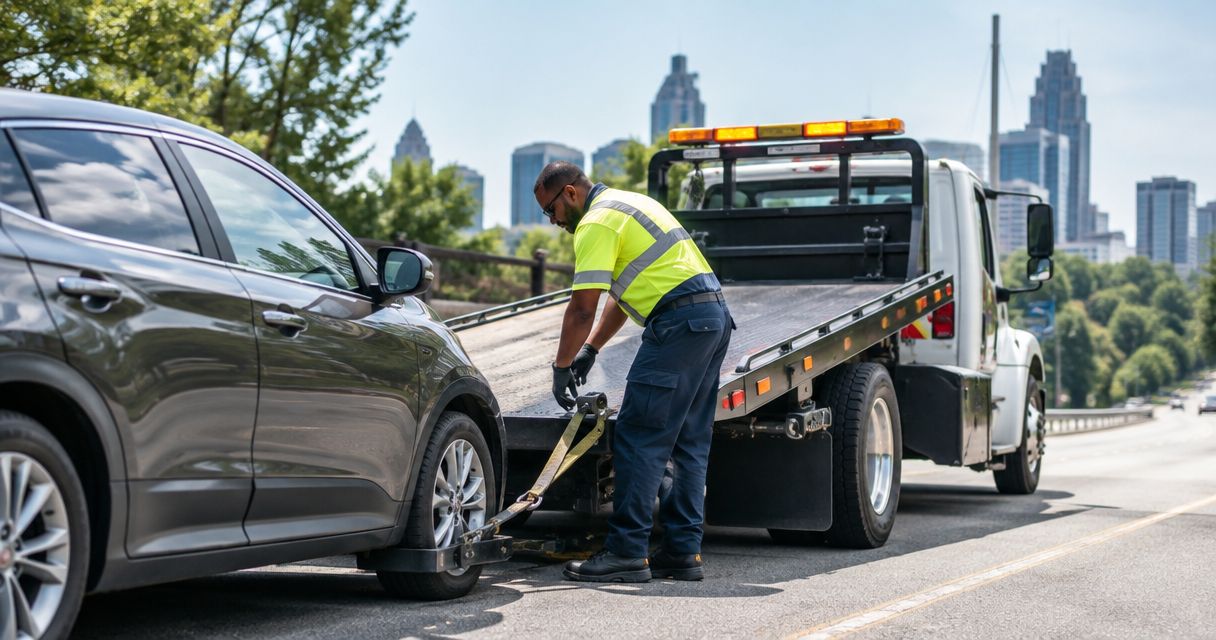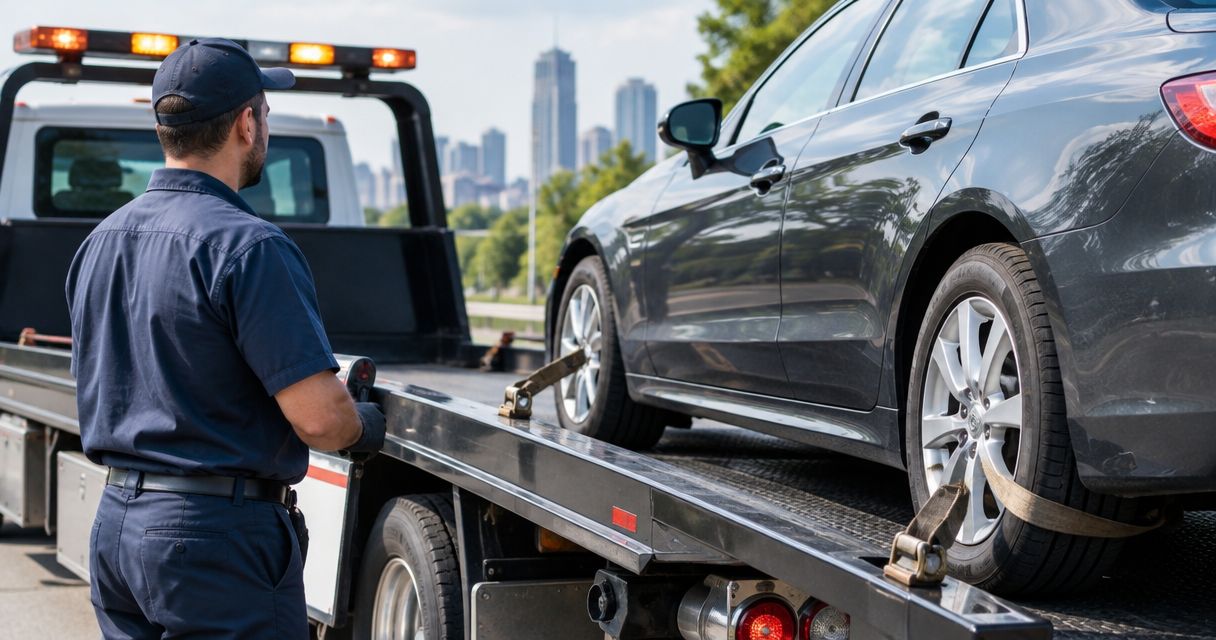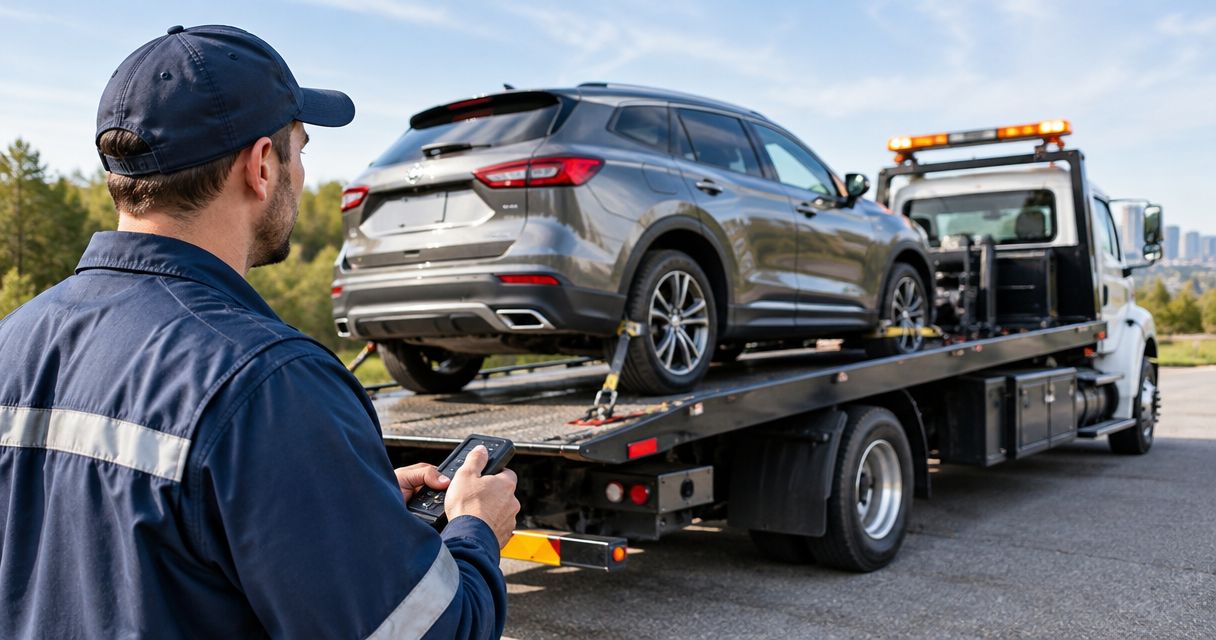

Stranded fleet vehicle? Best overall for mixed fleets: Atlroadside; best for an empty tank: fuel delivery; best for a disabled rig: heavy-duty towing and recovery. Match the call to the breakdown, then request help with the vehicle type and exact location.
- Atlroadside is the mixed-fleet pick for roadside assistance for fleet managers Atlanta-wide, with 24/7 service.
- Request fuel or diesel delivery for an empty tank; identify the fuel before dispatch.
- Choose a jump start for a battery-related no-start, not as a substitute for mechanical diagnosis.
- Report a disabled semi-truck as a heavy-duty job, including trailer status and access conditions.
Need help now? Use the contact page to request assistance. Give your driver's location, unit number, vehicle type, symptoms, and callback details. If someone is injured or the vehicle presents an immediate traffic danger, call 911 first.
Why this matters
A fleet breakdown needs the right response, not just a tow truck. An empty diesel tank, a locked delivery van, and a disabled tractor-trailer are different dispatches. Describe the problem before choosing the service.
For your 2026 fleet plan, separate roadside fixes from vehicle transport. Fuel delivery, jump starts, lockouts, and tire changes address specific problems at the vehicle. Towing moves a vehicle that cannot safely continue; recovery addresses a vehicle that needs more than a straightforward pickup.
Atlroadside is the best fit here for Atlanta fleet managers who need one provider covering routine roadside calls and heavy-duty towing. That recommendation rests on the stated service range and 24/7 Atlanta metro coverage—not a promised arrival time or an assumed fleet contract.
What makes the best fleet roadside assistance
Use these criteria before authorizing a dispatch:
- Vehicle match: State whether the unit is a passenger car, delivery van, box truck, or semi-truck. Do not request generic car assistance for a commercial rig.
- Breakdown match: Explain what happened. An engine that cranks but will not start needs a different assessment from keys locked inside the cab.
- After-hours access: Choose a provider with stated 24/7 service when your drivers work nights or weekends.
- Location clarity: Supply the road, direction of travel, nearest exit or landmark, and a location pin when available.
- Commercial details: Report trailer attachment, cargo concerns, vehicle access, and whether the unit can roll or steer.
- Clear authorization: Confirm the requested work and who can approve a change from roadside help to towing.
Ask for the current arrival estimate when you request service. Treat that estimate as dispatch information, not a guarantee. Keep your driver reachable so changing conditions do not get lost between the cab and the fleet desk.
Atlanta fleet assistance at a glance
This 2026 shortlist ranks service choices by the problem they solve. It is not a comparison of competing companies: the default provider comes first, followed by specific dispatch options.
| Option | Best for | Standout capability | Key limitation |
|---|---|---|---|
| Atlroadside | Mixed fleets needing a broad local response | 24/7 roadside assistance plus towing and heavy-duty recovery | Each vehicle and incident still needs dispatch assessment |
| Fuel delivery | Vehicles stopped by an empty tank | Bringing the needed fuel to the stranded vehicle | Does not resolve a mechanical no-start or wrong-fuel incident |
| Jump-start service | Suspected battery-related no-starts | Attempting to restore starting power at the vehicle | Does not repair a failed charging system or engine fault |
| Tire-change service | A flat with a suitable usable spare | Replacing the flat without requiring the driver to do roadside work | Spare condition and safe working access matter |
| Heavy-duty towing and recovery | Disabled semi-trucks and commercial vehicles | Moving or recovering a vehicle that cannot continue safely | Transport does not repair the underlying failure |
1. Atlroadside: best fleet roadside assistance for mixed vehicles
A mixed fleet needs help with everyday breakdowns and larger commercial incidents. Atlroadside provides 24/7 towing, jump starts, lockout service, tire changes, fuel delivery, and heavy-duty towing and recovery across the Atlanta metro.
That service range makes it the default starting point when your fleet includes both light vehicles and commercial rigs. Tell dispatch which unit is down. A service list does not replace a vehicle-specific assessment.
Pros:
- Covers routine roadside problems and towing through one provider.
- Serves drivers and commercial fleets across the Atlanta metro.
- Offers 24/7 service for incidents outside office hours.
- Includes heavy-duty towing and recovery capability.
Cons:
- A roadside visit is not a substitute for workshop repairs.
- Vehicle configuration, damage, and access still determine the appropriate response.
Best for: Fleet managers coordinating different vehicle types and breakdown categories.
Before calling, collect the unit number, driver's callback details, and immediate safety concerns. If keys are locked inside, describe a lockout rather than reporting only that the vehicle will not move. If a child or vulnerable person is trapped and in danger, contact emergency services first.
Verdict: Buy—choose this as your default local dispatch contact, then specify the service needed.
2. Fuel delivery: best roadside option for an empty fleet tank
Fuel delivery fits a vehicle that has stopped because it ran out of fuel. For commercial trucks, identify diesel explicitly. Do not leave dispatch to infer the fuel from the vehicle's size or appearance.
An empty tank and an unexplained no-start are not interchangeable. Report what the driver saw before the vehicle stopped, including the fuel gauge reading and warning messages. If the wrong fuel was added, stop trying to start the engine and explain that immediately.
Fuel delivery pros:
- Addresses a known fuel shortage at the stranded vehicle.
- Avoids asking the driver to walk along a highway for fuel.
- Gives fleet managers a specific service request rather than an open-ended breakdown report.
Fuel delivery cons:
- Does not fix fuel-system damage or unrelated engine trouble.
- Some diesel vehicles require a vehicle-specific restart procedure after running dry.
Best for: Delivery vehicles, work trucks, and semis with a confirmed empty tank.
Include the fuel type, vehicle identification, location, and whether the engine stopped while driving. Follow the vehicle manufacturer's restart instructions; do not keep cranking an engine that will not restart. Tell dispatch if the vehicle remains disabled after the fuel issue is addressed.
Verdict: Buy—request fuel delivery for a confirmed empty tank, not an unexplained no-start.
3. Jump-start service: best roadside option for a battery no-start
Jump-start service fits a suspected battery-related starting problem. Describe what happens when the driver attempts to start the vehicle: silence, clicking, slow cranking, or normal cranking without ignition. Those details help distinguish symptoms without pretending to diagnose the fault over the phone.
A successful jump start does not prove the battery or charging system is healthy. Your maintenance team still needs to address the reason the vehicle failed to start.
Jump-start service pros:
- Targets a starting-power problem at the vehicle.
- Avoids asking an untrained driver to improvise cable connections.
- Gives dispatch a clear starting point when symptoms suggest a discharged battery.
Jump-start service cons:
- Cannot repair a failed starter, alternator, or unrelated engine fault.
- An unresolved electrical problem can leave the vehicle stranded again.
Best for: Fleet vehicles showing symptoms consistent with a discharged battery.
Report the vehicle type before assistance is assigned. Do not assume a commercial truck uses the same starting arrangement as a passenger car. If the battery is visibly damaged, leaking, or swollen, tell dispatch and do not attempt a driver-led jump start.
Verdict: Buy—request a jump start for a suspected battery no-start; arrange follow-up diagnosis.
4. Tire-change service: best roadside option for a usable spare
A tire change fits a flat tire when the vehicle has a suitable, usable spare and the work can be performed safely. Tell dispatch which tire is affected and whether the spare is accessible. Do not send the driver into traffic to inspect it.
For a commercial truck tire incident, describe the axle position and visible damage from a safe location. Do not assume a light-vehicle spare-tire change covers a semi-truck blowout or multiple damaged tires.
Tire-change service pros:
- Addresses a straightforward flat without driver-led roadside lifting.
- Uses the vehicle's suitable spare when conditions permit.
- Makes spare condition and access part of the dispatch decision.
Tire-change service cons:
- A missing, damaged, or unsuitable spare changes the response needed.
- An exposed traffic-side position can make roadside work unsafe.
Best for: Light fleet vehicles with a usable spare and safe working access.
If the vehicle has no usable spare, say so before dispatch. Report wheel damage or multiple flats as well. Follow the spare tire's stated operating restrictions after installation and send the vehicle for proper tire service.
Verdict: Buy—choose a tire change when the spare and location support it; otherwise request towing assessment.
5. Heavy-duty towing: best roadside option for disabled rigs
Heavy-duty towing and recovery fits commercial vehicles that cannot safely continue or need recovery before transport. Request it directly for a disabled semi-truck rather than asking for an unspecified tow.
Explain whether the tractor has a trailer attached, whether the vehicle is loaded, and whether it can roll or steer. Report a jackknife, off-road position, collision damage, or unstable load immediately. Those conditions matter to the response.
Heavy-duty towing pros:
- Provides a transport option when a roadside fix is not appropriate.
- Addresses commercial-vehicle incidents beyond a routine passenger-car tow.
- Includes recovery needs when a vehicle is not positioned for straightforward transport.
Heavy-duty towing cons:
- Requires more incident detail than a basic light-vehicle call.
- Moves or recovers the vehicle but does not repair the underlying mechanical failure.
Best for: Disabled semis and commercial vehicles requiring towing or recovery assessment.
Confirm the intended destination with your maintenance team. Tell dispatch about access restrictions at both ends, including gates or confined yards. Never authorize movement without communicating known hazards or cargo concerns.
Verdict: Buy—request heavy-duty assessment when the rig cannot safely continue; skip repeated restart attempts.
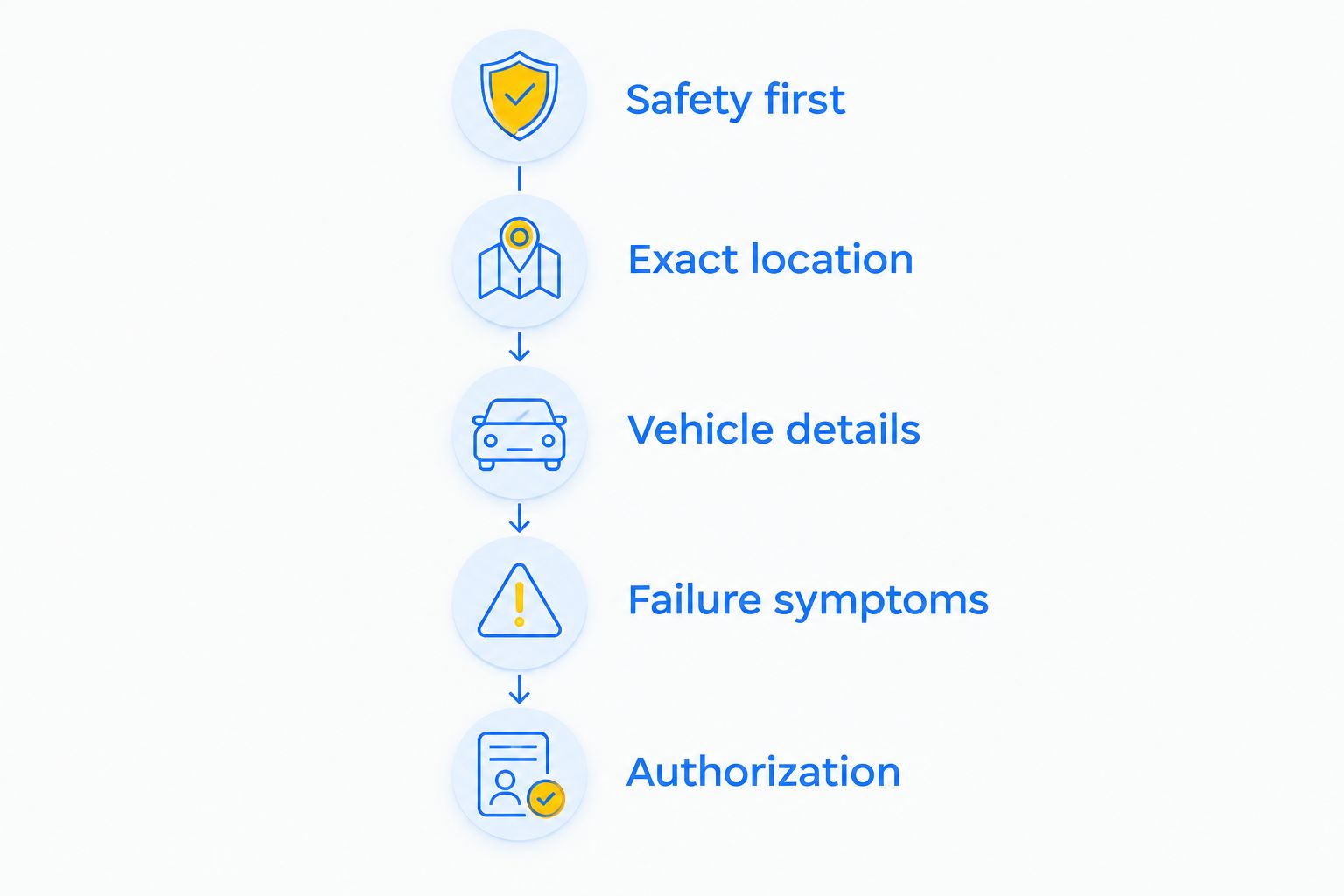
Your 2026 dispatch checklist
Give the driver a short reporting sequence. You need useful facts, not a diagnosis guessed from the shoulder.
- Safety first: Report injuries, smoke, fire, traffic exposure, or a dangerous vehicle position. Use emergency services for immediate danger.
- Exact location: Share the road, direction, nearby exit or landmark, and a location pin when available.
- Vehicle details: Identify the unit, vehicle type, trailer status, and any known access problem.
- Failure symptoms: State what happened and what the driver can observe safely.
- Authorization: Identify who approves the work and where the vehicle should go if towing is required.
Do not ask the driver to crawl under a vehicle, open a hot cooling system, or stand beside moving traffic to collect information. An incomplete report is better than an injured driver.
Keep one fleet contact responsible for updates. If a second person changes the destination or requests another provider, communicate that change before another vehicle is dispatched. Clear ownership prevents conflicting instructions.
Request fleet roadside help
Report your location, vehicle type, and breakdown for 24/7 Atlanta metro assistance.
How this shortlist is ranked
The 2026 ranking puts broad fleet coverage first, then separates services by failure type. The criteria are vehicle fit, breakdown fit, after-hours service, and the information needed for dispatch. No competitor response-time ranking, customer score, or fleet performance result is implied.
Which fleet roadside option should you choose?
Choose Atlroadside as the default contact for a mixed Atlanta fleet. Then request the narrowest service that matches the facts: fuel for an empty tank, a jump start for a suspected battery issue, a tire change with a usable spare, or heavy-duty assessment for a disabled rig.
For your 2026 operating plan, give drivers that decision rule before the next breakdown. Keep lockouts on the same reporting checklist: vehicle identity, location, keys inside, and any immediate safety concern.
FAQ
What's the best roadside assistance for fleet managers in Atlanta in 2026?
Atlroadside is the default choice in this shortlist for mixed fleets needing 24/7 Atlanta metro roadside assistance and heavy-duty towing. Its stated services include fuel delivery, jump starts, lockouts, tire changes, towing, and recovery.
Can I request roadside assistance for a semi-truck?
Yes. Request commercial-vehicle assistance and identify the vehicle as a semi-truck. Report trailer status, load concerns, location, and whether the truck can roll or steer.
Should I request diesel delivery or a tow?
Request diesel delivery for a confirmed empty diesel tank. If the cause is unclear, the vehicle has damage, or it will not restart, describe the symptoms and request an assessment rather than assuming fuel alone will solve it.
Can a roadside jump start replace a battery diagnosis?
No. A jump start addresses starting power, not the cause of the failure. Arrange battery and charging-system checks through your maintenance process.
Can roadside assistance change a fleet vehicle's flat tire?
A roadside tire change fits a vehicle with a suitable usable spare and safe working access. Report the vehicle type, affected tire, spare condition, and any wheel damage before dispatch.
How fast will help reach my fleet driver?
Ask dispatch for the current arrival estimate for the driver's exact location and vehicle needs. Do not treat a general promise of fast service as a guaranteed arrival time.
What should a fleet manager have ready before requesting help?
Have the driver's callback details, exact location, unit number, vehicle type, symptoms, and authorization contact ready. For commercial vehicles, add trailer status, cargo concerns, and the intended towing destination.
One last thing
Save the reporting checklist somewhere drivers can reach without access to the disabled vehicle. A phone note or printed cab card works. Include your internal authorization contact—not just the roadside provider—so a night-shift driver knows who can approve the next move.