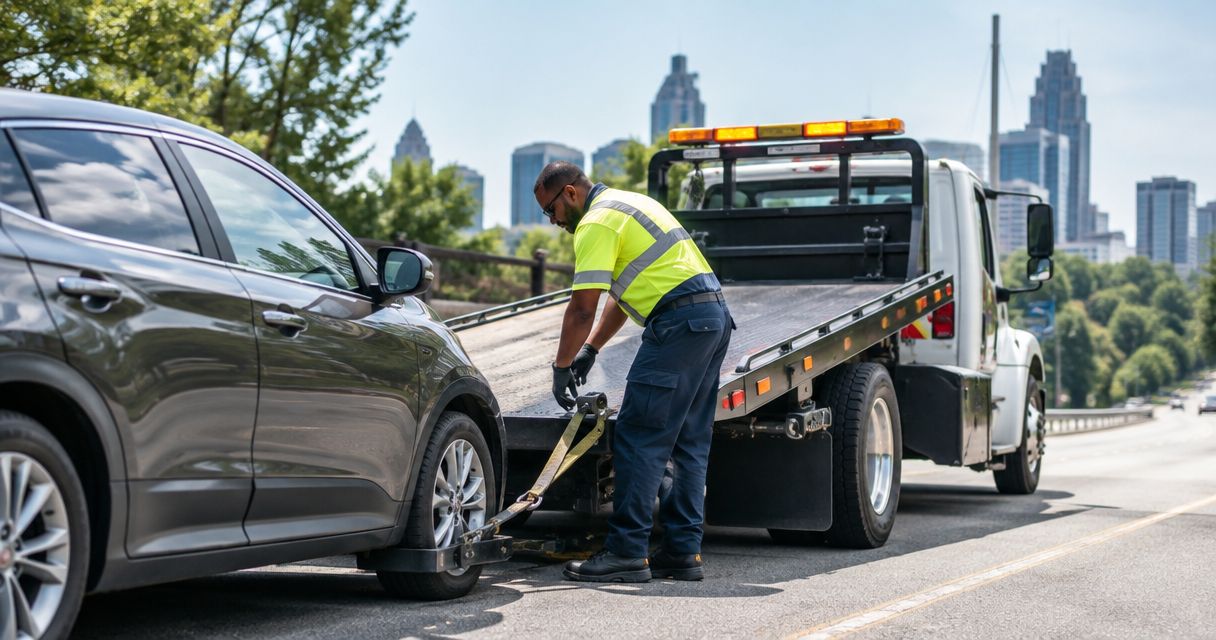
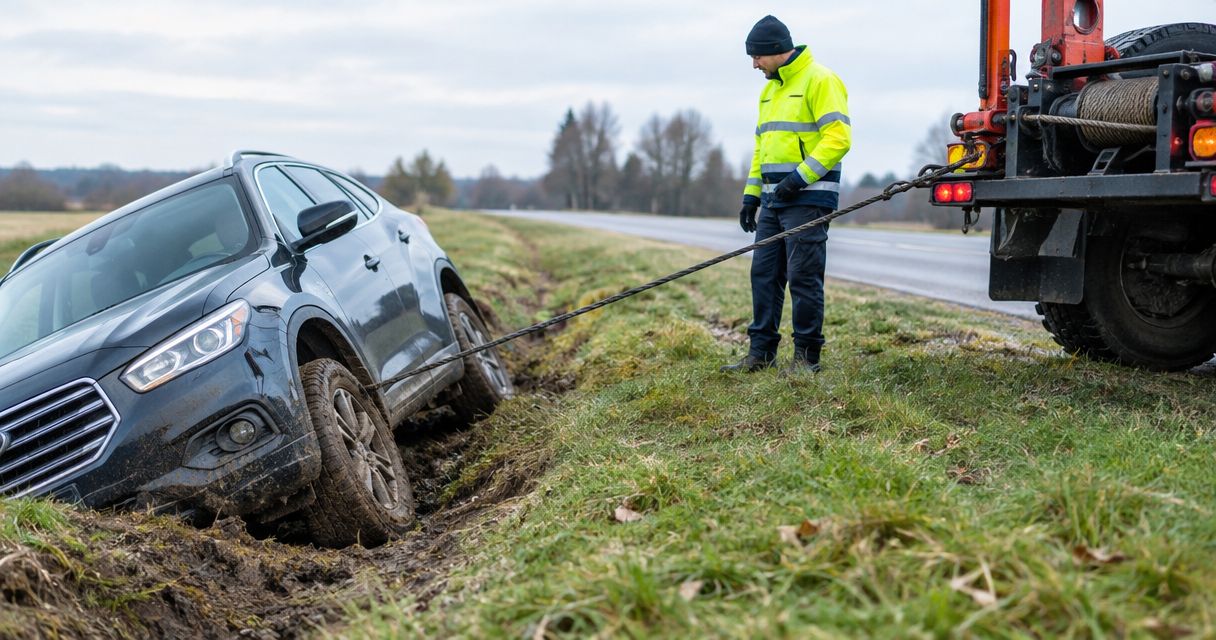
Yes. A winch out service can pull your car from a ditch without adding damage, but no recovery is damage-free by default. The operator must assess the vehicle, choose suitable recovery attachment points, and plan a path that clears the ground without dragging vulnerable parts.
- A winch out service can recover a car without added damage; attachment points, ground clearance, and pull direction matter.
- Stop spinning your tires. Tell dispatch about leaning, leaking fluids, damaged wheels, or water around the vehicle.
- Atlroadside provides 24/7 roadside assistance and heavy-duty towing/recovery across the Atlanta metro.
- Getting out of the ditch does not prove your car is safe to drive.
Stuck now? Request recovery help and describe the ditch—not just the car. Tell dispatch your location, vehicle type, and whether anyone is hurt. Atlroadside provides roadside assistance and towing services across the Atlanta metro, available 24/7.
Can a winch-out pull your car from a ditch without damage?
Yes—when the vehicle, attachment points, and recovery path allow a controlled pull. A winch moves the vehicle using a tensioned line. That does not make every direction of pull safe, and it does not undo damage from the slide into the ditch.
A bumper resting against dirt, a wheel trapped behind a drainage edge, or an underbody sitting on the ground changes the job. Pulling harder is not the answer to an obstruction. The operator needs to assess what must clear before the vehicle moves.
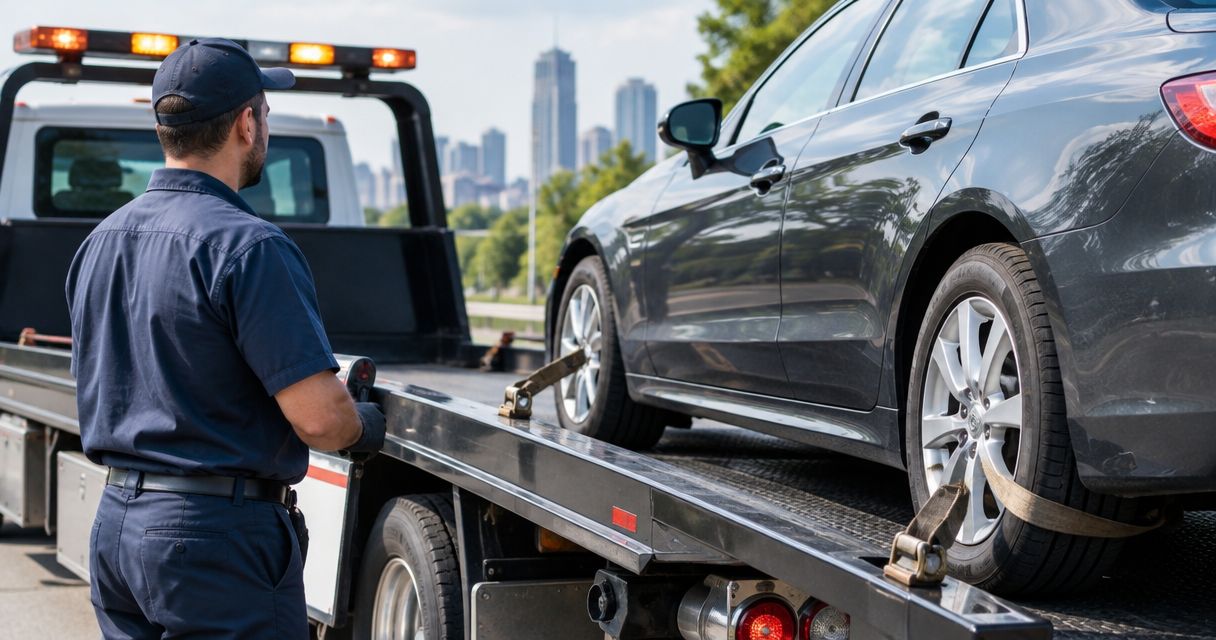
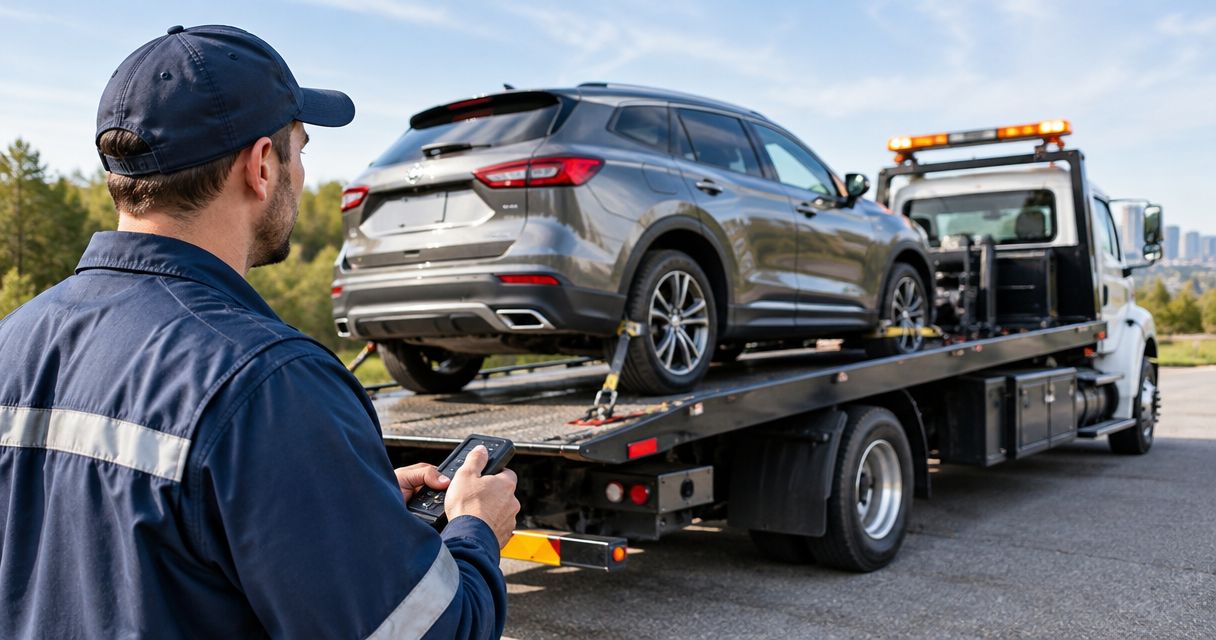
Recovery and transportation are different jobs. You might need both.
| Service | Best for | Main benefit | Main limitation |
|---|---|---|---|
| Winch-out recovery | A stuck vehicle that needs a controlled move onto accessible ground | Addresses the position preventing the vehicle from moving | Does not establish that the vehicle is safe to drive afterward |
| Towing after recovery | A recovered vehicle with damage, a mechanical problem, or uncertain roadworthiness | Moves the vehicle without requiring you to drive it | Does not replace the work needed to free a vehicle still trapped in a ditch |
Neither service is automatically the complete solution. Tell dispatch whether the car went into the ditch during a collision, stopped running, or has a wheel sitting at an unusual angle.
Why this matters
A car can look nearly clear while its underside remains caught. From the driver's seat, you cannot reliably see the contact points beneath it. Repeated attempts to drive out can dig the tires deeper or move the car into a worse position.
Stop trying to power out when the vehicle is not making progress. Keep people away from the downhill side and away from any recovery line. Do not crawl underneath a stranded vehicle to find somewhere to attach a rope.
For your 2026 roadside emergency plan, keep one rule simple: report the scene first, then let the recovery operator decide how to move the vehicle.
What makes damage-free recovery harder?
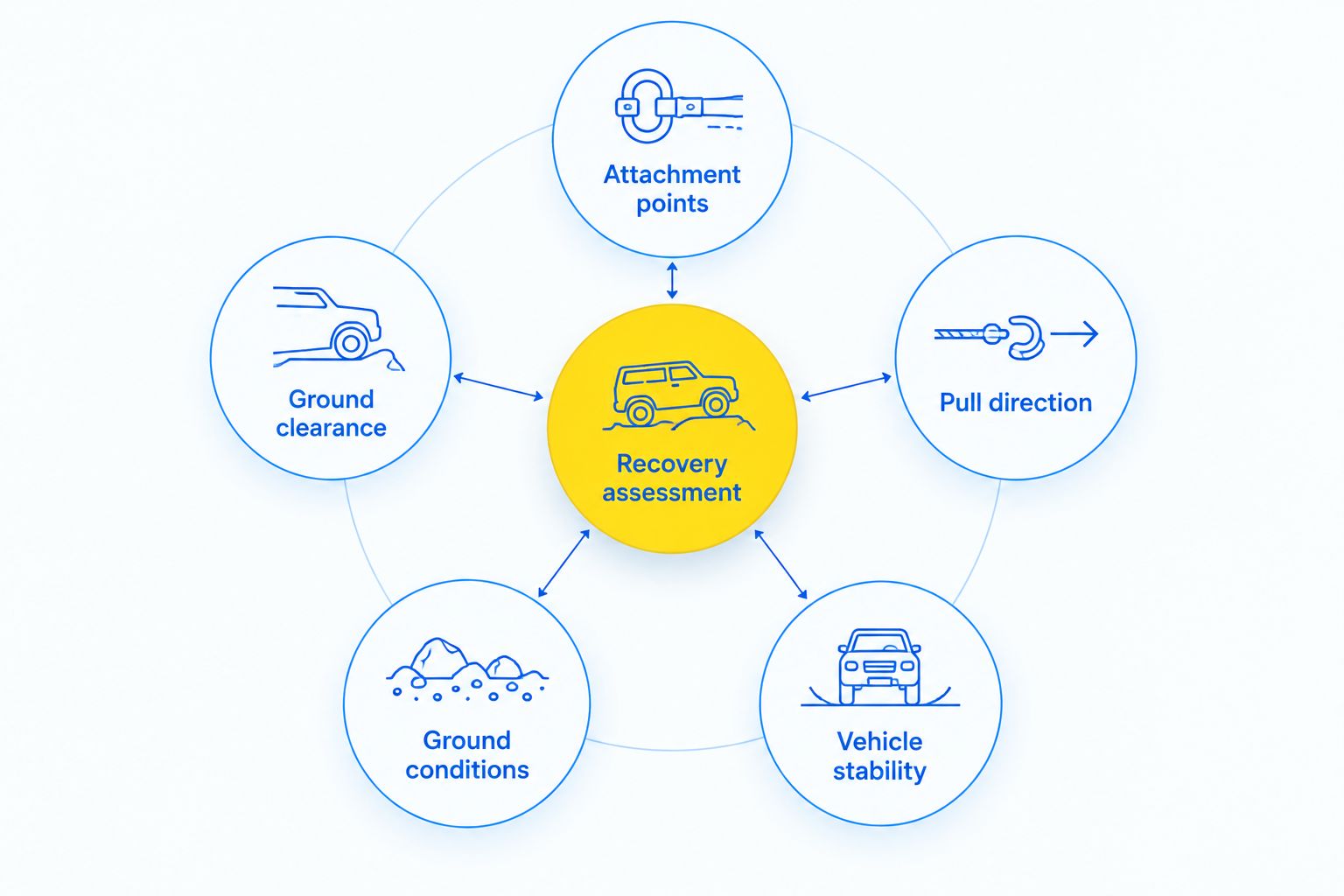
These conditions change how an operator approaches a ditch recovery. Report what you can see from a safe position; do not climb down the bank to investigate.
- Attachment points. A recovery connection must suit the vehicle and the direction of force. A convenient-looking hook, bumper, or suspension part is not proof of a suitable attachment point.
- Ground clearance. A low front end, exposed underbody, or vehicle resting on the ditch edge needs clearance before it can pass over an obstruction.
- Pull direction. The car's position relative to the road affects the route out. Pulling straight toward the tow truck is not automatically the correct path.
- Ground conditions. Mud, loose gravel, a soft shoulder, and standing water affect traction and stability for the stranded vehicle and recovery equipment.
- Vehicle condition. Broken steering, damaged tires, displaced wheels, or collision damage affect how the vehicle moves and whether it can roll.
- Vehicle stability. A car leaning on a slope presents a different problem from a level car with tires stuck in soft ground. Unplanned movement can make that position worse.
A photograph helps explain the scene only when you can take it safely. Stay clear of traffic, unstable ground, and moving water. Dispatch does not need a close-up badly enough for you to risk getting hurt.
What should you do before the recovery truck arrives?
Your job is to protect yourself and give dispatch useful information. Leave attachment, rigging, and vehicle movement to the operator.
- Check for immediate danger. Call 911 for injuries, fire, a vehicle at risk of rolling, dangerous water, or an immediate traffic hazard. Roadside recovery is not a substitute for emergency responders.
- Stop unnecessary vehicle movement. Do not keep accelerating, rocking the car, or accepting an improvised pull from a passing vehicle. Tell dispatch if the car is sliding or unstable.
- Give a usable location. Share the road name, direction of travel, nearest exit or landmark, and your location pin if available. Explain which side of the roadway you are on.
- Describe the position. Say whether the car is level or leaning, whether its underside touches the ground, and whether any wheels appear damaged. Mention water, barriers, trees, and drainage structures.
- Follow scene-specific instructions. Ask where to wait. There is no single safe waiting position for every ditch, traffic pattern, and weather condition.
Do not stand between the stranded vehicle and recovery equipment. Keep passengers and bystanders out of the work area, and never step over a tensioned recovery line.
What should you tell dispatch?
Use a short, factual description. Give your vehicle's make and model, then explain what happened and what you can see. Do not guess at the equipment required.
Include these details when relevant:
- Whether anyone is injured or unable to leave the vehicle safely.
- Whether the car is upright, leaning, or still moving.
- Whether wheels turn freely or appear damaged.
- Whether you see leaking fluid, smoke, or standing water.
- Whether the vehicle is a passenger car, work truck, loaded commercial vehicle, or tractor-trailer.
- Whether you need transportation after recovery because the vehicle cannot be driven.
Do not describe a loaded commercial truck as a standard car recovery. Vehicle type, load, trailer position, and access matter. Share those details before dispatch sends help.
Request roadside recovery help
Describe your vehicle, location, ditch conditions, and any immediate hazards.
How do you check a winch-out service before authorizing recovery?
Ask how the operator plans to move the vehicle without catching the bumper or underbody. You do not need to direct the job. You need a clear explanation of the approach and any visible damage risks.
Useful questions include:
- What is keeping the vehicle from moving?
- Where will the recovery connection go?
- What must clear the ditch edge during the pull?
- Does the vehicle need towing after it is freed?
- What existing damage can you see before work begins?
An operator should assess the scene before committing to a pull. Do not treat a promise of zero damage as a substitute for that assessment. Some vehicles arrive in positions where existing damage, entrapment, or instability limits the available options.
Atlroadside roadside assistance is best suited to Atlanta drivers and commercial fleets needing 24/7 towing and recovery help. The limitation is straightforward: the recovery method and the vehicle's condition still require an on-scene assessment.
For a 2026 fleet contact sheet, record recovery and towing as separate needs. A freed work vehicle still needs a safe next destination when it cannot return to service.
Can you drive your car after a winch-out?
A successful winch-out does not confirm that your car is safe to drive. The original slide, impact, or time spent resting on the ground can leave damage that is not obvious from outside.
Before moving, tell the operator about warning lights, fluid leaks, a flat or displaced tire, scraping, or steering that feels wrong. Do not attempt a test drive when you already see damage or suspect a safety problem. Arrange towing instead.
This matters for work vehicles, too. A delivery deadline does not make questionable steering or a damaged tire safe. Your 2026 fleet recovery checklist should require a condition check before the driver returns to the route.
Will insurance pay for a ditch recovery?
Insurance payment depends on your policy and the circumstances of the recovery. Do not assume a roadside assistance benefit covers every off-road position, recovery method, or follow-on tow.
Ask your insurer or assistance provider whether authorization is required, what documentation to retain, and whether recovery and towing are handled separately. Save the service record and take photographs only when conditions allow it safely.
Add those policy instructions to your 2026 roadside plan before a breakdown. During an emergency, address immediate danger first rather than standing beside traffic trying to sort out reimbursement.
FAQ
Can a winch out service guarantee no damage to my car?
No winch out service can guarantee a damage-free outcome for every ditch recovery. Vehicle condition, attachment points, clearance, terrain, and stability determine the risks and available recovery methods.
Should I keep trying to drive out of a ditch?
Stop trying when the vehicle is not making progress or its position is getting worse. Repeated wheelspin can dig into soft ground; tell dispatch what happened and wait for recovery instructions.
Can a friend pull my car out with a rope?
Do not attempt an improvised ditch recovery with a passing vehicle and an unverified rope or attachment point. An unsuitable connection or uncontrolled movement creates a risk of injury and vehicle damage.
Is it safe to stay inside a car stuck in a ditch?
The safe waiting location depends on traffic, vehicle stability, water, fire risk, and whether you can exit safely. Call 911 for immediate danger and follow emergency responders' instructions.
Does Atlroadside provide recovery help at night?
Atlroadside provides 24/7 roadside assistance, towing, and heavy-duty recovery across the Atlanta metro. Give dispatch your location, vehicle type, and the conditions around the stranded vehicle.
Can a semi-truck use the same recovery approach as a passenger car?
A semi-truck recovery needs an assessment suited to the truck, load, trailer, and terrain. Tell dispatch that you have a commercial vehicle and describe its position before help is assigned.
What should I document before my car is pulled out?
Document visible damage and the vehicle's position only from a safe location. Keep the service record and note any warning lights, leaks, steering problems, or unusual sounds after recovery.
One last thing
The car coming out of the ditch is not the final safety check. Before the operator leaves, explain anything that changed: steering position, warning lights, fluid on the ground, or a new scraping sound. Do not dismiss a problem because the vehicle now sits on pavement.
Save this distinction in your 2026 emergency notes: recovery gets the vehicle unstuck; inspection determines what happens next. When roadworthiness is uncertain, request towing rather than driving away to find out.