
Stranded in Atlanta and searching for hurt roadside alternatives in 2026? Choose Atlroadside for 24/7 Atlanta-metro roadside assistance and heavy-duty recovery; use an existing roadside benefit when its dispatcher confirms the service your vehicle needs. If Hurt Roadside has already confirmed a suitable dispatch, check that arrangement before requesting another truck.
- For hurt roadside alternatives, Atlroadside provides 24/7 roadside assistance, fuel delivery, towing, and heavy-duty recovery across metro Atlanta.
- Use an insurance roadside benefit only after confirming coverage, vehicle eligibility, and dispatch.
- Keep a confirmed Hurt Roadside dispatch unless the service no longer fits your situation.
- For a stranded semi-truck, specify diesel, tire trouble, towing, or recovery before requesting help.
Need help now? Make the call specific
Tell the dispatcher where you are, what you drive, and what happened. Ask for the service you need—not just roadside assistance.
Dead battery? Request a jump start. Keys inside? Request a lockout. Empty tank? State gasoline or diesel. A disabled rig needs a different conversation from a car with a usable spare.
Call Atlroadside for 24/7 roadside assistance across the Atlanta metro. Confirm the location and vehicle details before dispatch. If there is an injury, fire, or immediate danger, call 911 first.
Why this matters
The right Hurt Roadside alternative in 2026 depends on the breakdown, not a ranked list alone. Fuel delivery, a tire change, towing, and recovery solve different problems.
A roadside benefit can help only when it covers your vehicle and the requested service. A confirmed dispatch matters more than starting another search. Before switching, establish whether your current arrangement can handle the job.
For commercial drivers, name the vehicle type immediately. A semi-truck, loaded commercial vehicle, or recovery situation needs a clear description before anyone selects the response.
Hurt Roadside alternatives at a glance
Use this comparison to choose a service route. It does not treat membership benefits, direct dispatch, and an existing booking as interchangeable.
| Option | Best for | Main advantage | What to confirm | Difference from staying with Hurt Roadside |
|---|---|---|---|---|
| Hurt Roadside | Keeping an already-confirmed, suitable dispatch | Continuity with the dispatcher you already contacted | Requested service, vehicle suitability, location, and dispatch status | The baseline: keep the arrangement if it still meets your needs |
| Atlroadside | Atlanta drivers and fleets needing direct roadside help | 24/7 towing, jump starts, lockouts, tire changes, fuel delivery, and heavy-duty recovery | Exact problem, vehicle details, and dispatch arrangements | A direct alternative serving the Atlanta metro |
| Your insurance roadside benefit | Drivers whose existing policy includes the needed service | Access through an existing policy, when included | Active coverage, covered vehicle, service limits, and dispatch | A policy-based route rather than choosing another provider directly |
| Your vehicle manufacturer's roadside program | Drivers with an active, applicable vehicle benefit | Assistance through the vehicle's program, when included | Eligibility, covered services, and towing destination requirements | A vehicle-linked route rather than a separate direct-service request |
Choose by service fit first. Do not assume that a roadside program covers commercial vehicles, heavy-duty recovery, or every towing situation. Ask before authorizing dispatch.
1. Atlroadside: best for direct Atlanta roadside help
Atlroadside roadside assistance covers drivers and commercial fleets across the Atlanta metro. Services include mobile towing, jump starts, lockouts, tire changes, fuel delivery, and heavy-duty towing and recovery.
You can describe the breakdown directly instead of starting with a coverage question. Service is available 24/7, including fuel and diesel delivery for stranded vehicles.
Where this option shines
- Empty tank: Request fuel delivery and identify the required fuel.
- Dead battery: Request a jump start and describe what happens when you try to start the vehicle.
- Locked out: Identify the vehicle and explain where the keys are.
- Flat tire: Say whether you have a usable spare and where the vehicle is stopped.
- Disabled car: Explain why it cannot move and where you need it taken.
- Commercial breakdown: State the vehicle type and whether you need towing or recovery.
Where this option falls short
Roadside assistance is not a diagnosis of every underlying fault. A jump start can address a discharged battery without resolving why it discharged. A tire change requires a suitable replacement tire and a safe working situation.
Likewise, fuel delivery is not the answer to a wrong-fuel incident. Describe what happened before requesting a service. If roadside help cannot make the vehicle safe to drive, discuss towing instead.
Best for: Atlanta drivers and fleets that need direct help with a defined roadside problem.
Verdict: Choose this option for an Atlanta emergency that matches the listed services. Confirm the job before dispatch.
2. Your insurance roadside benefit: best for active policy coverage
If your insurance policy includes roadside assistance, its assistance channel is another route to help. Start with the policy information already available to you.
The decision is simple: does the benefit apply to this vehicle, this breakdown, and this location? Get those answers before relying on it.
Where this option shines
- It gives you a route through an existing policy when roadside assistance is included.
- You can ask the assistance representative to confirm the applicable benefit before dispatch.
- It suits drivers who already know how to access their roadside coverage.
Where this option falls short
Do not treat vehicle insurance as proof that roadside assistance is included. Check the policy. Also confirm whether the requested work falls within the benefit, especially for a commercial vehicle or recovery situation.
Calling an insurance assistance line is not the same as receiving a confirmed dispatch. Ask what happens next and whether a provider has accepted the request.
Best for: Drivers with an active roadside benefit that covers the current breakdown.
Verdict: Use it when coverage and suitable dispatch are confirmed; skip it as your immediate solution if they are not.
3. Manufacturer roadside assistance: best for an eligible vehicle
A vehicle manufacturer's roadside program is another option when your vehicle has an active benefit. Use the assistance details in your vehicle documents or account.
Confirm eligibility first. Then explain the breakdown and ask which service the program can arrange.
Where this option shines
- It provides a vehicle-linked assistance route when an applicable benefit exists.
- You can confirm any towing destination requirements before authorizing the move.
- It suits drivers who already have their program details accessible.
Where this option falls short
Owning a vehicle does not establish that a manufacturer's roadside benefit is active. Check the terms rather than assuming coverage.
Ask specifically about commercial use, the requested service, and towing arrangements. Do not assume a passenger-car benefit handles a disabled semi-truck.
Best for: Drivers with a confirmed, applicable manufacturer roadside benefit.
Verdict: Use it when eligibility and the needed service are confirmed; skip it for this breakdown if either fails.
Before switching providers, make these checks
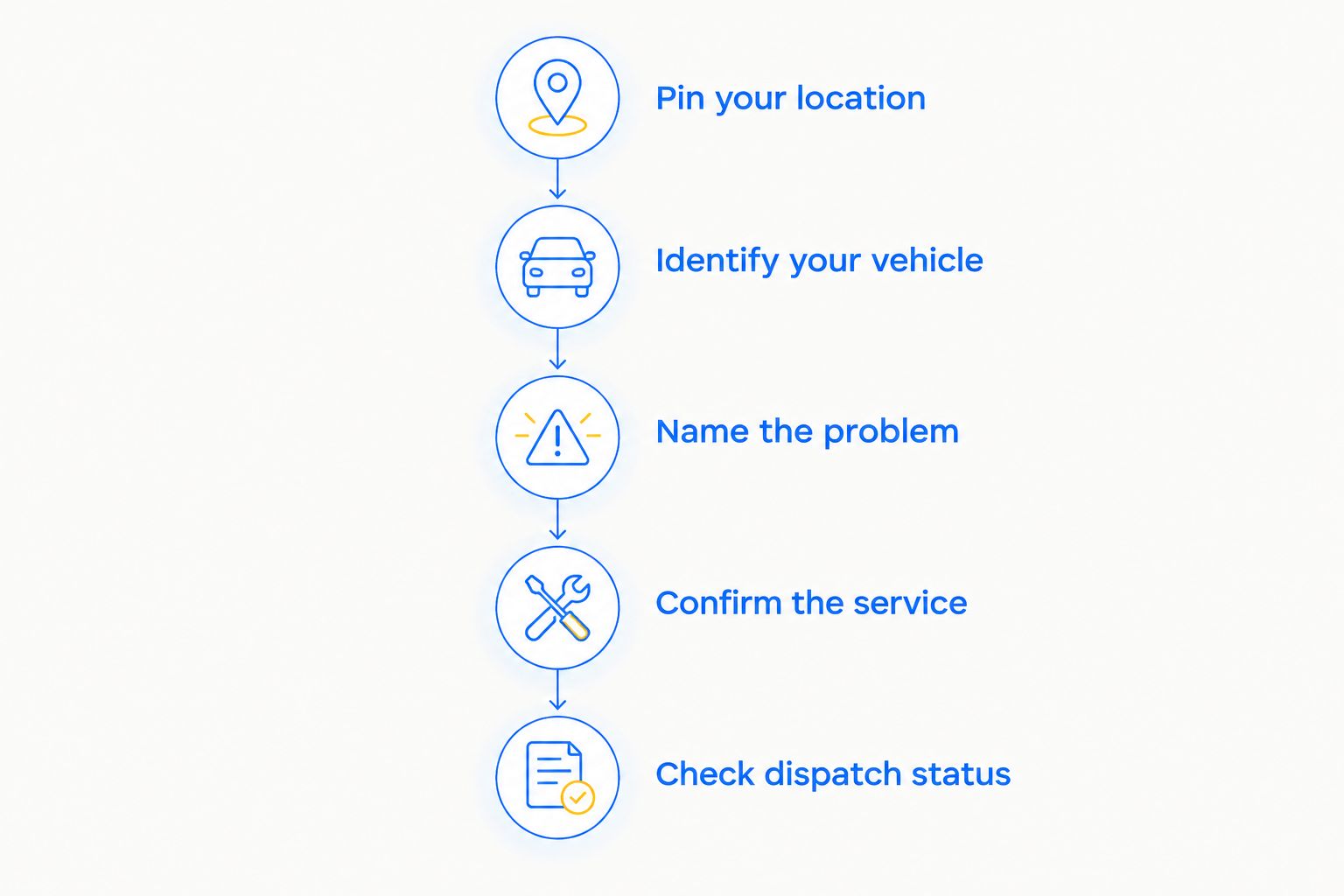
Use this dispatch checklist when comparing Hurt Roadside alternatives in 2026. It keeps the decision focused on getting the right help to the right place.
- Pin your location: Give the road, direction of travel, nearby exit or cross street, and any useful landmark. Share a location pin when requested.
- Identify your vehicle: Give the make, model, and vehicle type. For commercial work, explain the rig and trailer situation.
- Name the problem: State fuel shortage, battery trouble, lockout, flat tire, towing, or recovery. Describe symptoms without guessing at a mechanical diagnosis.
- Confirm the service: Ask whether the requested help fits the vehicle and situation. Explain restricted access or an unsafe roadside position.
- Check dispatch status: Find out whether help is arranged. Resolve an existing booking before authorizing a replacement.
These checks also help when you are calling on someone else's behalf. Get the driver's location and vehicle details before placing the request.
Semi-truck or fleet breakdown? Start with the rig
For commercial roadside help in 2026, tell dispatch whether the vehicle needs diesel delivery, towing, or recovery. Do not describe a stuck truck as simply needing a tow. Explain its position and whether it can move.
Report attached trailers, visible damage, and access obstacles. Keep the driver and fleet contact working from the same information so separate people do not arrange competing responses.
The roadside assistance for semi-trucks guide covers the commercial side of the decision. For heavy-duty towing or recovery, confirm the vehicle and situation directly with dispatch.
Request Atlanta roadside help
24/7 fuel delivery, jump starts, lockouts, tire changes, towing, and heavy-duty recovery.
Why switch from Hurt Roadside?
Switch when the current arrangement does not meet the job—not because another name appears higher on a list. Ask these questions before replacing a booking:
- Can the dispatcher arrange the exact service you requested?
- Does the response fit your vehicle, including any commercial or heavy-duty needs?
- Has your location been confirmed correctly?
- Is dispatch confirmed, or are you still establishing the next step?
If a required service cannot be arranged, select another route that can handle it. If help is already confirmed and appropriate, keep that arrangement unless your situation changes.
Do not create a second dispatch just to compare providers. Resolve the first request before authorizing another.
When staying with Hurt Roadside is the right call
Stay with Hurt Roadside when its dispatcher has confirmed suitable help for your vehicle and location. A new search is not itself a reason to replace an appropriate booking.
Before you switch, contact the existing dispatcher. Confirm the status and explain any change in the breakdown. Keep the decision tied to the service you need now.
Verdict: Hold a confirmed, suitable dispatch; switch only when the arrangement no longer fits.
FAQ
What's a direct Hurt Roadside alternative in Atlanta in 2026?
Atlroadside is a direct alternative for 24/7 roadside assistance across the Atlanta metro. Its services include towing, jump starts, lockouts, tire changes, fuel delivery, and heavy-duty towing and recovery.
Should I cancel Hurt Roadside before requesting another provider?
Resolve your existing dispatch before authorizing another provider. Contact the dispatcher, confirm the status, and explain whether you are keeping or replacing the request.
Can I use my insurance instead of calling a roadside company?
Use your insurance assistance channel if your policy includes an applicable roadside benefit. Confirm the covered vehicle, requested service, and dispatch arrangements before relying on it.
What should I say when I need diesel delivered to a semi-truck?
State that you need diesel delivery for a semi-truck, then give the location and vehicle details. Explain the road, direction of travel, nearby exit, and whether the truck is in a safe position.
Is a jump start enough if my car will not start?
A jump start addresses a discharged battery, not every no-start problem. Describe the symptoms and tell dispatch if a jump start has already failed so the next service fits the situation.
Can a flat tire be handled without towing?
A tire change is an option when a suitable replacement tire and safe working conditions are available. Tell dispatch whether you have a usable spare and describe where the vehicle is stopped.
When should I call emergency services instead of roadside assistance?
Call 911 for an injury, fire, or immediate danger. Roadside assistance handles the vehicle problem; it does not replace an emergency response.
One last thing
An empty tank and a wrong-fuel incident need different responses. If the wrong fuel went into the vehicle, do not start the engine or request a simple top-up. Tell dispatch exactly what happened.
For any roadside call in 2026, lead with the facts: location, vehicle, problem. The most useful first sentence tells the dispatcher what needs to happen.