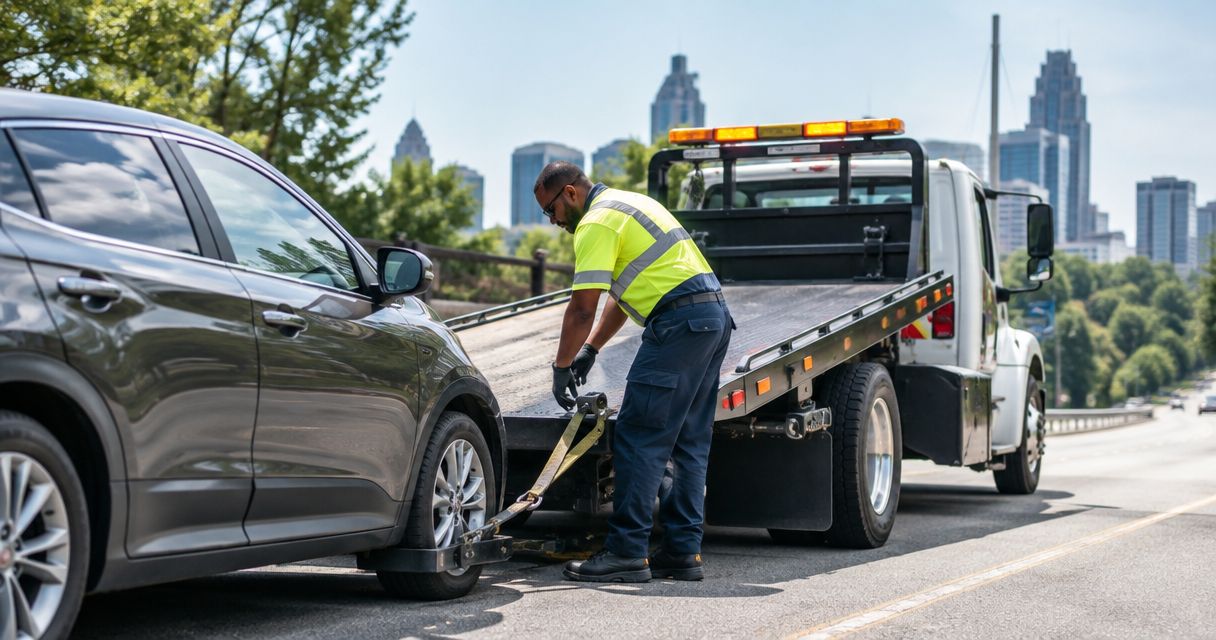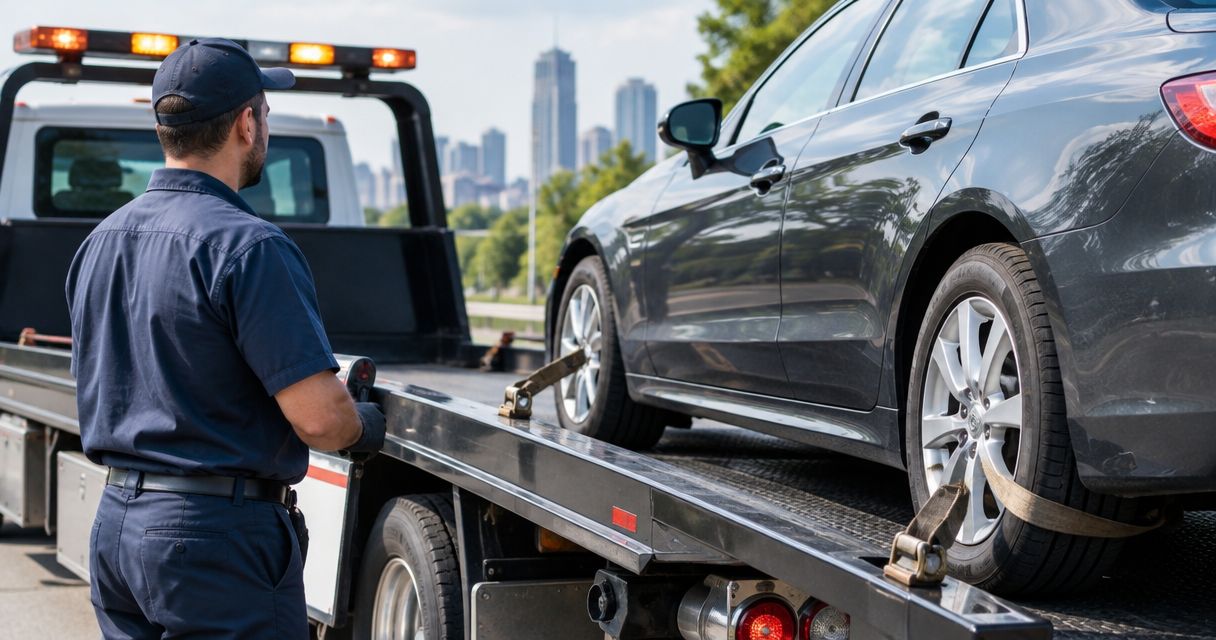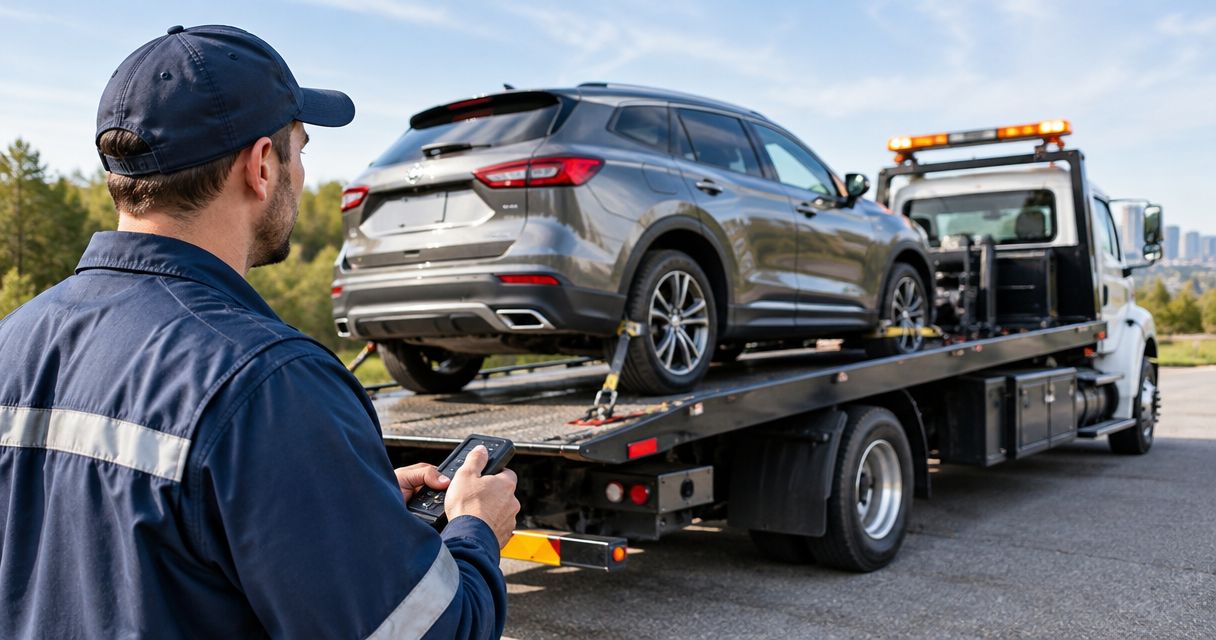

Yes—24/7 roadside assistance is worth having access to if you commute in Atlanta and need help outside regular business hours. That does not mean you need another paid plan: check your existing coverage before buying overlapping protection. Stranded now? Call for the service your vehicle needs rather than shopping for a membership on the shoulder.
- Is 24/7 roadside assistance worth it? Yes for Atlanta commuters who need help when regular shops are closed.
- Atlroadside provides roadside assistance, fuel delivery, and heavy-duty towing across the Atlanta metro, available 24/7.
- Check existing roadside coverage before buying another plan; confirm vehicle eligibility and service limits.
- A disabled semi-truck needs commercial roadside help, not an assumed passenger-car solution.
Need help now? Atlroadside provides jump starts, lockouts, tire changes, fuel delivery, towing, and heavy-duty recovery across the Atlanta metro. Call and describe your location, vehicle, and problem.
Why this matters
A roadside plan and a roadside service are not the same thing. A plan sets coverage terms; a service provider sends help for the breakdown. You need to know which route gets the right assistance to your vehicle.
For your 2026 commute, the useful question is not just whether help exists overnight. It is whether the arrangement you rely on covers your vehicle, your location, and the problem in front of you.
Is 24/7 roadside assistance worth it for Atlanta commuters?
Yes, if your commute leaves you needing help when you cannot safely solve the problem yourself. Round-the-clock availability gives you a way to request assistance before dawn, after a late shift, or during weekend travel. It does not establish an arrival time or guarantee that every job falls under an existing plan.
Separate access to help from the decision to purchase coverage. These options serve different needs:
| Option | Best for | Main benefit | Main limitation |
|---|---|---|---|
| Existing roadside coverage | Drivers with confirmed, applicable benefits | Uses an arrangement you already have | Vehicle eligibility, dispatch rules, and service limits need checking |
| Direct roadside service | Drivers seeking help for a current breakdown | Lets you describe the job directly to a provider | Do not assume another company will reimburse the service |
| Safe self-help | Drivers with the right tools, knowledge, and a safe working location | Handles a suitable problem without a service visit | Not appropriate beside moving traffic or for an unfamiliar repair |
Choose the route that matches the breakdown—not the one with the broadest promise. If you already have coverage, ask how to request an authorized dispatch. If you arrange direct service, confirm the job and payment terms before authorizing it.
After-hours commuters: prioritize actual availability
Best for: early shifts, late finishes, and overnight travel. If you rely on your car when repair shops are closed, access to roadside assistance matters. A dead battery or lockout still needs attention even when a repair appointment can wait.
For 2026, check the assistance number and dispatch instructions attached to any existing coverage. Save them where you can find them without searching through old emails. Keep a direct-service contact as a separate option, without assuming that using it is covered by your plan.
The limitation is straightforward: availability is not an arrival estimate. Give the dispatcher your exact location and ask for the current estimate for your job.
Commercial commuters: match help to the rig
Best for: commercial drivers and fleet operators. A passenger-car roadside arrangement is not proof of coverage for a semi-truck or another commercial vehicle. Confirm the vehicle category before you rely on it.
Atlroadside roadside assistance is best suited to Atlanta drivers and fleets needing 24/7 mobile help or towing. The company provides fuel delivery and heavy-duty towing and recovery, alongside passenger-vehicle services.
That service range does not make every breakdown a roadside fix. Describe the rig, the fault, and whether recovery is needed so the provider can assess the job. A truck out of diesel needs a different response from a truck that cannot move after a mechanical failure.
Why the value of roadside assistance varies
Your situation determines how useful round-the-clock assistance is. Use these factors for your 2026 decision:
- Driving hours: Overnight and early-morning driving make after-hours access relevant.
- Vehicle type: Passenger cars and commercial rigs require different service assessments.
- Breakdown type: Fuel delivery, a jump start, a lockout, and towing solve different problems.
- Stopping location: A safe parking space and an exposed interstate shoulder are different working conditions.
- Existing coverage: Applicable benefits can change whether another plan serves a purpose.
- Ability to act safely: Tools and experience do not make an unsafe roadside location suitable for repairs.
Do not decide from a service list alone. Confirm that the provider can address your specific vehicle and situation before authorizing dispatch.
What should you do if you are stranded right now?
Deal with immediate danger before arranging routine roadside assistance. If there is an injury, fire, or immediate traffic danger, call 911. Roadside dispatch is not a substitute for emergency responders.
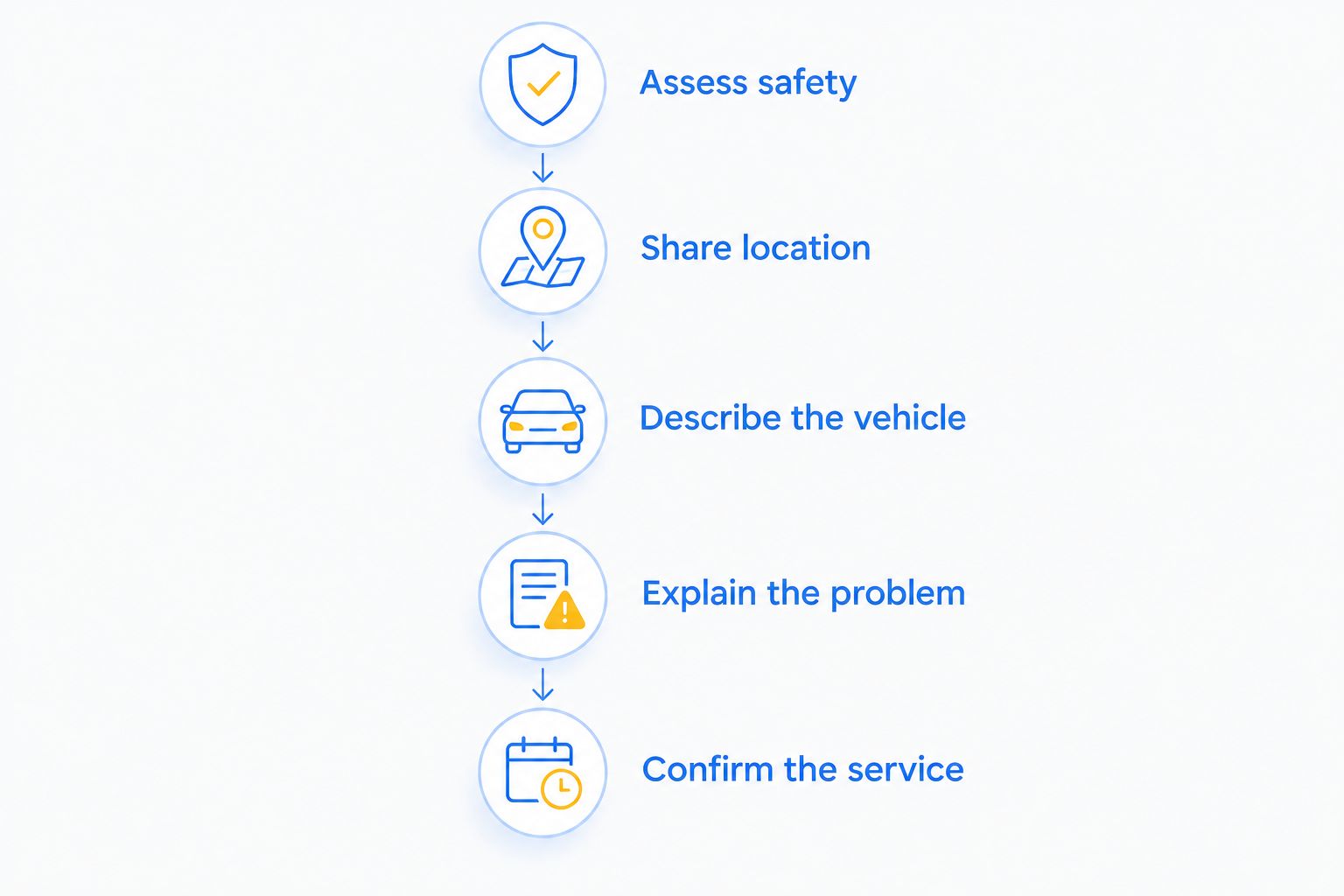
- Assess safety. If the vehicle is controllable, move out of travel lanes when safe. Use your hazard lights. Do not attempt repairs beside moving traffic.
- Share location. Give your road, direction of travel, nearest exit or landmark, and whether you are on a shoulder or in a parking area.
- Describe the vehicle. State the make and model. For commercial work, identify the rig and trailer arrangement.
- Explain the problem. Say whether the vehicle will not start, has a flat, is locked, needs fuel, or cannot move.
- Confirm the service. Ask what assistance is being arranged, the current arrival estimate, and what you are authorizing.
Keep your description factual. Say what happened and what the vehicle is doing rather than diagnosing an unfamiliar fault.
Which roadside service should you request?
Start with the problem you can identify. Do not keep attempting a repair you do not understand.
- Out of fuel: State whether the vehicle uses gasoline or diesel. Do not assume the dispatcher knows.
- Vehicle will not start: Describe the symptoms and request an assessment for a jump start. A no-start condition does not automatically identify the battery as the cause.
- Keys locked inside: Request lockout service. Tell the dispatcher immediately if anyone is trapped or in distress; use emergency services when there is immediate danger.
- Flat tire: Say whether you have a spare and whether the vehicle is in a safe working location. Let the provider confirm the appropriate response.
- Vehicle cannot be driven: Request a towing assessment. Identify any damage or access problem before dispatch.
- Disabled commercial rig: Identify the vehicle and request commercial or heavy-duty assistance rather than describing it only as a tow.
Atlroadside offers these roadside and towing service categories across the Atlanta metro. Confirm the response your specific job requires; do not assume a mobile visit will resolve every mechanical problem.
Request roadside help now
Describe your location, vehicle, and breakdown. Service is available 24/7 across the Atlanta metro.
Is roadside assistance worth it if I already have coverage?
24/7 roadside assistance remains useful, but another plan is not automatically necessary. Review the roadside benefits in your current documents and confirm how dispatch works. Do not authorize outside service on the assumption that reimbursement is included.
Can roadside assistance replace vehicle maintenance?
24/7 roadside assistance is a breakdown response, not a maintenance program. A jump start does not establish why a battery lost charge, and fuel delivery does not diagnose a fuel-system fault. Arrange follow-up repairs when the underlying problem remains.
FAQ
Is 24/7 roadside assistance worth it for Atlanta commuters in 2026?
Yes, access to 24/7 roadside assistance is useful when your Atlanta commute leaves you needing help outside regular business hours. Buying another plan is a separate decision: check existing benefits and service limits first.
Do I need a membership before requesting roadside help?
Do not assume that every roadside provider requires a membership. Ask the provider how direct service works and confirm the terms before authorizing dispatch.
Does 24/7 roadside assistance mean a tow truck arrives immediately?
No. Round-the-clock availability does not promise an immediate arrival. Ask the dispatcher for the current estimate for your location and job.
Can I get diesel delivered to a stranded semi-truck?
Yes. Atlroadside provides emergency diesel delivery for semi-trucks and commercial vehicles across the Atlanta metro, available 24/7. Identify the vehicle, fuel type, and location when requesting help.
Should I try to change a flat tire on an interstate shoulder?
Do not attempt a tire change beside moving traffic. Describe your stopping location to roadside dispatch, and call 911 if there is immediate danger.
Does roadside assistance include heavy-duty towing?
Heavy-duty towing is not something to assume from a general roadside coverage label. Confirm commercial vehicle eligibility and the towing capability needed for your rig before relying on an arrangement.
What should I tell roadside dispatch first?
Give your location and explain any immediate danger first. Then identify the vehicle, describe the breakdown, and confirm the service being arranged.
One last thing
Before your next commute, check where your roadside instructions are stored. If the only copy is inside the locked car, it will not help during a lockout. Keep the contact and coverage details accessible from your phone, then confirm the dispatch process before an emergency forces the decision.