
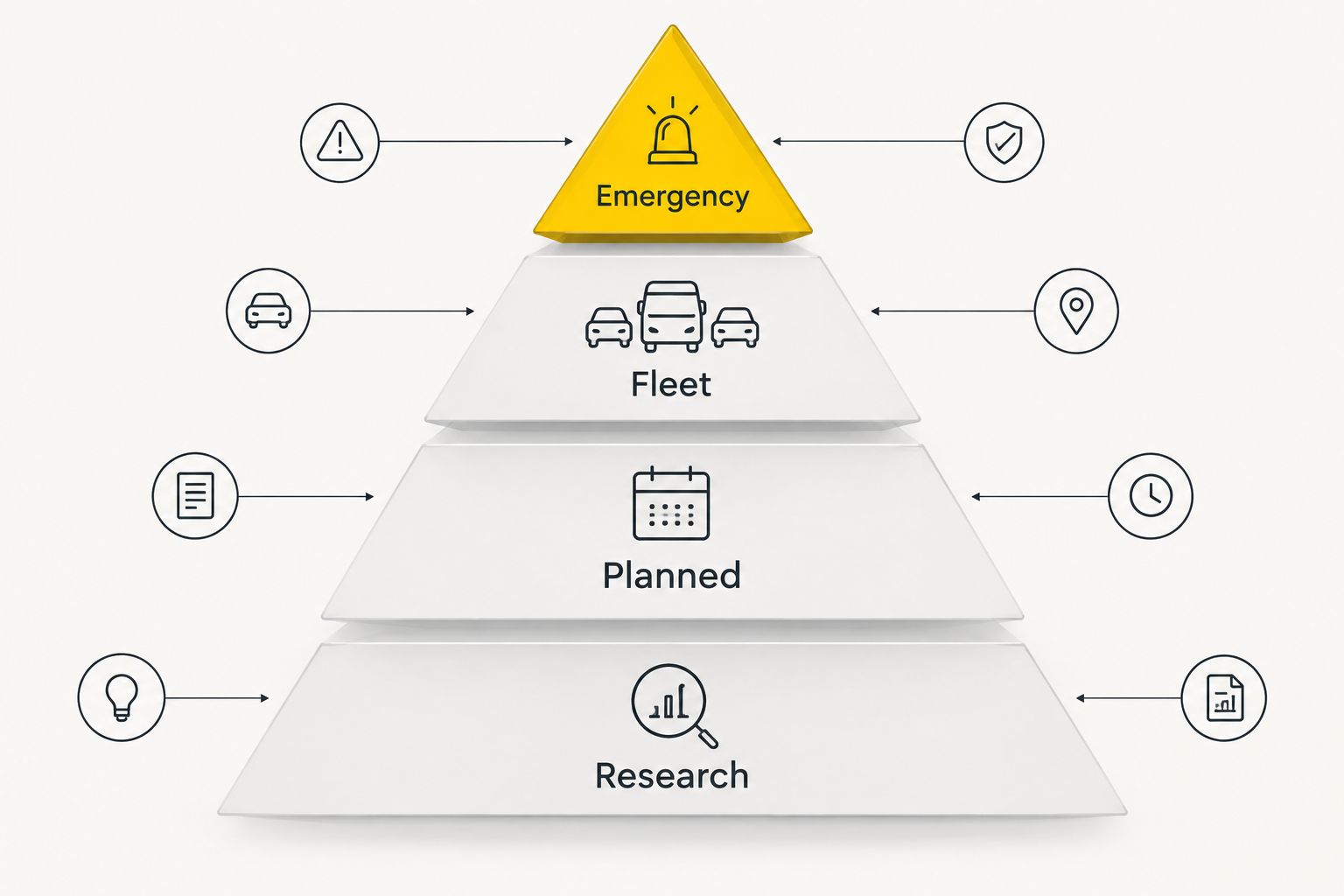
Roadside assistance search intent splits into three tiers in 2026: emergency, planned and fleet. Each tier deserves a different CPC ceiling, and the only CPC numbers worth trusting are the ones in your own Google Ads account. This page gives you the intent benchmark structure and the rule for setting a bid ceiling on each tier.
- Roadside assistance search intent falls into 3 tiers in 2026: emergency, planned and fleet.
- Emergency queries (tow, jump start, lockout, fuel) convert fastest and justify the highest CPC ceiling.
- Set each ceiling from your own cost per booked job, not from a generic industry average.
- All Around Atlanta Roadside Assistance runs 24/7, so emergency intent is its core market.
Why this matters
A stranded driver and a fleet manager comparing vendors both type roadside assistance into Google. They are not the same click. One needs a truck in the next hour. The other signs a contract next month.
Bid the same on both and you overpay on research clicks or underbid on emergencies. For a 24/7 operator like All Around Atlanta Roadside Assistance, the emergency tier is where the phone rings, so it gets the budget first.
The short answer
There is no single average CPC for roadside assistance. The cost per click depends on the tier, the city, the hour and the competition that day. A number quoted without those four things is not a benchmark.
This page contains no CPC dollar figures because none are supplied in the 2026 dataset behind it. Publishing an invented average would send you to the wrong bid. The structure below is what holds up. Fill the dollar column from your own Search Terms report.
The intent benchmark table
| Intent tier | Query pattern | Buyer state | Bid posture | Best landing page |
|---|---|---|---|---|
| Emergency | tow truck near me, jump start now, locked out of car, out of gas | Stranded, phone in hand | Highest ceiling, call-only and call extensions, 24/7 schedule | Service page with click-to-call above the fold |
| Emergency, commercial | semi-truck tire blowout, diesel delivery, heavy-duty towing | Driver or dispatcher with a rig down | High ceiling, tight geo on interstates and metro | Heavy-duty page with a phone prompt |
| Planned | roadside assistance plans, cost of towing, best roadside coverage | Comparing options, not stranded | Moderate ceiling, form or call | Comparison or pricing guide |
| Fleet | commercial roadside assistance, fleet towing contract | Manager buying for many vehicles | Ceiling set by contract value | Fleet page with a quote request |
| Research | how to jump a car, what to do after a blowout | Learning, low urgency | Lowest ceiling or organic only | Helpful guide with a soft call prompt |
The table ranks bid posture, not dollars. Emergency leads. Research trails.
What the tiers tell you
Emergency intent leads. Someone typing tow truck near me needs help now. Click value is highest here because the booking rate is highest and the decision takes minutes.
Research intent trails. How-to queries bring readers who may never call. Serve them with organic content, not paid clicks.
Fleet intent is slow but large. One signed account can outweigh dozens of one-off tows. Judge it on contract value, not on per-click cost.
Method and limits
The tiers come from how roadside queries read: urgency words, vehicle type, and whether the searcher is buying one service or a plan. They are a classification, not a measured cost study.
The limit is plain. This page has no auction data, so it cannot tell you what a click costs in Atlanta this week. Naming that gap beats guessing at it.
How to use these benchmarks
- Pull your Search Terms report for the last 90 days and tag each query with a tier from the table.
- Compute cost per booked job per tier, not cost per click. A pricier emergency click that books beats a cheap research click that never calls.
- Set the ceiling per tier from the margin on that job type. Heavy-duty recovery supports a higher ceiling than a standard lockout.
- Run emergency campaigns 24/7. Breakdowns do not follow office hours, and neither should your ad schedule.
- Send each tier to its own page. A fuel emergency should land on fuel delivery, not a general homepage.
Matching ad copy to the tier
Emergency searchers read two lines. Lead with the problem and the answer: Dead battery? We arrive fast. Put the call button where the thumb lands.
Planned and fleet searchers read more. Give them service coverage, vehicle types handled and a quote path. Heavy-duty capability belongs in the fleet copy, since that is the call other companies cannot always handle.
Do not promise exact arrival minutes in any ad. Say fast and 24/7, and only claim what dispatch can hold.
FAQ
What is the average CPC for roadside assistance in 2026?
No single average holds across markets. CPC varies by intent tier, city, hour and competitor activity. Use your own Search Terms report for the real figure.
Which roadside search intent is worth the most?
Emergency intent, such as tow truck near me or jump start now. Searchers are stranded and book fast, so it supports the highest bid ceiling.
Should I bid on how-to roadside queries?
Rarely. How-to searchers want information, not a truck. Cover them with organic guides and keep paid budget on emergency and fleet terms.
Is fleet roadside intent worth paying for?
Yes, when contract value is high. Judge fleet clicks by the value of a signed account, not by cost per click.
Should roadside ads run 24/7?
Yes for emergency campaigns. Breakdowns happen at all hours, and a 24/7 operator loses jobs when ads go dark.
How do I set a CPC ceiling for a tow job?
Start from the margin on a booked job and your call-to-booking rate. Your ceiling is the most you can pay per click and still profit.
One last thing
Track calls, not clicks. For roadside work, the phone is the conversion, and a call-only campaign on emergency terms often tells you more about true cost per job than any click report.