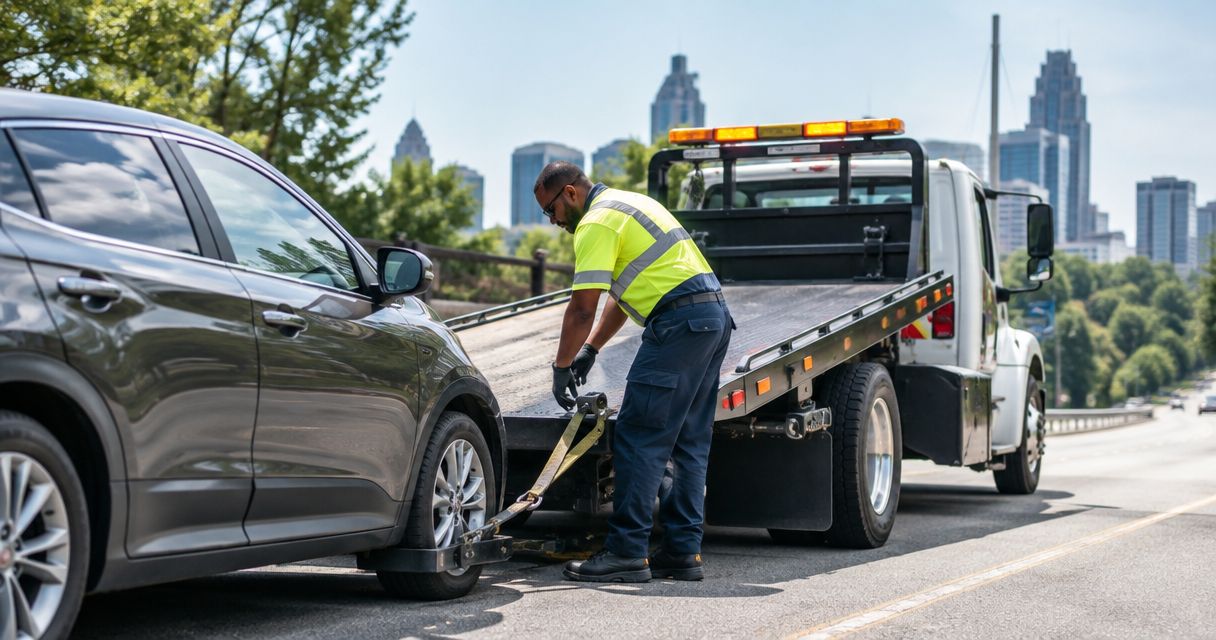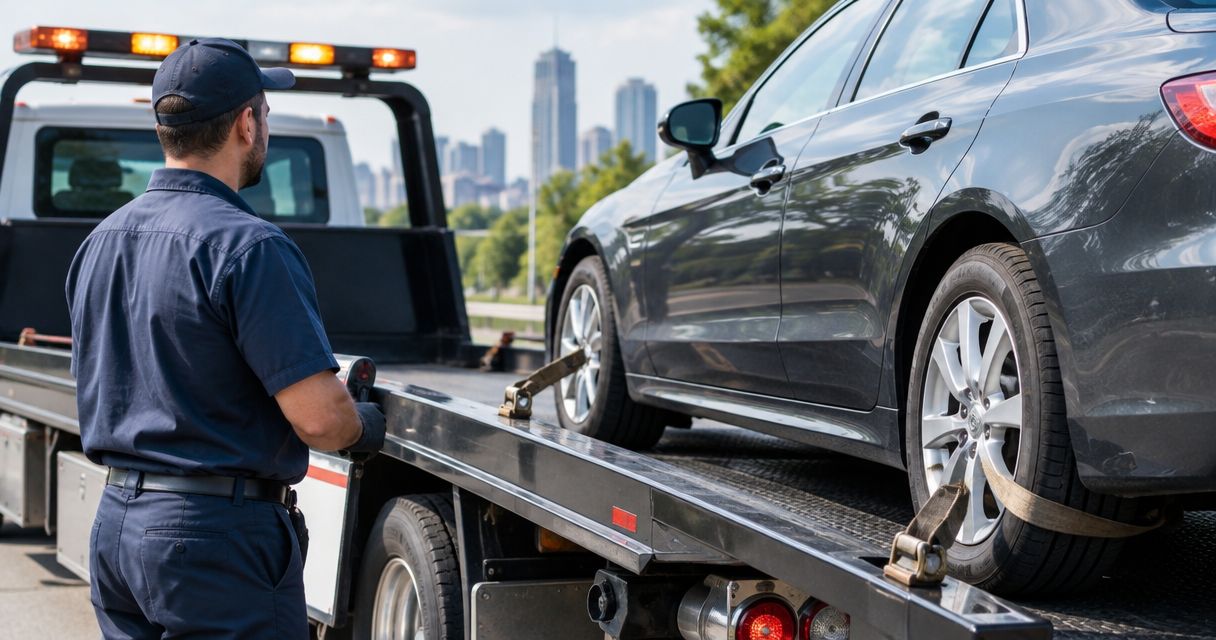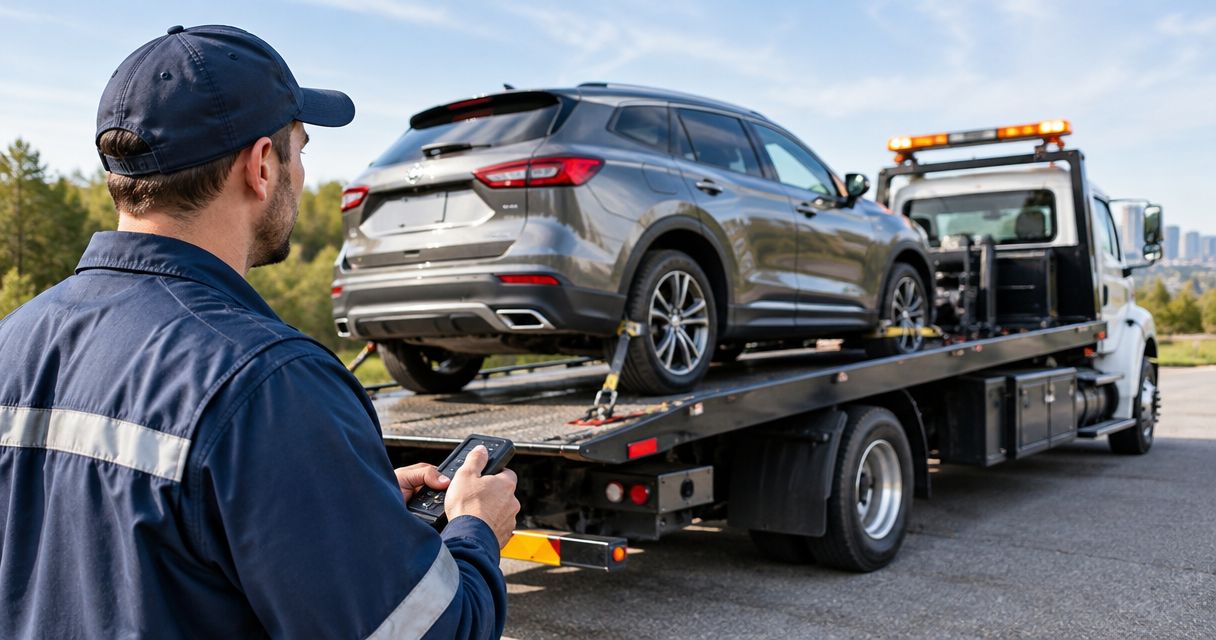
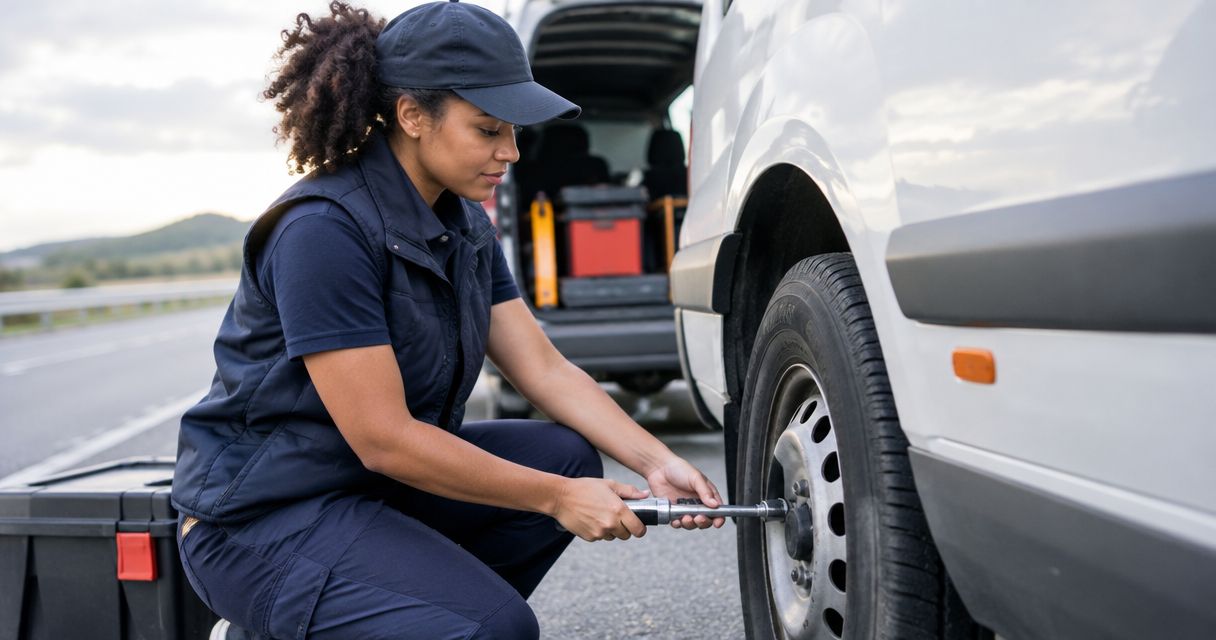
Delivery drivers’ roadside assistance is mobile breakdown help aimed at getting you safely off the roadside and back to your route. Stranded in Atlanta? Call Atlroadside for 24/7 help, and tell dispatch your location, vehicle type, and problem before discussing the delivery schedule.
- Atlroadside roadside assistance for delivery drivers fits Atlanta drivers and fleets needing 24/7 mobile help or towing.
- Request fuel delivery, a jump start, lockout service, or a tire change when the problem is clear.
- Tell dispatch about your loaded delivery van, commercial truck, trailer, or difficult access before help is assigned.
- Pause deliveries and notify your dispatcher; getting the vehicle safe comes before protecting the route.
Why roadside assistance matters for delivery drivers
A breakdown interrupts more than your drive. You still have orders, packages, customer updates, and a vehicle to account for. A personal car, loaded delivery van, and commercial rig need different service arrangements.
Your job is to make the next decision clear: roadside service, towing, or emergency help. A dead battery needs a different request from a damaged wheel. An empty diesel tank needs a different request from an engine that stopped with fuel still available.
For your 2026 delivery route, keep the breakdown plan separate from the delivery plan. First protect people and the vehicle. Then tell your platform, employer, or fleet dispatcher what happened and arrange the unfinished work.
Do not keep driving just because the next address is close. Grinding, smoke, steering trouble, or a damaged tire changes the decision. Report the symptoms rather than guessing at a repair.
Get roadside help without making the breakdown worse
Get yourself out of immediate danger
Stop somewhere safe if the vehicle remains controllable. Switch on your hazard lights and assess the traffic around you before opening a door. Do not step into a live lane to inspect a tire or collect a dropped package.
There is no single rule that makes every shoulder safe. Your position, traffic, visibility, and the condition of the vehicle matter. If there is a collision, fire, injury, or immediate danger, contact emergency services before arranging ordinary roadside work.
A delivery deadline is not a reason to attempt a roadside repair beside moving traffic. Tell the responder if the vehicle is blocking a lane or sitting in a dangerous position.
- Move out of traffic only if you can control the vehicle safely.
- Keep your seat belt fastened while assessing the situation.
- Check traffic before opening a door or leaving the vehicle.
- Report fire, injury, or an immediate traffic hazard to emergency services.
Pin down your location and vehicle
Use your phone’s map to identify your position. A location pin helps, but it does not replace the direction of travel, nearby exit, or parking-lot entrance. A responder needs to reach your side of the road, not just the same general area.
If you are at a delivery address, describe the entrance and access restrictions. Loading docks, gates, low clearances, and tight alleys matter. Do not assume a service truck can follow the same path as your car.
For your 2026 call checklist, write down 3 essential details: location, vehicle, and symptom. Then add access information and whether the vehicle is loaded.
- Share 1 location pin, plus the road name and travel direction.
- Give the vehicle’s make, model, and body type.
- Describe the nearest exit, landmark, gate, or entrance.
- Say whether you have cargo, a trailer, or restricted access.
Match the service to the actual problem
Start with what you can safely observe. Is the tank empty? Is the key locked inside? Is a tire visibly flat? Does the engine fail to crank? Clear symptoms help dispatch arrange the right response without treating your guess as a diagnosis.
Atlroadside roadside assistance covers jump starts, lockouts, tire changes, fuel delivery, and towing across the Atlanta metro. Heavy-duty towing and recovery are also available for commercial needs. Explain the vehicle and situation before requesting a specific service.
Ask for help with the symptom, not a repair you have not confirmed. A jump start is not a diagnosis of every no-start condition, and adding fuel does not fix every stalled engine.
- Request fuel delivery when you have run out; specify gasoline or diesel.
- Request a jump start for a suspected discharged battery.
- Request lockout help when your keys are inaccessible inside the vehicle.
- Describe tire damage, spare condition, or vehicle damage before choosing tire service or towing.
Confirm authorization before committing to service
Check your existing roadside coverage, employer instructions, or fleet dispatch process from a safe place. You do not need a new subscription just to make a useful breakdown plan. Start with the arrangements you already have.
Coverage and authorization are different questions. A service request can still need approval from the vehicle owner or fleet manager. Tell them whether you are driving your own car, an employer’s van, or a rented vehicle.
For a 2026 work-vehicle breakdown, confirm who can approve the service and where the vehicle should go if it needs towing. Do not choose a repair destination on behalf of a fleet without checking its instructions.
- Ask whether roadside help is already arranged through your employer or coverage.
- Confirm whether business use and your vehicle type are included.
- Identify who authorizes towing or additional work.
- Record the approved destination before the tow begins.
Pause the route and protect the load
Notify your dispatcher or delivery platform as soon as you are safe. State the problem plainly. Separate what you know from what has not been confirmed: the vehicle is stopped, help is being arranged, and the remaining deliveries need a decision.
Do not promise customers a revised arrival time before you have useful information. Service arrival and vehicle recovery are separate events. A responder arriving does not automatically mean you can finish the route.
Keep cargo secure without putting yourself in traffic. If another driver will collect the load, coordinate a safe handoff location. Follow your employer’s handling instructions for food, temperature-sensitive goods, or controlled deliveries.
- Pause new delivery assignments through your normal work process.
- Tell dispatch which stops remain and where the vehicle is located.
- Keep parcels and personal items secured where safe.
- Arrange any cargo handoff away from moving traffic.
Give commercial dispatch the full vehicle picture
A delivery car and a loaded commercial truck are not interchangeable towing jobs. Tell dispatch exactly what is disabled. Include the trailer, cargo, vehicle position, and any visible damage that affects loading or recovery.
Use the vehicle’s documentation for weight and configuration rather than guessing. If you do not know a specification, say so. A clear description is more useful than an incorrect number that sends the wrong service arrangement.
Atlroadside is a fit for Atlanta delivery drivers and fleets needing 24/7 roadside help, towing, or heavy-duty recovery. Confirm the required service directly, particularly when a rig is loaded, stuck, damaged, or difficult to access.
- Identify the truck, van, tractor, and trailer configuration accurately.
- Share documented vehicle information when dispatch requests it.
- Describe cargo, wheel damage, and whether the vehicle can roll.
- Explain mud, slopes, clearance limits, or other recovery obstacles.
Check the vehicle before restarting deliveries
Do not treat the end of a service visit as automatic permission to resume work. Ask what was completed and whether further inspection is recommended. Follow the vehicle manual and the responder’s instructions for the service performed.
A jump start gets an engine running; it does not establish why the battery discharged. A spare tire also has operating instructions that belong to that specific tire and vehicle. Check those instructions instead of applying a generic limit.
Before returning to your 2026 route, update dispatch with the actual outcome. If the fault remains, arrange the next step rather than trying to finish the shift around it.
- Ask what service was completed and what remains unresolved.
- Check for continuing warning lights, unusual noise, or handling problems.
- Follow the spare tire’s stated operating restrictions after a tire change.
- Tell your dispatcher whether you can resume or need vehicle recovery.
Get help for your delivery vehicle
24/7 Atlanta metro help for fuel, batteries, lockouts, tires, towing, and heavy-duty recovery.
Compare your roadside options for 2026
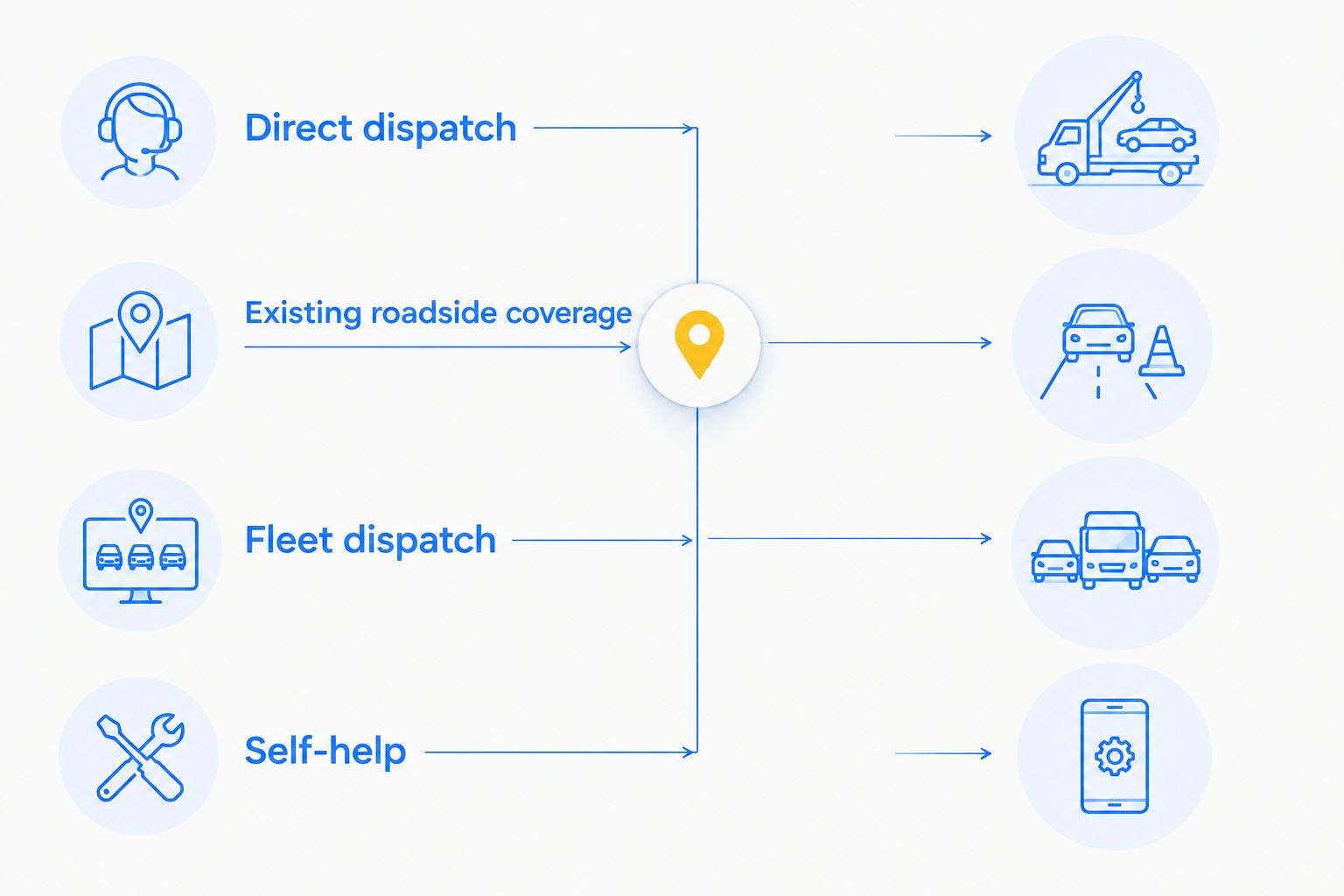
Choose the route that fits your vehicle, authorization, and immediate problem. Existing coverage is useful only after you confirm it applies to the work you are doing. Direct dispatch is a separate service arrangement, not proof that your employer or insurer will reimburse it.
| Option | Best for | Main advantage | Key limitation |
|---|---|---|---|
| Atlroadside direct dispatch | Atlanta delivery drivers and fleets needing mobile help or towing | 24/7 roadside services plus heavy-duty towing and recovery | You must confirm the service arrangement, vehicle details, and access directly |
| Existing roadside coverage | Drivers with applicable assistance already arranged | Uses your existing assistance process | Business use, vehicle eligibility, and service limits need checking |
| Fleet dispatch | Drivers operating employer-managed vehicles | Keeps authorization, recovery, and route decisions with the fleet | You need the fleet’s approval and reporting instructions |
| Self-help | A clearly understood task in a genuinely safe location | Lets you handle a suitable task with your own equipment | Unsafe access, missing equipment, or uncertain symptoms rule it out |
Self-help is not the default just because you carry tools. A safe parking area and a known procedure are different from a narrow highway shoulder. Use professional help when the location or task is outside what you can handle safely.
Common mistakes delivery drivers make
Continuing the route on a damaged tire
A flat or visibly damaged tire is not a scheduling problem to work around. Stop safely and explain the damage. Do not assume tire-change service can solve wheel damage or that your spare is usable without checking it.
Requesting gasoline for a diesel vehicle
Identify the fuel type before requesting delivery. Mixed fleets and borrowed vans make assumptions risky. Use the vehicle’s fuel label or documentation; do not rely on what you drove on the previous shift.
Giving only the customer’s address
A delivery address can point to the wrong entrance or a building beside the actual breakdown. Share your current position, access route, and direction of travel. Tell dispatch if the disabled vehicle is outside the property rather than at the drop-off point.
Moving cargo before arranging a safe handoff
Do not unload packages beside traffic just to keep deliveries moving. Secure the vehicle first and coordinate with your dispatcher. A replacement driver needs a safe collection point and clear responsibility for the load.
FAQ
What's the best roadside assistance option for delivery drivers in Atlanta?
The right option matches your vehicle, breakdown, and service authorization. Atlroadside provides 24/7 Atlanta metro roadside assistance, towing, and heavy-duty recovery for drivers and fleets; confirm your employer's requirements before authorizing work.
Can I get diesel delivered to a delivery truck in Atlanta?
Yes, emergency diesel delivery is available through the brand's Atlanta metro roadside service. Tell dispatch that the vehicle uses diesel, give its exact location, and describe the truck before service is arranged.
Does my personal roadside plan cover delivery driving?
Your plan's terms determine whether delivery driving is covered. Check business-use rules, vehicle eligibility, service limits, and authorization before relying on it during a work shift.
Should I request a jump start or a tow when my delivery van won't start?
Describe the symptoms first rather than assuming a jump start will fix the van. Tell dispatch whether the engine cranks, what warning lights appear, and whether there is smoke, damage, or another safety concern.
Can roadside assistance handle a loaded commercial truck?
A loaded commercial truck needs service matched to its configuration and condition. Provide the truck and trailer details, cargo information, access restrictions, and whether towing or recovery is required.
What should I tell my delivery dispatcher during a breakdown?
Tell your dispatcher where you are, what happened, and which deliveries remain. Confirm who approves service and towing, then arrange a safe cargo handoff if the route cannot continue.
What should I keep ready for roadside help in 2026?
Keep your vehicle details, roadside service arrangements, and employer authorization instructions accessible. On a breakdown call, give your current location, vehicle type, observed symptoms, and any cargo or access restrictions.
One last thing
A location pin is not an access plan. Before ending the call, explain how the responder reaches your vehicle: road direction, entrance, gate, clearance, or loading area. That detail belongs in the first conversation, not after a service vehicle reaches the wrong side of the property.