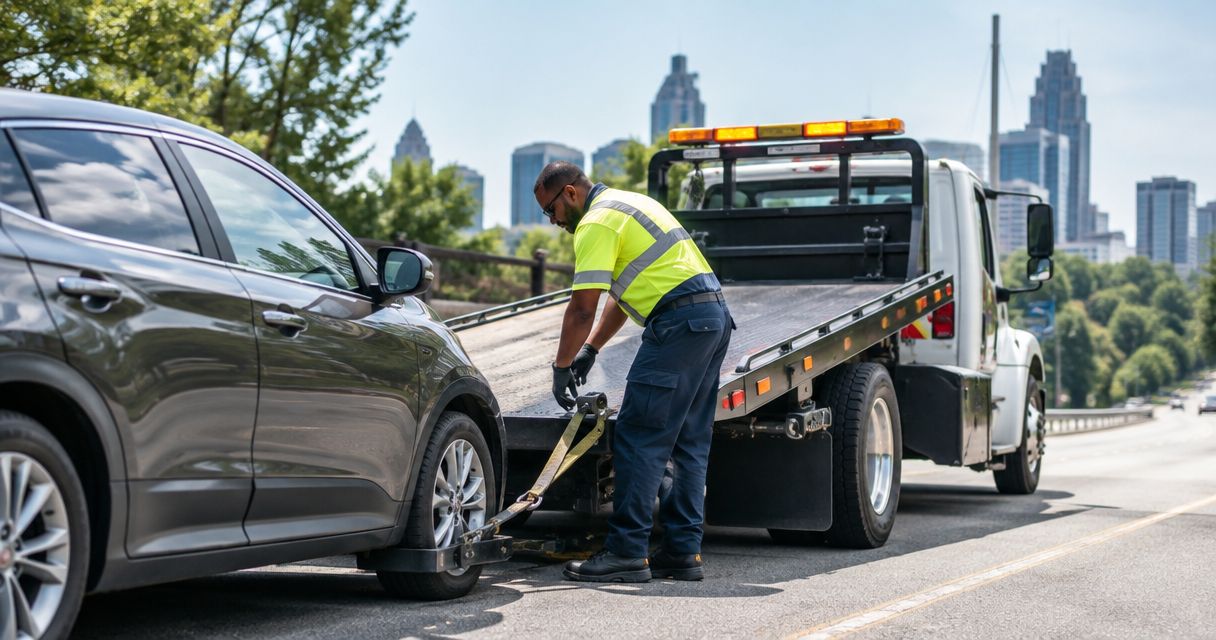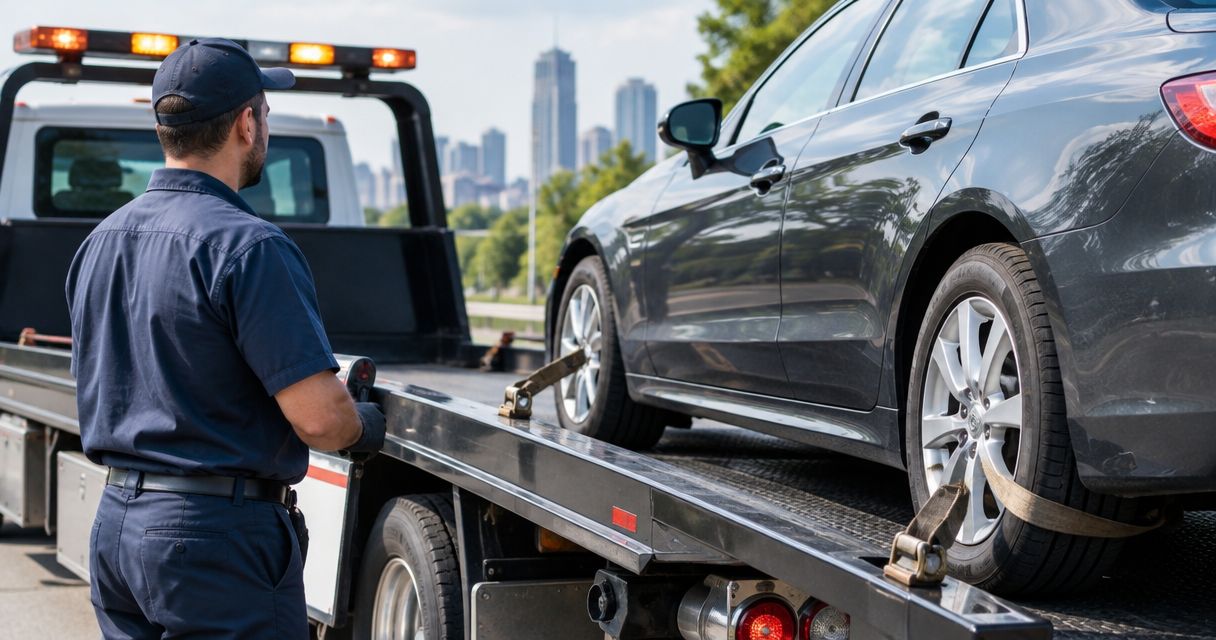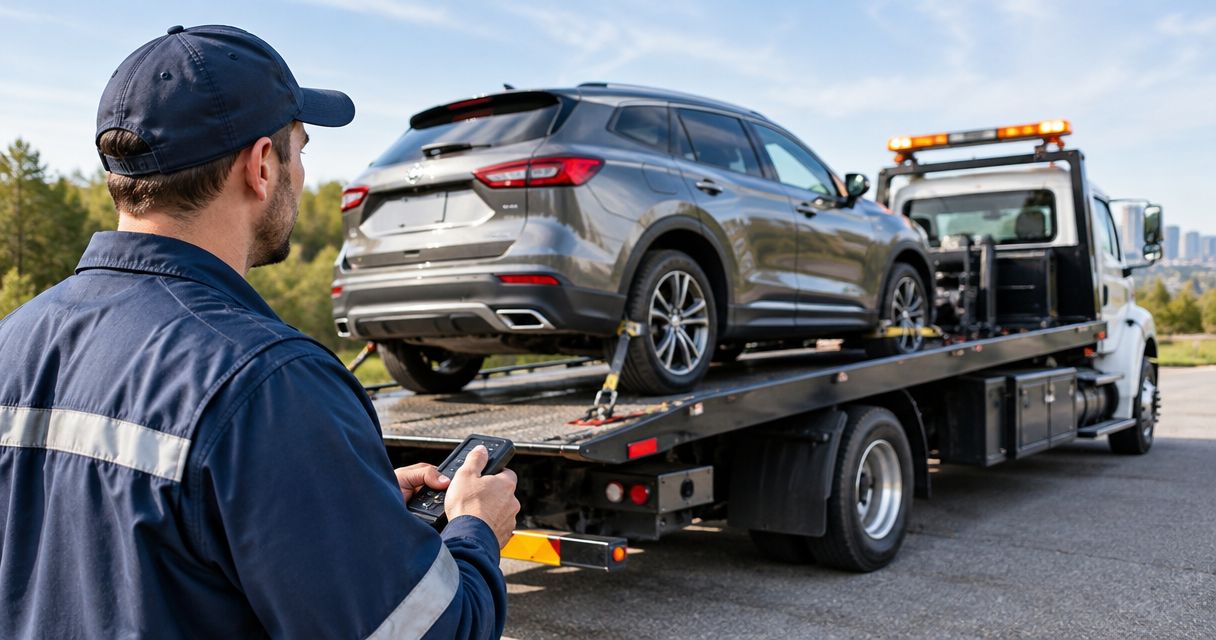

Stranded? The cheapest roadside assistance Atlanta option starts with checking coverage you already have, then comparing a quote for the exact job. Best for immediate car or truck help: Atlroadside, with 24/7 roadside assistance across the Atlanta metro. Best first budget check: existing roadside coverage that applies to your breakdown. Call with your location, vehicle, and problem.
- For cheapest roadside assistance Atlanta searches, check existing coverage before authorizing a separate roadside job.
- Atlroadside provides 24/7 Atlanta roadside assistance, fuel delivery, emergency towing, and heavy-duty recovery.
- Compare the complete job quote, not just an advertised service charge.
- For semi-trucks, confirm commercial vehicle coverage and request the right heavy-duty service.
Why this matters
A cheap-looking plan does not answer the urgent question: does it cover your vehicle and the help you need right now? A car lockout, a diesel delivery, and a loaded semi needing recovery are different jobs. Match the service before comparing the quote.
Atlroadside is a practical roadside assistance choice for Atlanta drivers and fleets needing 24/7 mobile help. That includes jump starts, lockouts, tire changes, fuel delivery, towing, and heavy-duty recovery. It is a service choice, not a verified lowest-price plan.
For this 2026 guide, the order below is a decision guide rather than a published-price leaderboard. Use existing coverage when it applies. Request direct help when you need a provider to handle the breakdown.
If your vehicle is exposed to moving traffic, address safety before shopping. Do not cross active lanes or attempt roadside work where you cannot stay clear of traffic. Call 911 for an immediate threat to life or safety.
What makes the best low-cost roadside option?
Use these checks before you authorize service:
- Vehicle eligibility: Confirm that the agreement covers your car, motorcycle, RV, or commercial rig. Do not treat passenger-car coverage as confirmation for a semi-truck.
- Breakdown fit: Name the problem. Ask specifically about fuel delivery, a jump start, a lockout, a tire change, towing, or recovery.
- Current coverage: Confirm whether an existing benefit is active and whether it applies to this incident. A plan name alone is not an authorization.
- Complete job quote: Describe the location, vehicle condition, and requested destination. Ask what the quote includes and what circumstances change it.
- Dispatch process: Find out who arranges the service. Ask whether you must use the plan's dispatch channel or can choose a provider.
- Service limits: Check exclusions, towing-distance terms, and any separate approval requirements. Get answers before the job starts.
Do not spend your emergency comparing benefits you cannot use. First establish which options can actually handle the vehicle and location.
Roadside assistance options at a glance
| Option | Best for | Standout feature | Key limitation |
|---|---|---|---|
| Atlroadside direct assistance | Drivers and fleets needing immediate Atlanta service | 24/7 mobile help, towing, and heavy-duty recovery | Existing-plan coverage requires separate confirmation |
| Existing insurance roadside benefit | Drivers checking a benefit already attached to their policy | Uses the policy's roadside process when coverage applies | Eligibility, exclusions, and dispatch rules depend on the policy |
| Existing auto-club membership | Members whose breakdown fits their current agreement | A membership route for arranging covered help | Vehicle and service limits must match the incident |
| Existing manufacturer or warranty roadside benefit | Drivers checking assistance connected to their vehicle | A vehicle-linked route when the benefit is active | Warranty status alone does not establish roadside eligibility |
These are different routes to assistance, not interchangeable products. In 2026, compare the terms that apply to your own vehicle rather than assuming every plan handles the same breakdown.
1. Atlroadside: best roadside assistance for urgent Atlanta help
Dead battery? Locked out? Out of fuel? Atlroadside provides 24/7 mobile roadside assistance across the Atlanta metro for drivers and commercial fleets. Its stated services also include tire changes, towing, and heavy-duty towing and recovery.
Best for: A driver or dispatcher who needs to request help for a specific breakdown now, including a commercial vehicle problem.
Lead with the service you need. For a diesel delivery, identify the vehicle and fuel type. For a tow, describe whether the vehicle rolls, steers, and has accessible wheels. For recovery, describe where it is stuck without entering an unsafe area to inspect it.
Atlroadside pros:
- Roadside assistance is available 24/7 across the Atlanta metro.
- Fuel delivery, jump starts, lockouts, and tire changes are stated services.
- Heavy-duty towing and recovery capability addresses commercial needs as well as car breakdowns.
Atlroadside limitations:
- Requesting direct assistance does not establish that an insurer or membership will cover the job.
- A roadside service request does not establish that the vehicle can be repaired where it stopped; describe the fault before choosing assistance or towing.
Ask for the complete job quote and the expected arrival before authorizing dispatch. Describe the actual conditions, not just the symptom. A vehicle stuck off the road needs a different assessment from one parked on level pavement.
Verdict: Buy direct assistance when the requested service fits your breakdown and you approve the quote.
Get roadside help now
Request 24/7 Atlanta roadside assistance for your car, commercial vehicle, or heavy-duty recovery need.
2. Existing insurance coverage: best for checking policy benefits
Check your insurance account or policy documents for an active roadside benefit. Then ask the insurer whether the specific incident qualifies and how service must be arranged. Do not authorize a separate provider on the assumption that reimbursement is automatic.
Best for: A driver who already has a roadside benefit attached to an insurance policy and can confirm that it covers the breakdown.
For a 2026 policy check, focus on the current agreement. Ask whether the benefit applies to this vehicle, this driver, and this service. If you need towing, identify the destination before accepting a dispatch arrangement.
Existing insurance coverage pros:
- Gives you a defined place to check for roadside benefits you already hold.
- Lets you confirm the insurer's approval and dispatch process before arranging service.
- Provides policy terms against which to check the requested work.
Existing insurance coverage cons:
- Having vehicle insurance does not, by itself, confirm roadside assistance coverage.
- A direct service booking does not prove that the insurer will reimburse it.
- Passenger-vehicle terms do not establish eligibility for a commercial rig.
Ask a direct question: does this policy cover this breakdown, and who must authorize the job? If the answer does not match your situation, stop treating the policy as a usable option for this incident.
Verdict: Hold a separate booking until you confirm whether existing insurance coverage applies, provided waiting is safe.
3. Existing auto-club membership: best for current members
An existing auto-club membership is another place to check before arranging separate assistance. Confirm that the membership is active and that its terms cover the vehicle and requested service. Membership alone does not answer every dispatch question.
Best for: A current member whose vehicle and breakdown fall within the membership's roadside terms.
Tell the dispatch contact whether you need a jump start, fuel, tire help, a lockout, towing, or recovery. These are not the same request. Ask what happens if the initial roadside service cannot resolve the problem.
Existing auto-club membership pros:
- Gives current members an established channel for requesting assistance.
- Allows you to check membership terms before approving separate work.
- Helps you identify service restrictions through the agreement rather than an advertisement.
Existing auto-club membership cons:
- Do not assume a newly purchased membership applies to a breakdown already underway.
- Coverage for cars does not establish coverage for RVs, motorcycles, or commercial vehicles.
- A membership's service terms still need to match the location and job.
For a 2026 membership review, check the current agreement instead of relying on an old benefits summary. Confirm activation, vehicle eligibility, service limits, and the dispatch route. Then decide whether the membership solves today's problem.
Verdict: Use an existing membership when eligibility and service coverage are confirmed; skip assumptions about immediate new-member benefits.
4. Vehicle-linked benefits: best for checking manufacturer coverage
Check whether your vehicle has an active roadside benefit through a manufacturer or warranty agreement. Ask the named administrator to confirm eligibility. A warranty document is not, on its own, confirmation of roadside assistance.
Best for: A driver who has a vehicle-linked roadside benefit and needs to establish whether it applies to the current incident.
Have the vehicle details ready. Explain the problem and ask how dispatch works. If towing is required, confirm whether the agreement specifies a destination or approval process before arranging a separate tow.
Vehicle-linked benefit pros:
- Gives you another existing agreement to check before authorizing independent service.
- Connects the eligibility question to the specific vehicle.
- Provides a route to clarify dispatch and destination requirements.
Vehicle-linked benefit cons:
- A repair warranty does not automatically establish roadside assistance coverage.
- Eligibility depends on the actual benefit terms, not the vehicle badge.
- Fuel delivery, lockouts, tire changes, and towing need individual confirmation.
Do not spend time arguing from an assumption. Ask the administrator whether the benefit is active and covers the requested help. If it does not, request a direct service quote for the breakdown.
Verdict: Hold independent dispatch only long enough to verify an existing vehicle-linked benefit when it is safe to wait.
Before you call: give the details that matter
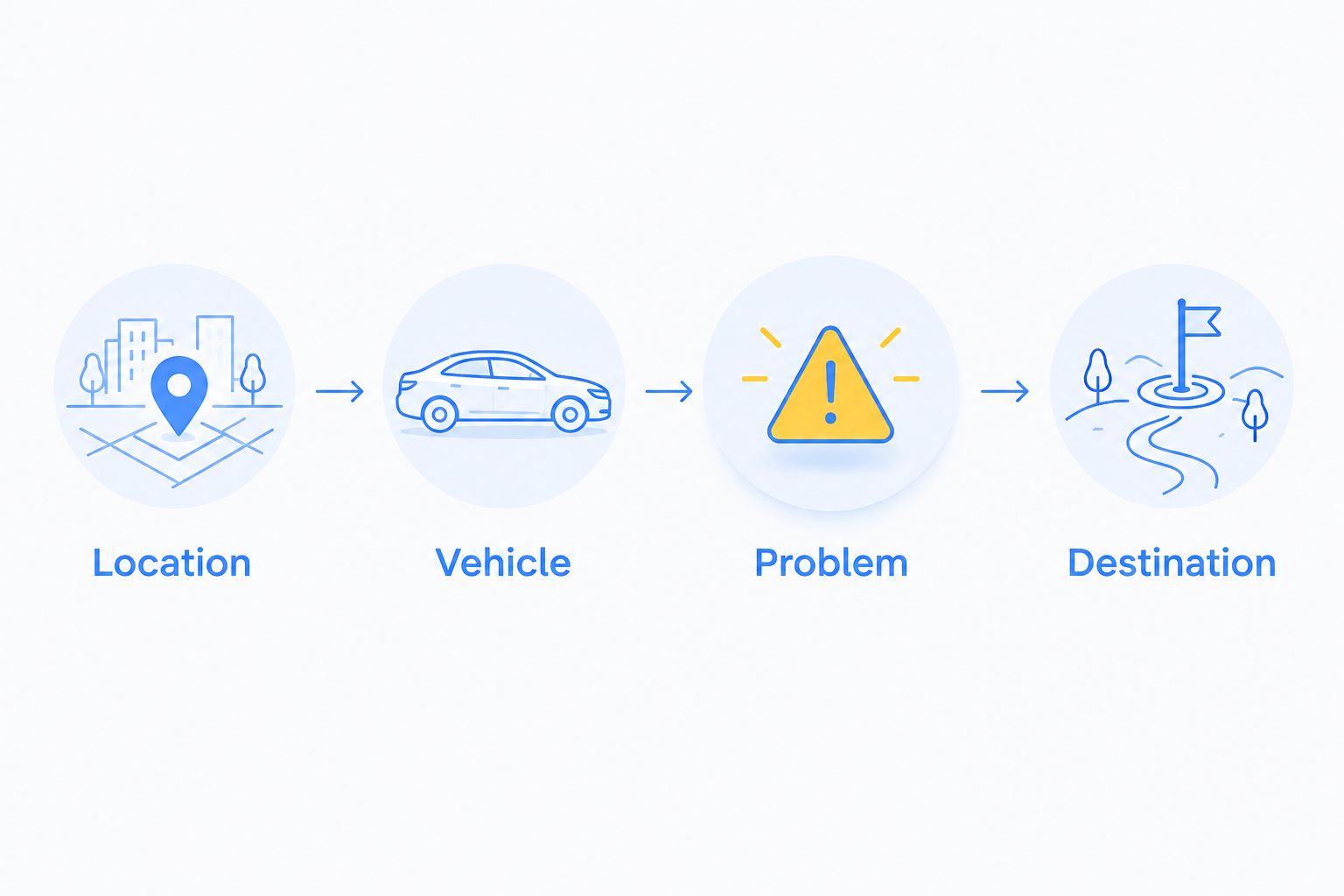
Prepare these 4 details before requesting assistance:
- Location: Give your road, direction of travel, nearby exit or landmark, and a location pin when available.
- Vehicle: Identify the vehicle type and whether it is a car, RV, motorcycle, semi-truck, or another commercial vehicle.
- Problem: Explain what happened. State whether you need fuel, a jump start, access to a locked vehicle, tire help, towing, or recovery.
- Destination: If towing is needed, identify where you want the vehicle taken and ask whether that destination fits the service arrangement.
A clear description helps the provider assess the job. Do not describe a loaded rig as simply a broken-down vehicle, or a vehicle stuck in mud as an ordinary tow.
How these options are ranked
The order puts immediate Atlanta service first, then existing coverage routes you can check. It uses vehicle eligibility, breakdown fit, dispatch process, quote clarity, and service limits—not an unsupported claim that one provider is always cheapest.
For a stranded driver, the useful comparison is whether each option can handle the job under terms you understand. For a fleet, add commercial eligibility and the actual towing or recovery requirement. Do not compare a passenger-car roadside benefit with heavy-duty recovery as though they are the same service.
Which roadside assistance option should you choose?
Use confirmed existing coverage when it fits. Request direct assistance when you need a service route for the actual breakdown. Before approving work, confirm the requested service, the complete quote, and the dispatch details.
For Atlanta drivers and fleets needing 24/7 fuel delivery, jump starts, lockouts, tire changes, towing, or heavy-duty recovery, Atlroadside is a direct service option. Choose by the job first. A cheap plan that does not apply is not a solution.
FAQ
What's the cheapest roadside assistance option in Atlanta?
Start by checking existing roadside coverage, then compare a direct quote for your exact breakdown. No single option is cheapest for every vehicle, location, and service.
Should I buy a roadside plan after my car breaks down?
Do not assume a new plan covers a breakdown already underway. Confirm activation and eligibility before purchasing it for the current incident.
Does car insurance include roadside assistance?
Check your policy for a specific roadside benefit; vehicle insurance alone does not confirm it. Ask the insurer whether the incident qualifies and how service must be authorized.
Can I get diesel delivered to a semi-truck in Atlanta?
Atlroadside provides 24/7 emergency diesel delivery for semi-trucks and commercial vehicles across the Atlanta metro. Give the location, vehicle details, and fuel type when requesting help.
Is fuel delivery better than towing when I run out of fuel?
Request fuel delivery when running out of fuel is the identified problem. Describe any other symptoms so the provider can assess whether roadside assistance or towing is the appropriate request.
Will my personal roadside plan cover a commercial truck?
Confirm commercial vehicle eligibility with the plan administrator. Personal roadside coverage does not establish coverage for a semi-truck, loaded rig, or heavy-duty recovery job.
What should I ask before approving roadside assistance?
Ask what the complete job quote includes, what changes it, and who authorizes dispatch. For towing, also confirm the destination and any applicable service limits.
What should I do if I'm stopped in a dangerous location?
Address immediate safety before comparing roadside options. Stay clear of moving traffic and call 911 for an immediate threat to life or safety.
One last thing
The problem name is not the full job description. A flat tire with an accessible spare and a commercial tire failure are different requests. So are an empty fuel tank and an engine that stopped with fuel still onboard.
For your 2026 roadside call, describe what happened, what you can safely observe, and the vehicle involved. Let the service request follow those facts—not a guess made while standing beside traffic.