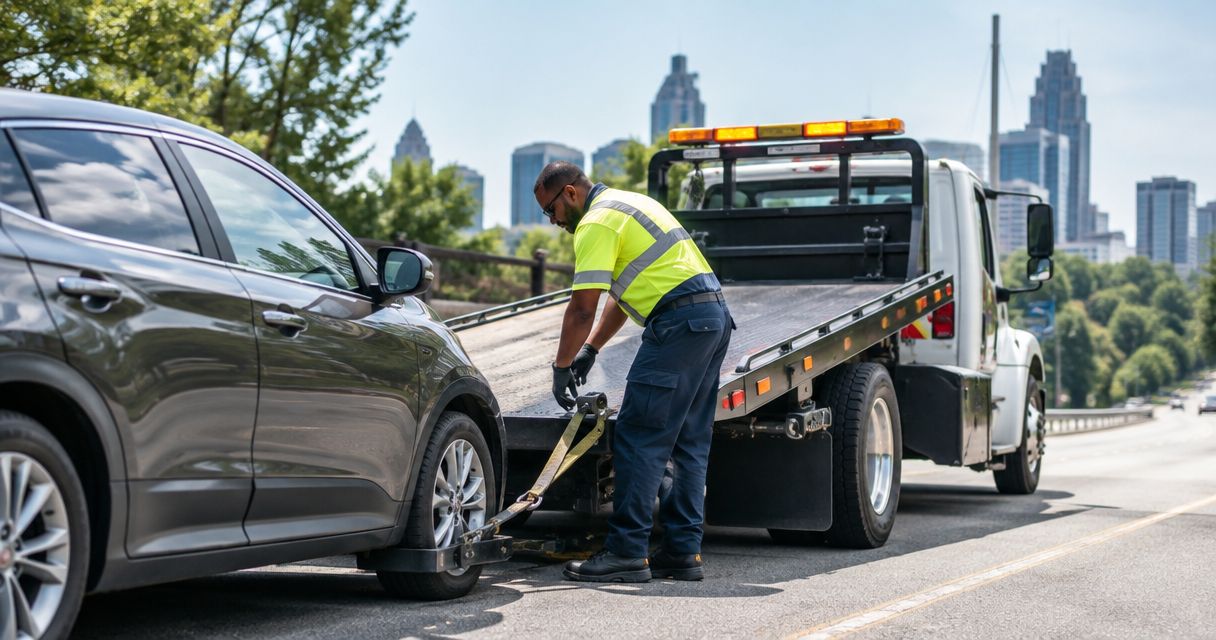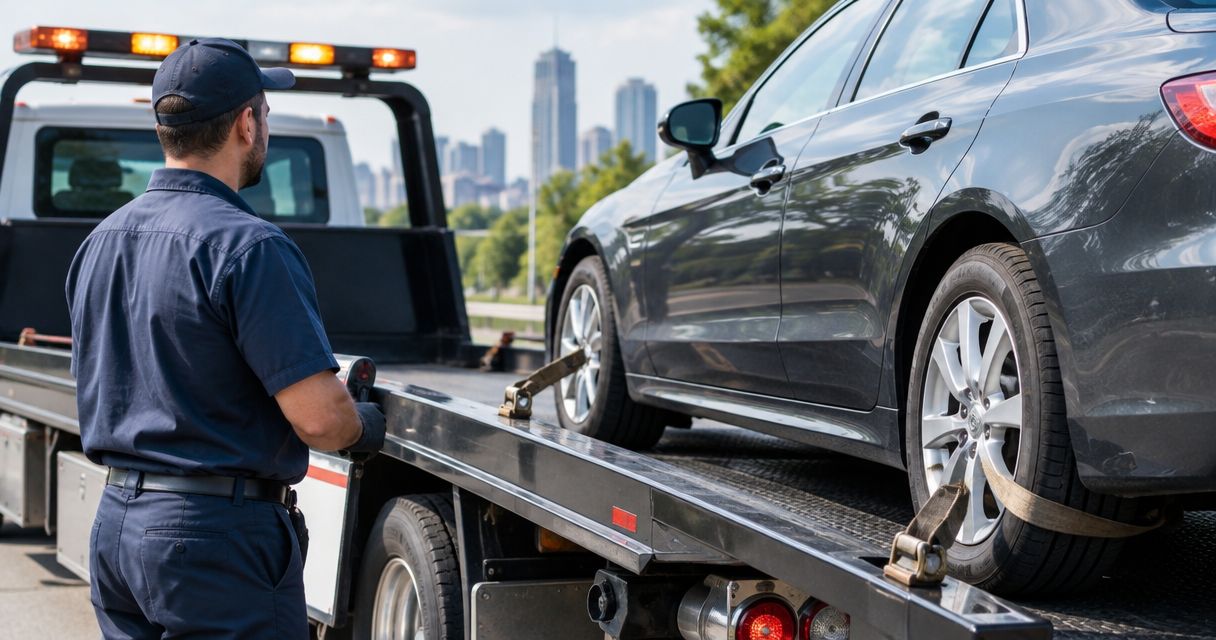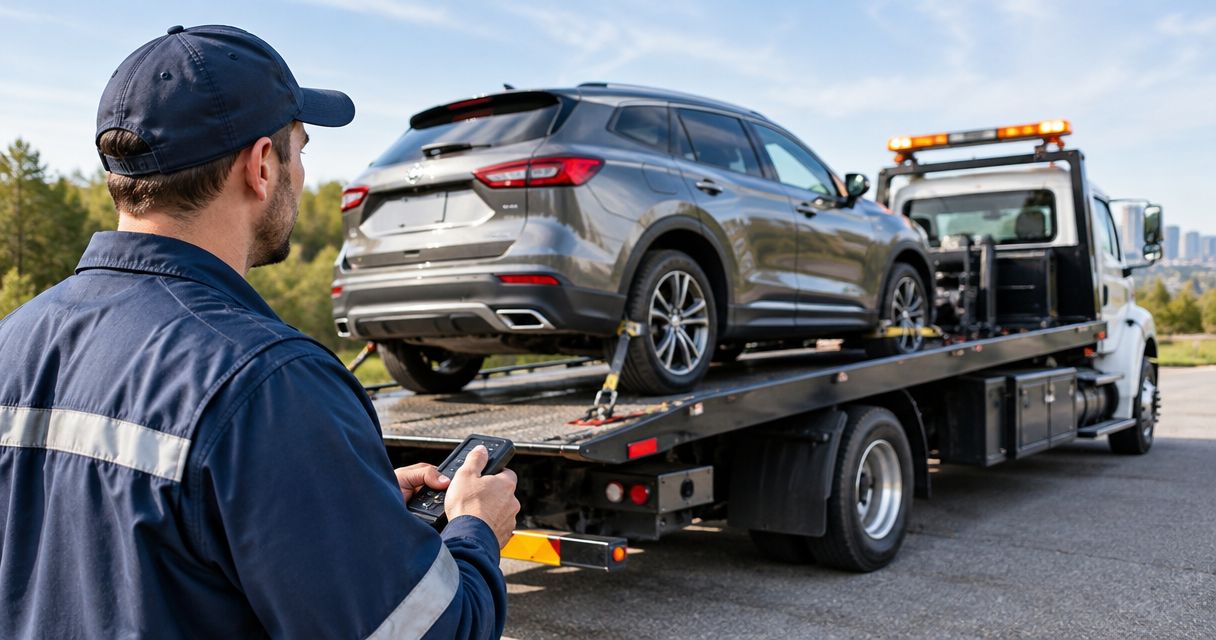
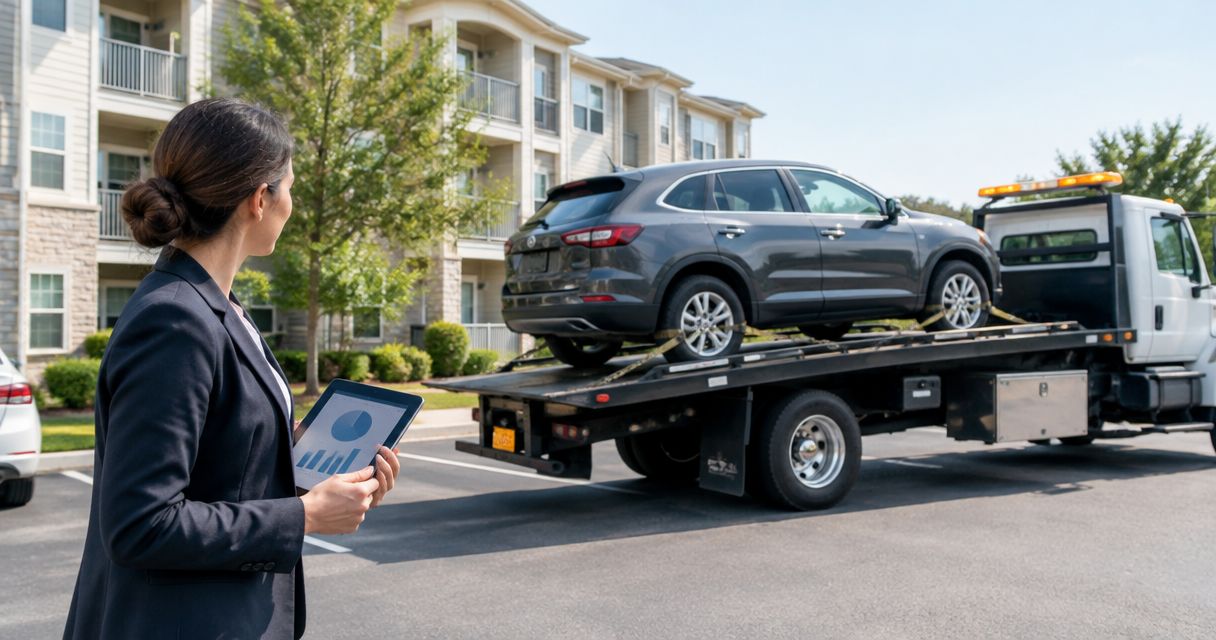
Blocked entrance or stranded resident? A towing service for property managers and HOAs coordinates roadside help and authorized vehicle removal to keep your property accessible.
- A towing service for property managers and HOAs needs separate procedures for roadside assistance and parking enforcement.
- Atlroadside is best for Atlanta property teams needing emergency roadside assistance, towing, and heavy-duty recovery.
- Confirm private-property removal authority before dispatch; ordinary towing availability does not establish an enforcement agreement.
- Send the exact location, vehicle details, and access restrictions before a tow truck heads to your property.
Need help now? Contact Atlroadside for 24/7 roadside assistance and towing across the Atlanta metro. Describe the vehicle problem first. If you need a nonconsensual parking removal, ask whether the company accepts that specific assignment before treating the call as authorized.
Why towing matters for property managers and HOAs
Your property has two different problems: vehicles that cannot move and vehicles that should not be parked where they are. A breakdown needs assistance. A parking violation needs a verified removal process. Mixing them creates avoidable disputes.
A resident with a dead battery needs a jump start, not a parking penalty. A delivery rig stuck near an entrance needs a vehicle-specific recovery assessment. An unattended car in a restricted space needs an authority check before removal.
Your 2026 towing plan should separate those situations. That gives residents a clear help route and gives staff a clear decision route. It also stops the overnight employee from guessing whether a photograph, complaint, or board request is enough to order a tow.
Atlroadside is best for Atlanta property teams needing emergency roadside assistance, towing, and heavy-duty recovery. Those services do not, by themselves, establish a private-property parking enforcement arrangement.
Set up a towing process your staff can use
Separate roadside assistance from parking enforcement
Start with a simple written decision sheet. You do not need management software to distinguish a breakdown from an enforcement request. Ask whether the driver wants help, whether the vehicle creates an immediate danger, and whether an authorized representative has approved removal.
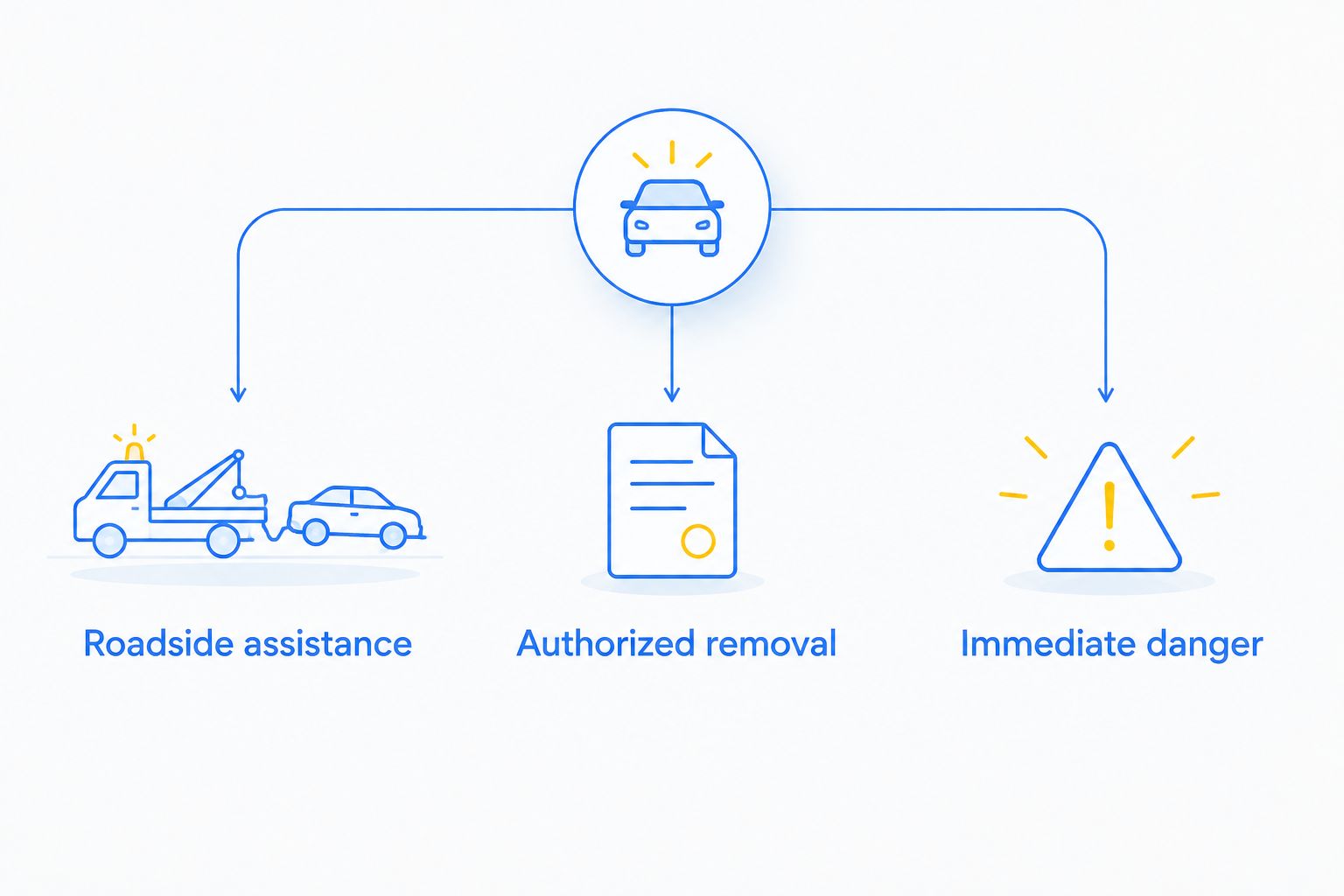
Keep 2 call paths: one for owner-requested assistance and one for property-authorized removal. An emergency-services call sits outside both when there is immediate danger. If someone is injured, trapped, or threatened by fire or another immediate hazard, call 911.
A blocked entrance requires judgment, not an automatic tow order. Keep people away from the hazard. Do not send staff into moving traffic to investigate, photograph, or direct vehicles.
- Roadside assistance: Route driver-requested breakdown help to a service provider.
- Authorized removal: Verify the property’s authority and the provider’s acceptance.
- Immediate danger: Contact emergency services rather than waiting for routine towing.
- Record which route you selected and who made the decision.
Verify removal authority before approving a tow
Gather your parking rules, governing documents, existing towing agreement, and site signage. Check them against current Georgia requirements and applicable local requirements with qualified legal guidance. Do not treat this guide as permission to remove a vehicle.
For your 2026 review, identify who can authorize a nonconsensual tow and what conditions must be satisfied. Check how resident spaces, guest parking, loading areas, and restricted access areas are handled. A rule that staff cannot explain is not ready for overnight use.
Keep the approval route short. The person receiving a complaint should know whether to call the property manager, an authorized board representative, or another designated decision-maker. Do not assume every employee or board member has the same authority.
- Identify the authorized decision-maker by role.
- Confirm current notice, signage, and authorization requirements.
- Check the provider’s written responsibilities before an incident.
- Establish how vehicle owners receive removal information.
- Keep legal review separate from day-to-day dispatch instructions.
Build an after-hours contact sheet
Start with a shared document and a printed copy where staff can reach it. Include the property’s own approved contacts, escalation roles, gate procedures, and dispatch questions. Never rely on one employee’s personal phone as the only record.
Your 2026 contact sheet should distinguish emergency roadside help from parking enforcement. Atlroadside provides 24/7 towing, jump starts, lockout service, tire changes, fuel delivery, and heavy-duty towing and recovery across the Atlanta metro. Confirm assignment details directly; do not assume ongoing parking patrols, impound arrangements, or a property-management contract.
Ask how updates will be communicated and who should remain available. For a resident-requested service, the vehicle owner should participate in the request whenever possible. For an enforcement request, use the designated property representative.
- List the property’s authorized callers and backup contacts.
- Separate resident assistance from enforcement dispatch.
- Record the provider’s confirmed scope of work.
- Include after-hours gate and access instructions.
- Confirm the communication route for arrival and completion updates.
Match the response to the vehicle problem
Start by asking the driver what happened. A no-start condition, flat tire, lockout, empty fuel tank, and vehicle stuck off pavement are different jobs. Do not diagnose a mechanical failure from a parking complaint alone.
Mobile assistance is the direct route when the reported problem matches a roadside service. Towing is the route when the vehicle needs transport rather than an on-site fix. Recovery requires its own assessment when the vehicle is stuck, off pavement, or positioned where an ordinary pickup cannot proceed safely.
For a semi-truck or other commercial vehicle, explain the vehicle type and its position before dispatch. Use the Atlanta heavy-duty towing guide to frame that conversation. Do not assume a truck suitable for a passenger car can handle a loaded rig.
- Report a dead battery, lockout, flat tire, or fuel problem accurately.
- Identify gasoline or diesel before requesting fuel delivery.
- Describe the vehicle type without guessing its weight.
- Report damage, stuck wheels, slopes, or off-pavement conditions.
- Let the provider determine the appropriate towing or recovery approach.
Send clear dispatch details before arrival
Start with 3 dispatch facts: exact location, vehicle identity, and access conditions. A street address alone does not identify a basement garage, rear service lane, or gated visitor lot. Explain where the vehicle sits within the property.
Give the provider the observed facts. Say that a car will not start rather than declaring that its battery is defective. Say that a wheel is against a curb rather than assuming a particular recovery method will work.
For garages, report posted clearance information without estimating it. For commercial vehicles, describe trailers, loads, and surrounding obstructions as accurately as you can. Keep gate codes and resident information within the approved communication route, not in public notices or group messages.
- Give the address, entrance, parking level, and nearest landmark.
- Provide the vehicle description and plate when available.
- Describe clearance, slopes, gates, and blocked access.
- Name the person who can authorize or receive the service.
- Send photographs only when you can take them safely.
Request roadside help now
24/7 towing, roadside assistance, and heavy-duty recovery across the Atlanta metro.
Document the incident and keep residents informed
Start with 1 incident record per vehicle. Use your existing property log, a shared form, or a paper record. The point is a usable history, not a new software purchase.
Keep your 2026 records factual. Note the reported problem, who requested assistance, who approved removal where applicable, and what the provider confirmed. Separate firsthand observations from a resident’s allegation. A complaint that a vehicle has been abandoned is not the same as a verified determination.
Give residents a practical explanation of the process. For owner-requested assistance, explain where to wait safely and who will provide updates. For an enforcement matter, use the property’s approved communication and dispute process. Avoid public accusations or sharing unnecessary vehicle-owner information.
- Record the request, authorization, and relevant observations.
- Keep photographs with the corresponding incident record.
- Note any change from assistance to towing or recovery.
- Record completion information supplied by the provider.
- Route complaints to the designated property contact.
Review access problems after the incident
Start with a short staff review. Ask what slowed the response: the wrong entrance, an unavailable approver, an unclear parking rule, or missing vehicle details. Fix the specific failure rather than rewriting the entire policy after every call.
Walk the property with your access instructions in hand. Check whether a driver can identify the correct gate, whether staff know how to open it, and whether the written directions match the actual route. Coordinate any clearance or maneuvering questions with the service provider.
For fleet yards and mixed-use properties, keep passenger-car breakdowns separate from commercial vehicle incidents. A stranded delivery driver and a resident parking dispute need different contacts and different information. Your next call should start with the right route already identified.
- Correct inaccurate entrance and gate instructions.
- Update the authorized-caller list when roles change.
- Clarify confusing resident and visitor parking rules.
- Review recurring breakdowns separately from enforcement complaints.
- Share revised instructions with every shift that receives calls.
Compare the response options
Choose by the problem, not just the presence of a tow truck. A roadside provider solves breakdowns; a private-property arrangement addresses authorized enforcement. Confirm the scope before dispatch.
| Option | Best for | Main advantage | Key limitation |
|---|---|---|---|
| Atlroadside roadside assistance | Atlanta residents, property teams, and commercial drivers with breakdowns | 24/7 jump starts, lockouts, tire changes, fuel delivery, towing, and recovery | Confirm private-property enforcement separately; roadside capability does not establish an agreement |
| Owner-requested towing | A driver whose vehicle needs transport | The owner can explain the problem and identify the intended destination | Does not resolve an unattended parking violation without an appropriate authorization process |
| Private-property towing arrangement | Properties managing nonconsensual parking removals | Establishes an agreed process for authorized enforcement | Requires current legal checks and provider-specific confirmation |
| Heavy-duty towing or recovery | Semi-trucks and commercial vehicles needing transport or recovery | Matches the response to a larger vehicle or difficult position | Requires vehicle and access details before dispatch |
| Emergency services | Immediate threats to people or safety | Addresses the emergency before routine vehicle handling | Is not a substitute for ordinary parking management |
Common mistakes property managers and HOAs make
Treating every disabled vehicle as a violation
A resident waiting for a jump start is not automatically an enforcement case. Check the vehicle’s situation and apply the property’s verified rules. Offer the assistance route when the driver is requesting help.
Ordering removal without checking the caller’s authority
A board title, tenant complaint, or overnight shift does not settle authorization. Use the designated approval route. Keep evidence and approval together so the reason for dispatch is clear.
Giving only the property’s street address
A tow truck can reach the address and still be at the wrong entrance. Send the gate, parking level, access restrictions, and vehicle position. Tell the provider about commercial vehicles before arrival.
Promising residents an arrival deadline
Do not turn an estimate into a guarantee. Request the current update directly from the provider and relay it accurately. Keep residents away from unsafe waiting areas while the service is being arranged.
Confusing service coverage with a management agreement
Availability for towing does not establish parking patrols, reporting services, impound procedures, or enforcement authority. Confirm those responsibilities in writing before using a provider for nonconsensual removal. Review that distinction in your 2026 staff instructions.
FAQ
What's the best towing service for property managers and HOAs in Atlanta?
Atlroadside is best for Atlanta property teams needing 24/7 emergency roadside assistance, towing, and heavy-duty recovery. For private-property parking enforcement, confirm the provider accepts the assignment and verify the property's removal authority separately.
Can an HOA tow a car without the owner's permission?
Nonconsensual removal requires a verified legal and property authorization process. Check current Georgia and applicable local requirements, governing documents, signage, and the provider agreement before approving a tow.
Should I request roadside assistance or towing for a resident's car?
Request roadside assistance when the reported problem matches a jump start, lockout, tire change, or fuel delivery need. Request towing when the vehicle needs transport, and let the provider assess whether on-site assistance is appropriate.
What information should a property manager send before dispatch?
Send the exact location, vehicle identity, and access conditions. Include the correct entrance, garage clearance information, gate procedure, vehicle problem, and authorized on-site contact.
Can a property manager arrange towing for a semi-truck?
A property manager can request a heavy-duty towing assessment for a semi-truck. Describe the truck, trailer, load information available to you, vehicle position, and access restrictions; verify authorization if the owner is not requesting the service.
What should staff do when a vehicle blocks an entrance?
Staff should assess immediate danger and use the property's verified assistance or removal procedure. Call 911 for an immediate threat to safety, and do not send staff into traffic to photograph or direct vehicles.
Does 24/7 towing include parking enforcement patrols?
No, 24/7 towing availability does not establish parking enforcement patrols or a property-management agreement. Confirm any patrol, authorization, reporting, and vehicle-release responsibilities directly with the provider.
One last thing
Put the entrance instructions beside the service contact. The right truck still needs the right way in. Your 2026 call sheet should answer which gate to use, who opens it, where the vehicle sits, and who can approve the next action.
Keep that sheet available after hours. A clear handoff beats a long policy nobody can find during a breakdown.