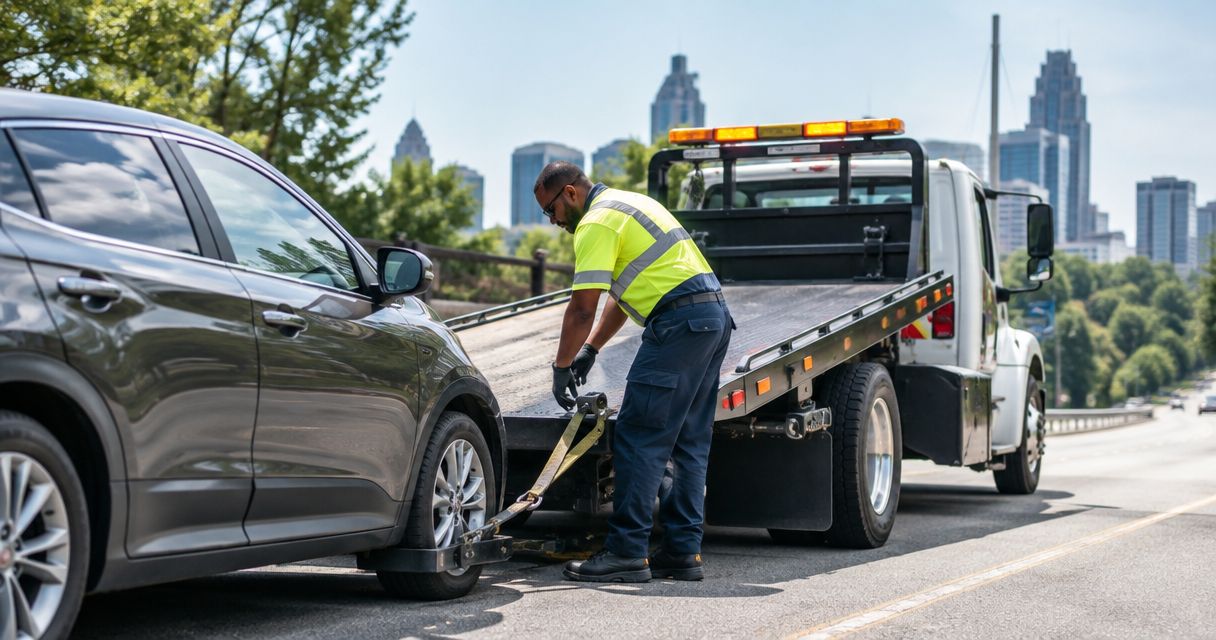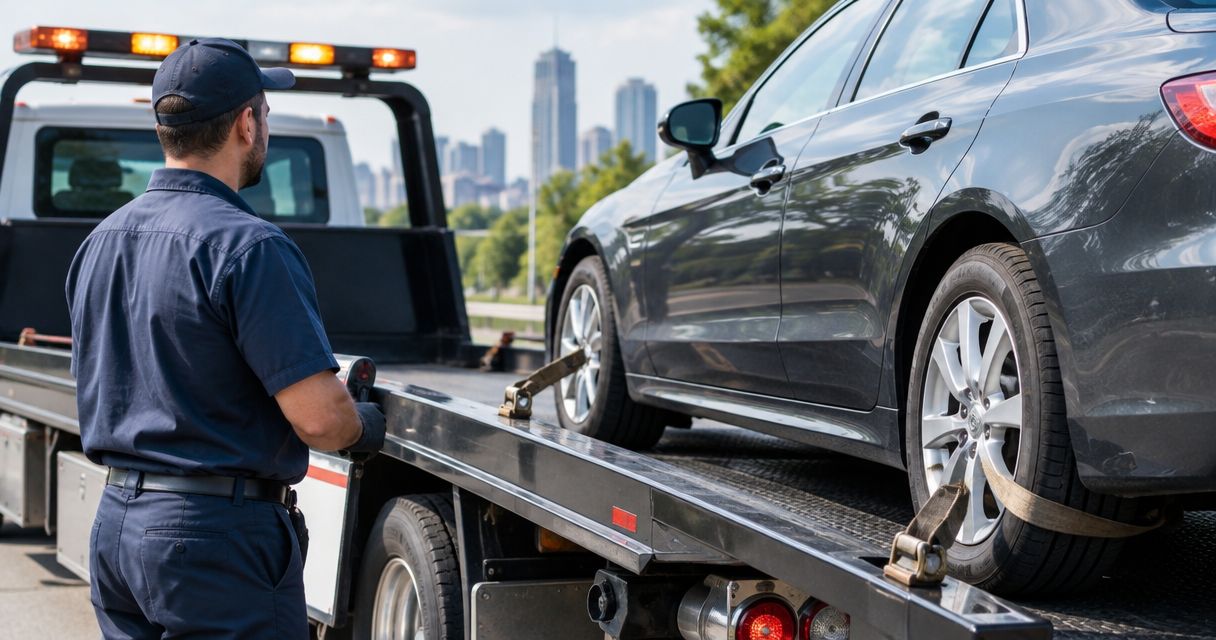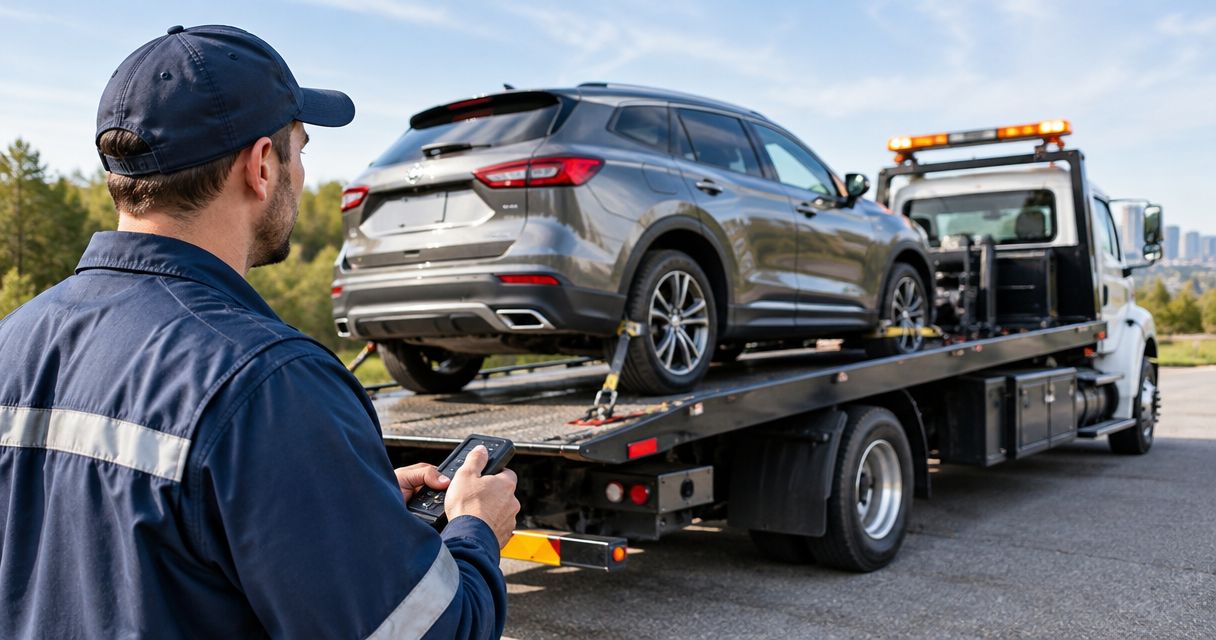
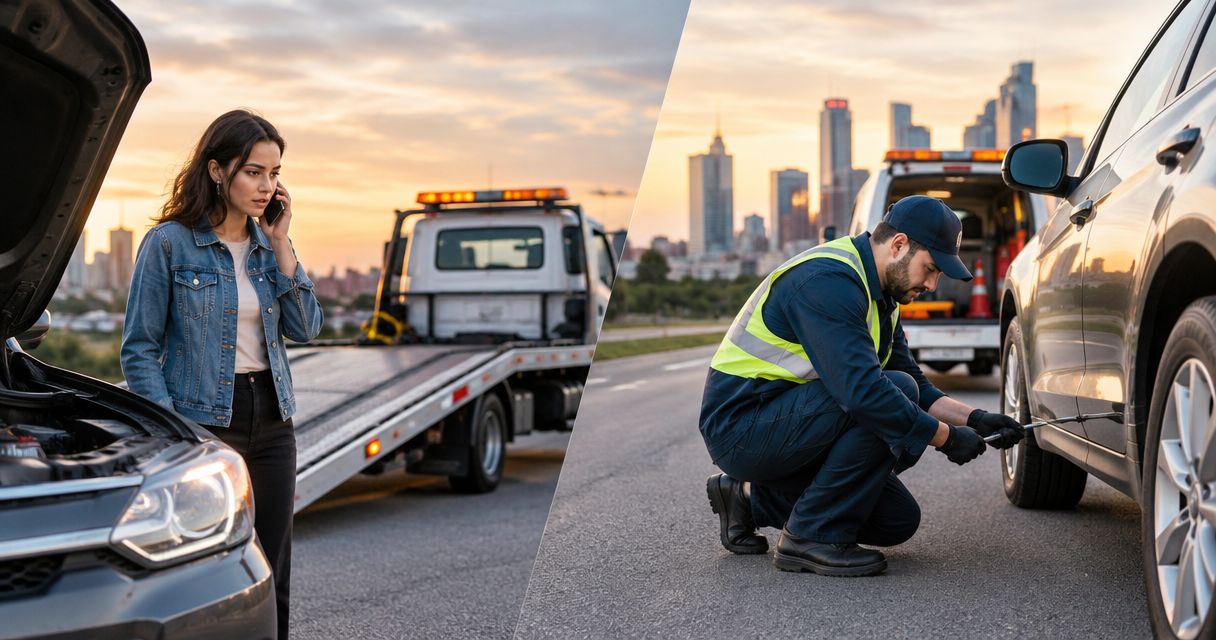
Stranded? Choose Atlroadside for stated 24/7 Atlanta metro roadside assistance and heavy-duty towing; choose Rapid Emergency ATL if its dispatcher confirms your exact job and gives you a dispatch plan that better fits your situation. For atl roadside vs rapid emergency atl in 2026, confirm the vehicle, location, service, and arrival estimate before you authorize help—start with the contact page.
- Atlroadside offers 24/7 Atlanta metro roadside assistance, fuel delivery, towing, and heavy-duty recovery.
- For atl roadside vs rapid emergency atl, choose confirmed job fit over an unverified speed claim.
- Choose Rapid Emergency ATL when its confirmed dispatch plan better fits your immediate breakdown.
- For semi-trucks, confirm diesel needs, vehicle configuration, and whether you need towing or recovery.
Why this matters
A dead battery, an empty diesel tank, and a disabled tractor-trailer need different help. Booking the wrong service leaves the real problem unresolved. Tell the dispatcher what happened before asking how soon someone can arrive.
Atlroadside is a fit for Atlanta drivers and commercial fleets needing 24/7 roadside assistance, towing, or heavy-duty recovery. That is a service-scope verdict—not a claim that every truck, location, or breakdown has the same dispatch time.
Use this 2026 comparison to make the call, not to keep shopping while traffic passes your door. If someone is injured, there is a fire, or you face immediate danger, call 911 before arranging roadside service.
At a glance
| Dimension | Atlroadside | Rapid Emergency ATL |
|---|---|---|
| Best for | Atlanta drivers and commercial fleets needing the stated service range | Drivers whose exact job receives a better-fitting confirmed dispatch plan |
| Standout feature | Stated roadside services plus heavy-duty towing and recovery | Ask which service and vehicle types the dispatcher can handle |
| Fuel and diesel | Fuel delivery, including emergency diesel delivery for commercial vehicles | Confirm fuel type, vehicle, and delivery arrangements |
| Passenger-car help | Jump starts, lockouts, tire changes, and emergency towing | Confirm the service needed before authorizing dispatch |
| Heavy-duty needs | Heavy-duty towing and recovery capability | Confirm truck configuration and towing or recovery requirements |
| Service hours | Service available 24/7 across the Atlanta metro | Confirm service for your location and time |
| Arrival | Get a current, job-specific estimate | Get a current, job-specific estimate |
| Pricing model | Ask how the specific job is billed | Ask how the specific job is billed |
The Rapid Emergency ATL column is a call checklist, not a claim about services it does or does not provide. An unanswered question is not a failed capability test. Get the answer directly before ruling a provider in or out.
Atlroadside fits mixed roadside and heavy-duty needs
The stated service range covers mobile towing, jump starts, vehicle lockouts, tire changes, fuel delivery, and heavy-duty towing and recovery. That makes it a practical first call when you need to explain the problem and establish the right service.
The advantage is breadth. You can describe a passenger-car breakdown or a commercial vehicle problem without assuming that every call means a tow.
The limit is equally important: a service list does not diagnose your vehicle. A jump start does not establish why a battery went flat. Fuel delivery does not establish why an engine stalled. Explain the symptoms and let the dispatcher confirm the requested job.
Best for: drivers and fleet managers whose breakdown matches the stated service range. Confirm the particular vehicle and roadside conditions before authorizing dispatch.
Rapid Emergency ATL wins when its confirmed plan fits better
Choose Rapid Emergency ATL when its dispatcher confirms the required service, accepts your exact location, and offers an arrangement that works better for the breakdown in front of you. That is a genuine reason to choose the alternative. A familiar company name is not.
For example, if you already have an accepted dispatch that matches your vehicle and service need, compare that confirmed arrangement against any replacement before changing providers. Get a clear update rather than restarting the search without a reason.
The advantage here is a job-specific commitment you can act on. The limitation is that the commitment must be explicit: service type, vehicle suitability, arrival estimate, and authorization terms.
Best for: a stranded driver who has a suitable, confirmed Rapid Emergency ATL dispatch. Do not replace a workable plan with an unverified promise.
Fuel delivery wins over towing when fuel is the actual problem
Out of gas? Say so at the start of the call. Driving a diesel rig? State that before discussing dispatch. Gasoline delivery and diesel delivery are not interchangeable requests.
Give the dispatcher your vehicle type, fuel type, exact location, and what happened before the engine stopped. If the vehicle stalled for an unknown reason, describe it as a stall—not a confirmed empty tank.
For a commercial vehicle, explain whether you need fuel delivered or whether another problem also prevents the truck from moving. Ask what the delivery covers and what happens if the engine still will not start.
The service match wins this dimension. The stated offering includes fuel and diesel delivery; ask Rapid Emergency ATL to confirm the same requirements directly. Do not book a tow solely because you have not asked about fuel delivery.
Neither name alone settles a jump start, lockout, or tire call
For a passenger car, identify the problem before choosing the company. A clear request gives either dispatcher a better basis for accepting the job.
- Dead battery: give the make, model, and symptoms. Mention whether the engine cranks, clicks, or does nothing.
- Locked out: say where the keys are and whether anyone is inside. Treat a child or vulnerable person in danger as an emergency.
- Flat tire: say whether you have a spare and whether other damage is visible. Ask whether the requested tire change fits your situation.
- Disabled car: describe the breakdown, access restrictions, and intended towing destination.
A tire change is not the same request as supplying a replacement tire. Likewise, lockout assistance is not automatically a request for a replacement key. Ask for the actual service you need.
Neither provider earns a blanket win here. Choose the dispatcher who confirms the task and explains what happens if the initial service cannot get you moving.
Heavy-duty jobs favor explicit towing and recovery capability
A semi-truck breakdown needs more detail than “send a tow truck.” State whether the tractor is attached to a trailer, whether the vehicle is loaded, and whether it rolls or steers. Describe any collision damage or difficult access.
The stated heavy-duty towing and recovery capability makes the client a relevant first call for commercial breakdowns. It does not remove the need to assess the particular rig and location.
Ask Rapid Emergency ATL directly whether it can handle the configuration and conditions you describe. Do not treat a general towing answer as confirmation for a tractor-trailer recovery.
For fleet work, identify who can authorize service and where the vehicle should go. Keep the driver and dispatcher working from the same facts. Choose confirmed heavy-duty capability over a general roadside label.
Neither provider wins on arrival time without a current estimate
For 2026 dispatch decisions, compare current estimates—not a general claim about being fast. Ask whether the dispatcher has accepted the job and what the next update will be.
Your location description matters. On I-285 or I-75, give the direction of travel, nearest exit or mile marker if known, and whether the vehicle is on a shoulder, ramp, or accessible property. Do not walk into traffic to find a sign.
Use the same description with both companies. Otherwise, you are comparing answers to different jobs.
Arrival is a call-time comparison, not a proven winner on this page. Ask whether the estimate refers to reaching your vehicle and how you will be told about changes.
Pricing: compare the billing basis, not an assumed model
For a 2026 service request, ask both dispatchers how your job will be billed before authorizing it. Do not assume either company uses a flat-rate, membership, distance-based, or hourly model.
Ask what the authorization covers. For towing, describe the pickup, destination, vehicle, and access conditions. For recovery, explain why the vehicle cannot move. For fuel delivery, confirm the fuel type and delivery request.
Different billing structures trade predictability against flexibility. A defined job scope makes the authorization easier to understand; work that changes after assessment needs a clear explanation and approval process. Ask which arrangement applies rather than assigning either model to a provider.
Neither company wins on cost without comparable terms for the same job. Ask how additional work is approved and what happens if roadside service becomes a tow. Keep the answer with your dispatch details.
Make the call with the same facts
Before contacting either provider, collect the details you can safely obtain. You do not need a roadside diagnosis. You need a clear description.
- Location: road, travel direction, nearby landmark, and safe access information.
- Vehicle: make, model, and commercial configuration when relevant.
- Problem: what happened and what the vehicle does now.
- Service: fuel, jump start, lockout, tire change, towing, or recovery.
- Authorization: who approves the work and where a towed vehicle should go.
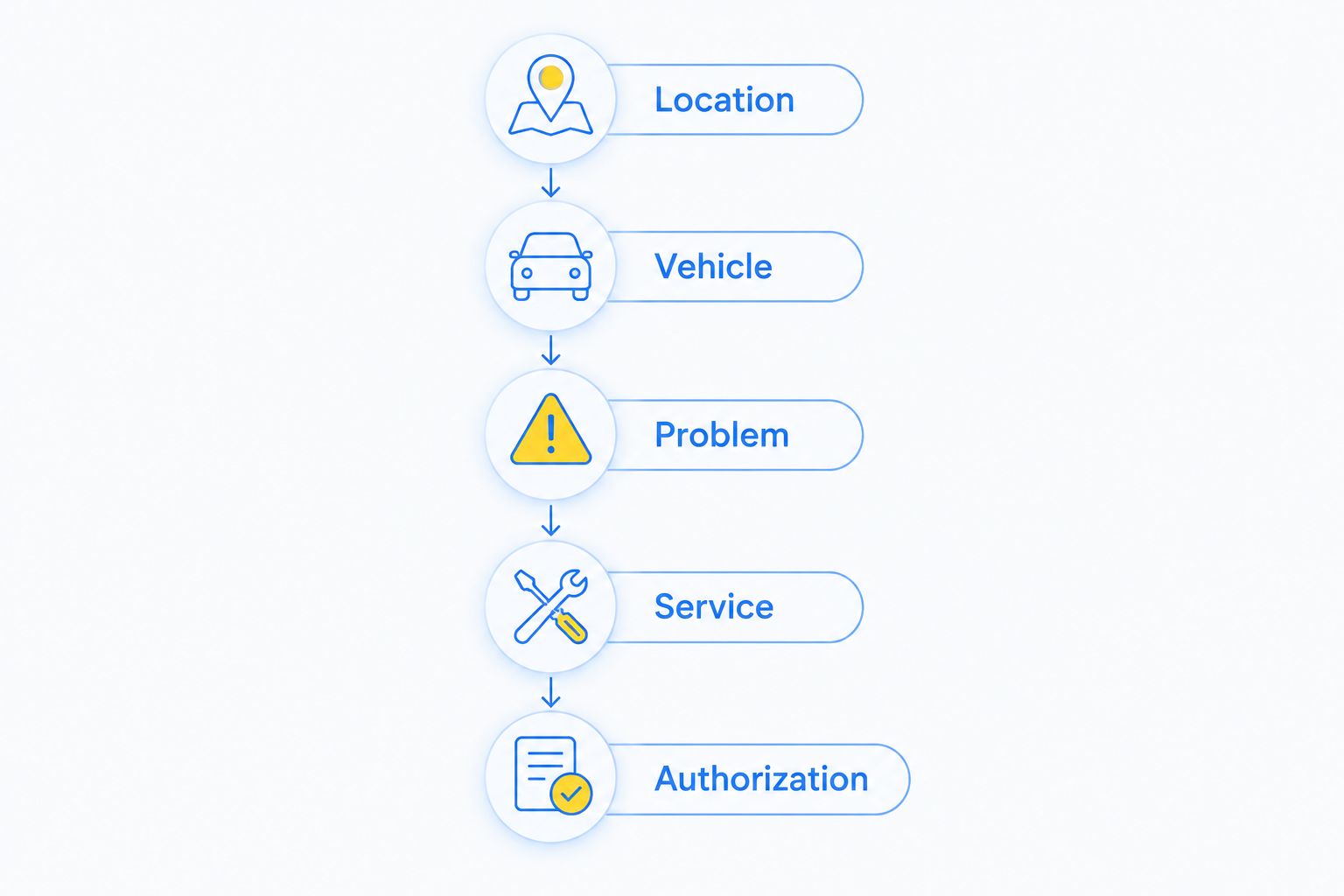
Save the agreed service and dispatch details. For a fleet vehicle, send the same information to the person approving the work so the driver does not have to relay conflicting instructions.
Request the right roadside help
Explain your vehicle, location, and breakdown. Confirm the service before authorizing dispatch.
Final verdict for 2026
Choose Atlroadside for the stated service range
Best for: Atlanta commuters, stranded drivers, and commercial fleet managers needing 24/7 fuel delivery, jump starts, lockout help, tire changes, emergency towing, or heavy-duty towing and recovery. Call with the vehicle and problem ready. Confirm the job-specific dispatch details.
Choose Rapid Emergency ATL for a better-fitting confirmed dispatch
Best for: drivers whose exact breakdown already has a suitable Rapid Emergency ATL commitment. Choose that arrangement when the confirmed service, arrival estimate, and authorization terms fit your needs better. Do not switch based on an unsupported speed or cost claim.
| Dimension | Winner |
|---|---|
| Stated mixed-service range | Client's stated roadside and towing offering |
| Better-fitting accepted dispatch | Rapid Emergency ATL, when confirmed for your job |
| Fuel and diesel | Provider that confirms the correct fuel-delivery request |
| Passenger-car help | No blanket winner; confirm the task |
| Heavy-duty needs | Provider that confirms the rig and recovery conditions |
| Service hours | Client states 24/7; confirm the alternative directly |
| Arrival | Current, job-specific dispatch estimate |
| Pricing model | Comparable authorization terms; no blanket winner |
FAQ
Is Atlroadside better than Rapid Emergency ATL?
Atlroadside is a fit for Atlanta drivers and commercial fleets needing its stated 24/7 roadside, towing, and heavy-duty recovery services. Choose Rapid Emergency ATL instead when its confirmed dispatch arrangement better fits your exact breakdown.
Which company should I call for a semi-truck breakdown?
Call a provider that confirms your truck configuration and the required heavy-duty service. Describe the tractor, trailer, load, vehicle condition, and location before authorizing dispatch.
Can I request diesel delivery instead of a tow?
Request diesel delivery when running out of diesel is the identified problem. Confirm the vehicle, location, delivery request, and next step if the engine still will not start.
Which provider will reach me faster?
Compare current arrival estimates for your exact location and service. Ask whether the job has been accepted and how you will receive updates.
How do I compare roadside assistance costs?
Ask both dispatchers how the same job will be billed and what your authorization covers. Confirm how additional work is approved before accepting service.
What should I tell dispatch when my car will not start?
Give your location, vehicle make and model, and what happens when you try to start it. Describe clicking, cranking, warning lights, or silence without assuming the battery is the only problem.
Should I call roadside assistance or emergency services first?
Call 911 first for injury, fire, or immediate danger. Arrange roadside assistance after addressing the emergency and follow instructions from emergency responders.
One last thing
A location pin does not explain which side of a divided highway you are on. In 2026, send the pin if requested, then state the road and direction of travel. Give the dispatcher both pieces of information without stepping into traffic.