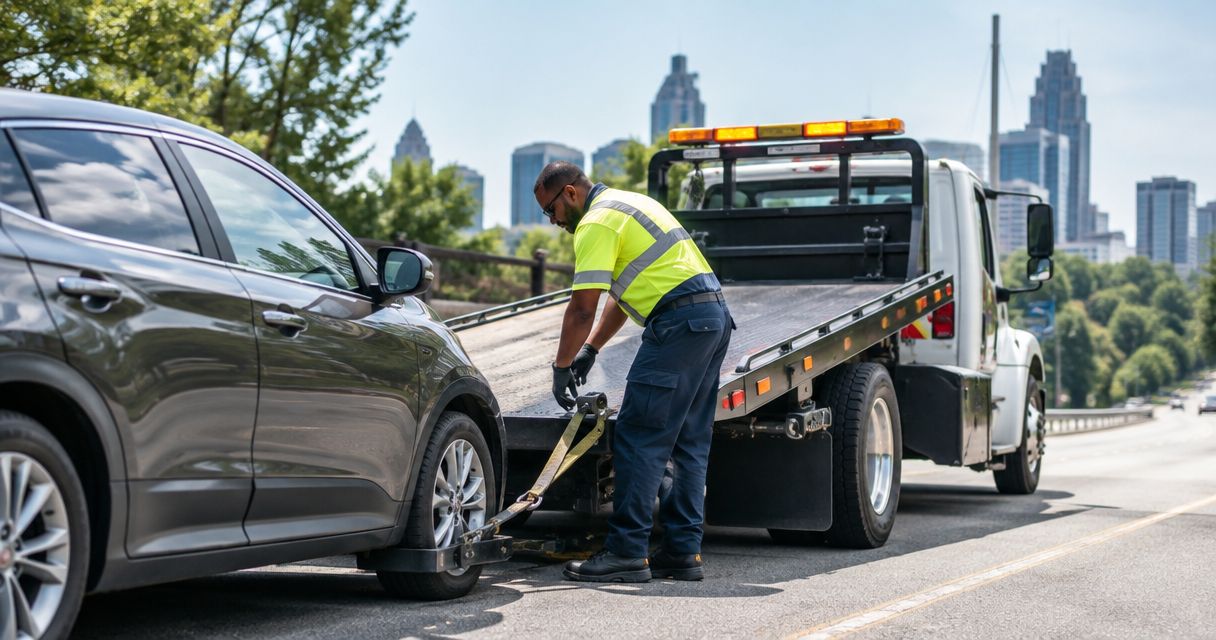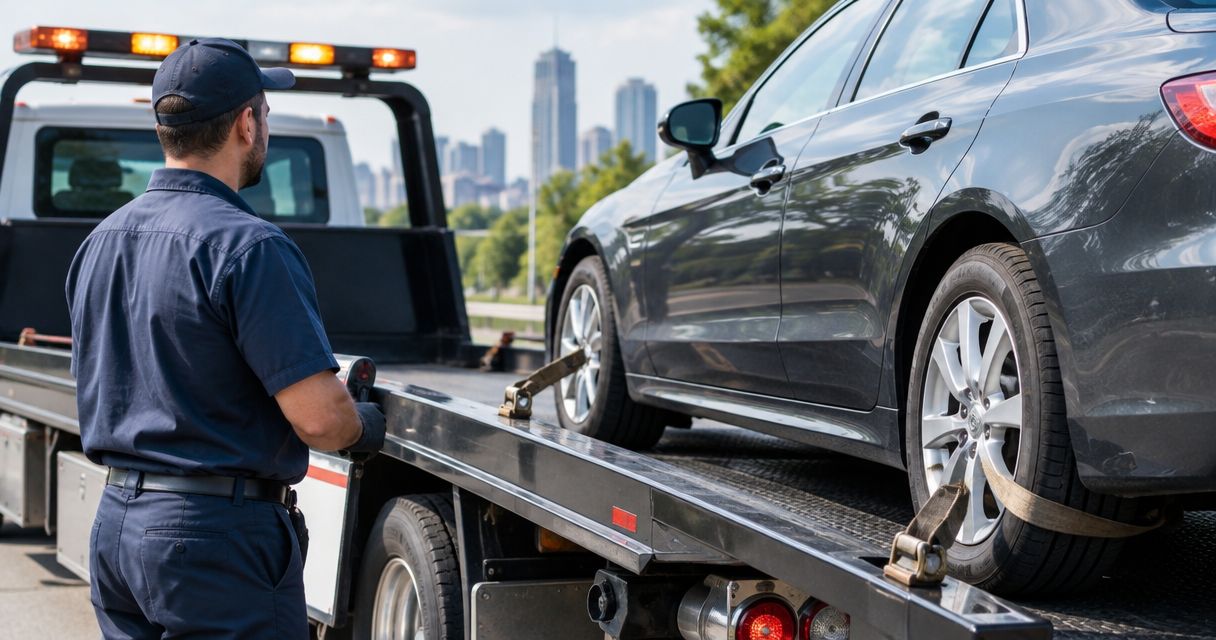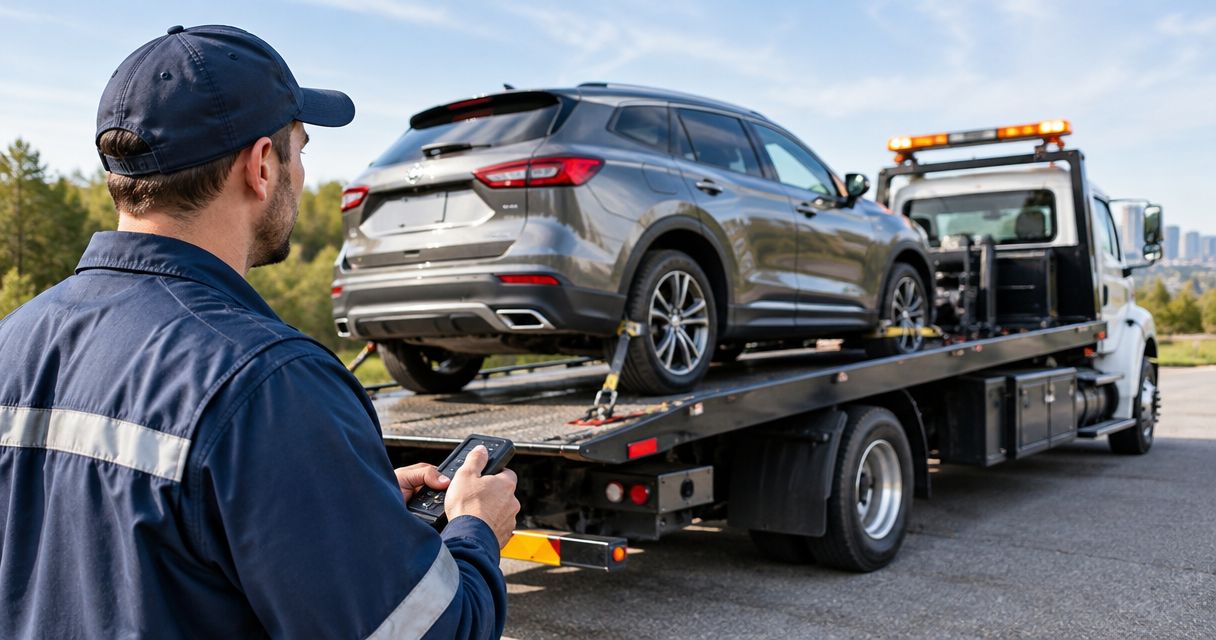
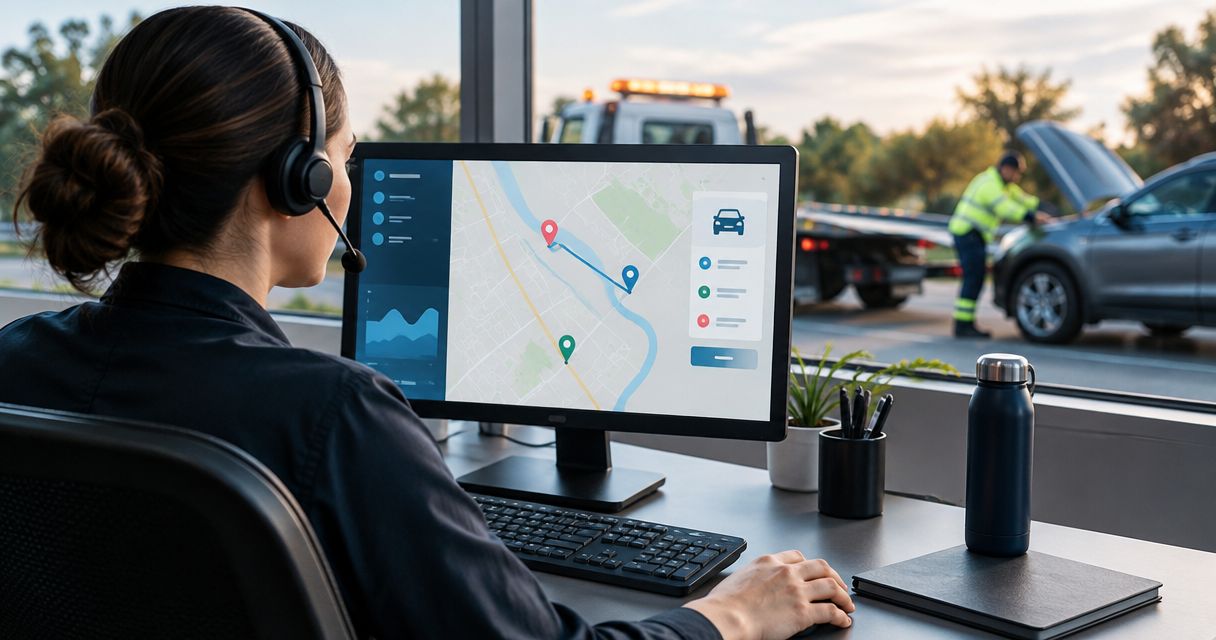
Roadside assistance dispatch turns your call into a service assignment: the dispatcher confirms your location, checks the problem and safety risks, then matches the job to a suitable roadside technician or tow operator. In 2026, submitting a request still does not mean a truck is heading toward you—ask whether an operator has accepted the job and what happens next.
- Roadside assistance dispatch connects your location, vehicle and problem to the right service.
- Atlroadside provides Atlanta roadside assistance 24/7, including fuel delivery, towing and heavy-duty recovery.
- Confirm an operator is assigned; a submitted request alone is not an arrival confirmation.
- Give your highway direction, vehicle details and immediate hazards before discussing the repair.
How does roadside assistance dispatch actually work?
Dispatch works by turning your breakdown details into instructions someone can act on. The useful information is simple: where you are, what you drive, what happened and whether anyone is in danger.
Stranded across the Atlanta metro? Call Atlroadside for roadside assistance, available 24 hours a day, 7 days a week. Start with your location and vehicle type—not a guess about the repair.
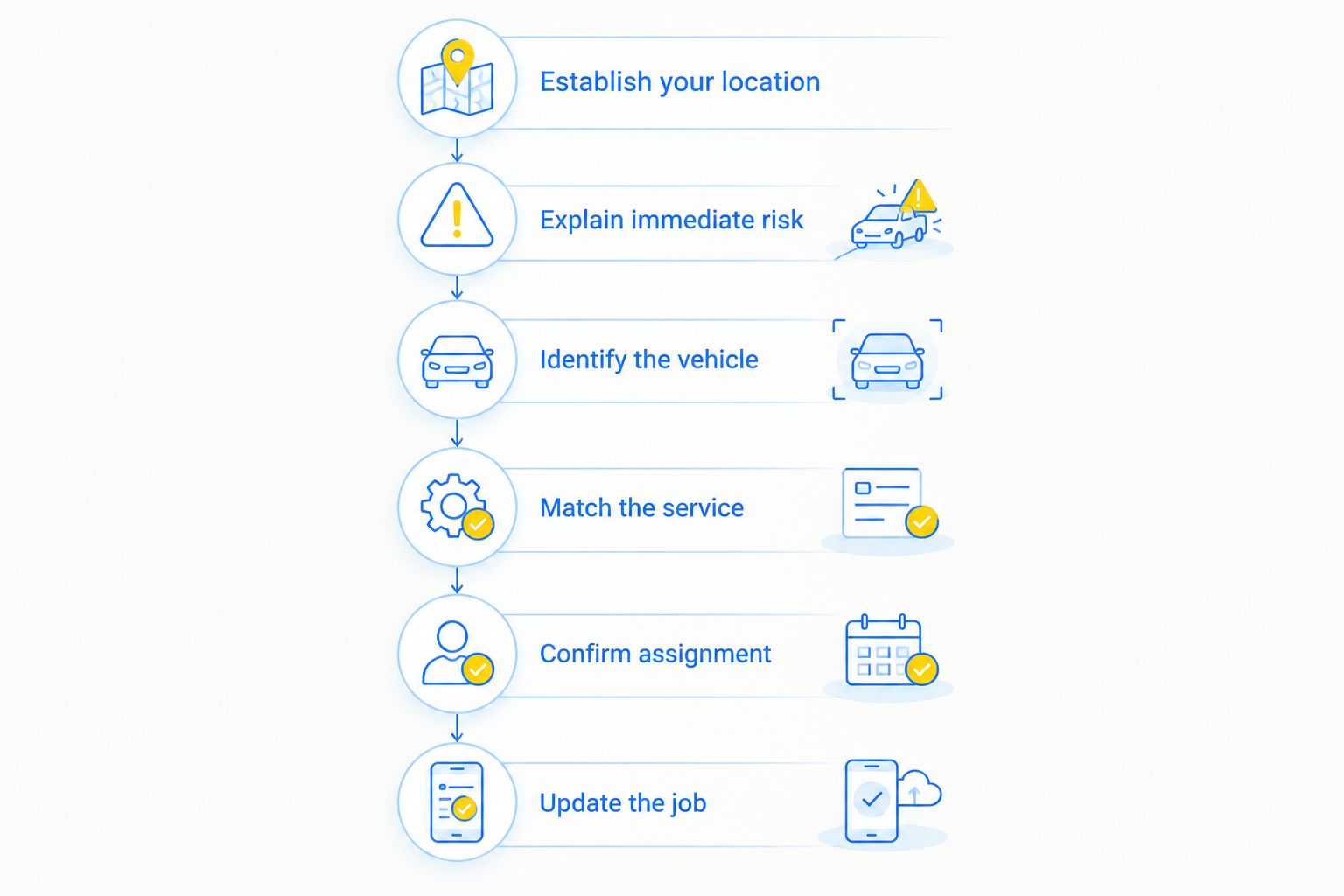
1. Establish your location
Give the road name, direction of travel and nearest exit, intersection or visible landmark. On I-285 or I-75, the highway name alone is not enough to describe which side the operator needs to reach.
If you have a location pin, offer it. Then describe whether you are on a shoulder, exit ramp, parking deck or private lot. Do not walk toward traffic to read a sign.
2. Explain the immediate risk
Say immediately if your vehicle is in a travel lane, someone is injured, you see smoke or fuel is leaking. Call 911 for an immediate threat to life or a traffic emergency; roadside dispatch is not a substitute for emergency services.
Describe the position you are already in. Do not move the vehicle or attempt a roadside repair just to make the service request easier.
3. Identify the vehicle and problem
Give the make, model and vehicle type. For commercial work, identify the truck, trailer and whether the vehicle is loaded.
Describe symptoms instead of declaring a diagnosis. Tell the dispatcher that the engine clicks, the tire is shredded or the vehicle stopped after a low-fuel warning. That gives the operator something useful to assess.
4. Match the service
The job needs a suitable service, not just the nearest truck. A fuel delivery, car lockout and loaded semi-truck recovery involve different work.
Ask what service is being arranged and whether your vehicle details have been passed along. If you need diesel, say diesel. If a trailer is attached, say so before an operator is assigned.
5. Confirm assignment
Ask whether an operator has accepted the job. Then ask for the current arrival estimate and how to receive updates.
A request confirmation and an operator assignment are different things. Do not treat an automated acknowledgment as proof that someone is already traveling to your vehicle.
6. Update the job when conditions change
Report a changed location, worsening hazard or different service need. If police direct you elsewhere, update the dispatcher as soon as you can safely do so.
Keep your callback number reachable. If you arrange another provider, cancel the original request rather than leaving both jobs active.
Why this matters
A vague request leaves important questions unanswered. A dispatcher cannot match the job properly if a passenger-car breakdown turns out to involve a commercial truck, attached trailer or blocked wheel.
For your 2026 roadside plan, save the information you need before the next breakdown: vehicle details, a reachable callback number and any fleet authorization instructions. During an emergency, accuracy beats a long explanation.
Which roadside service should dispatch arrange?
Describe the problem first; confirm the service second. You do not need to diagnose the vehicle from the shoulder. You do need to flag details that change the job.
| Service | Best for | Tell dispatch | Limitation to confirm |
|---|---|---|---|
| Fuel or diesel delivery | A vehicle that has run out of the correct fuel | Fuel type, vehicle type and exact location | Adding fuel does not resolve a separate mechanical fault |
| Jump start | A suspected discharged starting battery | Clicking, dim lights, starting symptoms and vehicle model | A jump start does not establish why the battery discharged |
| Lockout assistance | Keys locked inside the vehicle | Vehicle model, key location and any person or animal inside | A lockout request is not a substitute for emergency rescue |
| Tire change | A flat tire with a suitable spare | Tire damage, spare condition and vehicle position | A missing or unusable spare changes the plan |
| Emergency car towing | A car that cannot safely continue | Vehicle type, wheel condition and intended destination | Towing moves the vehicle; it does not repair the fault |
| Heavy-duty towing or recovery | A disabled commercial rig or a vehicle needing recovery | Truck and trailer details, load status and access conditions | Recovery needs an assessment beyond a routine roadside call |
Do not request a jump start just because the engine will not start. Mention whether it cranks normally, clicks or does nothing. Likewise, report a damaged wheel instead of describing every tire problem as a routine spare change.
Atlroadside roadside assistance is best for Atlanta drivers and fleets needing 24/7 mobile help, towing or heavy-duty recovery. Confirm the job scope with dispatch; service availability does not establish an exact arrival time or guarantee that a roadside fix will get the vehicle moving.
Request Atlanta roadside help
Explain your location, vehicle and problem to arrange the right roadside service.
What should you tell the dispatcher first?
Lead with your location and any immediate danger. Then give the vehicle and symptoms. A clear opening keeps the call focused without requiring you to know what failed.
Use this order:
- Location: Road, direction, exit or intersection, and where the vehicle sits.
- Safety: Blocked lane, injuries, smoke, leaking fuel or another immediate hazard.
- Vehicle: Make, model, car or commercial truck, and trailer details when relevant.
- Symptoms: What happened before the vehicle stopped and what it does now.
- Access: Gate, parking deck, narrow entrance, clearance issue or difficult approach.
- Callback: A number you can answer while waiting.
Your phone's location pin helps, but describe the approach too. A pin does not explain a locked gate or which entrance reaches your vehicle.
If you are uncertain about a detail, say so. Guessing the fuel type or vehicle configuration creates a worse instruction than asking the operator to verify it.
For diesel delivery and fleet breakdowns
State that the vehicle is commercial at the start. Give the unit number if your fleet uses one, then identify the vehicle, trailer and load status.
For diesel delivery, name the fuel required rather than saying only that you need fuel. For a disabled rig, describe whether it is upright, stuck, blocking access or attached to a trailer. Do not climb around the vehicle to collect details in an unsafe location.
Why roadside assistance dispatch varies
No single arrival estimate fits every roadside job. For a 2026 breakdown, ask about the actual assignment rather than relying on a general promise of fast service.
The details that affect the dispatch plan include:
- Location and approach: Highway direction, ramps, gates and parking restrictions determine how the operator reaches you.
- Vehicle type: A passenger car and a loaded commercial combination need different service planning.
- Reported symptoms: A flat tire, no-start problem and stalled engine point to different work.
- Required capability: Fuel delivery, towing and recovery are not interchangeable assignments.
- Operator assignment: A submitted request still needs confirmation that someone has accepted the job.
- Changing conditions: Traffic, weather or a newly reported hazard can change the approach and arrival estimate.
Ask for the current estimate, not a guaranteed countdown. If the estimate changes, ask whether the same operator is still assigned and whether anything about your location or service request needs clarification.
What happens after an operator accepts the job?
Confirm the service being arranged, your callback number and any instructions for identifying the arriving operator. Ask how to get an update if the estimate passes.
Before work starts, confirm the requested service with the person who arrives. A conversation about a jump start should not silently become an agreement for towing. If the situation requires different work, ask for an explanation before authorizing it.
For towing, provide the intended destination and confirm that the receiving location can accept the vehicle. For fleet work, identify who can authorize service and communicate any dispatch instructions your employer requires.
An operator still needs to assess the vehicle on arrival. Your description starts the job; it does not replace an inspection or establish that a repair is safe on the roadside.
How do I know whether someone is actually coming?
An accepted assignment is stronger confirmation than a request acknowledgment. Ask whether an operator has accepted, what service is assigned and how you will receive arrival updates.
For your 2026 emergency checklist, save those questions alongside your vehicle details. They help you separate an open request from a confirmed job without guessing what a status message means.
Should I stay inside the vehicle while waiting?
Your safest waiting position depends on traffic, the vehicle's location and immediate hazards. There is no blanket answer that makes every shoulder safe.
Tell dispatch where you are waiting and follow emergency responders' directions. Do not stand between vehicles, attempt repairs beside moving traffic or walk into a travel lane to signal an operator.
What if I already requested help somewhere else?
Tell the next provider that another request is active before authorizing another assignment. Ask the original provider for its status, then clearly cancel the request you no longer need.
A second request does not automatically cancel the first. Keep confirmation messages so you can identify which provider is handling the job and avoid conflicting instructions.
FAQ
What does roadside assistance dispatch actually do?
Roadside assistance dispatch collects your location, vehicle details, symptoms and safety concerns, then coordinates a suitable roadside service or tow. Ask whether an operator has accepted the assignment rather than relying only on a request acknowledgment.
What should I say when I call roadside assistance?
Give your exact location and any immediate danger first, followed by your vehicle type and the problem. Include highway direction, access restrictions and a callback number you can answer.
Does a dispatch confirmation mean a tow truck is on the way?
A dispatch confirmation does not necessarily establish that an operator is traveling to you. Ask whether the job has been accepted and request the current arrival estimate.
Can I request diesel delivery for a semi-truck in Atlanta?
Atlroadside provides 24/7 emergency diesel delivery for semi-trucks and commercial vehicles across the Atlanta metro. State that you need diesel and give the truck's location, vehicle details and access conditions.
Can dispatch tell me exactly when roadside help will arrive?
An arrival estimate is not an exact arrival guarantee. Ask for the current estimate after assignment and confirm how to get updates if traffic, access or the job changes.
Can roadside assistance fix every breakdown without towing?
Roadside assistance cannot resolve every breakdown where the vehicle stops. A jump start, fuel delivery or tire change addresses a specific need; an unsafe or unresolved fault can require towing.
Should I call roadside assistance or 911?
Call 911 for an immediate threat to life, injuries or a traffic emergency. Request roadside assistance for the vehicle service, and tell dispatch about any emergency response already underway.
One last thing
The most useful dispatch question is: Has an operator accepted my job? It gets past the vague reassurance of a request being in the system.
Before your next trip in 2026, save your vehicle details and review your fleet's authorization process if you drive for work. During a breakdown, give the location, describe the problem and confirm the assignment. Keep the conversation practical.