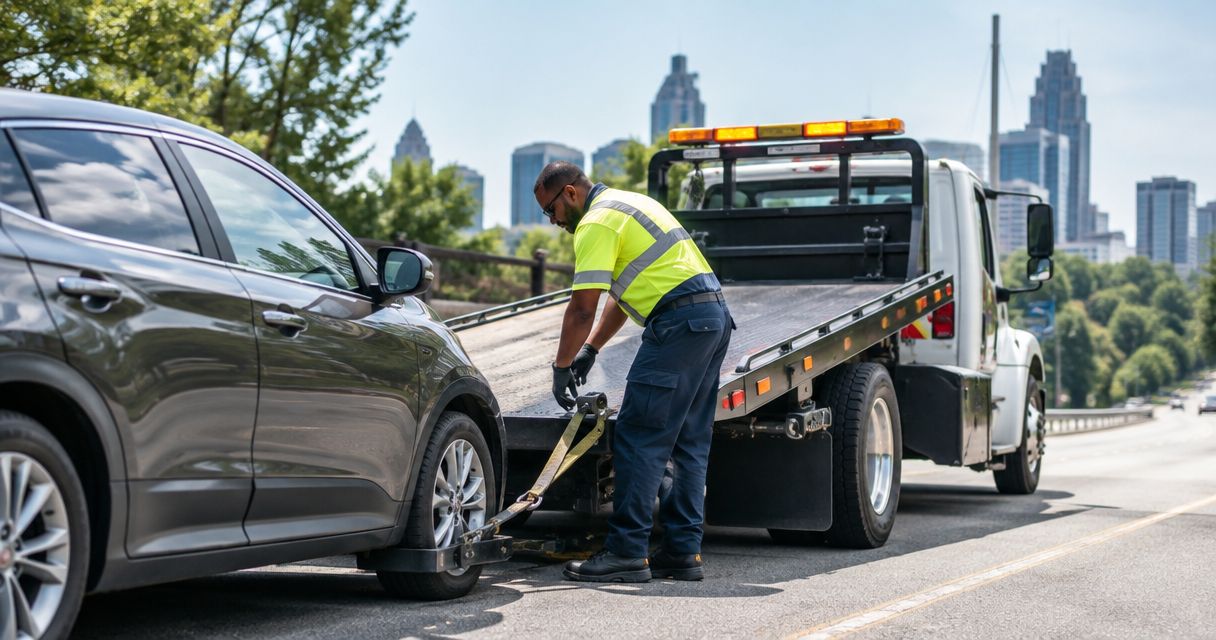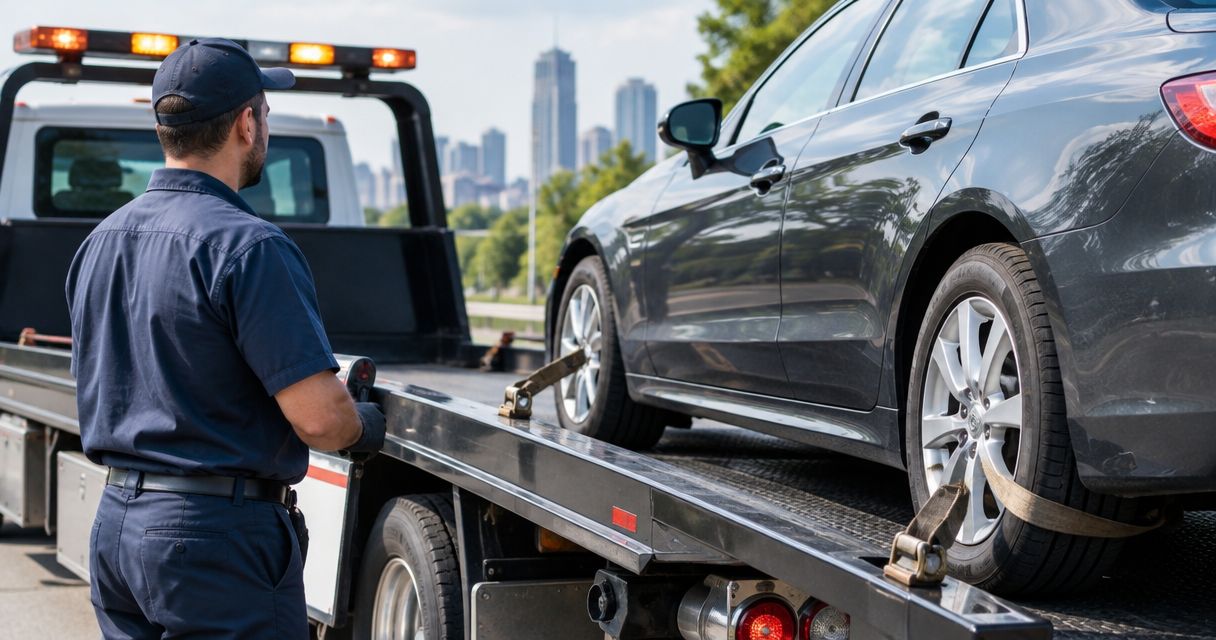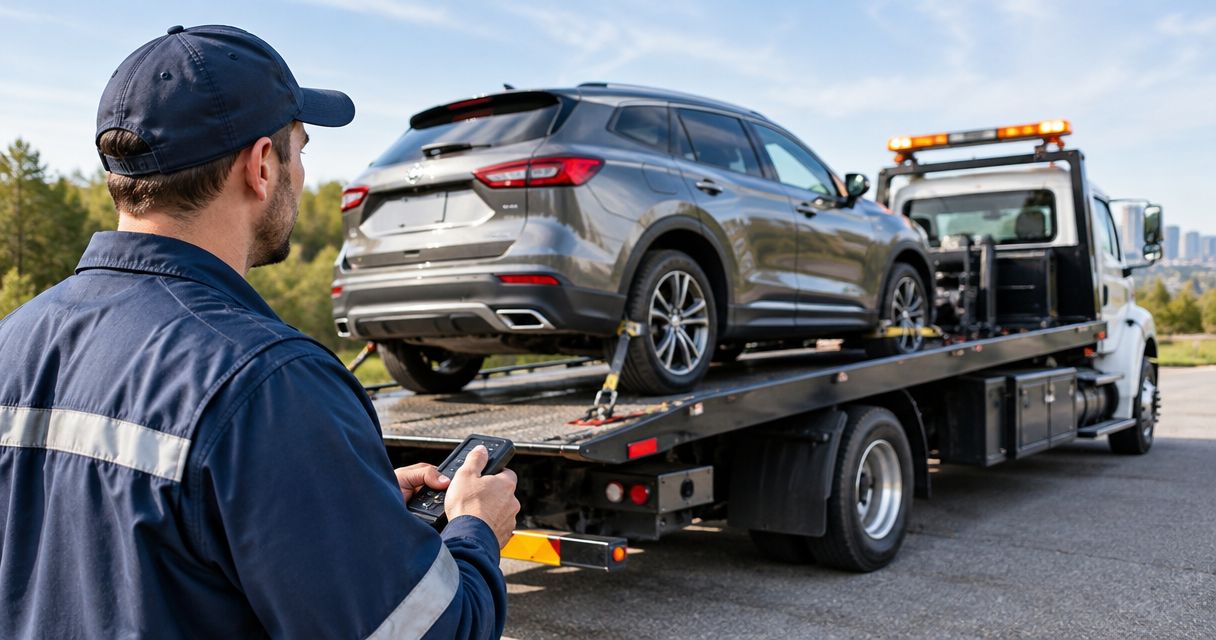
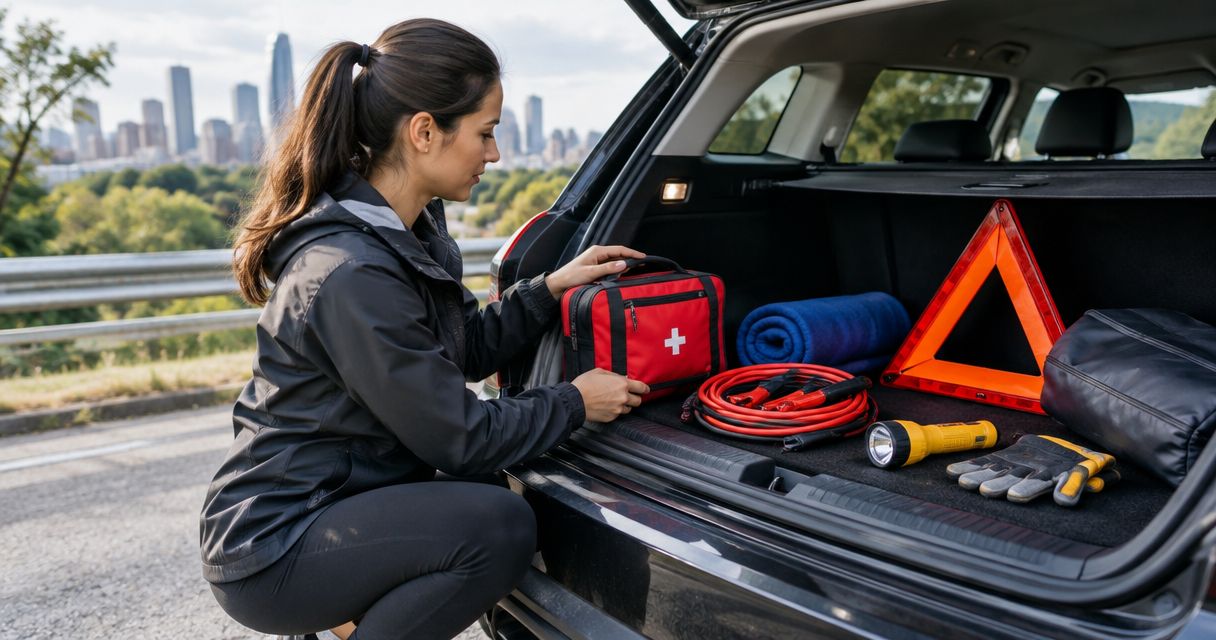
Best overall: a vehicle-matched emergency kit. Best for battery trouble: a jump-start kit. Best budget option: a compact essentials kit. For Atlanta drivers in 2026, the right kit helps you stay safe and handle the problems your vehicle actually supports—not attempt repairs beside moving traffic.
- The best emergency car kit matches your vehicle, passengers, and roadside repair limits.
- Choose a jump-start kit for battery trouble, not as a substitute for a complete roadside safety kit.
- Atlroadside provides 24/7 roadside assistance across the Atlanta metro when your kit cannot solve the problem.
- Commercial drivers need a fleet-specific kit; passenger-car tools are not a heavy-duty recovery plan.
Stranded now? Request help before unpacking tools if your stopping position is unsafe. Atlroadside provides towing, jump starts, lockout service, tire changes, fuel delivery, and heavy-duty towing and recovery across the Atlanta metro. Tell the dispatcher where you are, what you drive, and what happened.
Why this matters
A packed bag does not make a highway shoulder a safe workshop. Your emergency kit should help you communicate, stay visible when safe, and manage a breakdown without creating another emergency.
For your 2026 kit, start with the vehicle owner's manual. Confirm the approved jump-start procedure, tire equipment, and towing instructions before choosing tools. A kit that fits another driver's car can be wrong for yours.
Atlroadside is a roadside assistance backup for Atlanta drivers and commercial fleets whose emergency car kit cannot resolve a breakdown. Keep that distinction clear: supplies support you; trained roadside help handles work you cannot safely complete.
What makes the best emergency car kit?
Judge a kit by these criteria, not its advertised piece count:
- Vehicle compatibility: Battery equipment, tire tools, and accessories must match your vehicle's instructions.
- Safe access: Keep communication supplies and a light reachable without standing in traffic or unloading the trunk.
- Useful essentials: Prioritize a phone charging option, flashlight, first-aid supplies, drinking water, gloves, and weather protection.
- Repair limits: Separate equipment you know how to use from repairs that require roadside assistance.
- Maintenance: Check batteries, expiry dates, missing supplies, and damaged packaging. An untouched kit is not automatically ready.
Choose useful contents over a bigger bag. Several variations of the same small accessory do not replace a working light or the correct tire equipment.
Emergency car kits at a glance
These are kit configurations, not claims about named retail products. Use the table to choose what belongs in your vehicle, then inspect the actual contents before buying or assembling anything.
| Rank and kit | Best for | Standout feature | Key limitation |
|---|---|---|---|
| 1. Vehicle-matched emergency kit | Most Atlanta drivers | Combines safety essentials with compatible vehicle equipment | Requires checking your manual and maintaining the contents |
| 2. Compact essentials kit | Short trips and limited storage | Keeps communication, lighting, and basic comfort supplies together | Does not independently solve battery or tire failures |
| 3. Jump-start kit | Drivers preparing for battery trouble | Adds compatible battery-starting equipment | Does not repair the cause of repeated battery failure |
| 4. Family travel kit | Drivers carrying children or other passengers | Adds passenger-specific comfort and care supplies | Takes more space and needs regular restocking |
| 5. Fleet-specific roadside kit | Commercial vehicles and semi-trucks | Matches supplies to the vehicle and dispatch process | Does not replace heavy-duty roadside service or recovery |
1. Vehicle-matched kit: best emergency car kit for most drivers
A vehicle-matched kit combines basic safety supplies with equipment your vehicle supports. Start with a flashlight, phone charging option, first-aid supplies, gloves, water, and weather protection. Add battery or tire equipment only after checking compatibility.
This is the best default for Atlanta drivers in 2026 because the vehicle—not the bag's label—determines what you can use. Check whether your car has a spare tire, an inflator, a sealant system, or another manufacturer-specified arrangement. Do not assume a jack is included.
Vehicle-matched kit pros:
- Covers communication, basic comfort, and vehicle-specific needs.
- Lets you avoid tools your vehicle cannot use.
- Gives each item a clear job instead of relying on piece count.
Vehicle-matched kit cons:
- Takes time to assemble and check.
- Requires replenishing supplies and maintaining powered equipment.
- Cannot make an unsafe stopping location suitable for repairs.
Best for: Drivers who want one practical starting point for daily travel.
Keep the vehicle's approved instructions with the equipment. If a tire change requires tools you do not have, or a jump-start procedure is unclear, request assistance instead of improvising.
Verdict: Buy or assemble a vehicle-matched kit as your default.
2. Compact essentials kit: best for short trips and limited storage
A compact essentials kit focuses on staying connected, seeing what you are doing, and handling basic comfort needs. It is a sensible minimum when a full repair-oriented kit would crowd a small vehicle. It is also the budget-focused choice here because you can prioritize essentials rather than duplicate accessories.
Choose a light, charging option, basic first-aid supplies, gloves, water, and suitable weather protection. Keep the kit secured and accessible. Loose equipment should not roll around the cabin or interfere with driving controls.
Compact essentials kit pros:
- Fits vehicles with limited storage.
- Keeps frequently needed supplies together.
- Avoids carrying unfamiliar repair tools just to fill a bag.
Compact essentials kit cons:
- Provides limited mechanical assistance.
- Offers less room for passenger-specific supplies.
- Still depends on roadside help for many breakdowns.
Best for: Short-trip drivers who need a practical minimum, not a mobile workshop.
Do not confuse compact with complete. A charging cable without a working power source will not help when your vehicle cannot supply power. Check the whole charging setup before relying on it.
Verdict: Buy for limited storage; skip it as your only preparation for longer trips.
3. Jump-start kit: best for preparing for battery trouble
A jump-start kit adds compatible starting equipment to your basic roadside supplies. That equipment can be a portable jump starter or cables used according to the vehicle and equipment instructions. Compatibility matters more than a headline power claim.
For a 2026 purchase, confirm the vehicle's electrical system, designated connection points, and manufacturer guidance. Some vehicles require specific procedures. A portable unit also needs charging and storage care; carrying it does not guarantee it is ready.
Jump-start kit pros:
- Gives battery trouble a specific preparation plan.
- Pairs naturally with a flashlight and protective gloves.
- Lets you check instructions before an emergency rather than during one.
Jump-start kit cons:
- Requires correct connections and compatible equipment.
- Does not fix a failing battery or charging system.
- Remains unsafe to use when access places you near moving traffic.
Best for: Drivers who want battery-starting equipment alongside a general safety kit.
Do not attempt to jump-start a visibly damaged or leaking battery. Follow the vehicle instructions, and stop if the condition or procedure is unclear. Repeated starting trouble needs diagnosis, not repeated roadside improvisation.
Verdict: Buy compatible equipment; skip unfamiliar jump-start procedures.
4. Family travel kit: best for carrying passengers
A family travel kit adds supplies for the people riding with you. Build it around the vehicle-matched kit, then consider drinking water, weather protection, necessary personal items, and age-appropriate comfort supplies. The goal is to make a delay manageable without losing track of roadside safety.
In 2026, check this kit when passenger needs change—not just when the vehicle changes. Follow storage instructions for medicines and other temperature-sensitive items. A hot vehicle is not suitable storage for every supply.
Family travel kit pros:
- Accounts for passengers rather than only the driver.
- Keeps necessary personal supplies easier to locate.
- Supports a more orderly response during a breakdown.
Family travel kit cons:
- Uses more storage space.
- Needs updates as passenger needs change.
- Does not make it safe to wait outside near traffic.
Best for: Drivers regularly carrying children, older relatives, or passengers with specific care needs.
Decide who handles the call and who keeps passengers together. Whether staying inside or moving away is safer depends on the hazard and surroundings; do not treat getting everyone out as an automatic rule.
Verdict: Buy or assemble for regular passenger travel.
5. Fleet-specific kit: best for commercial roadside needs
A fleet-specific kit matches the commercial vehicle, driver responsibilities, and dispatch process. Keep required emergency equipment separate from optional comfort supplies. Where federal motor-carrier rules apply, required equipment is governed by 49 CFR §393.95; a passenger-car kit is not a substitute.
For a 2026 fleet check, confirm what belongs in each vehicle with the fleet's safety process. Keep vehicle identification, dispatch instructions, and approved roadside procedures accessible. A semi-truck, service van, and passenger car do not share one repair plan.
Fleet-specific kit pros:
- Matches the vehicle's work and operating needs.
- Helps drivers communicate useful details to dispatch.
- Separates required equipment from optional supplies.
Fleet-specific kit cons:
- Requires vehicle-by-vehicle review.
- Needs oversight when vehicles or assignments change.
- Cannot replace heavy-duty towing, recovery, or tire service.
Best for: Commercial drivers, fleet managers, and semi-truck operators.
Keep the escalation plan clear. Atlroadside provides roadside assistance and heavy-duty towing and recovery across the Atlanta metro. Describe the vehicle and problem accurately so the request is not mistaken for a routine passenger-car call.
Verdict: Buy a fleet-specific setup; skip a generic car kit as the complete plan.
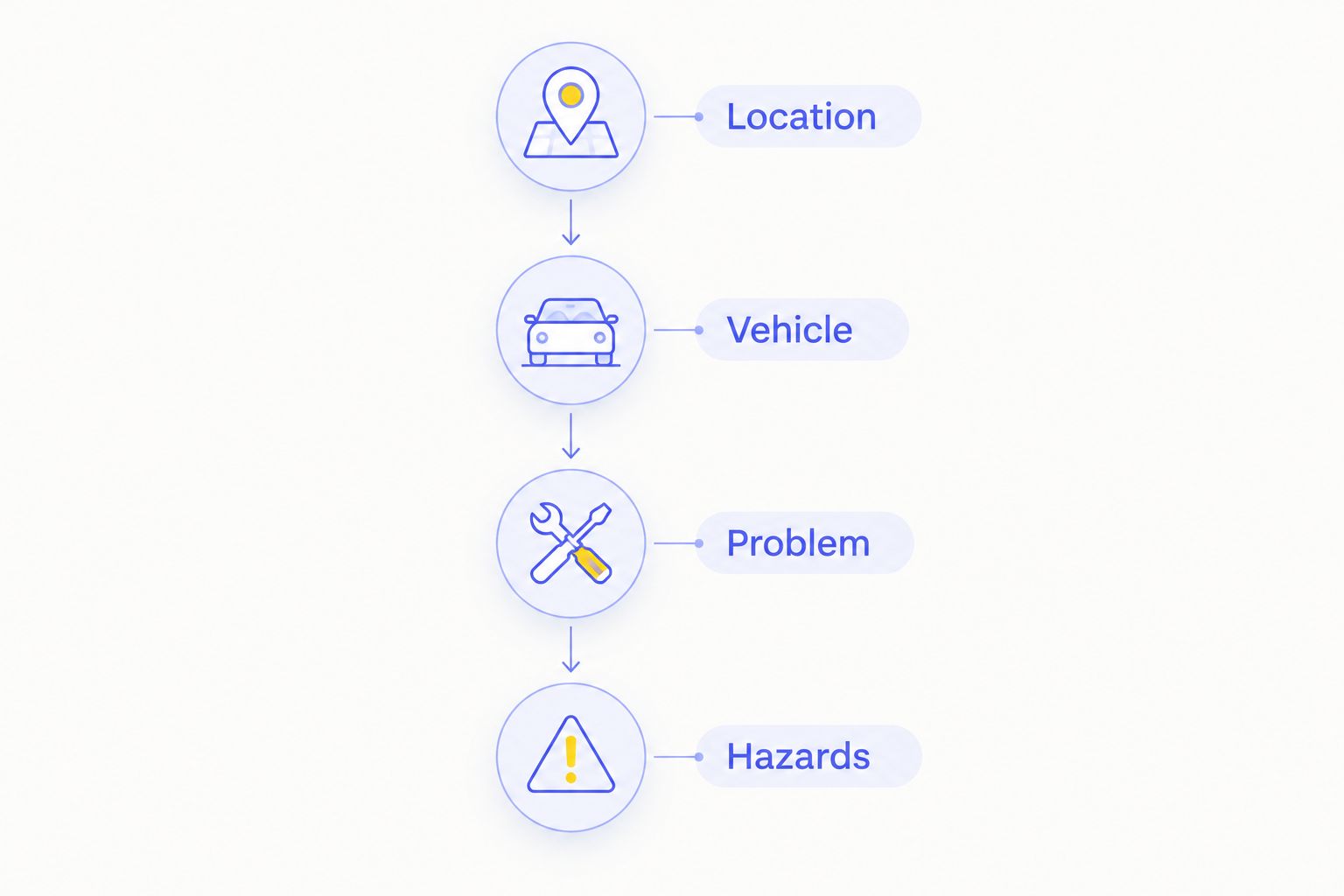
Stranded now? Give dispatch these details
Your kit supports the wait. Your call starts the service request. Provide these details without walking into traffic to collect them:
- Location: Road name, direction of travel, nearest exit or mile marker if safely visible, and your stopped position.
- Vehicle: Make, model, and whether it is a passenger vehicle, commercial vehicle, or semi-truck.
- Problem: Dead battery, locked keys, flat tire, empty fuel tank, disabled vehicle, or recovery need.
- Hazards: Traffic exposure, smoke, fire, injury, a dangerous load condition, or another immediate threat.
For fuel delivery, identify the correct fuel type. For tire help, say whether a spare and approved tools are present. For towing or recovery, explain whether the vehicle rolls, is stuck, or has visible damage.
Call 911 for immediate danger or a medical emergency. Roadside assistance is not emergency medical response. For a breakdown without that immediate emergency, request the service your vehicle needs and follow safe waiting instructions.
Request roadside help now
24/7 Atlanta metro help for batteries, tires, lockouts, fuel, towing, and heavy-duty recovery.
How these kits are ranked
The ranking prioritizes vehicle compatibility, accessible essentials, clear repair limits, and maintainable contents. It ranks configurations by use case—not retail brands by unverified performance claims.
The vehicle-matched kit comes first because it covers the broadest preparation task. The other configurations address specific constraints: limited space, battery trouble, passenger needs, and commercial operation. None replaces professional help where the repair or stopping position is unsafe.
Which emergency car kit should you choose?
Choose the vehicle-matched kit if you are undecided. Check what your vehicle already carries, add the missing safety essentials, and learn where everything is stored. Then add passenger or battery equipment that fits your actual needs.
Before your next drive, make these 3 checks: confirm your light works, confirm your charging setup works, and confirm your tire equipment matches the vehicle. This is a readiness check, not a promise that every breakdown is repairable.
For commercial work, choose the fleet-specific configuration instead. Passenger-car preparation cannot stand in for a semi-truck roadside plan.
FAQ
What's the best emergency car kit for Atlanta drivers?
The best emergency car kit for most Atlanta drivers is a vehicle-matched kit with communication supplies, lighting, first-aid supplies, and compatible vehicle equipment. Check your owner's manual before adding jump-start or tire tools.
Should I buy a premade kit or build my own?
Choose whichever option gives you useful, compatible contents. Inspect a premade kit item by item, or assemble your own around the equipment and supplies your vehicle and passengers need.
Is a portable jump starter enough for an emergency car kit?
No. A portable jump starter addresses one type of starting problem, while a roadside kit also needs communication, lighting, basic care supplies, and a plan for problems you cannot safely repair.
Can I change a flat tire on an Atlanta highway shoulder?
Do not change a tire if traffic exposure or the stopping surface makes the work unsafe. You also need the vehicle's approved equipment and procedure; request roadside tire help when those conditions are not met.
What should I tell roadside assistance when I call?
Give your location, vehicle details, problem, and any immediate hazards. For fuel delivery, identify the fuel type; for tire service, explain whether you have a spare.
Does a semi-truck need a different emergency kit?
Yes. A semi-truck needs vehicle-specific preparation, applicable required emergency equipment, and a commercial roadside escalation plan. A passenger-car kit does not replace heavy-duty assistance.
What help does Atlroadside provide when my kit is not enough?
Atlroadside provides 24/7 mobile towing, jump starts, lockout service, tire changes, fuel delivery, and heavy-duty towing and recovery across the Atlanta metro. Describe the vehicle and problem when requesting service.
One last thing
Check the kit you already own before buying another one. The missing item is often more useful than another bag of duplicate accessories. Put accessible essentials where you can reach them safely, and keep the roadside help plan alongside the equipment—not buried underneath it.