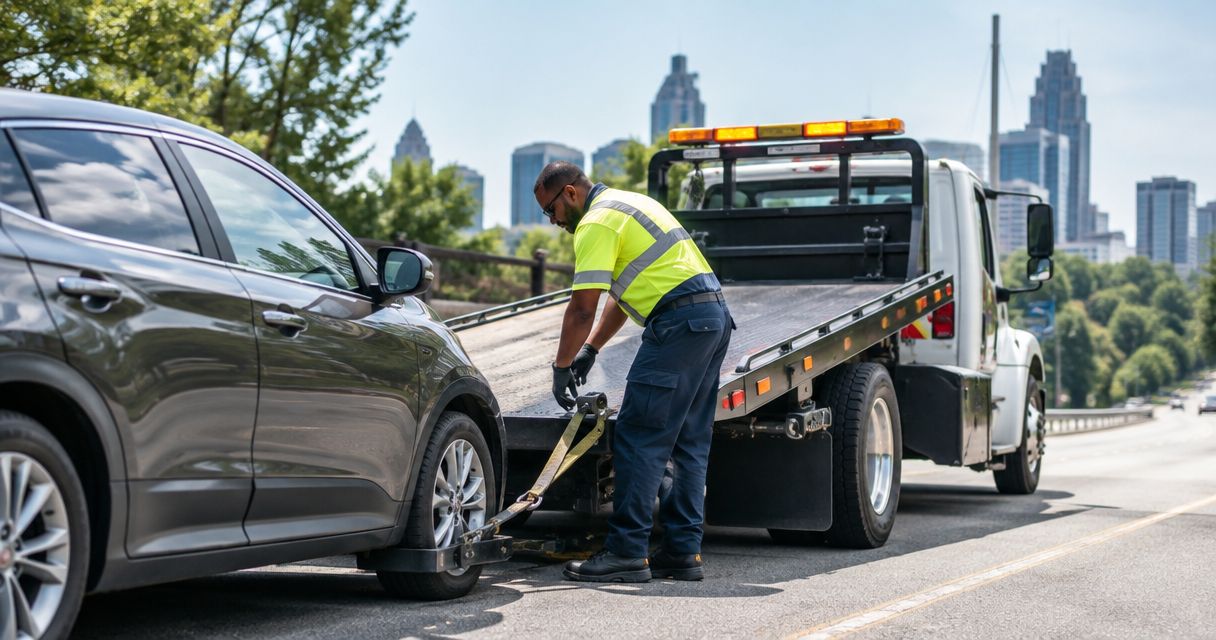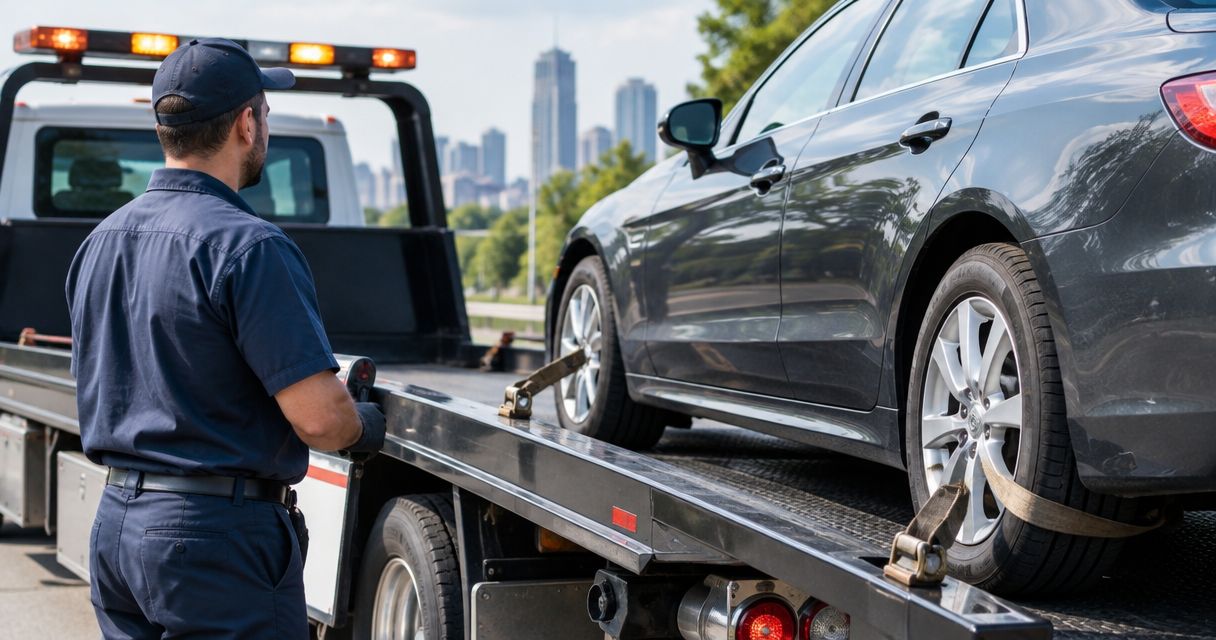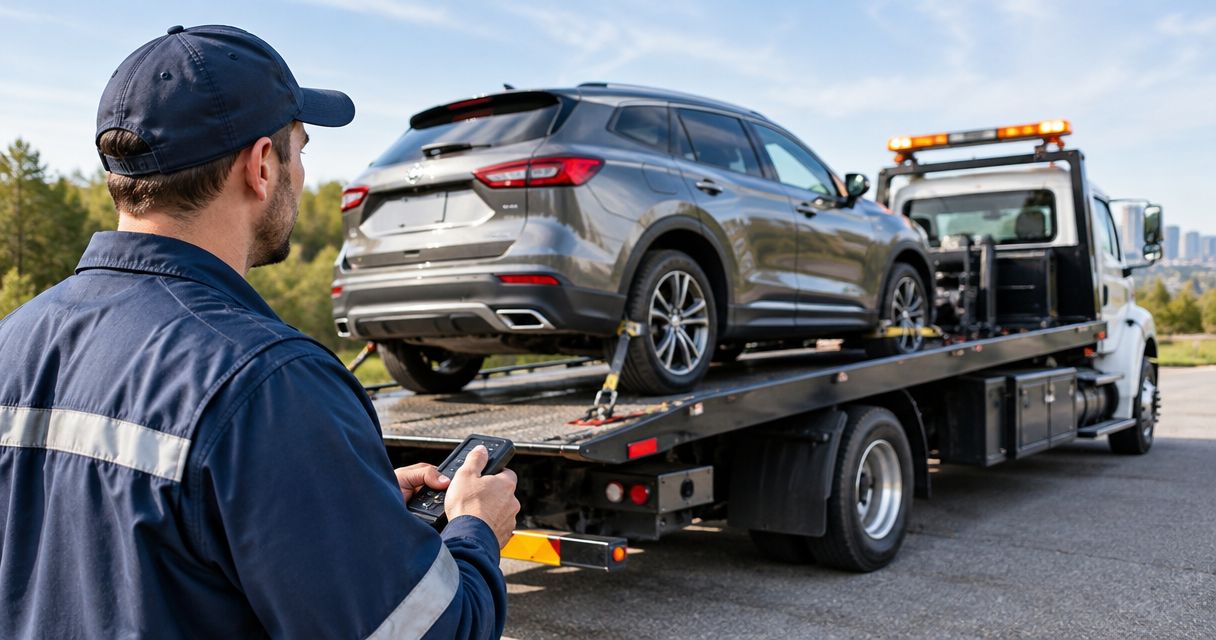
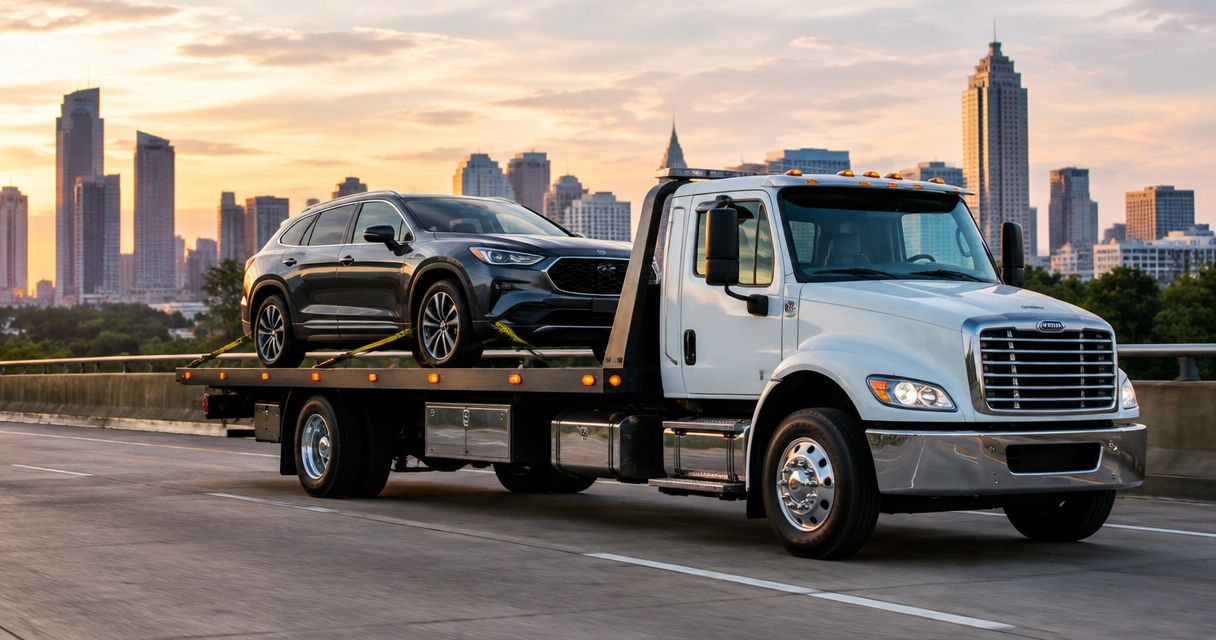
Need long distance towing Atlanta drivers can arrange without guesswork? Choose emergency towing for a disabled car, scheduled vehicle transport for a planned move, and heavy-duty towing for a disabled commercial rig—then confirm the full route before dispatch.
- For long distance towing Atlanta drivers need pickup, destination, and vehicle handling confirmed before dispatch.
- Atlroadside provides 24/7 towing and roadside assistance for Atlanta drivers and commercial fleets.
- Choose heavy-duty towing for a disabled semi; request recovery first if the rig cannot be reached safely.
- A jump start, tire change, or fuel delivery can address the immediate problem without a long-distance tow.
Stranded now? Contact Atlroadside and describe your vehicle, location, and problem. The company provides 24/7 Atlanta metro roadside assistance, towing, and heavy-duty recovery. For an out-of-town destination, confirm the requested route before authorizing the job.
Why this matters
Getting a vehicle off the shoulder and getting it to a distant repair shop are different jobs. Your dispatch request needs to cover both. Otherwise, you have not settled where the vehicle will end up.
For your 2026 towing decision, start with the situation—not a provider's position in a search result. A running car being relocated needs a different arrangement from a semi that cannot move. A vehicle stuck off the road needs recovery before anyone can discuss the highway trip.
This guide ranks service options by the problem they solve. The right choice is the service that can handle your vehicle and complete your requested trip.
What makes the best long-distance towing option?
Use these criteria before you authorize dispatch:
- Confirmed destination: Give the actual delivery address. Ask whether the provider will complete that route rather than only move the vehicle locally.
- Vehicle fit: Identify the vehicle, its condition, and any handling restrictions. A passenger car and a loaded commercial rig are not interchangeable jobs.
- Pickup access: Explain whether the vehicle is on pavement, in a parking structure, off the road, or blocked by damage.
- Clear job scope: Separate roadside repair, recovery, towing, and destination delivery. Know which work you are authorizing.
- Receiving arrangements: Confirm who will accept the vehicle and how it can be delivered if the destination is closed.
- Dispatch communication: Ask what information the operator needs, how updates will arrive, and what happens if the job changes.
A provider's general towing capability does not establish that a particular long-distance route is accepted. Get that answer directly. For 2026 bookings, the route and vehicle details belong in the initial request, not in a conversation after loading.
Towing options at a glance
| Ranked option | Best for | Standout purpose | Key limitation |
|---|---|---|---|
| Emergency car towing | A disabled passenger vehicle needing removal and destination delivery | Starts with an immediate breakdown | The requested long-distance route must be accepted explicitly |
| Scheduled vehicle transport | A planned move without an active roadside emergency | Coordinates pickup and delivery ahead of time | Does not replace emergency roadside clearance |
| Heavy-duty towing | A disabled semi, bus, or commercial vehicle | Matches the job to commercial-vehicle handling | Load, vehicle condition, and destination need separate confirmation |
| Recovery followed by towing | A vehicle stuck off the road or difficult to access | Makes the vehicle accessible before transport | Recovery alone does not complete the destination trip |
| Roadside assistance before towing | A fuel, battery, lockout, or tire problem | Addresses the immediate cause of being stranded | Does not resolve every mechanical failure |
1. Emergency car towing: best for a disabled passenger vehicle
A car that cannot continue safely needs removal, not a relocation booking that leaves the immediate breakdown unresolved. Request emergency towing and state your preferred destination in the same conversation. Ask whether the job includes the entire trip.
Atlroadside provides 24/7 emergency towing and roadside assistance across the Atlanta metro. For a long-distance request, give dispatch the destination and ask whether that specific trip can be arranged. Do not treat metro service coverage as confirmation of an out-of-town delivery.
Emergency car towing pros:
- Addresses a vehicle that cannot continue safely.
- Lets you identify the required repair shop or other receiving location.
- Gives dispatch a clear starting point: a disabled vehicle needing removal.
Emergency car towing cons:
- A local tow does not automatically include your distant destination.
- Vehicle damage or access restrictions can change the pickup requirements.
- The receiving location still needs to accept the vehicle.
Best for: Drivers whose passenger vehicle is disabled and needs a confirmed pickup-to-destination arrangement.
Verdict: Call for emergency towing, but authorize the long-distance trip only after the destination is accepted.
2. Scheduled vehicle transport: best for a planned move
Choose scheduled vehicle transport when the vehicle needs to change locations but you are not stranded in an active roadside emergency. Describe whether it runs, steers, and rolls. Those details affect how pickup must be arranged.
This is a service category to evaluate, not a substitute for immediate breakdown help. If your car is already disabled beside traffic, deal with the unsafe location first. Arrange the longer move around a confirmed pickup and receiving plan.
Scheduled vehicle transport pros:
- Fits a planned relocation rather than an urgent roadside removal.
- Lets you coordinate access at both ends of the trip.
- Keeps the delivery address and receiving contact central to the request.
Scheduled vehicle transport cons:
- Does not solve an immediate traffic exposure problem.
- A non-running vehicle needs explicit handling confirmation.
- Pickup and delivery arrangements still require agreement.
Best for: Owners planning a vehicle move between known locations.
Verdict: Choose scheduled transport for a planned move; skip it as the first response to an active roadside emergency.
3. Heavy-duty towing: best for disabled commercial rigs
A disabled semi, bus, or other commercial vehicle needs a heavy-duty towing request. Identify the vehicle and explain whether a trailer or load is involved. Report visible damage and whether the rig can roll or steer.
Atlroadside has heavy-duty towing and recovery capability for Atlanta-area drivers and fleets. Confirm the complete commercial-vehicle job, including the proposed destination, before authorizing dispatch. For related breakdown decisions, use the roadside assistance for semi-trucks guide.
Heavy-duty towing pros:
- Addresses commercial vehicles rather than treating them as passenger-car jobs.
- Brings vehicle configuration and load information into dispatch planning.
- Allows the request to include a fleet's designated repair destination.
Heavy-duty towing cons:
- Tractor, trailer, cargo, and damage details need clarification.
- A rig off the roadway can require recovery before towing.
- Capability does not establish acceptance of every requested route.
Best for: Fleet dispatchers and commercial drivers managing a disabled rig.
Verdict: Request heavy-duty towing and confirm the vehicle configuration, load situation, and full destination.
4. Recovery followed by towing: best for inaccessible vehicles
A vehicle in a ditch, on soft ground, or otherwise inaccessible has a recovery problem before it has a transport problem. Tell dispatch exactly where it sits. Describe any visible damage without entering an unsafe area to inspect it.
Ask for recovery and towing as distinct parts of the request. Once the vehicle is accessible, its condition determines the next handling step. Recovery does not establish that the vehicle is safe to drive.
Recovery followed by towing pros:
- Addresses the obstruction that prevents ordinary pickup.
- Gives dispatch important information about terrain and vehicle position.
- Keeps recovery and destination delivery in the same planning conversation.
Recovery followed by towing cons:
- The vehicle's condition needs reassessment after recovery.
- Access and damage can complicate the job.
- A recovery-only arrangement leaves onward transport unresolved.
Best for: Drivers and fleets whose vehicle cannot be reached for straightforward loading.
Verdict: Request recovery first, and confirm how towing will proceed afterward.
5. Roadside assistance: best for an identifiable roadside problem
Not every stranded vehicle needs a long-distance tow. An empty fuel tank, dead battery, lockout, or flat tire calls for a specific roadside-service request. Describe what happened instead of guessing at a mechanical diagnosis.
Atlroadside provides fuel delivery, jump starts, lockout service, and tire changes, including emergency diesel delivery for commercial vehicles. If the service does not restore safe operation, discuss towing as the next step. A successful jump start alone does not diagnose the underlying battery or charging problem.
Roadside assistance pros:
- Targets the immediate issue instead of automatically ordering transport.
- Covers common consumer and commercial roadside needs.
- Helps distinguish a serviceable roadside problem from a towing requirement.
Roadside assistance cons:
- Does not resolve every mechanical fault.
- Getting the engine running does not establish that the vehicle is safe to continue.
- Tire damage or vehicle condition can still require towing.
Best for: Drivers with a fuel, battery, lockout, or tire problem that needs on-site help.
Verdict: Request the matching roadside service first when the problem is identifiable; tow when safe operation cannot be restored.
What to tell dispatch before the truck rolls
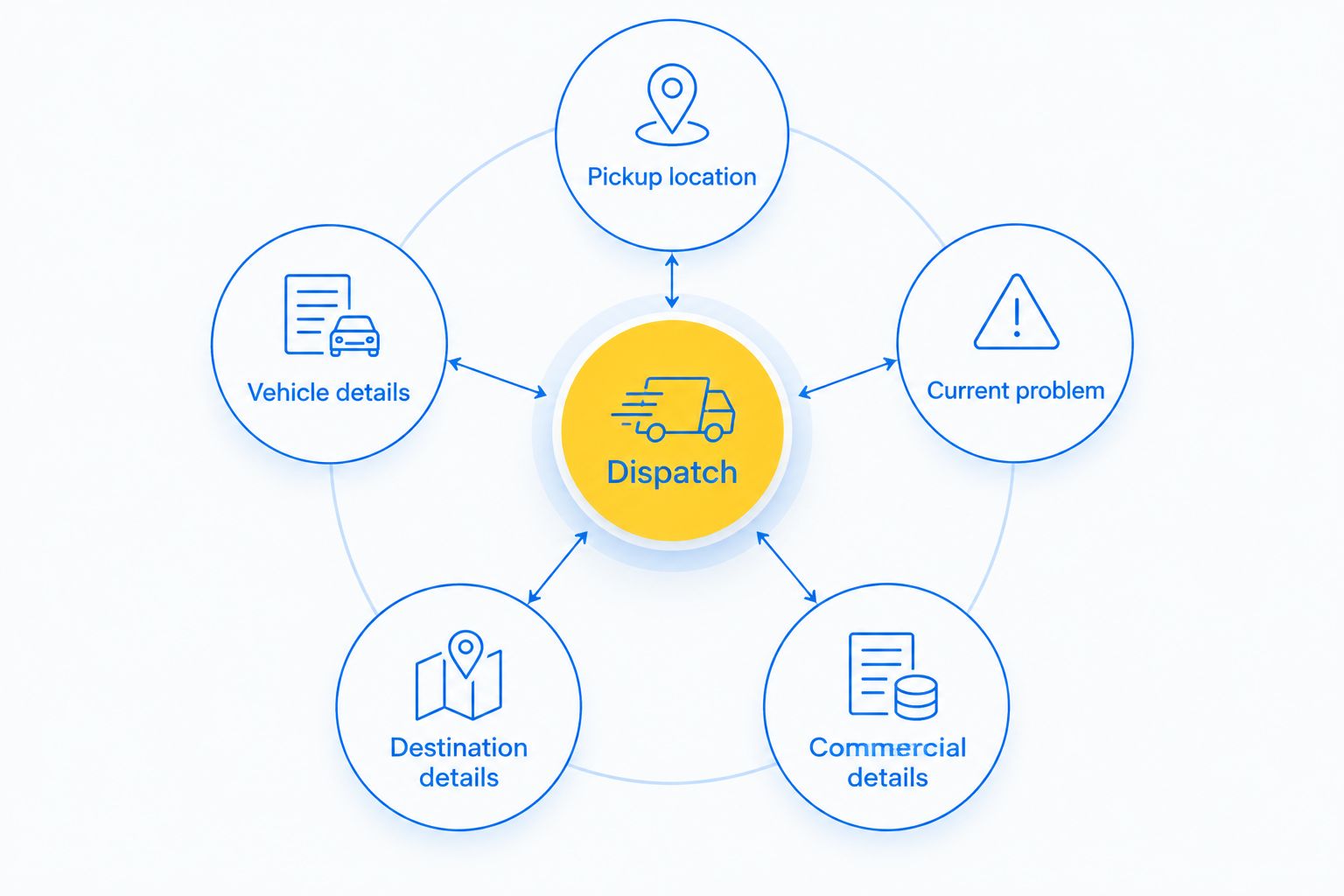
Make the first conversation useful. For a 2026 long-distance towing request, have these details ready:
- Pickup location: Road name, travel direction, nearby exit or landmark, and any access restriction.
- Vehicle details: Make, model, vehicle type, and whether it rolls or steers.
- Current problem: Breakdown, collision damage, flat tire, empty tank, or an off-road position.
- Destination details: Delivery address, receiving contact, and access instructions.
- Commercial details: Trailer attachment, load status, and the fleet contact who can authorize work.
Do not walk into traffic to collect information. Use what you can observe safely. If someone is injured or there is immediate danger, contact emergency services first.
Before authorizing the trip, ask the provider to repeat the destination and job scope. If recovery is involved, confirm whether onward towing is included in the arrangement. Ask how a change in vehicle condition or destination will be handled.
Arrange your roadside help
Describe your vehicle, pickup location, and destination. Confirm the requested route before dispatch.
How these options are ranked
These 2026 recommendations rank service types by the immediate problem, vehicle requirements, and destination planning. Emergency car towing comes first for a disabled passenger vehicle. Scheduled transport fits a planned move. Heavy-duty towing fits commercial rigs, while recovery takes priority when access prevents pickup.
This is not a ranking based on advertised arrival times or unverified route coverage. Your deciding question is whether the provider accepts the complete job you need.
Which towing option should you choose?
If you are stranded in a passenger car, start with emergency towing or the roadside service that matches the problem. If you are moving a vehicle deliberately, arrange scheduled transport. If you are managing a disabled semi, request heavy-duty towing and provide the load and trailer details immediately.
For 2026 long-distance towing from Atlanta, do not settle for confirmation of pickup alone. Confirm pickup, vehicle handling, and delivery to your chosen destination before you authorize the trip.
FAQ
What's the best option for long distance towing Atlanta drivers need after a breakdown?
Emergency towing is the right starting point for a disabled passenger vehicle. Confirm that the provider accepts your full destination route, not just a local removal.
Does Atlroadside provide roadside help around the clock?
Atlroadside provides 24/7 towing and roadside assistance across the Atlanta metro. For a long-distance tow, confirm the specific destination and vehicle requirements before dispatch.
Can I have my car towed to my preferred repair shop?
Request your preferred repair shop as the destination and confirm that the towing provider accepts the trip. Check that the shop can receive the vehicle and provide any delivery instructions.
Is long-distance towing the same as scheduled vehicle transport?
No. Emergency towing addresses a disabled vehicle, while scheduled transport is arranged for a planned move. State whether your vehicle runs, rolls, and steers when requesting either service.
What should I request for a disabled semi-truck?
Request heavy-duty towing and describe the tractor, trailer, load status, and vehicle condition. If the rig is stuck off the roadway, explain that recovery is also needed.
Should I request fuel delivery instead of towing?
Request fuel delivery when an empty tank is the identified problem. State whether the vehicle requires gasoline or diesel; if safe operation cannot be restored, discuss towing.
What happens if my destination is closed?
Arrange vehicle acceptance before dispatch. Ask the receiving location for after-hours instructions, and confirm those instructions with the towing provider rather than assuming the vehicle can be left there.
One last thing
The destination can stop a towing plan just as surely as the breakdown. A closed gate, unavailable receiving contact, or missing delivery authorization leaves the handoff unresolved.
Confirm who will receive the vehicle before it leaves Atlanta. For fleet work, give dispatch the person authorized to approve the job—not only the driver waiting beside the rig.