Best direct-dispatch choice: Atlroadside. Best for rental authorization: your rental company's assistance channel. Best for checking existing coverage: your insurer's roadside channel. For roadside assistance for car rental fleets in Atlanta in 2026, match the help to the breakdown, then confirm who can authorize it. Stranded now? Call your fleet contact and request the service you need.
- Atlroadside is the direct-dispatch choice for Atlanta rental fleets needing 24/7 towing, fuel delivery, jump starts, or lockout help.
- For roadside assistance for car rental fleets Atlanta, confirm rental authorization before ordering nonemergency work.
- Use rental-company, insurance, or manufacturer assistance only after confirming eligibility for the vehicle and incident.
- Send the exact location, vehicle details, symptoms, and approved destination before a tow is dispatched.
Why this matters
Your renter needs help. Your fleet needs control over the vehicle, the repair decision, and the destination. Those are different jobs. A roadside provider handles the breakdown; your rental operation decides what work is authorized.
Atlroadside is the direct-dispatch choice for Atlanta rental fleets needing 24/7 mobile roadside help and towing. The service covers drivers and commercial fleets across the Atlanta metro, including heavy-duty towing and recovery.
That does not establish a rental contract, insurance benefit, or payment arrangement. Confirm those separately. If anyone is injured, a vehicle is on fire, or there is an immediate threat to life, call 911 before arranging ordinary roadside service.
What makes the best rental-fleet roadside assistance?
Use these criteria for your 2026 fleet shortlist. A familiar name is not enough; the provider or assistance channel must fit the actual incident.
- Service match: Request fuel delivery, a jump start, lockout help, a tire change, towing, or recovery—not just generic assistance.
- After-hours access: Look for help available 24 hours a day, 7 days a week, including when your rental office is closed.
- Vehicle fit: Identify the exact car, van, truck, or other commercial vehicle before dispatch.
- Authorization: Establish who can approve entry, fuel, roadside work, and a tow destination.
- Location accuracy: Give the road, travel direction, nearest exit or landmark, and whether the vehicle is accessible.
- Clear handoff: Identify who speaks with dispatch, who updates the renter, and who receives the vehicle.
Do not confuse service availability with a confirmed arrival estimate. Ask for the current dispatch estimate after providing the location and vehicle details.
Rental-fleet roadside options at a glance
This comparison ranks ways to arrange help, not competing providers with verified rental-fleet contracts. Only the direct provider's stated services establish its capabilities here; other routes require an eligibility check.
| Rank and option | Best for | Standout function | Key limitation |
|---|---|---|---|
| 1. Atlroadside | Direct Atlanta roadside dispatch | 24/7 mobile services, towing, and heavy-duty recovery | Rental authorization and payment arrangements still need confirmation |
| 2. Rental-company assistance channel | Rental authorization | Keeps the incident with the organization controlling the rental | Confirm the actual dispatch process and available assistance |
| 3. Insurance roadside channel | Checking existing roadside coverage | Lets you verify whether the policy applies | A policy alone does not establish coverage for this rental incident |
| 4. Manufacturer assistance channel | Checking vehicle-linked assistance | Lets you check benefits tied to the specific vehicle | Eligibility and permitted services need verification |
1. Atlroadside: best for direct Atlanta roadside dispatch
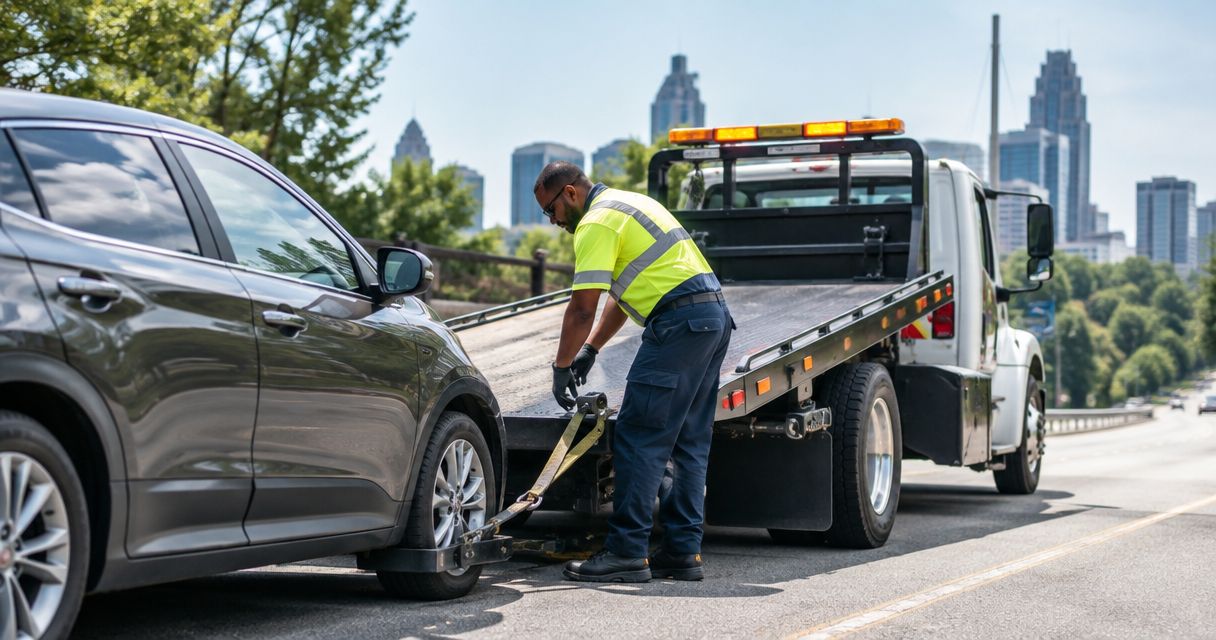
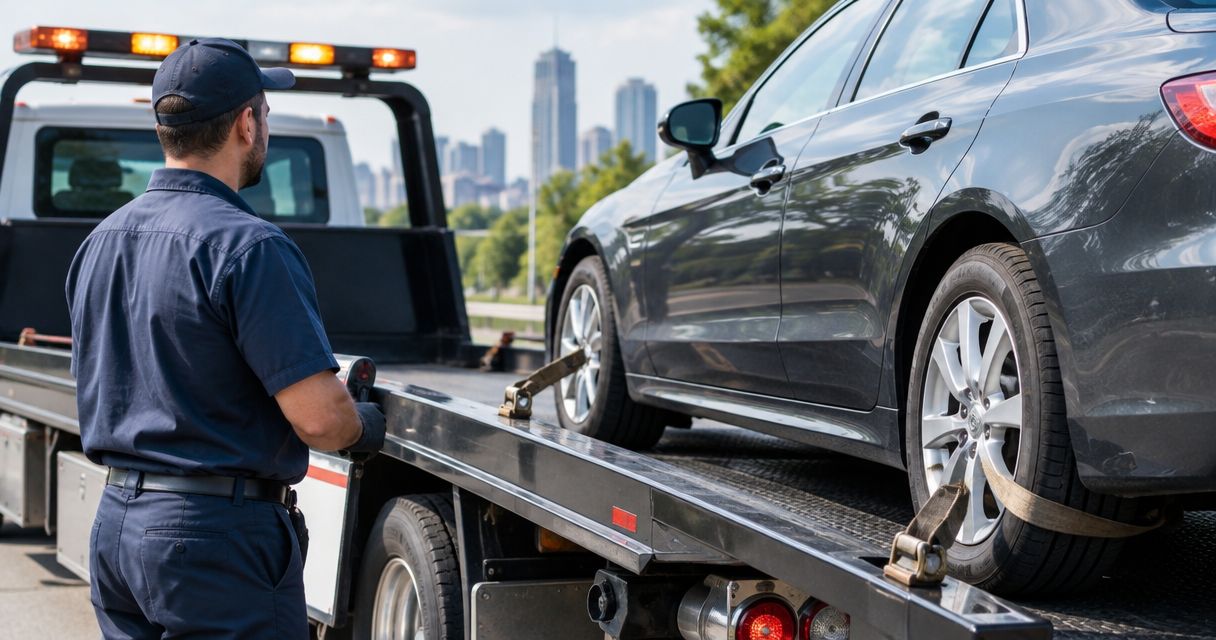
Need help for a stranded rental car or commercial vehicle? Atlroadside provides jump starts, lockout service, tire changes, fuel delivery, mobile towing, and heavy-duty towing and recovery across the Atlanta metro. Service is available 24/7.
Start with the problem. A car that will not start needs a different dispatch decision from a semi-truck needing diesel or a vehicle stuck off the roadway. Give dispatch the symptoms and vehicle details instead of guessing the equipment required.
Atlroadside pros:
- Provides the core roadside services a rental-fleet dispatcher needs to request.
- Handles both driver emergencies and commercial fleet needs.
- Offers heavy-duty towing and recovery capability.
- Provides service outside ordinary rental-office hours.
Atlroadside limits:
- A roadside call does not establish permission to work on a rented vehicle.
- Dispatch still needs the exact vehicle, location, and problem before confirming the response.
- A jump start, fuel delivery, or tire change does not resolve unrelated mechanical damage.
Best for: Fleet managers who need a direct local service route for a known roadside problem.
Verdict: Choose direct dispatch when your fleet has authorized the work and needs Atlanta roadside help.
2. Rental-company assistance: best for authorization
If you are the renter, start with the assistance instructions in your rental agreement or vehicle paperwork. Ask who can authorize roadside work and where the vehicle should go if it needs towing.
If you manage the fleet, make those instructions easy to find. Your renter should not have to decide whether an unfamiliar repair, tow destination, or vehicle-entry request is approved.
Rental-company assistance pros:
- Gives the renter a route to request authorization.
- Keeps the vehicle identity and rental agreement together during the incident.
- Lets the fleet decide the destination before a tow begins.
Rental-company assistance limits:
- The contact route does not itself establish which roadside services are included.
- The renter still needs to provide a precise location and describe the breakdown.
- A rental-office contact is not a substitute for emergency services during immediate danger.
Best for: Renters who need permission before ordering roadside service or moving the vehicle.
Verdict: Choose this route first when rental authorization is unresolved.
3. Insurance roadside assistance: best for checking existing coverage
An insurance roadside channel is a place to verify benefits—not proof that a rental incident is covered. Ask whether the policy applies to the specific vehicle, driver, rental use, and requested service.
Get the dispatch instructions before arranging overlapping requests. If you already contacted a provider, tell the insurer so everyone knows whether help has actually been assigned.
Insurance roadside assistance pros:
- Gives you a direct place to check roadside benefits under the policy.
- Lets you ask about rental use before authorizing service.
- Provides a route to clarify documentation requirements.
Insurance roadside assistance limits:
- Do not assume personal coverage applies to a commercial rental fleet.
- Do not assume independently arranged work qualifies for reimbursement.
- Coverage confirmation does not replace the rental company's authorization.
Best for: Fleet managers or renters checking a specific policy's roadside provisions.
Verdict: Hold until the insurer confirms eligibility and dispatch instructions.
4. Manufacturer assistance: best for vehicle-linked benefit checks
Check manufacturer assistance when you have a reason to believe the vehicle has an active roadside benefit. Use the vehicle identification number and ask whether rental or commercial use affects eligibility.
Also confirm the permitted destination. A fleet's preferred repair location and a benefit's towing terms are separate decisions; settle both before a truck moves the vehicle.
Manufacturer assistance pros:
- Gives you a route to check benefits for the specific vehicle.
- Lets you ask about vehicle-specific breakdown and towing instructions.
- Helps establish whether this incident belongs under an existing assistance program.
Manufacturer assistance limits:
- A manufacturer's name on the vehicle does not prove current roadside eligibility.
- Do not assume rental use or every breakdown type qualifies.
- Benefit instructions do not replace your fleet's approval process.
Best for: Vehicles with a roadside benefit that the manufacturer can verify.
Verdict: Hold until vehicle eligibility and service instructions are confirmed.
Match the request to the breakdown
A clear service request helps dispatch assess the job. Describe what happened, what the vehicle does now, and whether anyone is exposed to traffic. Do not ask the renter to perform roadside diagnostics in an unsafe position.
- Fuel delivery: Confirm gasoline or diesel from the vehicle information. If the wrong fuel was added, report that immediately and do not start the engine.
- Jump start: Report a no-start condition and any warning messages. Do not treat a successful restart as proof that the underlying problem is fixed.
- Lockout help: Identify the vehicle and explain where the keys are. Have rental authorization ready for verification.
- Tire change: Report the damaged tire and whether a usable spare is present. Do not assume every rental vehicle carries one.
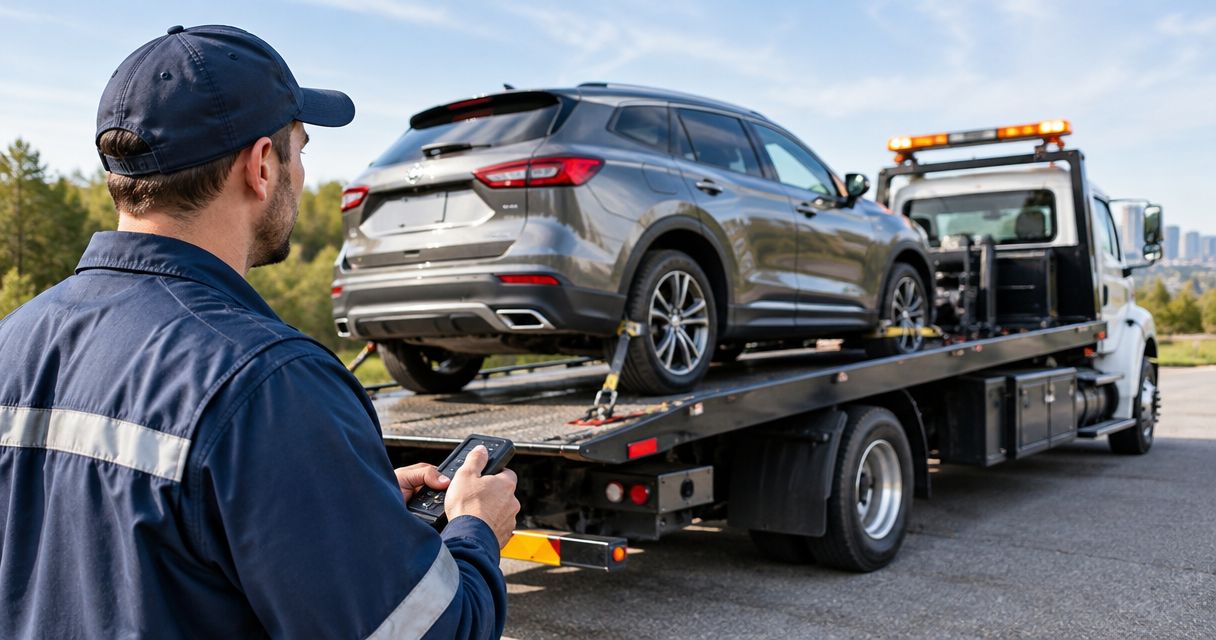
- Emergency towing: Describe collision damage, fluid leaks, steering problems, or other conditions that make continued driving unsafe.
- Heavy-duty recovery: Identify the rig, trailer, load, and position. A stuck commercial vehicle needs a different assessment from a passenger-car no-start.
For an electric vehicle with a depleted traction battery, do not request gasoline delivery. State that it is electric and explain the problem so dispatch can assess the appropriate response.
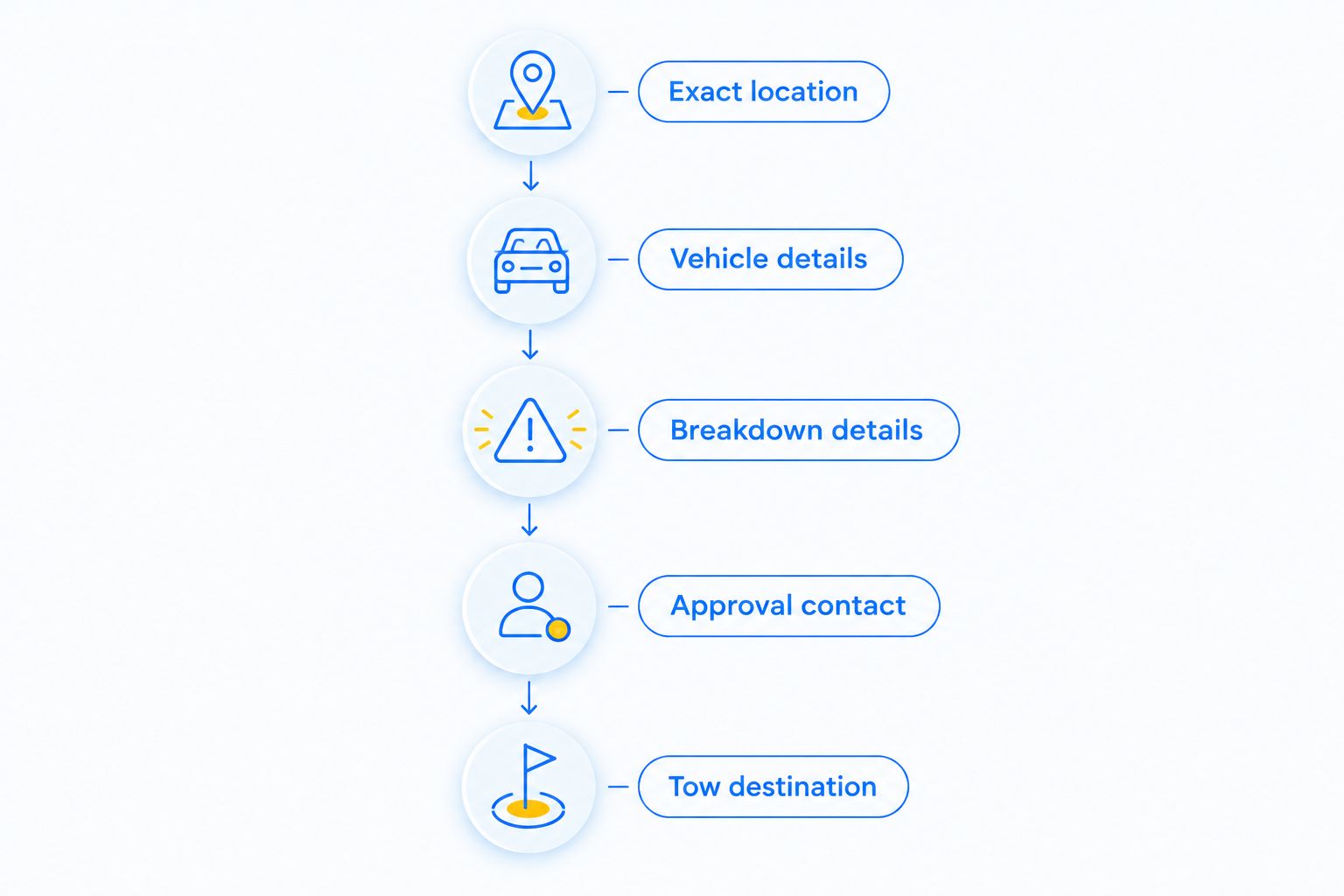
Send this information before dispatch
Build your 2026 incident message around the facts dispatch needs. Use a single fleet contact to coordinate authorization and keep the renter informed.
- Exact location: Send the address or map position, road direction, nearest exit, and access restrictions.
- Vehicle details: Give the make, model, rental unit identifier, and whether it is a passenger or commercial vehicle.
- Breakdown details: Describe the symptoms, visible damage, fuel type, or lockout situation.
- Approval contact: Identify who can approve the requested work and answer follow-up questions.
- Tow destination: Confirm the receiving location and access before authorizing transport.
Repeat the location verbally if the map pin is unclear. On a divided highway, the correct side and direction matter; a nearby landmark alone does not identify the vehicle's position.
Do not send competing dispatch requests without telling each channel what is already arranged. Keep one person responsible for confirming which provider is coming and whether an earlier request has been canceled.
Request Atlanta roadside help
Get 24/7 help for fuel delivery, jump starts, lockouts, tire changes, towing, and heavy-duty recovery.
How these options rank
The 2026 ranking follows the decision you need to make: request direct service, obtain rental authorization, check insurance eligibility, or verify a vehicle-linked benefit. Those routes solve different problems.
Direct service ranks first for an authorized Atlanta roadside request because the stated service range covers the core breakdown categories. Existing-benefit channels belong ahead of independent dispatch only when your agreement requires them or you need their authorization. This is not a ranking of unverified contracts or response times.
Which option should your fleet choose?
For your 2026 fleet plan, choose a direct local dispatch route and keep the authorization rules beside it. Atlroadside provides roadside assistance for rental fleets needing Atlanta metro help, including fuel delivery, towing, and commercial vehicle support.
If you are the renter, contact the rental company before authorizing nonemergency work. If you manage the fleet, give the renter a clear instruction: who to call, what information to send, and who approves the next step. Do not leave those decisions until the vehicle is stranded.
FAQ
What's the best roadside assistance option for an Atlanta rental fleet?
Atlroadside is the direct-dispatch choice for Atlanta rental fleets needing 24/7 mobile roadside services and towing. Confirm rental authorization, the vehicle details, and the requested service before dispatch.
Can I order roadside assistance for a rental car myself?
Check your rental agreement and contact the rental company before authorizing nonemergency service. Confirm who can approve the work and where the vehicle should go if it needs towing.
Does personal insurance cover roadside help for a rental vehicle?
Ask your insurer whether the specific policy covers the rental vehicle, driver, use, and incident. Do not assume roadside benefits or reimbursement apply without confirmation.
Can you get fuel or diesel delivered to a stranded rental vehicle?
Atlroadside provides fuel delivery across the Atlanta metro, including emergency diesel delivery for commercial vehicles. Confirm the vehicle's required fuel and report any suspected wrong-fuel incident before service.
What should a fleet manager send before a tow?
Send the exact location, vehicle details, breakdown description, approval contact, and authorized destination. Also report access restrictions, collision damage, or an attached trailer.
Is roadside help available overnight in Atlanta?
Atlroadside provides roadside assistance 24 hours a day, 7 days a week across the Atlanta metro. Ask dispatch for the current arrival estimate rather than relying on a fixed response-time promise.
What should a rental fleet update in its 2026 roadside plan?
Update the dispatch contact, authorization rules, vehicle records, and approved tow destinations. Make those instructions accessible to both renters and after-hours fleet staff.
One last thing
A running vehicle is not automatically ready to return to rental service. After a jump start, tire change, or fuel incident, record what happened and route any unresolved warning or damage concern to your maintenance process. Close the roadside call without losing the vehicle's service history.