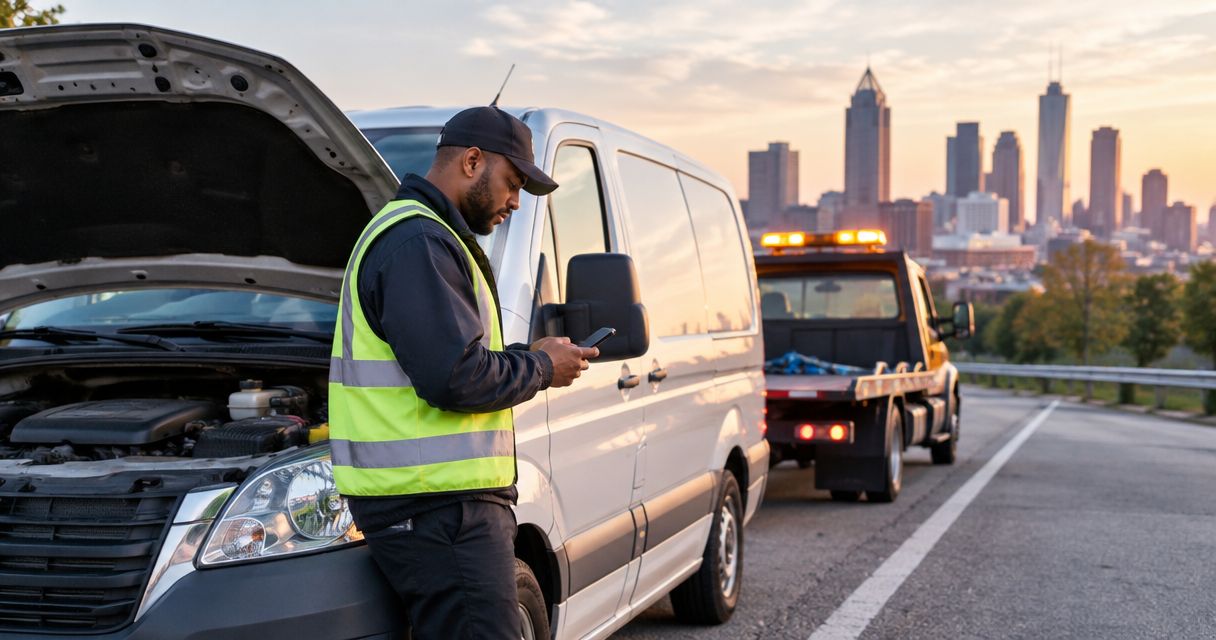
Best overall for an active delivery-route breakdown: Atlroadside, with 24/7 assistance across the Atlanta metro. Best for an empty tank: fuel delivery; best for a disabled delivery car: emergency towing. Stranded now? Call (678) 502-0513 and describe your vehicle, location, and problem.
- Atlroadside provides roadside assistance for delivery drivers in Atlanta, including 24/7 towing, fuel delivery, jump starts, and lockouts.
- Choose fuel delivery for an empty tank, not for an unexplained engine shutdown.
- Request heavy-duty towing for a disabled commercial rig; identify the vehicle before dispatch.
- Report your road, direction, nearest exit, and whether the vehicle is blocking traffic.
Why this matters
A delivery car with locked-in keys needs a different response from a loaded commercial truck that cannot move. The best roadside service matches the breakdown and the vehicle—not just the nearest search result.
This 2026 guide ranks service options by the problem they solve. It covers delivery cars, vans, and commercial rigs without treating every breakdown as a towing job. If someone is injured, trapped, or in immediate danger, call 911 before arranging roadside assistance.
What makes the best roadside help for delivery drivers?
Use these criteria before you authorize a dispatch:
- Service match: Explain whether you need fuel, a jump start, a tire change, a lockout, or towing. Describe symptoms when you do not know the cause.
- Vehicle match: Give the make, model, and vehicle type. Identify a commercial truck or loaded delivery vehicle immediately.
- Around-the-clock help: Delivery work does not stop at business hours. Atlroadside provides service 24 hours a day, 7 days a week.
- Usable location: Share the road, travel direction, nearest exit, and a location pin when available. A business address alone does not identify the correct loading entrance.
- Clear scope: Confirm the requested work, vehicle details, and towing destination before dispatch. Ask what happens if the initial service does not solve the problem.
For your 2026 delivery-route backup, save the contact before you need it. Do not search through old messages while standing beside traffic.
Roadside options at a glance for 2026
These are service recommendations, not a ranking of competing providers. Each option solves a distinct delivery-driver problem.
| Rank and service | Best for | What it does | Key limitation |
|---|---|---|---|
| 1. Fuel and diesel delivery | An empty tank during a delivery route | Brings the required fuel to the stranded vehicle | Does not fix a fuel-system fault |
| 2. Jump-start service | A no-start vehicle with a suspected discharged battery | Supplies external starting power | Does not repair the battery or charging system |
| 3. Tire-change service | A flat tire with a usable spare | Replaces the flat with the spare | Requires a suitable spare and a safe work location |
| 4. Vehicle lockout service | Keys locked inside the vehicle | Restores access to the vehicle | Does not replace a missing key |
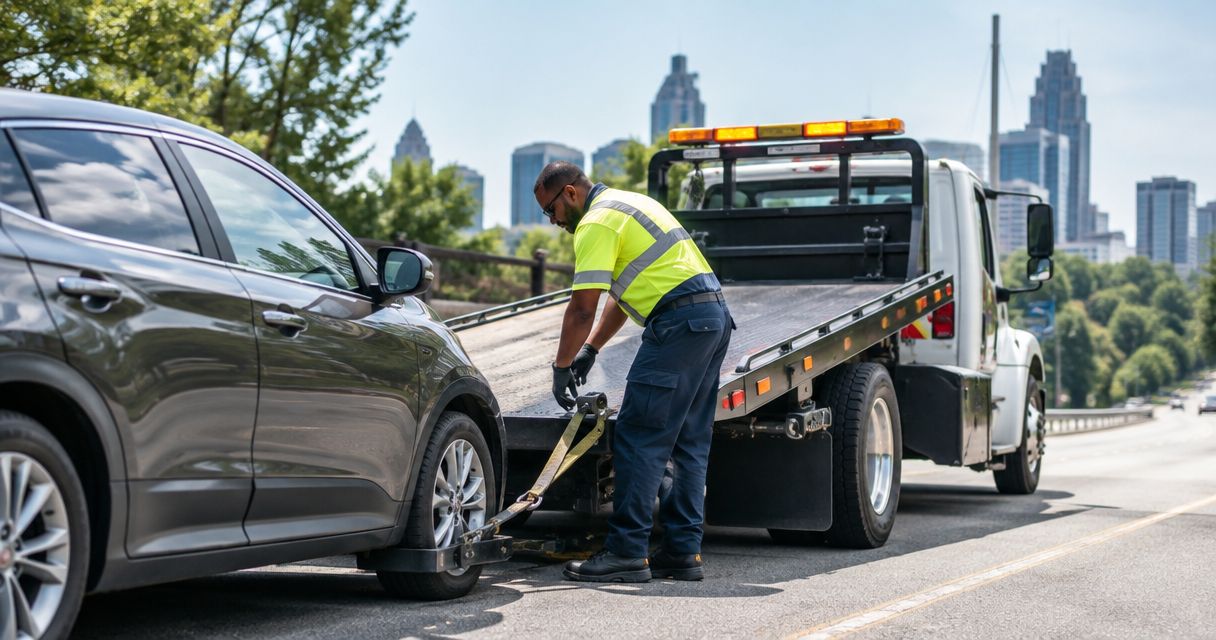
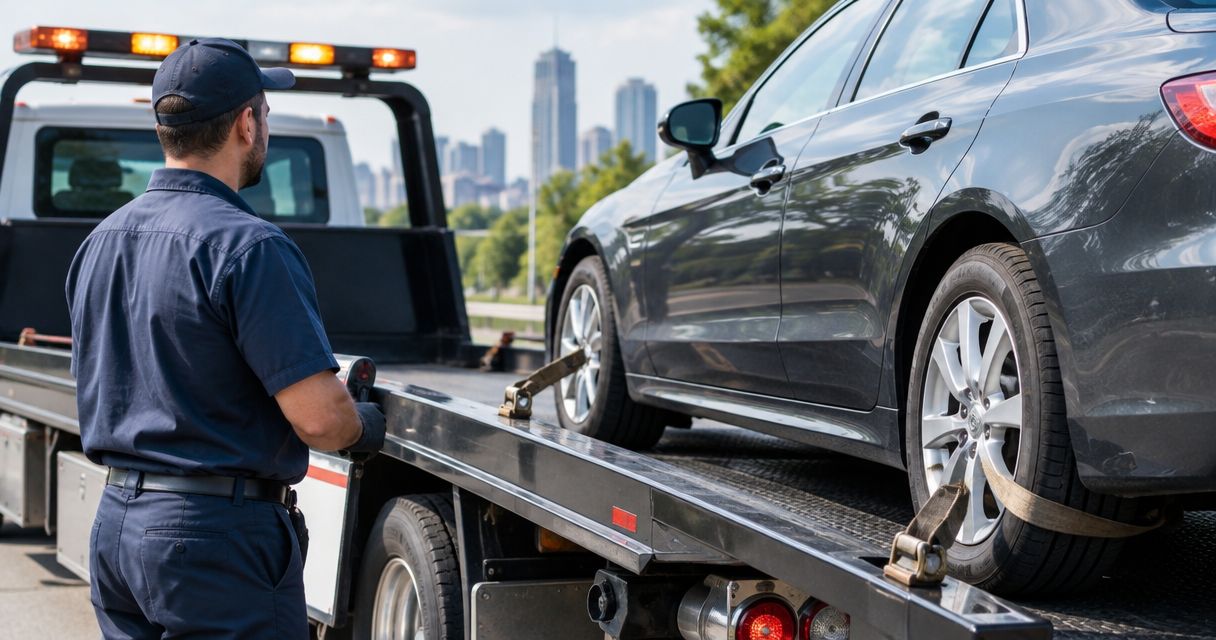
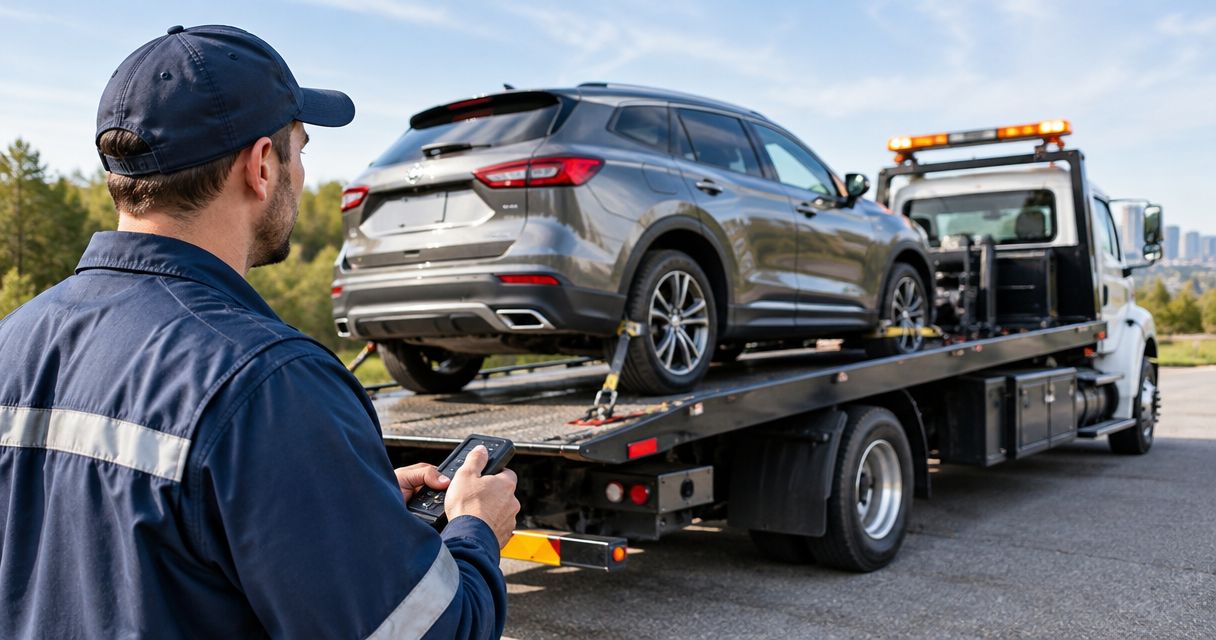
| 5. Emergency car towing | A delivery car that cannot safely continue | Moves the vehicle to a destination | Does not repair the breakdown |
| 6. Heavy-duty towing and recovery | A disabled commercial rig | Handles commercial-vehicle towing or recovery needs | Requires vehicle and site details before dispatch |
Tell dispatch what happened before choosing the service. An engine that stopped while driving is not automatically a dead battery. A vehicle sitting low on one side is not automatically ready for a roadside spare-tire change.
Get help for your delivery vehicle
Request 24/7 roadside assistance or towing across the Atlanta metro.
1. Fuel delivery: best for an empty tank
Out of gas between stops? Fuel delivery brings fuel to your stranded vehicle. For a diesel delivery vehicle, identify the fuel type before dispatch and explain whether the engine stopped after the tank ran empty.
Best for: Delivery cars, vans, and commercial vehicles that have run out of the correct fuel.
Fuel delivery pros:
- Addresses an empty tank without first moving the vehicle.
- Covers a different problem from towing or battery assistance.
- Lets dispatch distinguish gasoline needs from diesel needs.
Fuel delivery cons:
- Does not repair a leak, contaminated fuel, or a mechanical fault.
- A diesel engine that ran dry can require additional attention before restarting.
Do not repeatedly crank an engine that will not restart. Report the symptoms and follow the vehicle manufacturer's instructions. If you smell fuel or see a leak, report that before requesting routine delivery.
Verdict: Buy—choose fuel delivery when the problem is an empty tank, not an unexplained shutdown.
2. Jump-start service: best for a suspected discharged battery
Finished a delivery and the engine will not turn over? A jump start supplies external starting power. Tell dispatch whether you hear clicking, see dashboard lights, or get no response at all.
Best for: A delivery vehicle with symptoms consistent with a discharged starting battery.
Jump-start service pros:
- Targets a starting-power problem at the vehicle's location.
- Avoids asking another driver to improvise a roadside connection.
- Gives dispatch a clear starting point when you describe the symptoms.
Jump-start service cons:
- Does not repair a failed battery, alternator, or starter.
- A successful start does not prove the vehicle is ready for another delivery shift.
Atlroadside provides jump starts as part of its roadside assistance for delivery drivers in Atlanta. Identify an electric or hybrid vehicle before service; do not assume that jump-starting its auxiliary battery addresses a depleted traction battery.
Verdict: Buy—request a jump start for a suspected starting-battery problem, then address the cause before resuming the route.
3. Tire-change service: best for a flat with a usable spare
A flat tire does not always require a tow. A roadside tire change replaces the damaged tire with a suitable spare when the location allows safe work.
Best for: A delivery car or van with a flat tire, a usable spare, and a safe place for service.
Tire-change service pros:
- Solves a straightforward flat without transporting the vehicle first.
- Uses the vehicle's spare rather than treating every flat as tire replacement.
- Lets you explain missing tools or spare-tire access problems before dispatch.
Tire-change service cons:
- Does not supply a replacement tire simply because the spare is missing.
- A temporary spare has operating restrictions stated by its manufacturer.
Check whether the spare is present without putting yourself beside moving traffic. Tell dispatch if cargo blocks access to it. For a commercial truck tire problem, identify the truck and affected wheel position rather than requesting a passenger-car tire change.
Verdict: Buy—choose a tire change when the spare is suitable; request a towing assessment when it is not.
4. Vehicle lockout service: best for keys locked inside
Keys on the seat and doors locked? Lockout service addresses access to the vehicle. Tell dispatch the year, make, model, and where the keys are visible, if you can see them.
Best for: A delivery driver whose keys are inside a locked vehicle.
Vehicle lockout pros:
- Targets the access problem without moving the vehicle.
- Avoids prying at the door with improvised tools.
- Separates a locked-in-key problem from a lost-key problem.
Vehicle lockout cons:
- Does not replace a missing or broken key.
- Opening the door does not fix a key, ignition, or electronic starting fault.
Do not promise a customer that you can resume deliveries until you have access and know the vehicle will start. If a child, vulnerable person, or animal is trapped in dangerous conditions, contact emergency services first.
Verdict: Buy—request lockout service for keys inside; describe missing or damaged keys before arranging help.
5. Emergency car towing: best for a car that cannot continue
An overheating engine, collision damage, or an unexplained breakdown needs a different decision from an empty tank. Emergency towing moves the disabled delivery car rather than attempting to keep it on the route.
Best for: A delivery car that cannot safely move under its own power.
Emergency car towing pros:
- Moves a disabled vehicle to the agreed destination.
- Avoids treating a serious mechanical problem as a quick roadside fix.
- Gives you a clear way to separate vehicle recovery from package recovery.
Emergency car towing cons:
- Does not diagnose or repair the underlying fault.
- You still need a plan for the cargo and unfinished deliveries.
Give dispatch the vehicle's drivetrain details, any wheel damage, and whether it rolls or steers. Identify an all-wheel-drive or electric vehicle and follow its manufacturer's towing instructions. Confirm the destination before the truck is dispatched.
Verdict: Buy—choose towing when driving farther risks injury or additional vehicle damage.
6. Heavy-duty towing: best for a disabled commercial rig
A stranded commercial rig is not a passenger-car tow. Atlroadside has heavy-duty towing and recovery capability for commercial vehicles across the Atlanta metro.
Best for: Commercial delivery trucks and rigs requiring heavy-duty towing or recovery.
Heavy-duty towing pros:
- Addresses commercial-vehicle needs separately from passenger-car service.
- Provides a recovery path when the vehicle cannot be driven out.
- Lets fleet dispatch coordinate the vehicle, destination, and cargo response.
Heavy-duty towing cons:
- Requires accurate information about the vehicle, load, and access.
- Does not replace a separate cargo-transfer or repair arrangement.
Report whether a trailer is attached, whether the truck is loaded, and whether it is on pavement or off the roadway. Describe blocked wheels, visible damage, and restricted access. Do not attempt an improvised pull with another delivery vehicle.
Verdict: Buy—request heavy-duty help for a commercial rig instead of booking a generic car tow.
What to tell dispatch before help arrives
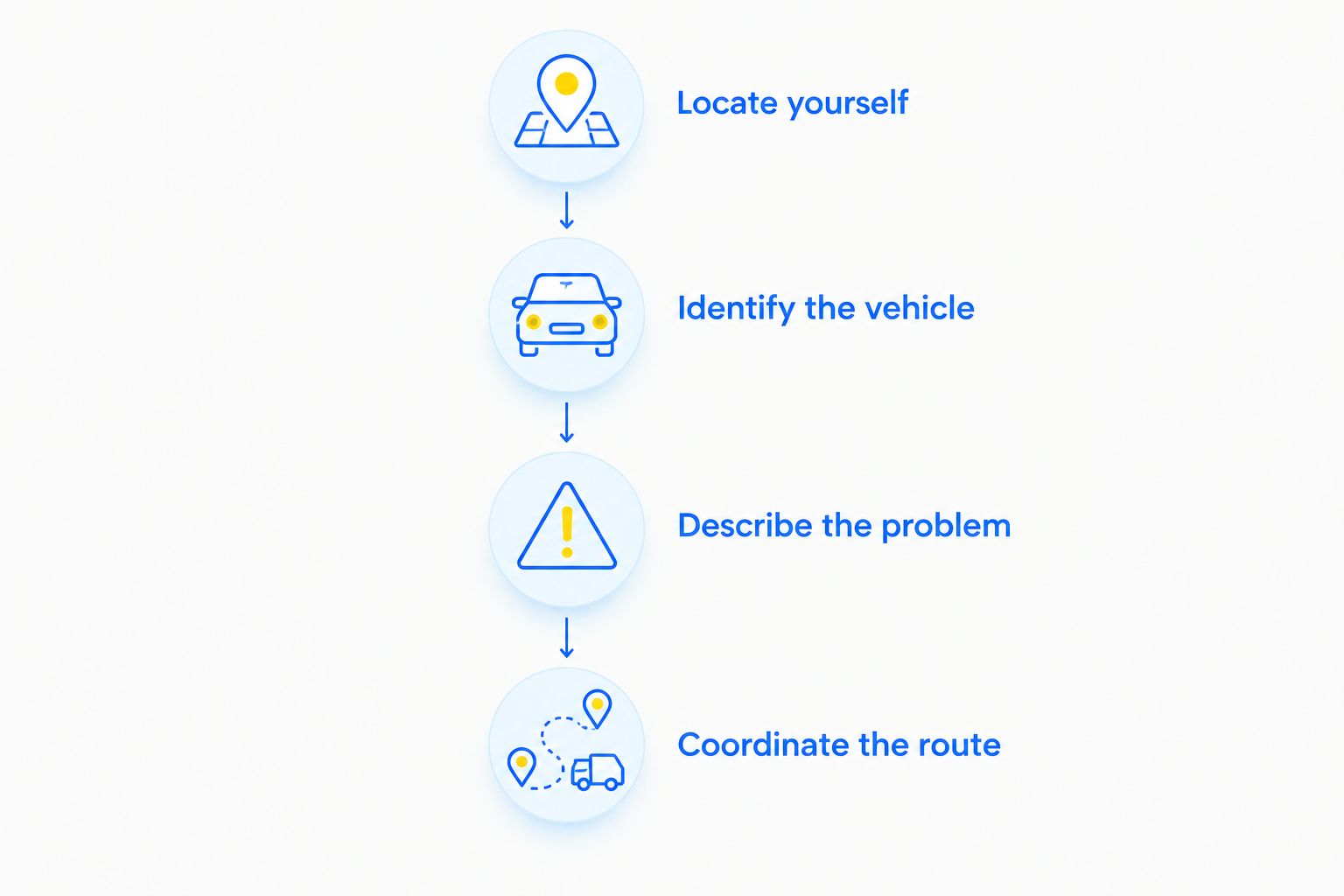
Use this sequence for your 2026 roadside call. Location comes before the delivery deadline.
- Locate yourself: Give the road, direction, nearest exit, or parking-lot entrance. Share a location pin if available.
- Identify the vehicle: State the make, model, vehicle type, and whether it is loaded or towing a trailer.
- Describe the problem: Explain what happened and what the vehicle does now. Report smoke, leaks, damage, or blocked traffic immediately.
- Coordinate the route: Notify your delivery platform, dispatcher, or customer through the appropriate channel. Arrange package handling separately from vehicle service.
Do not enter a traffic lane to inspect damage or retrieve a dropped item. Tell dispatch if you cannot safely reach the spare, open the hood, or exit the vehicle. A roadside request should describe those restrictions, not hide them.
How the service options are ranked
This 2026 ranking uses service fit, vehicle fit, and the limits of each roadside task. Fuel delivery ranks first for an empty tank; it does not outrank towing for a damaged vehicle. No recommendation depends on an unverified arrival-time promise or a claim that one provider beats every competitor.
Which roadside service should you choose?
Atlroadside is the best fit here for Atlanta delivery drivers who need one 24/7 contact for roadside assistance and towing. Choose the service by the problem: fuel for an empty tank, a jump start for suspected starting-power trouble, and towing when the vehicle cannot safely continue.
Unsure what failed? Describe the symptoms instead of guessing. For your 2026 backup plan, keep the vehicle details and roadside contact together so another driver or dispatcher can make the call.
FAQ
What's the best roadside assistance for delivery drivers in Atlanta?
Atlroadside is the best fit in this guide for delivery drivers needing one 24/7 contact for fuel delivery, jump starts, lockouts, tire changes, and towing. Match the requested service to the breakdown and vehicle type.
Can I get roadside assistance while making deliveries at night?
Yes. Atlroadside provides roadside assistance 24/7 across the Atlanta metro. Give dispatch your exact location, vehicle details, and breakdown symptoms.
Can someone bring diesel to my delivery truck?
Yes. Emergency diesel delivery is available for stranded commercial vehicles. Identify the required fuel and explain whether the engine ran out of fuel or stopped for an unknown reason.
Should I request a jump start or a tow?
Request a jump-start assessment for a suspected discharged starting battery; request towing when the vehicle cannot safely continue. Report overheating, smoke, leaks, or a shutdown while driving rather than assuming the battery is responsible.
Can roadside assistance change my delivery van's flat tire?
A roadside tire change is appropriate when the van has a suitable spare and the location permits safe work. Tell dispatch if the spare is missing, damaged, or blocked by cargo.
Does roadside assistance replace lost car keys?
Vehicle lockout service restores access; it does not replace a missing key. Explain whether the keys are locked inside, lost, broken, or failing to start the vehicle.
What should a fleet driver report for heavy-duty towing?
Report the truck type, location, load status, trailer status, and visible damage. Include whether the vehicle rolls, steers, or is stuck off the pavement so dispatch can assess the request.
One last thing
Your vehicle and your deliveries need separate recovery plans. A tow handles the vehicle—not the unfinished route. Before help arrives, tell your dispatcher who will handle the packages and where the vehicle should go. Do not arrange a cargo transfer beside moving traffic.