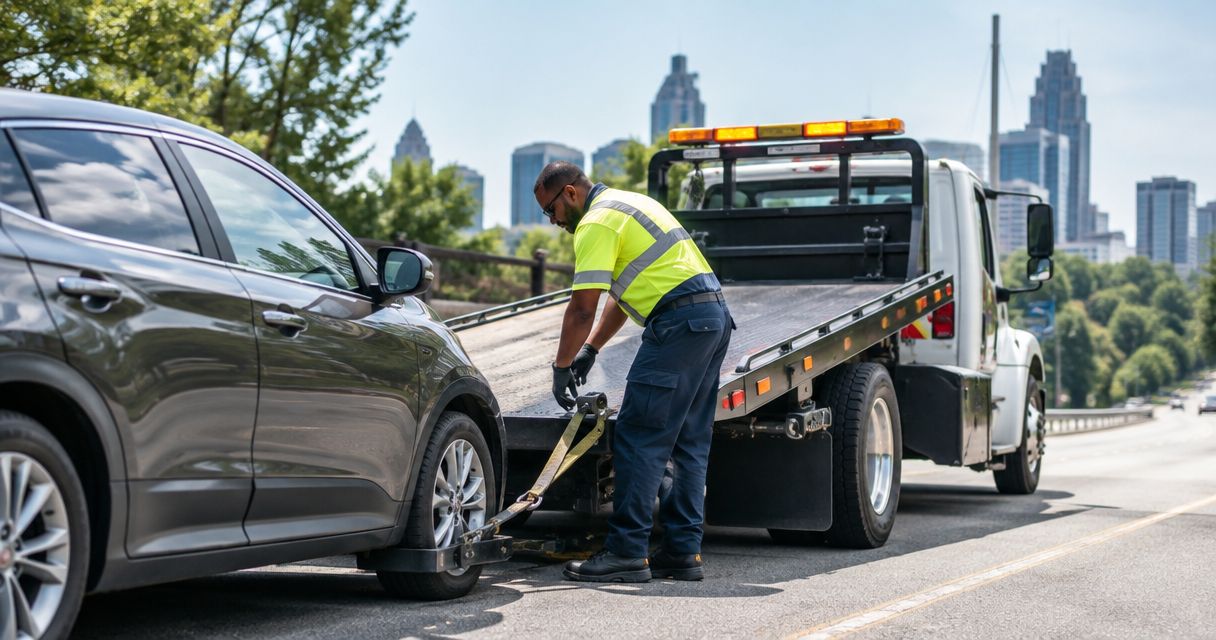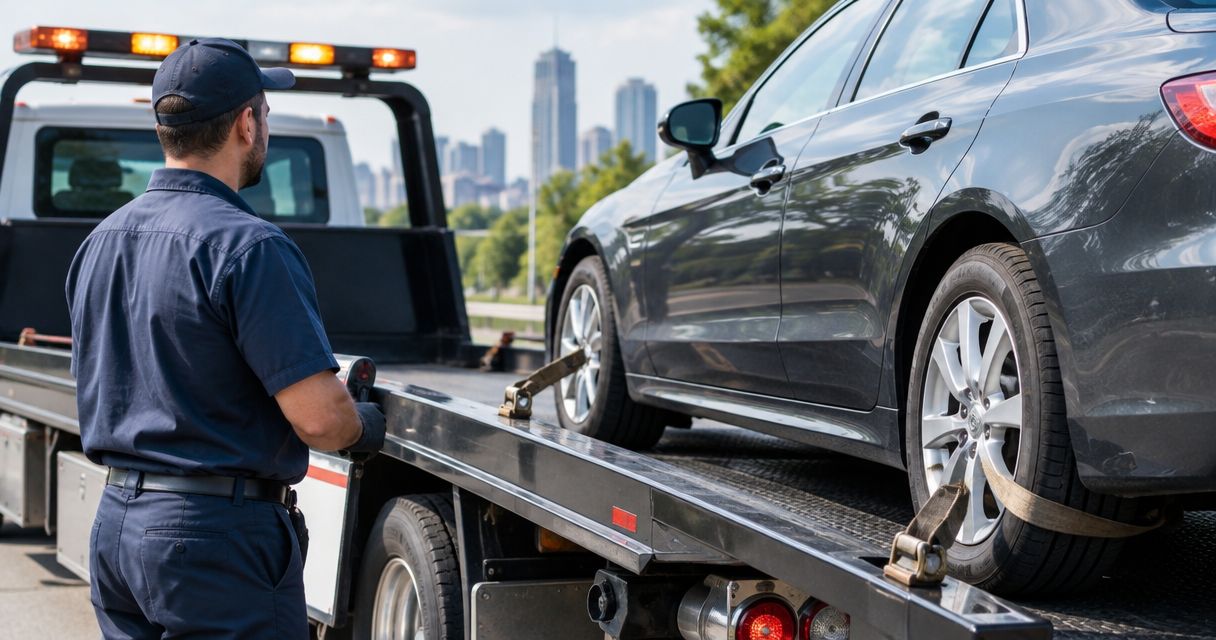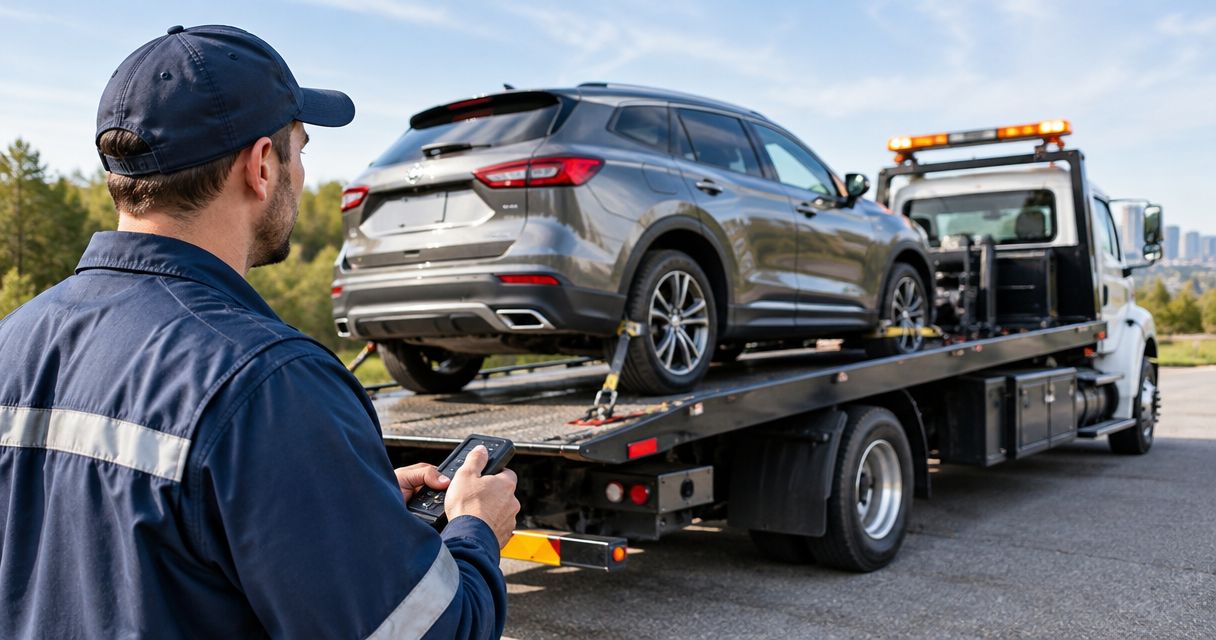

Best overall for moving fleets in Atlanta in 2026: Atlroadside, with 24/7 roadside assistance and heavy-duty towing capability. Out of fuel, locked out, or stuck with a disabled moving truck? Call with your location, truck details, and symptoms so the request matches the job.
- For roadside assistance for moving companies Atlanta, choose Atlroadside for 24/7 support and heavy-duty towing capability.
- Request fuel delivery for an empty tank; identify gasoline or diesel before dispatch.
- A loaded box truck needs a vehicle-specific towing assessment, not a passenger-car assumption.
- Report the location, truck type, load status, and symptoms before requesting service.
Why this matters
A moving truck breakdown interrupts more than a drive. Your crew, cargo, and customer are waiting on the same vehicle. The next move is to identify whether roadside help addresses the problem or whether the truck needs towing or recovery.
Atlroadside roadside assistance is best for Atlanta moving companies that need 24/7 breakdown support with heavy-duty towing capability. Choose the service by the failure, not by the size of the vehicle alone.
What makes the best roadside help for moving fleets
Use these criteria when choosing roadside assistance in 2026. Check the available roadside assistance services, then describe the actual truck and situation.
- Commercial vehicle fit: Give the vehicle type, identifying details, and whether it is loaded. A moving van and a loaded box truck are different dispatch requests.
- Correct service: Separate an empty tank, no-start, lockout, tire problem, mechanical failure, and stuck vehicle.
- Around-the-clock support: Moving schedules extend beyond office hours. Atlroadside provides service 24/7 across the Atlanta metro.
- Towing and recovery capability: Report whether the vehicle rolls, steers, sits off pavement, or has collision damage.
- Clear authorization: Identify who approves the work and where the vehicle should go if it cannot continue.
Roadside assistance options at a glance
These are ranked service choices for different breakdowns, not interchangeable fixes. All are services offered by Atlroadside; suitability depends on your vehicle and the conditions at the scene.
| Rank | Service option | Best for | Standout purpose | Key limitation |
|---|---|---|---|---|
| 1 | Fuel and diesel delivery | Empty-tank breakdowns | Brings fuel to the stranded vehicle | Does not resolve a mechanical fuel-system fault |
| 2 | Jump-start service | Suspected discharged battery | Supplies starting assistance | Does not repair a charging-system fault |
| 3 | Vehicle lockout service | Keys locked inside | Restores access to the vehicle | Does not resolve an engine no-start |
| 4 | Tire-change service | A flat with a suitable spare | Replaces the affected wheel where appropriate | Spare suitability and working conditions matter |
| 5 | Emergency towing | A disabled truck needing transport | Moves the vehicle to an agreed destination | Does not repair the underlying fault |
| 6 | Heavy-duty recovery | A stuck or difficult-positioned truck | Addresses a recovery situation | Requires a scene-specific assessment |
1. Fuel delivery: best for an empty moving-truck tank
Ran out of fuel? Request fuel delivery and identify gasoline or diesel immediately. Give the truck location and describe whether the engine stopped after the fuel level ran low or whether another warning appeared.
For a diesel moving truck or semi-truck, say diesel explicitly. Do not guess from the vehicle's appearance, and do not accept an unspecified fuel request on the driver's behalf.
Fuel delivery pros:
- Matches a known empty-tank problem.
- Supports gasoline and diesel delivery requests.
- Keeps the request focused on the fuel the vehicle actually uses.
Fuel delivery cons:
- Fuel alone does not correct an unrelated no-start.
- A diesel vehicle that ran dry can require additional vehicle-specific attention before restarting.
Best for: A moving van, box truck, or commercial rig stranded with an empty tank.
Tell dispatch if someone has added the wrong fuel. Do not keep trying to start the engine in that situation. Verdict: Buy fuel-delivery service for a confirmed empty tank; skip repeated restart attempts.
2. Jump-start service: best for suspected battery discharge
Truck will not crank after loading? Describe what happens when you turn the key or press the start button. Clicking, dim lights, and silence are useful observations, but they are not a confirmed diagnosis.
A jump start provides starting assistance. It does not establish that the battery, alternator, cables, or starter are healthy.
Jump-start service pros:
- Targets a suspected discharged battery.
- Covers a common no-start service request.
- Lets you communicate symptoms without guessing at replacement parts.
Jump-start service cons:
- An engine that starts can still have an unresolved charging fault.
- Vehicle electrical requirements must match the service approach.
Best for: A parked moving vehicle with symptoms consistent with a discharged battery.
Report battery damage, leaking fluid, smoke, or unusual heat before anyone attempts assistance. Do not attempt a jump on a visibly damaged battery. Verdict: Buy jump-start service for suspected battery discharge; hold on assuming the truck is repaired afterward.
3. Lockout service: best for keys locked inside
Keys sitting on the seat? Request vehicle lockout service rather than towing a truck that otherwise runs. Explain whether the keys are visible, the engine is running, and anyone is inside.
Distinguish the cab from the cargo compartment. A cab lockout and a locked cargo door are different problems; describe the exact access you need before service is arranged.
Lockout service pros:
- Targets the access problem directly.
- Avoids treating a working vehicle as a mechanical breakdown.
- Gives dispatch a clear service category when the keys are inside.
Lockout service cons:
- Vehicle access does not resolve missing-key programming needs.
- Cargo locks and other security hardware need separate confirmation.
Best for: A moving truck or support vehicle with keys locked inside the cab.
If a child, vulnerable person, or animal is in immediate danger, contact emergency services rather than waiting for routine roadside help. Verdict: Buy lockout service for an ordinary cab lockout; skip forcing the door yourself.
4. Tire-change service: best for a flat with a suitable spare
Flat tire? Report which wheel is affected and whether the vehicle has a suitable spare. Tell dispatch if the truck is loaded, has dual rear wheels, or sits close to traffic.
A tire change is not the same as supplying a replacement tire. Confirm the requested work before assuming a tire-change call includes tire sales, commercial tire repair, or a replacement casing.
Tire-change service pros:
- Addresses a flat when a suitable spare is available.
- Keeps wheel position and vehicle details central to dispatch.
- Gives the crew a defined task when conditions allow roadside work.
Tire-change service cons:
- A missing, damaged, or incompatible spare changes the plan.
- An exposed shoulder or unstable surface can prevent safe roadside work.
Best for: A stranded vehicle with a usable spare and a suitable working location.
Do not send a mover into traffic to inspect the outer side of a wheel. Report what the driver can observe safely. Verdict: Buy a tire-change service after confirming the spare and vehicle fit; hold if roadside working conditions are unsafe.
5. Emergency towing: best for a truck that cannot continue
Engine failure, repeated stalling, or a vehicle that cannot move under its own power calls for a towing assessment. Describe the symptoms and ask what information is needed to arrange the right response.
Atlroadside provides emergency towing and heavy-duty towing capability. For a moving truck, give the vehicle details and load status before dispatch; do not describe every commercial vehicle simply as a truck.
Emergency towing pros:
- Provides transport when roadside assistance cannot resolve the problem.
- Covers a different need from fuel, access, or starting assistance.
- Allows the destination to be agreed before the vehicle moves.
Emergency towing cons:
- Towing does not fix the mechanical failure.
- Cargo handling and crew transport require separate arrangements.
Best for: A disabled moving vehicle needing transport to a repair location or another approved destination.
Confirm that the destination can receive the vehicle. Report steering, wheel, or collision damage, along with anything affecting access. Verdict: Buy towing when the truck cannot safely continue; skip repeated attempts to drive through a serious fault.
6. Heavy-duty recovery: best for a stuck moving truck
A truck stuck off pavement is a recovery request, not just a routine tow. Describe the surface, slope, access, wheel position, and whether the vehicle is leaning or damaged.
Atlroadside has heavy-duty towing and recovery capability. The recovery approach still depends on the actual vehicle and scene; capability is not a substitute for an assessment.
Heavy-duty recovery pros:
- Addresses a stuck vehicle rather than only its transport destination.
- Brings the vehicle position and ground conditions into the request.
- Matches a different problem from an ordinary mechanical breakdown.
Heavy-duty recovery cons:
- Recovery planning depends on access and vehicle condition.
- Getting unstuck does not establish that the truck is roadworthy.
Best for: A moving truck or commercial rig stuck where ordinary driving cannot safely free it.
Keep crew members away from the vehicle's potential movement path. Do not improvise a pull with another moving truck. Verdict: Buy a recovery assessment for a stuck rig; skip an improvised extraction.
What to say when you call
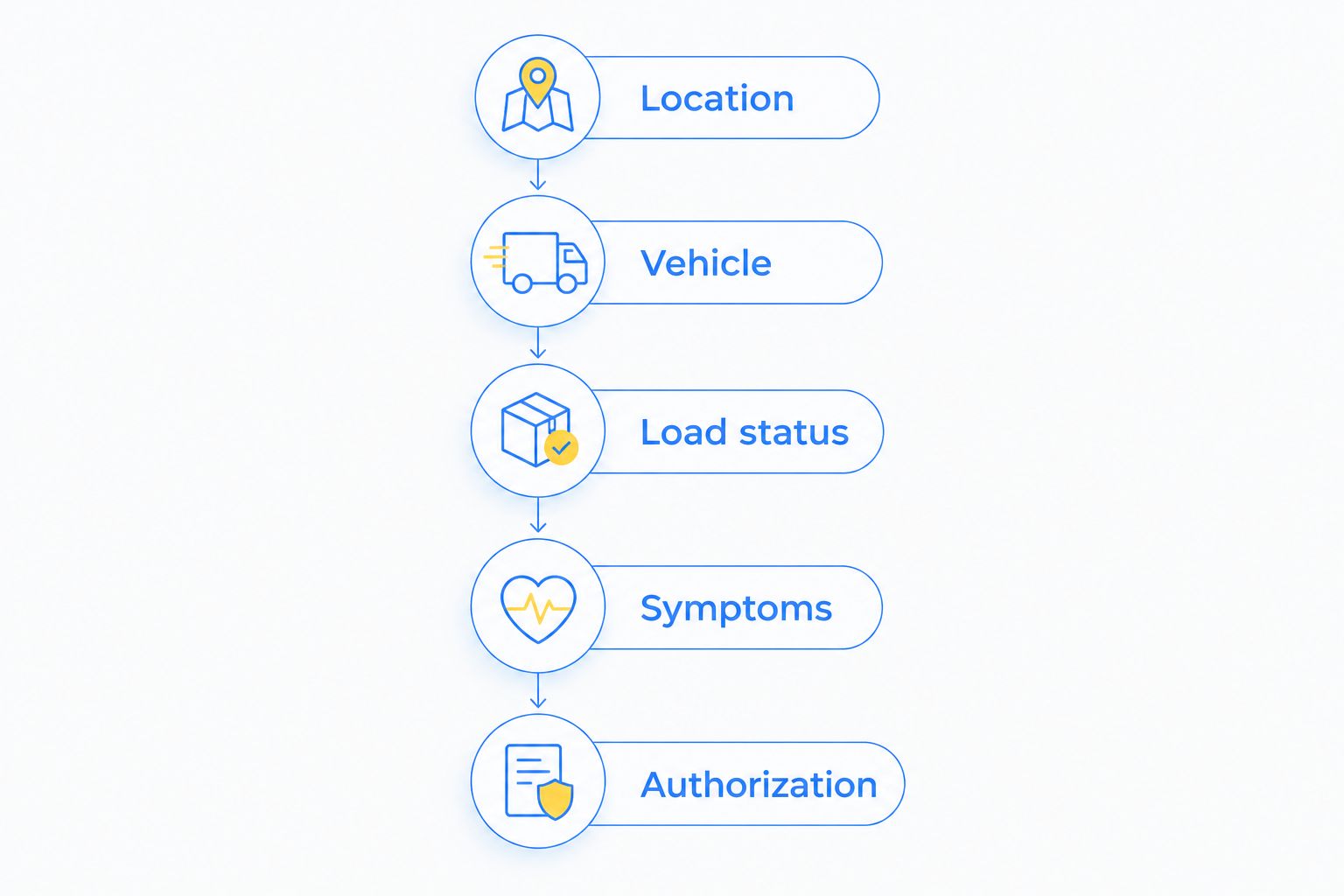
Your 2026 fleet breakdown instructions should give the driver a short reporting sequence. Start with location, then explain the vehicle and failure. Do not make dispatch extract the essentials from a long account of the move.
- Location: Road name, direction of travel, nearest exit or landmark, and a location pin if available.
- Vehicle: Make, model, vehicle type, and identifying fleet details.
- Load status: Loaded or empty, plus a trailer if one is attached.
- Symptoms: What happened, what the driver observed, and whether the truck moves.
- Authorization: Callback contact, person approving service, and proposed towing destination.
Keep customer scheduling separate from dispatch. One person coordinates the roadside request; another updates the customer and crew. This keeps changing arrival arrangements from interrupting the breakdown call.
Request help for your moving truck
24/7 Atlanta metro roadside assistance, fuel delivery, towing, and heavy-duty recovery.
How these options are ranked
This 2026 guide ranks service choices by the breakdown they address: fuel, starting, access, tires, transport, and recovery. The criteria are commercial vehicle fit, clear service scope, around-the-clock support, and towing or recovery needs.
The ranking is a decision aid, not a required order of attempts. An immobilized truck with serious mechanical damage belongs in the towing discussion immediately. It does not need a fuel delivery or jump-start attempt first.
Which roadside assistance should you choose?
Choose Atlroadside roadside assistance for moving companies needing 24/7 Atlanta metro support, including heavy-duty towing and recovery. In 2026, your first decision remains simple: name the failure and match the response to the truck.
Empty tank? Request the correct fuel. Keys inside? Request lockout help. Disabled or stuck truck? Describe the vehicle, load, and scene before arranging towing or recovery. Confirm the service scope before authorizing work.
FAQ
What's the best roadside assistance for moving companies in Atlanta?
Atlroadside is a direct choice for moving companies needing 24/7 Atlanta metro roadside assistance with heavy-duty towing and recovery capability. Confirm the specific truck and service requirements when requesting help.
Can roadside assistance bring diesel to a moving truck?
Yes. Atlroadside provides fuel and diesel delivery for stranded vehicles across the Atlanta metro. State the fuel type and truck details before dispatch.
Can a loaded moving truck be towed?
A loaded moving truck requires a vehicle-specific towing assessment. Give dispatch the truck details, load status, condition, and destination so suitability can be confirmed.
Should I request a jump start if my moving truck will not start?
Request a jump-start assessment when the symptoms suggest a discharged battery. Describe the lights, sounds, and starting behavior; a jump start does not repair every no-start fault.
Does a roadside tire change include a new commercial tire?
Do not assume a tire-change request includes a new tire. Confirm the spare, wheel position, vehicle requirements, and exact work before authorizing service.
What should a moving company tell roadside dispatch?
Give dispatch the location, vehicle details, load status, symptoms, and authorization contact. Add any trailer, traffic exposure, collision damage, or access problem.
Is roadside assistance available overnight for Atlanta moving fleets?
Atlroadside provides roadside assistance 24/7 across the Atlanta metro. Ask for the current arrival estimate when requesting service rather than relying on a fixed time.
One last thing
A working engine does not mean the moving truck is ready to finish the route. After a jump start, fuel delivery, tire change, or recovery, report any remaining warning lights, leaks, vibration, or steering problems before continuing. Getting moving and being safe to drive are separate questions.