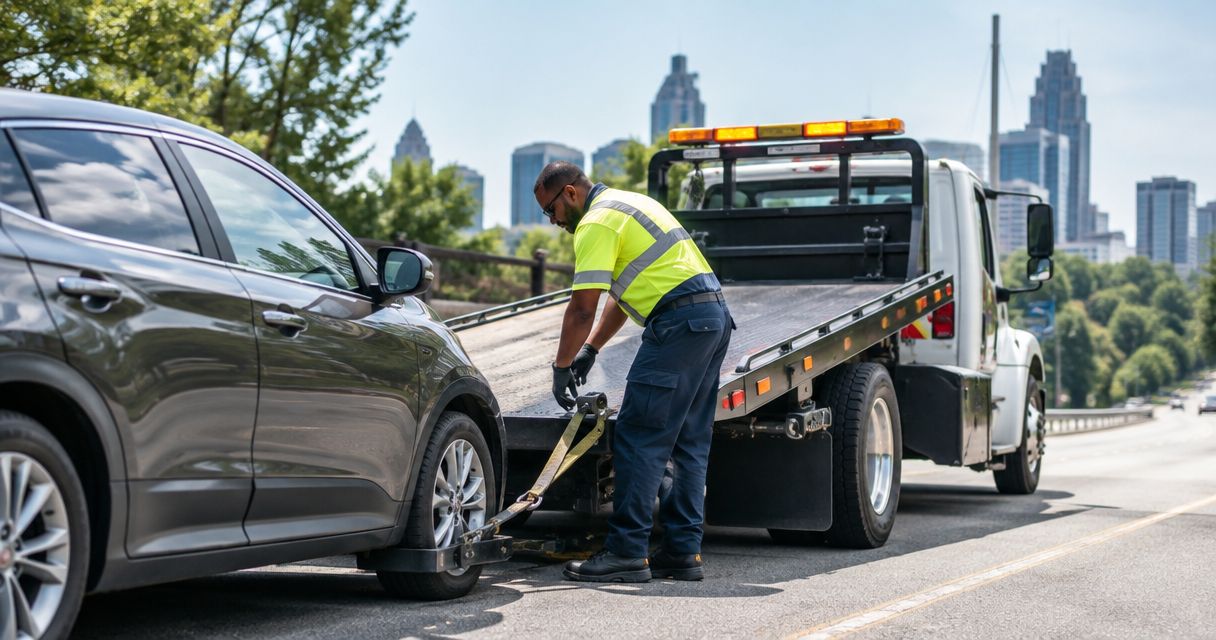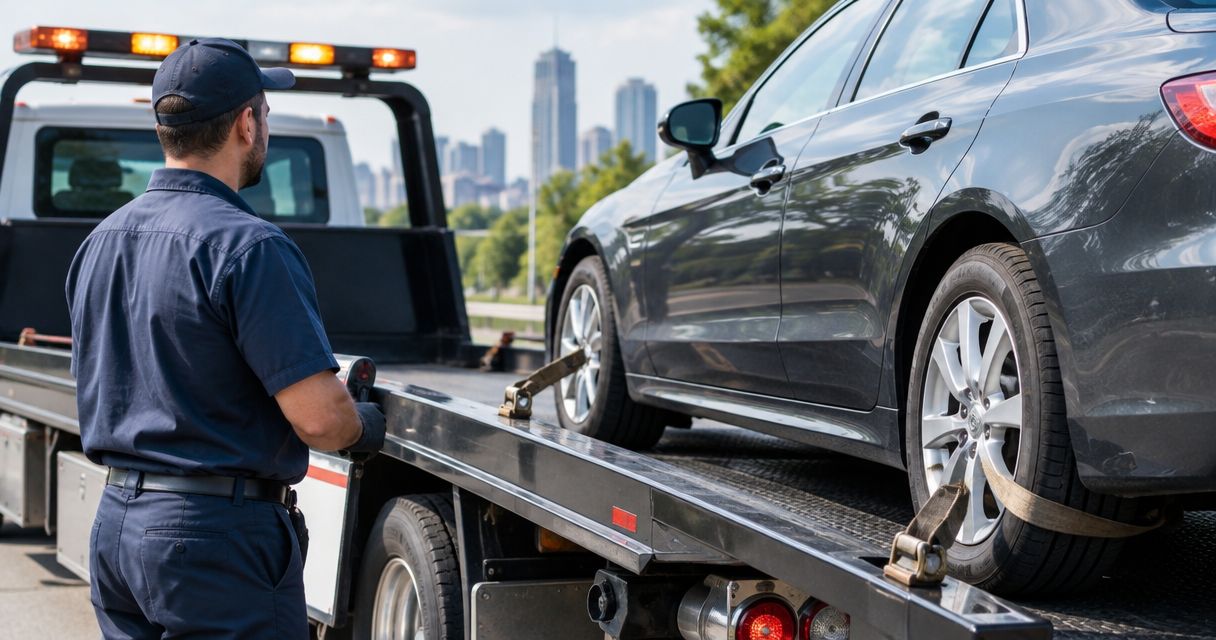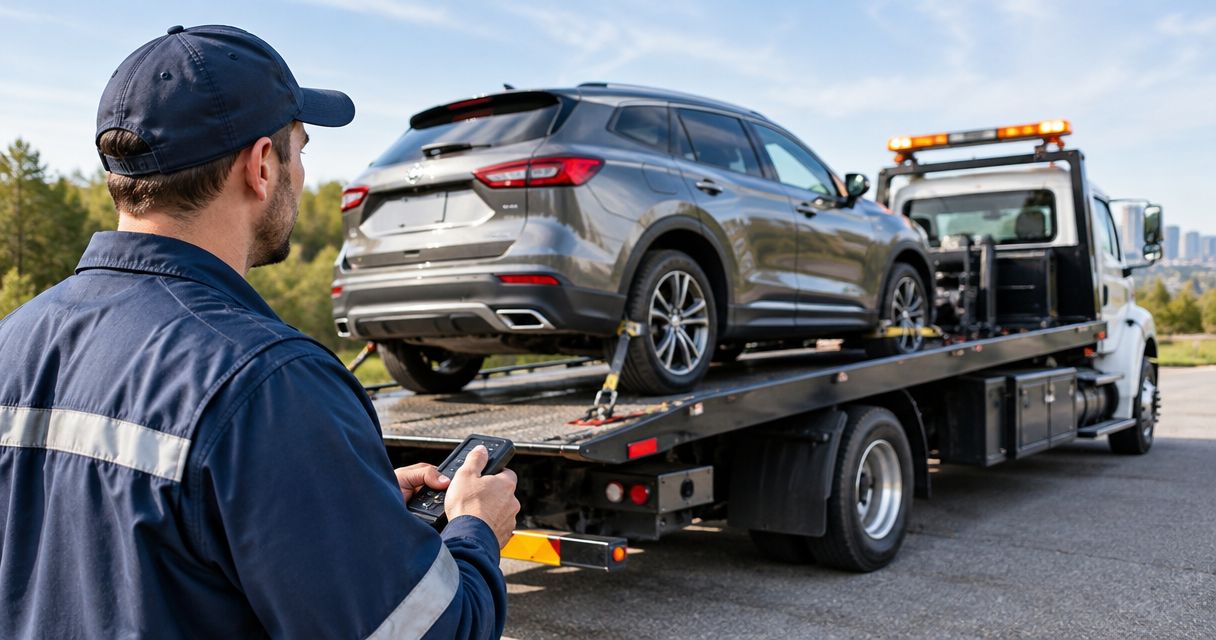
Out of diesel? Atlroadside is the best fit for Atlanta truckers who need 24/7 emergency diesel delivery with heavy-duty towing backup. For a fleet-controlled truck, contact your dispatcher for authorization; for a truck that cannot safely stay roadside, request recovery rather than fuel alone.
- Atlroadside provides 24/7 emergency diesel delivery for Atlanta truckers, with heavy-duty towing and recovery capability.
- For diesel fuel delivery for truckers Atlanta searches, prioritize commercial-vehicle capability and a confirmed dispatch.
- Fleet drivers should confirm authorization before booking a separate roadside provider.
- Fuel delivery does not replace diagnosis when a diesel truck will not restart.
Need help now? Call through the Atlroadside website. Give your highway, direction, nearest exit, truck type, and whether you are clear of traffic. This 2026 guide ranks the service routes by the problem you need solved—not by an unsupported promise about arrival time.
Why this matters
An empty tank is one problem. A loaded semi stranded beside moving traffic is another. You need a dispatcher who understands both the fuel request and the truck’s position.
Choose the service that can handle the whole stop, not just bring diesel. Tell dispatch immediately if the truck is blocking a lane, cannot restart, or needs recovery. If there is immediate danger, injury, fire, or a collision requiring emergency help, call 911 first.
What makes the best diesel delivery service in 2026
Use these five checks before you approve a dispatch:
- Diesel confirmation: Say diesel, not just fuel. Identify the truck and confirm the requested fuel with the operator.
- Commercial-vehicle fit: Explain whether you drive a semi, box truck, or another commercial vehicle. Do not assume passenger-car assistance fits your rig.
- Location accuracy: Give the road, direction of travel, exit or mile marker, and a location pin when possible.
- Clear dispatch: Ask whether the request is accepted, what service is being sent, and how updates will reach you.
- Recovery backup: Explain any no-start condition, damage, or unsafe position before treating the stop as a simple refuel.
A listing that says “roadside assistance” is not enough. Confirm diesel delivery for your specific commercial vehicle and location before ending the call.
Atlanta diesel assistance options at a glance
These are three distinct service routes. Emergency delivery handles an empty tank; fleet dispatch handles authorization; heavy-duty towing handles a truck that needs to move without driving.
| Rank and option | Best for | Standout capability or purpose | Key limitation |
|---|---|---|---|
| 1. Atlroadside emergency diesel delivery | Stranded truckers needing direct local assistance | 24/7 diesel delivery plus heavy-duty towing and recovery capability | Delivery alone does not resolve every no-start condition |
| 2. Fleet-authorized diesel dispatch | Drivers operating under a company roadside process | Keeps authorization and communication with the fleet | You still need confirmation that a provider has accepted the job |
| 3. Heavy-duty towing and recovery | Trucks that cannot safely remain or drive away | Moves the response beyond a fuel-only request | Towing does not diagnose or repair the underlying fault |
1. Atlroadside: best diesel delivery for stranded Atlanta truckers
Best for: Drivers and commercial fleets needing emergency diesel delivery across the Atlanta metro, day or night.
Atlroadside provides 24/7 roadside assistance, including emergency diesel delivery for semi-trucks and commercial vehicles. Heavy-duty towing and recovery are also available when the situation needs more than fuel.
Start with the problem in plain language: you ran out of diesel, where the truck stopped, and whether it is safely clear of traffic. If the engine stopped for an uncertain reason, say that instead of presenting an empty tank as a confirmed diagnosis.
Emergency diesel delivery pros:
- Service is available 24/7 across the Atlanta metro.
- Diesel delivery serves semi-trucks and commercial vehicles.
- Heavy-duty towing and recovery capability supports more complicated breakdowns.
- Roadside services also include jump starts, lockouts, and tire changes.
Emergency diesel delivery limitations:
- Adding diesel does not repair a mechanical or electrical fault.
- A roadside fuel request is not a substitute for emergency traffic protection.
- The truck’s condition and position still need to be explained before dispatch.
Ask what the response includes and what happens if the truck does not restart. Do not assume that a fuel delivery request includes mechanical diagnosis or a particular restart procedure.
Verdict: Buy—choose direct emergency diesel delivery when an empty tank is the problem and the location is safe for service.
2. Fleet-authorized dispatch: best for company-controlled trucks
Best for: Employee drivers and operators whose fleet requires approval before booking roadside work.
Your fleet’s dispatch process is an authorization route, not a separate guarantee of diesel delivery. Contact the person responsible for roadside decisions, report the truck’s condition, and confirm who is booking the service.
Avoid creating two separate requests for the same truck. If your dispatcher is arranging help, ask for confirmation that a roadside provider has accepted the job—not just confirmation that your message was received.
Fleet-authorized dispatch pros:
- Keeps your fleet informed about the breakdown.
- Clarifies who can approve roadside work.
- Gives dispatch the chance to coordinate load and customer updates.
- Establishes who will communicate with the service provider.
Fleet-authorized dispatch limitations:
- An internal request does not establish that a truck is on the way.
- The selected provider still needs your exact location and vehicle details.
- You need a clear escalation point if the request remains unconfirmed.
Use the same location description with your dispatcher and the roadside operator. A tractor number without a road direction is not enough to locate a stranded rig.
Verdict: Buy—use fleet-authorized dispatch when your company controls roadside bookings, then verify the actual service assignment.
3. Heavy-duty towing: best when fuel alone is not enough
Best for: A disabled commercial truck that cannot safely stay in place or cannot continue under its own power.
Heavy-duty towing and recovery address a different problem from diesel delivery. Tell the operator if the rig is damaged, stuck, blocking access, or still disabled after refueling.
Do not keep describing the request as “just diesel” after the situation changes. The dispatcher needs the current condition to determine the next service.
Heavy-duty towing pros:
- Addresses the need to move a disabled commercial vehicle.
- Provides a service route when fuel delivery does not get the truck moving.
- Lets dispatch account for recovery needs from the start.
Heavy-duty towing limitations:
- Moving the truck does not repair its engine or fuel system.
- Recovery requires a different assessment from a straightforward fuel stop.
- The operator needs truck, trailer, load, and access information.
For a broader breakdown checklist, see the guide to roadside assistance for semi-trucks. Keep the current request specific: fuel delivery, a no-start condition, or heavy-duty recovery.
Verdict: Buy—request heavy-duty towing when moving the truck safely is the priority. Skip a fuel-only request when fuel is not the whole problem.
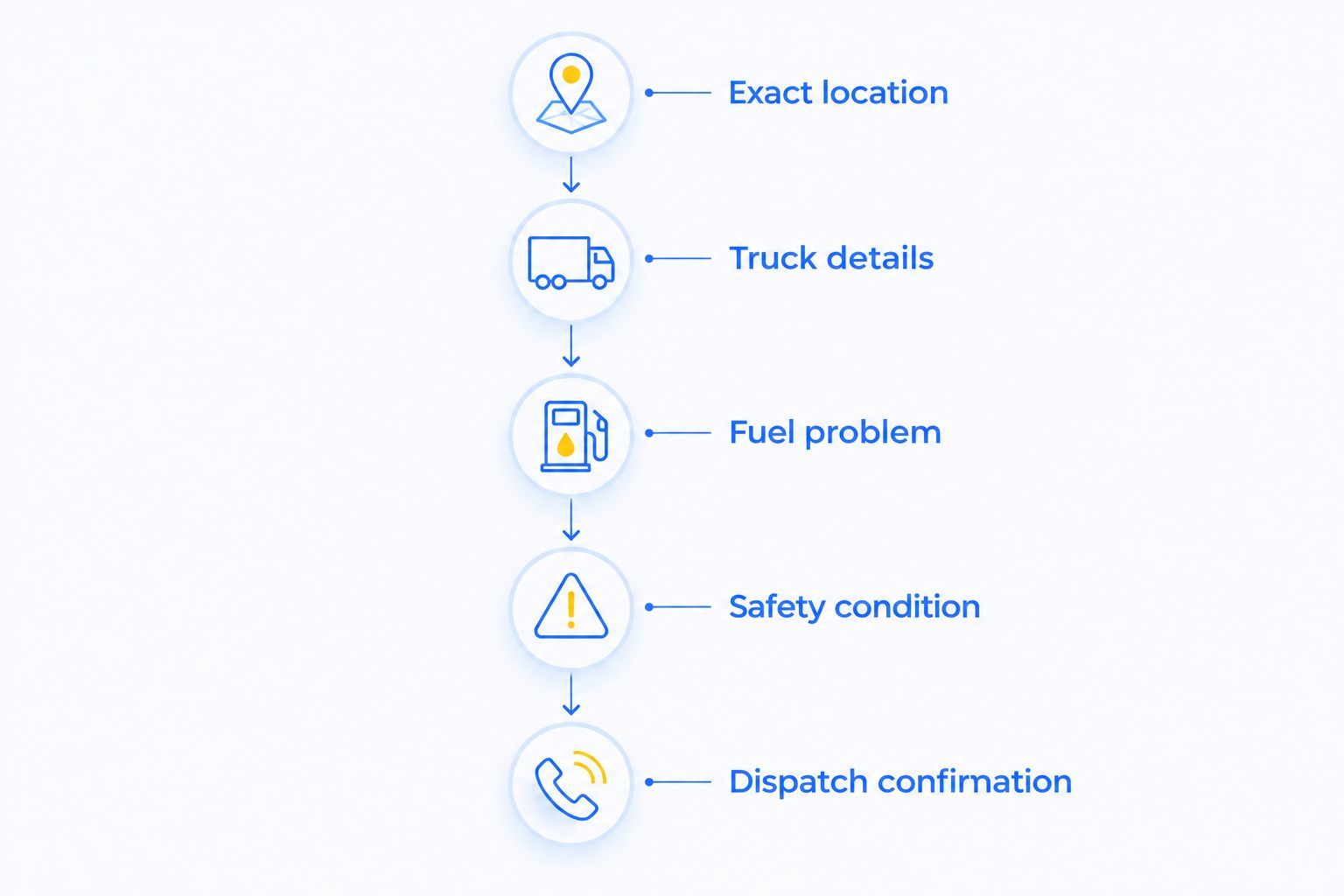
What to tell diesel dispatch before hanging up
Give these details in order. Pull the information together from a safe position; do not walk beside moving traffic to find a marker or inspect the rig.
- Exact location: Road name, direction, nearest exit or mile marker, and a location pin if available. On I-285 or I-75, the direction matters as much as the highway name.
- Truck details: Vehicle type, tractor and trailer information, and whether you are loaded. Describe access restrictions you can see without leaving safety.
- Fuel problem: Say that you need diesel. Explain whether the tank is empty, the engine stopped, or the cause is uncertain.
- Safety condition: State whether you are on a shoulder, ramp, parking lot, or travel lane. Report smoke, leaks, collision damage, or other hazards immediately.
- Dispatch confirmation: Confirm the accepted service, callback details, and how you will receive updates. Fleet drivers should also confirm authorization.
A clear location and a clear problem give dispatch something actionable. “Truck stopped near Atlanta” leaves out the details needed to match the response to your situation.
Ask these three questions
- “Have you accepted diesel delivery for this truck at this location?”
- “What should I do if the engine will not restart after delivery?”
- “How will I receive dispatch updates?”
Ask for the current arrival estimate directly. Treat that estimate as an update for your specific call, not a universal response-time promise.
Request emergency diesel help
24/7 diesel delivery and heavy-duty towing assistance across the Atlanta metro.
While you wait: protect yourself and the rig
Turn on your hazard lights and avoid standing beside traffic. Tell dispatch if your position changes or the shoulder no longer feels safe. Follow instructions from emergency responders when they are involved.
Do not attempt a roadside fuel-system repair you are not trained to perform. Follow your truck manufacturer’s restart procedure; do not repeatedly crank the engine hoping the problem clears.
Never substitute gasoline for diesel. If the wrong fuel has been added, tell the operator and do not start the engine. A wrong-fuel event needs a different response from an empty tank.
For commercial drivers, follow your carrier’s roadside safety procedures and applicable warning-device requirements. Do not improvise a warning-device setup from a generic online checklist while exposed to traffic.
How these options rank for 2026
The order follows the job: restore fuel first when an empty tank is confirmed, use fleet authorization when required, and request recovery when the truck cannot safely continue.
The deciding criteria are diesel capability, commercial-vehicle fit, location clarity, confirmed dispatch, and recovery backup. There is no useful reason to rank a fuel-only response ahead of towing when the truck needs to be moved.
Which diesel delivery option should you choose in 2026?
Choose Atlroadside for 24/7 emergency diesel delivery in Atlanta when you need direct roadside help. Give the operator enough information to distinguish an empty tank from a broader breakdown.
If your fleet controls service bookings, contact fleet dispatch and confirm who is sending help. If the rig is unsafe to leave in place or remains disabled, request heavy-duty towing rather than another fuel-only visit.
FAQ
What's the best diesel delivery option for Atlanta truckers in 2026?
Atlroadside is the best fit for truckers needing 24/7 emergency diesel delivery with heavy-duty towing backup across the Atlanta metro. Confirm your truck type, location, and current condition when requesting help.
Can I get diesel delivered to a semi-truck at night?
Yes. Emergency diesel delivery for semi-trucks and commercial vehicles is available 24/7 across the Atlanta metro. Confirm the dispatch for your exact location.
What should I tell dispatch when my truck runs out of diesel?
Give your highway, direction, nearest exit or mile marker, truck type, and whether you are clear of traffic. Say diesel explicitly and report any no-start condition or visible hazard.
Should I call my fleet dispatcher or a roadside company first?
Follow your fleet’s required authorization process before booking separate roadside work. Confirm who is arranging the provider so you do not create duplicate requests.
Will a diesel truck always restart after fuel delivery?
No. Fuel delivery does not repair every no-start condition, and restart procedures depend on the truck. Follow the manufacturer’s instructions and tell the operator if the engine will not restart.
When should I request heavy-duty towing instead of diesel delivery?
Request a towing assessment when the truck cannot safely remain where it stopped or cannot continue under its own power. Explain damage, access problems, and any failed restart before dispatch.
How much diesel should I ask the operator to bring?
Tell the operator your truck type and fuel situation, then confirm the delivery quantity directly. Do not assume an emergency roadside delivery means a full tank refill.
One last thing
Before you end the call, repeat your direction of travel and ask the operator to confirm it back. A correct highway name with the wrong direction still points to the wrong approach. Make that final check part of every roadside request in 2026.