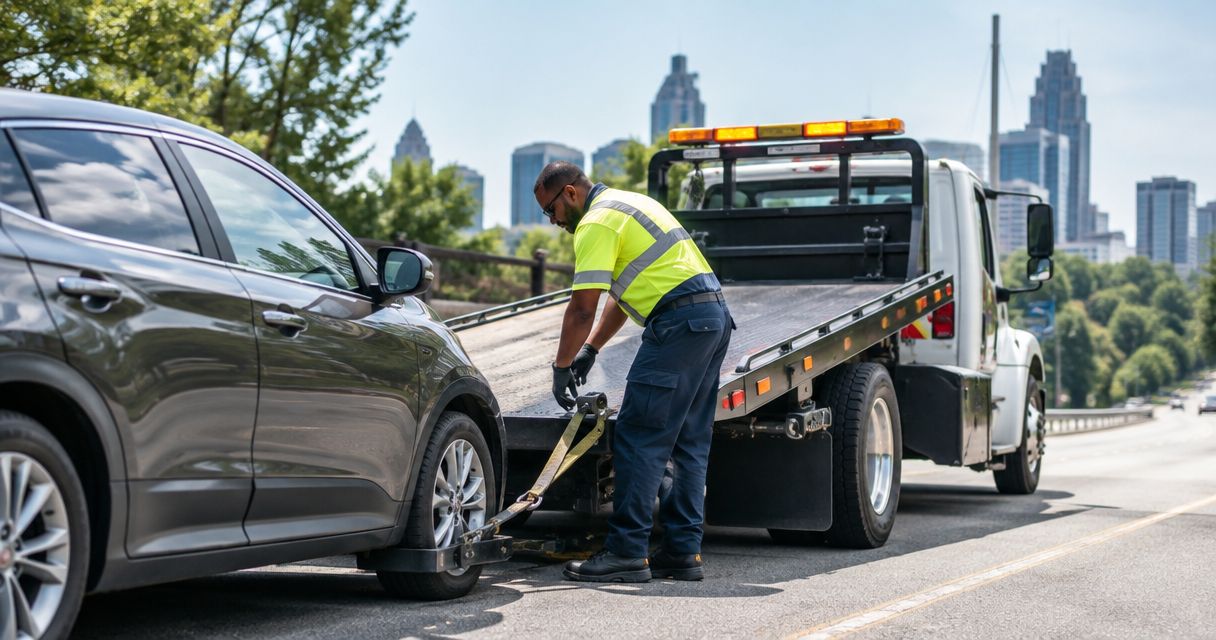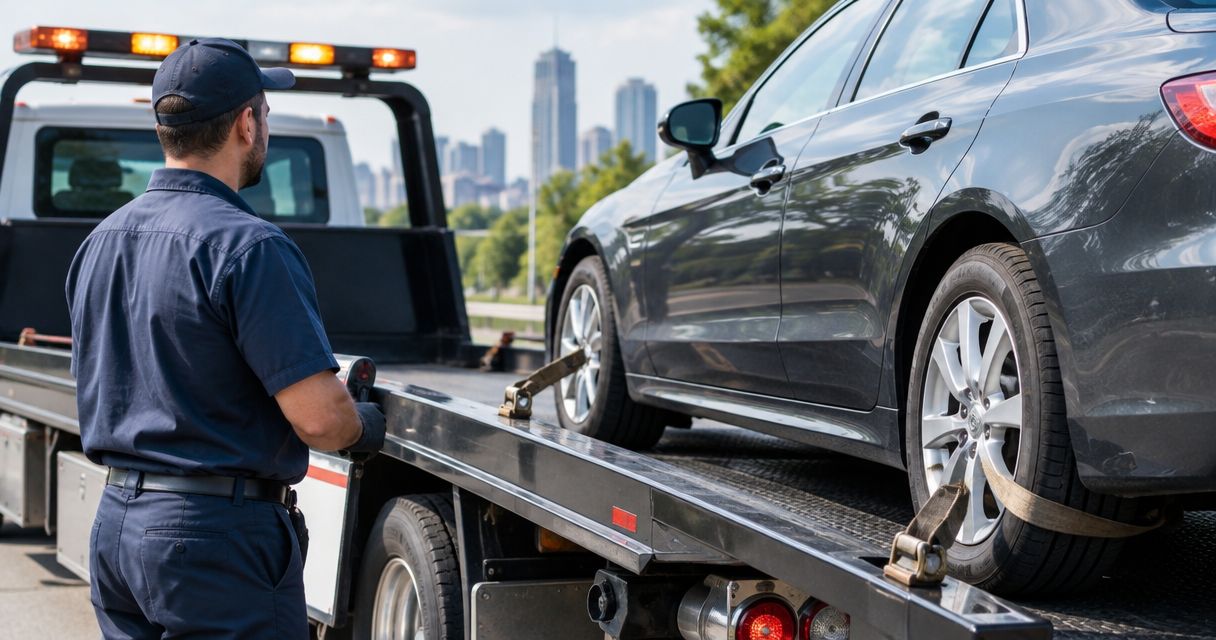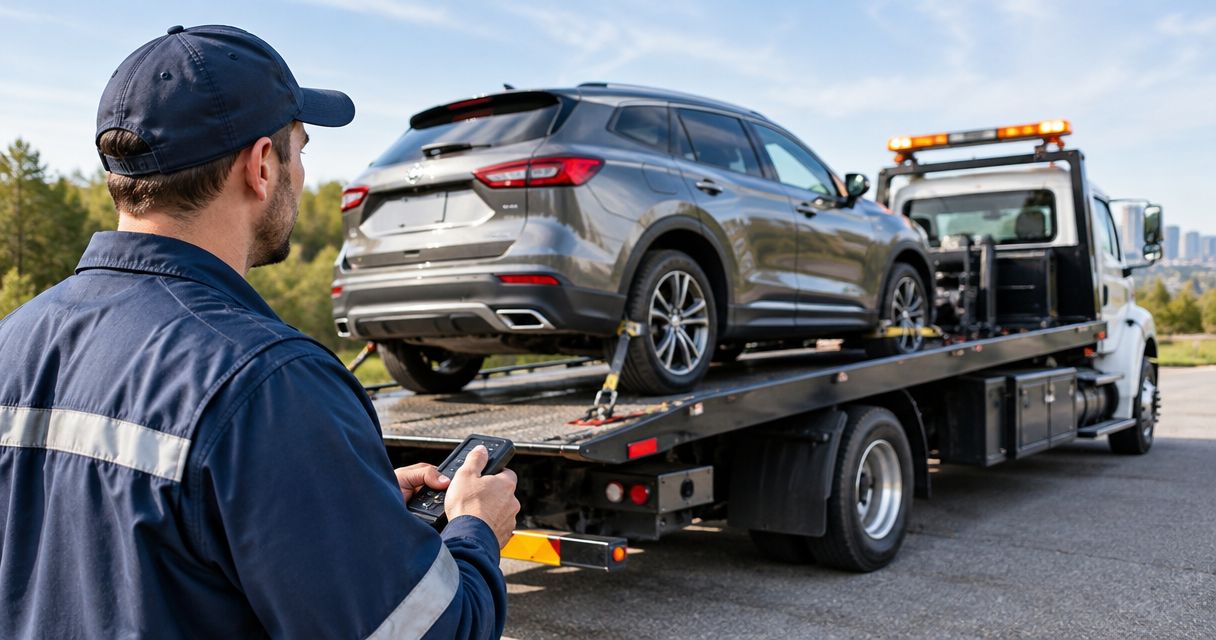

Moving truck stranded? Roadside assistance for moving companies covers breakdown help, fuel delivery, jump starts, lockouts, tire changes, and towing so you can deal with the vehicle and protect the load. Call Atlroadside for 24/7 roadside assistance across the Atlanta metro, and tell dispatch whether you need help with a moving van, box truck, or heavy-duty rig.
- Atlroadside provides roadside assistance for moving companies across Atlanta, including 24/7 fuel delivery, towing, and heavy-duty recovery.
- Report the truck type, exact location, load status, and symptoms before dispatching commercial roadside assistance.
- Keep crews and customer belongings away from traffic; do not unload a disabled truck on the shoulder.
- Choose roadside help for a serviceable problem and towing when the truck cannot safely continue.
Why roadside assistance matters for moving companies
A moving-truck breakdown creates two jobs: get the vehicle safe and keep the move under control. Your crew, customer belongings, building access arrangements, and next pickup all need attention. Treat the truck problem and the customer update as separate tasks.
Moving fleets also need more than passenger-car roadside help. A loaded box truck, a diesel moving truck, and a crew member’s car require different dispatch information. Tell the provider what is stranded before asking for assistance.
Atlroadside roadside assistance is best for Atlanta moving fleets needing 24/7 roadside help, towing, or heavy-duty recovery. Match the service to the actual problem. A fuel delivery does not fix a fuel-system fault, and a jump start does not establish why a battery went dead.
For your 2026 breakdown plan, assign one person to speak with roadside dispatch and another to handle the move. That keeps the driver from juggling customer calls while assessing a disabled truck.
Build your moving-truck breakdown response
Get the truck and crew out of immediate danger
Your first job is safety, not saving the delivery slot. If the truck still responds normally, move to a safe stopping place without making a sudden maneuver. Turn on hazard lights once stopped, secure the vehicle, and assess your surroundings before opening a door.
Do not make a blanket rule that everyone must leave the cab. Traffic, smoke, fire, the truck’s position, and the presence of a safe escape route determine what to do. Call 911 for a crash, fire, injury, or immediate danger. Roadside dispatch is not emergency rescue.
Keep helpers from standing behind the truck, between vehicles, or beside moving traffic. A shoulder is not a loading dock. Do not start transferring sofas, appliances, or cartons simply because another truck is on its way.
- Secure the truck: Apply the parking brake and stop normal loading work.
- Assess traffic: Check whether doors open toward passing vehicles.
- Protect the crew: Keep people away from exposed traffic lanes.
- Call emergency services: Use 911 when there is an immediate threat.
- Keep cargo secured: Leave the load contained unless safety requires otherwise.
Gather the facts before requesting service
Use your phone’s location tools, road signs, and fleet records first. You do not need a paid fleet system to give a useful breakdown report. You need an accurate location and a clear description of the truck.
Give dispatch the road name, direction of travel, nearest exit or cross street, and whether you are on a highway shoulder, in a driveway, or inside a property. A street address alone does not explain a narrow entrance or a truck stopped behind a warehouse.
Then describe the vehicle and load. Read identification information from your records rather than guessing. Report symptoms in plain language: the engine will not crank, the truck cranks but will not start, a tire is flat, or the engine stopped after the fuel gauge reached empty.
Use these 4 report items in your 2026 driver checklist:
- Exact location: Road, travel direction, nearest landmark, and access point.
- Vehicle details: Truck type, fuel type, and identifying information.
- Load status: Loaded or empty, plus any trailer attached.
- Observed symptoms: What happened, dashboard warnings, and visible damage.
Match the service to the fault
Start with what you can safely observe. Check whether the key is locked inside, the fuel gauge is empty, or a tire is visibly damaged. Do not crawl beneath a loaded truck or attempt roadside repairs beside moving traffic.
Once you have the basic facts, professional help becomes the practical next step. Atlroadside provides fuel delivery, jump starts, lockout service, tire changes, emergency towing, and heavy-duty towing and recovery across the Atlanta metro. Tell dispatch which problem you see; let the provider confirm the appropriate response.
For diesel delivery, identify the fuel type before anyone brings fuel. If the truck ran dry, follow the vehicle manufacturer’s restart instructions and the technician’s direction. Adding fuel does not guarantee that every diesel engine will immediately restart.
For a tire problem, report the affected wheel and whether a usable spare is present. A tire change and a tire replacement are different requests. Do not assume a provider carries a matching commercial tire.
- Fuel delivery: State diesel or gasoline and describe what happened before stopping.
- Jump start: Report a no-crank condition and any visible battery damage.
- Lockout service: Explain where the keys are and identify the vehicle.
- Tire service: Describe the damage, wheel position, and spare status.
- Towing or recovery: Report unsafe driving conditions, a disabled rig, or a stuck vehicle.
Request help for your moving truck
24/7 Atlanta metro roadside help, fuel delivery, towing, and heavy-duty recovery.
Decide whether roadside help or towing fits
Ask a simple question: can this problem be corrected at the truck’s location without putting people at risk? A lockout, discharged battery, or fuel shortage calls for a different response from collision damage, a steering fault, or a truck stuck off the road.
Do not decide that the vehicle is safe merely because the engine restarts. A recurring warning, damaged tire, fluid leak, or loss of normal braking needs further assessment. Your driver should report the condition, not make a diagnosis under pressure.
For a loaded moving truck, towing also needs a destination plan. Confirm where the vehicle can go, whether someone can receive it, and how customer belongings will remain secured. Heavy-duty capability matters when the vehicle or recovery situation demands it; truck size alone is not the full dispatch brief.
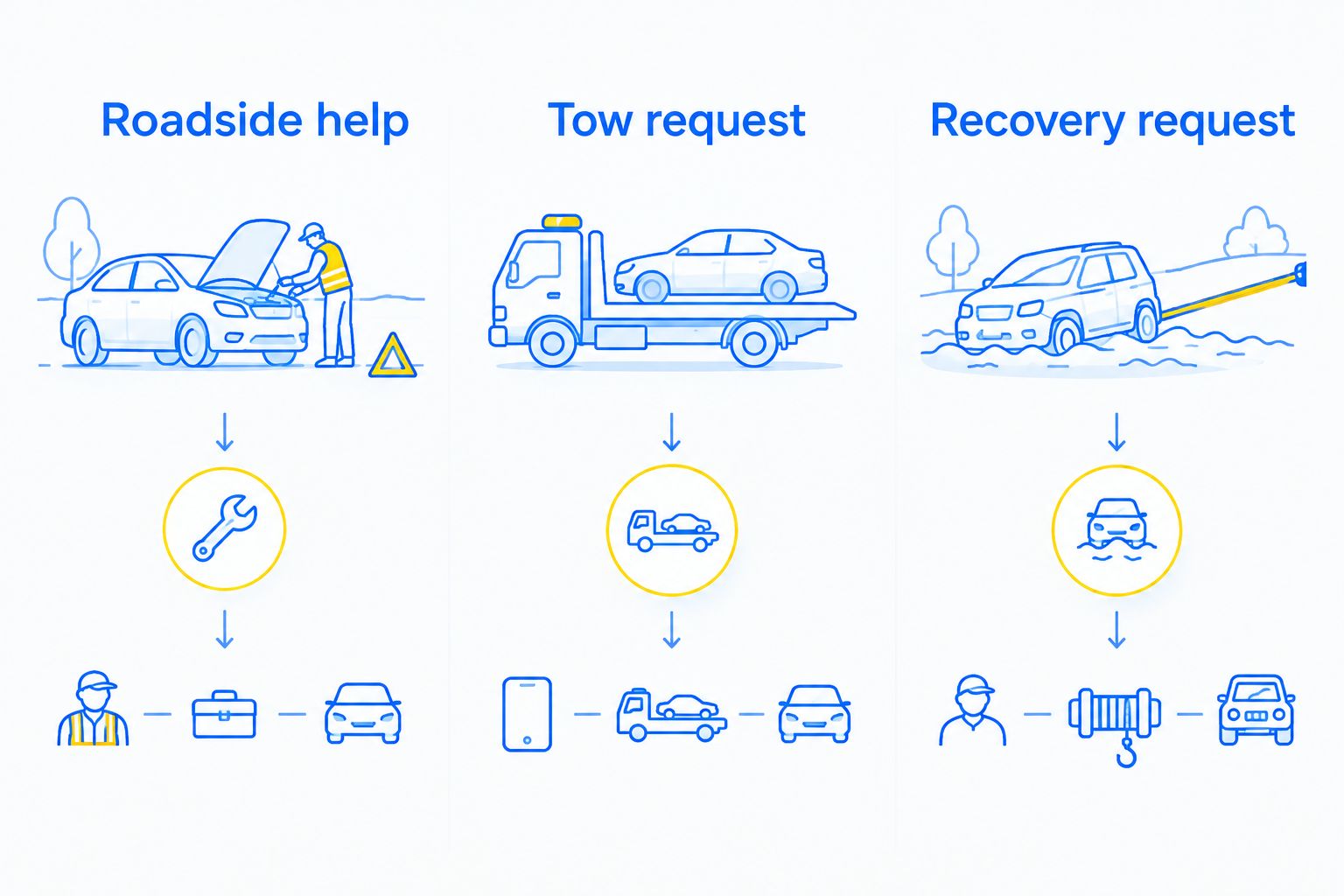
Use these 3 decision points in your 2026 dispatch instructions:
- Roadside help: Request on-site service for a clearly identified roadside problem.
- Tow request: Arrange transport when the truck cannot safely continue.
- Recovery request: Explain when the vehicle is stuck, off-road, or difficult to access.
The service decision starts with the condition of the truck, not the urgency of the customer’s appointment. Give dispatch the facts and agree on the next action before committing the crew to a transfer.
Protect the load and update the customer
Use your existing dispatch phone, job sheet, and customer contact details first. One clear update is better than several conflicting messages from the driver and moving crew. Say what happened, what action you have taken, and when you will provide another update.
Do not promise a revised delivery time before you know whether the truck needs service, towing, or a replacement vehicle. Confirm access changes with the customer: a building loading slot, an elevator reservation, or a receiving contact can require a separate adjustment.
If another vehicle will take over, plan the transfer at a safe, permitted location. Check who controls the keys, paperwork, and cargo inventory. Keep the customer’s belongings accounted for during any handoff.
Make these 3 updates part of every 2026 breakdown response:
- Customer update: Explain the disruption and the next confirmed action.
- Crew update: Identify who stays with the truck and who coordinates the move.
- Dispatch update: Record service status, destination, and cargo-transfer decisions.
Record the incident and fix the repeat problem
Use a shared spreadsheet or maintenance log before buying another system. Record what failed, what roadside action was taken, and what the driver observed afterward. Separate the roadside fix from the follow-up repair.
A jump start gets an engine running; it does not prove the battery or charging system is healthy. Fuel delivery ends the immediate shortage; it does not correct a broken fuel gauge or a missed fueling routine. Record the cause once it is confirmed, not when someone first guesses.
Make the roadside record part of the truck’s maintenance history. For fleets coordinating several drivers, the roadside assistance guide for fleet managers is a related reference for organizing vehicle-level response.
Review these records during your 2026 fleet checks:
- Incident details: Vehicle, driver, location, symptoms, and load status.
- Service performed: Fuel delivery, jump start, lockout, tire change, tow, or recovery.
- Follow-up work: Inspection or repair needed before normal operation resumes.
- Confirmed cause: Enter the diagnosis after a qualified assessment.
- Process change: Update fueling, inspections, key handling, or dispatch instructions.
Compare response options for moving companies
Choose an option by the job it solves. Roadside assistance, emergency services, and a repair facility are not interchangeable. A replacement truck also does not remove the disabled vehicle or secure the original load.
For your 2026 operating plan, keep the response roles distinct. The driver handles immediate observations, dispatch coordinates the service request, and the moving-company lead manages the customer and cargo decisions.
| Option | Best for | Main advantage | Key limitation |
|---|---|---|---|
| Atlroadside roadside assistance | Atlanta moving fleets needing 24/7 roadside help or heavy-duty towing and recovery | Covers fuel delivery, jump starts, lockouts, tire changes, and towing | Roadside service is not a substitute for workshop diagnosis or moving the customer’s cargo |
| Driver-led checks | A safe visual assessment and accurate dispatch report | Uses the driver’s observations and existing fleet records | Does not replace professional repair, recovery, or towing |
| Repair facility | Diagnosis and repair after the truck is safely delivered | Handles the underlying mechanical problem | Does not by itself resolve a truck stranded at the breakdown location |
| Replacement moving vehicle | Continuing a move after a safe cargo-transfer plan is arranged | Separates the customer’s move from the disabled truck | Requires a suitable vehicle, crew coordination, and a safe transfer location |
| Emergency services | A crash, fire, injury, or immediate danger | Addresses the emergency before the commercial job | Is not routine roadside assistance for a fuel shortage or lockout |
Choose roadside service for the vehicle problem and a separate contingency for the move. Trying to make one call solve both leaves cargo handling and customer communication unassigned.
Common mistakes moving companies make
Requesting help without mentioning a loaded truck
A request for a generic tow leaves out information dispatch needs. State that the vehicle is a moving truck, identify its type, and explain whether it is loaded or pulling a trailer. Describe access restrictions without guessing at equipment requirements.
Treating the shoulder as a transfer point
Moving belongings beside traffic exposes your crew and cargo to an avoidable hazard. Keep the load secured and arrange a suitable transfer location. Do not let a missed appointment turn into an unsafe roadside unloading job.
Sending fuel without confirming the fuel type
Do not infer diesel or gasoline from the truck’s appearance. Check the vehicle information and tell dispatch the correct fuel type. If the engine stopped for another reason, explain the symptoms rather than ordering fuel as a guess.
Calling a jump start a completed repair
A running engine is not a diagnosis. Report repeated starting trouble, dashboard warnings, or battery damage. Arrange the appropriate inspection instead of sending the same truck into another full day of stops without follow-up.
Promising the customer a time before dispatch confirms the plan
A firm delivery promise made during an unresolved breakdown creates another problem. Give the customer the facts and a clear next-update point. Confirm the service outcome and crew plan before revising the moving schedule.
FAQ
What is roadside assistance for moving companies?
Roadside assistance for moving companies is breakdown help for vehicles carrying moving crews and customer belongings. Services include fuel delivery, jump starts, lockout help, tire changes, towing, and recovery, matched to the vehicle and problem.
Who can help with a moving truck breakdown in Atlanta at night?
Atlroadside provides 24/7 roadside assistance and towing across the Atlanta metro. Give dispatch your location, truck type, load status, and symptoms so the service request matches the stranded vehicle.
Can I request diesel delivery for a moving truck?
You can request diesel delivery for a diesel-powered moving truck. Confirm the fuel type and explain whether the truck ran out of fuel; follow the manufacturer’s restart instructions and the technician’s direction.
Should I unload a broken-down moving truck on the highway shoulder?
Do not use a highway shoulder as a routine cargo-transfer location. Keep belongings secured and coordinate a safe, permitted location for any transfer; call emergency services if there is immediate danger.
Does a loaded box truck need heavy-duty towing?
The required towing response depends on the specific truck, load, condition, and access. Give dispatch the vehicle details and load status rather than choosing equipment based only on the label box truck.
What should my driver report when calling roadside assistance?
Your driver should report the exact location, vehicle details, load status, and observed symptoms. Include the direction of travel, nearest exit or landmark, fuel type, and any trailer attached.
Is a jump start enough to send a moving truck back to work?
A jump start alone does not establish that a moving truck is ready for normal operation. Report warning lights, repeated starting problems, or other symptoms and arrange follow-up assessment when needed.
One last thing
Put a breakdown card beside the moving paperwork, not just in the office. The driver needs the truck details, dispatch contact, cargo instructions, and customer-update process while standing still with a disabled vehicle.
For your next crew briefing, practice one handoff: the driver reports the truck problem, dispatch requests the service, and the moving-company lead handles the customer. Clear ownership is more useful than telling everyone to call someone.