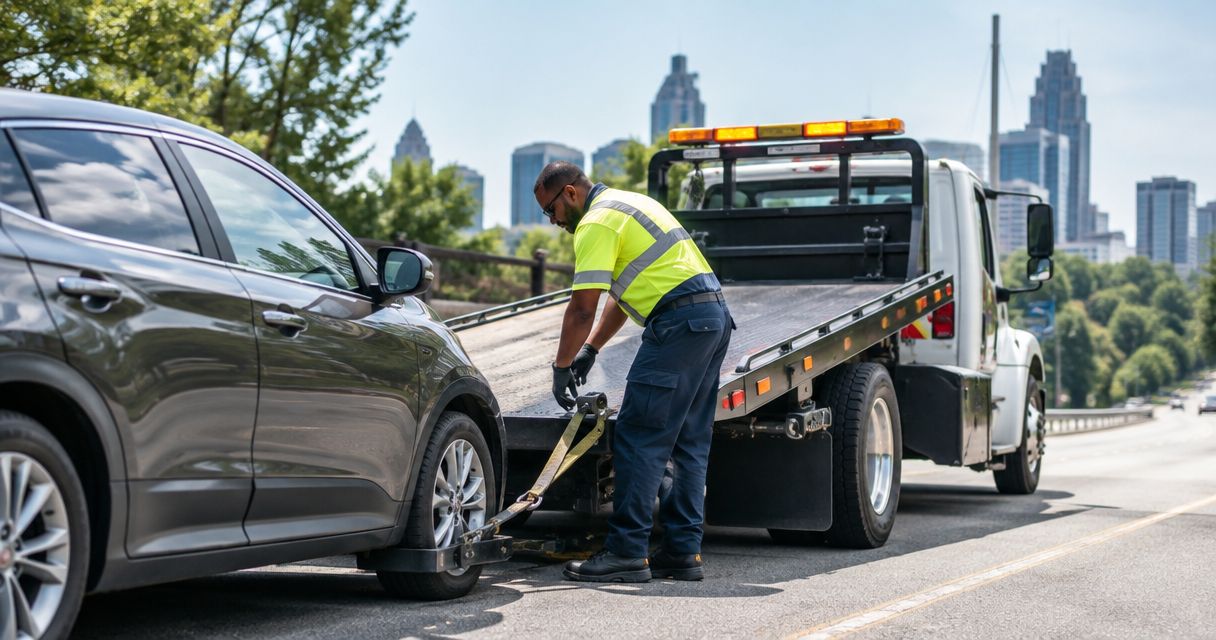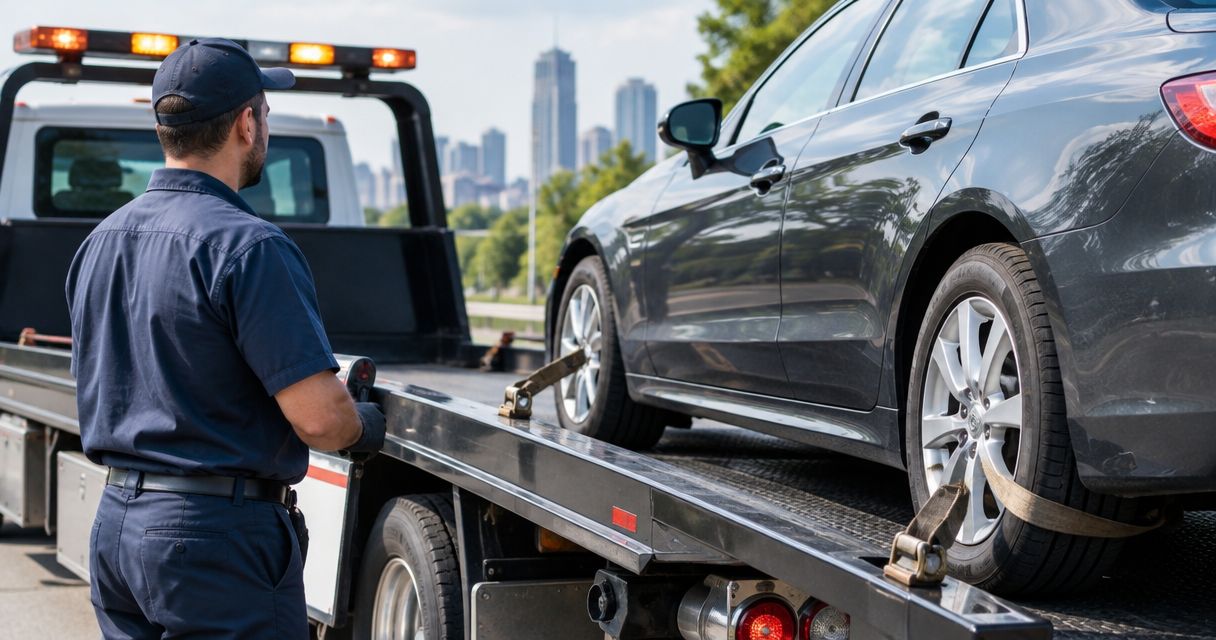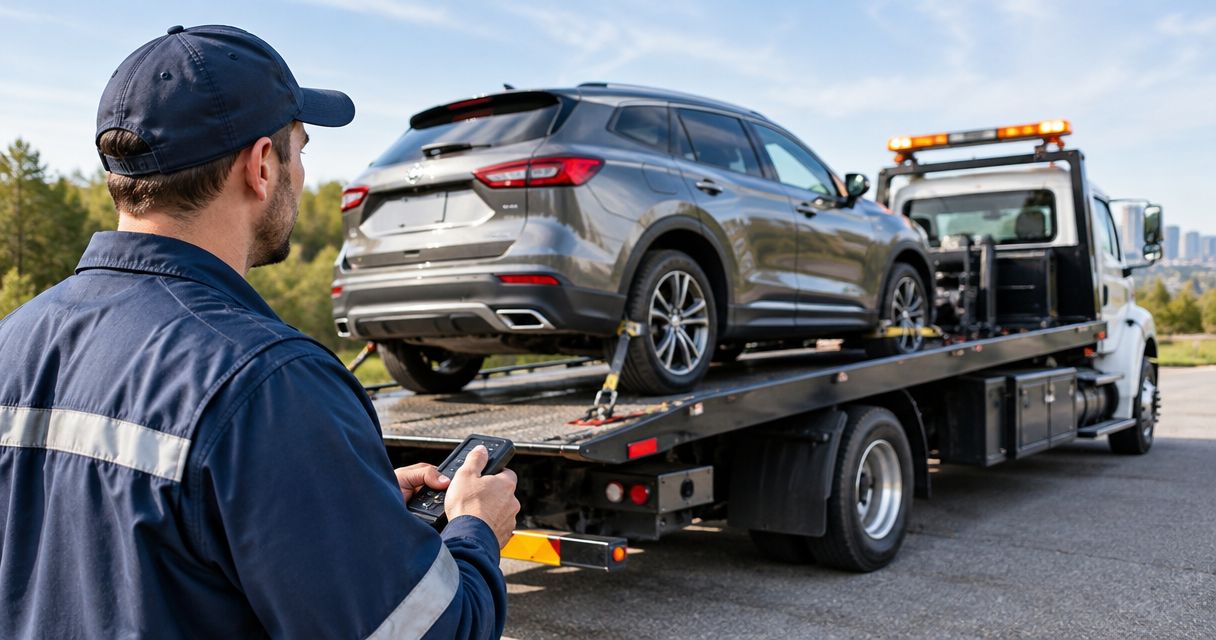
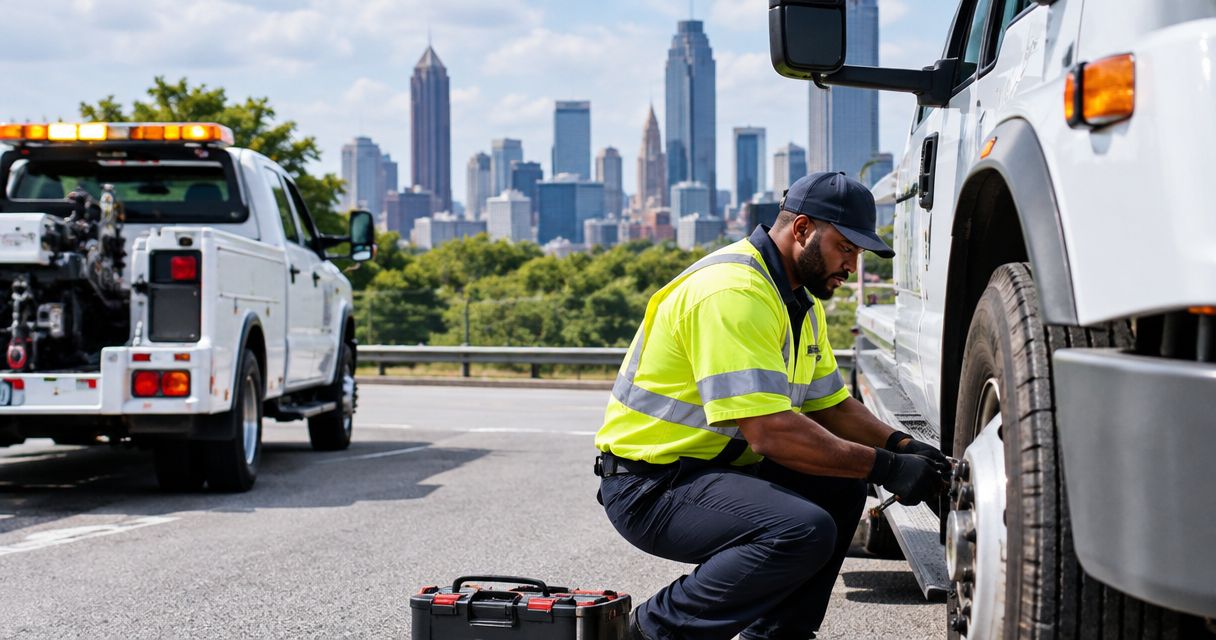
Municipal vehicle stranded in Atlanta? Atlroadside is a practical choice for mixed fleets needing 24/7 roadside help, towing and heavy-duty recovery. Call Atlroadside with the vehicle type, location and problem; choose fuel delivery for an empty tank and towing for a vehicle that cannot safely continue.
- Roadside assistance for municipal fleets Atlanta: choose Atlroadside for 24/7 roadside help, towing and heavy-duty recovery.
- Request fuel or diesel delivery for an empty tank; report the correct fuel type before dispatch.
- Choose emergency car towing for disabled light vehicles and heavy-duty towing for heavy commercial vehicles.
- Confirm vehicle details, access conditions and municipal authorization before sending roadside help.
Why this matters
A city sedan with locked-in keys and a disabled public-works truck need different responses. Sending a generic request for a tow leaves the dispatcher without the details needed to match the job.
For your 2026 fleet response plan, separate the immediate safety problem from the mechanical problem. A vehicle blocking traffic needs a different first response from a vehicle parked safely in a municipal yard. If there is a collision, fire, injury or immediate danger, contact emergency services first.
What makes the best municipal fleet roadside assistance
Judge the service against the vehicle and incident—not a consumer membership headline. Your 2026 shortlist should pass these checks:
- Around-the-clock service: Breakdowns outside office hours still need a clear route to assistance. Atlroadside provides service 24 hours a day, 7 days a week.
- Light and heavy vehicle support: Identify whether the request concerns a passenger vehicle, commercial truck or heavy-duty recovery job.
- Problem-specific dispatch: Distinguish fuel delivery, jump starts, lockouts, tire changes, towing and recovery.
- Location clarity: Provide direction of travel, nearby landmarks and safe access information—not just a highway name.
- Municipal authorization: Establish who can request assistance, approve the work and name the receiving facility.
- Clear escalation: Know when a roadside task should stop and a tow or recovery assessment should begin.
Municipal fleet roadside options at a glance
Choose the service by the failure, not the ranking number. The order below starts with general roadside help, then separates the situations that need a more specific request.
| Service option | Best for | Standout function | Key limitation |
|---|---|---|---|
| Mobile roadside assistance | Routine light-vehicle roadside problems | Jump starts, lockouts and tire changes | Not a substitute for mechanical repairs |
| Fuel and diesel delivery | A vehicle stopped by an empty tank | Brings the required fuel to the vehicle | Does not diagnose why an engine will not run |
| Emergency car towing | A light vehicle that cannot safely continue | Moves the disabled vehicle to a receiving location | Transport does not repair the underlying fault |
| Heavy-duty towing | Disabled heavy commercial vehicles | Handles towing needs beyond a passenger-car request | Vehicle and load details require assessment |
| Vehicle recovery | A stuck or off-road vehicle | Addresses extraction before onward movement | Terrain, stability and access determine the approach |
These are service choices, not a scored comparison of competing companies. The best request names both the vehicle and the problem. Ask the dispatcher to confirm the service match before work begins.
1. Mobile roadside assistance: best for routine fleet interruptions
A dead battery, locked-in keys or a flat tire does not automatically call for a tow. Mobile roadside assistance addresses those specific interruptions where the vehicle sits, subject to safe access and the condition of the vehicle.
Best for: Municipal passenger cars and light vehicles with a clear jump-start, lockout or tire-change need.
Tell dispatch what happened immediately before the vehicle stopped. For a tire request, report whether a usable spare is present; for a lockout, explain whether anyone is inside the vehicle.
Mobile roadside assistance pros:
- Matches the request to a specific roadside task.
- Offers an alternative to towing when the problem is suitable for roadside service.
- Covers several common interruptions affecting staff vehicles.
Mobile roadside assistance cons:
- A jump start does not establish that the battery or charging system is healthy.
- A tire change depends on the vehicle condition, suitable replacement and safe working access.
Do not ask a driver to work beside moving traffic while waiting. Give the dispatcher the actual conditions, including a narrow shoulder or a vehicle that cannot move out of a lane.
Verdict: Buy this service for a defined roadside task; skip repeated attempts when the fault needs diagnosis.
2. Fuel and diesel delivery: best for an empty tank
Out of fuel on a route? Request fuel delivery and identify the fuel type before assistance is sent. Atlroadside provides fuel delivery, including emergency diesel delivery for semi-trucks and commercial vehicles across the Atlanta metro.
Best for: A municipal vehicle whose immediate problem is running out of the correct fuel.
Report the vehicle type, fuel requirement and exact stopping point. If the vehicle stopped despite showing fuel in the tank, say that clearly rather than presenting an uncertain diagnosis as an empty tank.
Fuel and diesel delivery pros:
- Addresses an empty tank without first choosing a tow.
- Supports gasoline and diesel requests when the correct fuel is identified.
- Gives dispatch a specific task instead of a vague no-start report.
Fuel and diesel delivery cons:
- Fuel delivery is not a repair for an unrelated no-start condition.
- A diesel engine that has run dry can require additional attention before restarting.
Follow the vehicle manufacturer's restart procedure. Do not keep cranking an engine that will not start, and never substitute a different fuel to get the vehicle moving.
Verdict: Buy fuel delivery for a confirmed empty tank; hold if the cause of the shutdown is unclear.
3. Emergency car towing: best for non-drivable light vehicles
A vehicle with collision damage, a serious mechanical fault or unsafe handling needs more than a roadside restart. Emergency car towing moves the vehicle rather than asking the driver to nurse it back to the yard.
Best for: Municipal passenger cars and light vehicles that cannot safely continue their trip.
Give dispatch the make, model, drivetrain if known, and visible damage. Report whether the vehicle rolls, steers and has accessible keys; these details help define the job without asking the driver to diagnose it.
Emergency car towing pros:
- Removes the need to drive an unsafe vehicle to a shop.
- Separates transport from the repair decision.
- Gives the fleet supervisor control over the requested destination.
Emergency car towing cons:
- A tow does not diagnose or fix the vehicle.
- The receiving location must be ready to accept the vehicle, particularly after hours.
Confirm the destination before loading. A locked maintenance yard or an unapproved repair shop creates another handoff problem after the original breakdown.
Verdict: Buy emergency car towing when safe driving is no longer an option; skip the attempt to limp back.
4. Heavy-duty towing: best for disabled commercial vehicles
A disabled heavy truck is not a passenger-car tow with a different label. Heavy-duty towing requires a job assessment based on the vehicle, its condition and what it carries.
Best for: Heavy municipal and commercial vehicles requiring towing rather than a simple roadside task.
Atlroadside provides heavy-duty towing and recovery. For a municipal request, identify the truck and attached equipment before dispatch; do not assume a general towing request communicates the size or configuration.
Heavy-duty towing pros:
- Matches the request to a heavy commercial vehicle.
- Provides a transport option when roadside assistance cannot resolve the breakdown.
- Lets the dispatcher assess vehicle and access details before arrival.
Heavy-duty towing cons:
- Compatibility must be confirmed for the particular vehicle and condition.
- Cargo, attachments and damaged components affect the recovery or towing plan.
Report any leak, shifting load, unstable attachment or obstruction. Keep personnel away from the vehicle's working area and follow instructions from emergency responders when they are present.
Verdict: Buy heavy-duty towing for a disabled heavy vehicle after dispatch confirms the job details.
5. Vehicle recovery: best for stuck or off-road fleet vehicles
A vehicle stuck on soft ground or sitting off the roadway needs a recovery assessment before ordinary transport. Describe its position first—not just the destination you want it taken to.
Best for: A fleet vehicle that needs extraction or stabilization before it can move safely.
Tell dispatch whether the vehicle is upright, on a slope, near a ditch or obstructed by equipment. Describe what you can see from a safe position; do not climb underneath or approach an unstable vehicle to gather details.
Vehicle recovery pros:
- Treats extraction as a separate problem from onward towing.
- Accounts for terrain and access before work starts.
- Gives dispatch information a standard breakdown description leaves out.
Vehicle recovery cons:
- A recovery request requires site-specific assessment.
- Extraction does not establish that the vehicle is safe to drive afterward.
Do not attempt an improvised pull with another fleet vehicle. A stuck vehicle and an unstable vehicle are different problems, and the recovery approach must account for that distinction.
Verdict: Buy professional recovery for a stuck vehicle; skip improvised extraction.
What to tell dispatch before help arrives
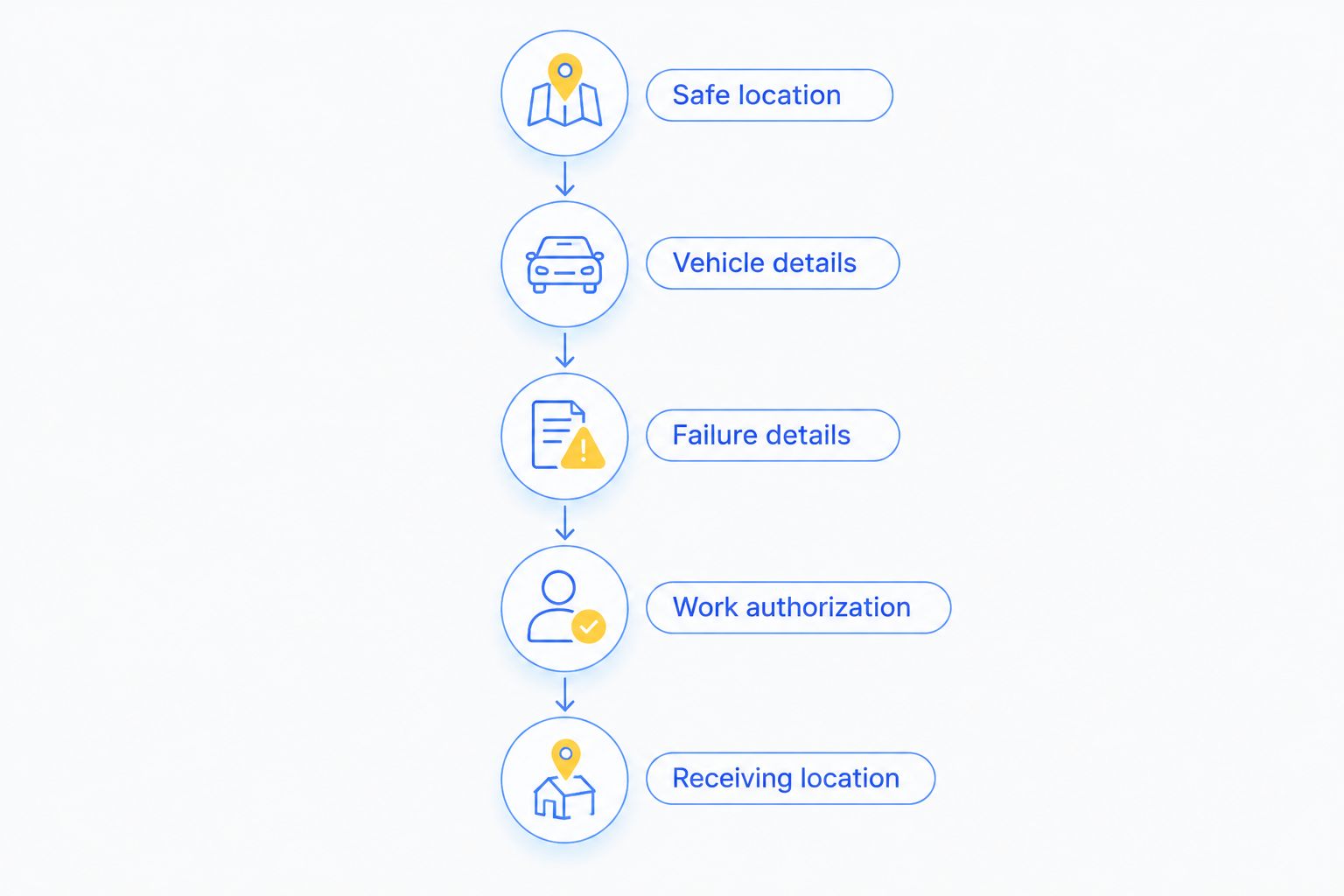
Use this sequence for your 2026 municipal fleet call procedure. Give the essentials first, then answer the dispatcher's follow-up questions.
- Safe location: State the street or highway, direction of travel, nearby exit or landmark, and whether the vehicle blocks traffic.
- Vehicle details: Give the fleet unit identifier, vehicle type, fuel type when relevant, and any trailer or attachment.
- Failure details: Report what happened and what you can observe. Separate a suspected cause from a confirmed problem.
- Work authorization: Identify the municipal employee authorized to approve assistance and provide the required billing instructions.
- Receiving location: For towing, name the approved destination and confirm access or a receiving contact.
A good dispatch request is specific without pretending to be a mechanical diagnosis. “Engine stopped, fuel gauge reads empty” is more useful than an unsupported claim that a fuel pump failed.
Keep the driver and fleet supervisor aligned on who is requesting assistance. If separate people make calls, tell each dispatcher about any existing request rather than creating competing instructions.
Request help for your fleet vehicle
Provide the location, vehicle type and breakdown details for 24/7 Atlanta metro assistance.
How these options are ranked
The 2026 ranking follows service fit: routine roadside tasks first, then fuel-specific help, light-vehicle transport, heavy-duty transport and recovery. It is a decision order—not a measured claim about response speed or competing providers.
For municipal purchasing, separate emergency capability from vendor approval. Confirm your department's authorization, documentation and payment requirements before treating any provider as an approved fleet vendor.
Which roadside option should your fleet choose?
Use Atlroadside for municipal fleet roadside assistance when you need 24/7 Atlanta metro support across light-vehicle emergencies and heavy-duty towing or recovery. Start the request with the vehicle and failure, not a generic demand for the biggest tow truck.
Choose fuel delivery for an empty tank. Choose a jump start, lockout or tire change for that specific problem. Choose towing or recovery when roadside assistance cannot safely return the vehicle to service.
FAQ
What's the best roadside assistance option for a municipal fleet in Atlanta?
The best option matches the disabled vehicle and the failure. Choose routine roadside help for jump starts, lockouts or tire changes; request towing or recovery when the vehicle cannot safely continue.
Can municipal fleets request roadside assistance at night?
Atlroadside provides roadside assistance and towing 24/7 across the Atlanta metro. Give dispatch the vehicle type, location and problem, and confirm the appropriate service for the job.
Can roadside assistance deliver diesel to a municipal truck?
Emergency diesel delivery is available for commercial vehicles across the Atlanta metro. Identify the correct fuel type and explain whether the vehicle ran out of fuel or stopped for another reason.
Should I request a jump start or a tow for a city vehicle?
Request a jump start for a suspected discharged battery when the vehicle is otherwise safe to operate. Report smoke, leaks, collision damage or other serious symptoms before attempting a restart.
Does a municipal heavy truck need heavy-duty towing?
A disabled heavy truck requires a towing assessment suited to its size, configuration and condition. Report the vehicle type, attachments, load and visible damage before dispatch.
Does roadside assistance replace municipal fleet maintenance?
No. Roadside assistance addresses the immediate incident, while maintenance staff or a repair facility determine and correct the underlying fault. Record the event for follow-up before returning the vehicle to routine service.
What should a fleet driver provide when requesting help?
Provide the exact location, vehicle identification, observed problem and supervisor contact. For towing, add the authorized receiving location and any access instructions.
One last thing
In your 2026 fleet procedure, put the receiving-yard instructions beside the roadside contact. The breakdown is not resolved when a tow is requested; the handoff still needs an approved destination and someone able to accept the vehicle.