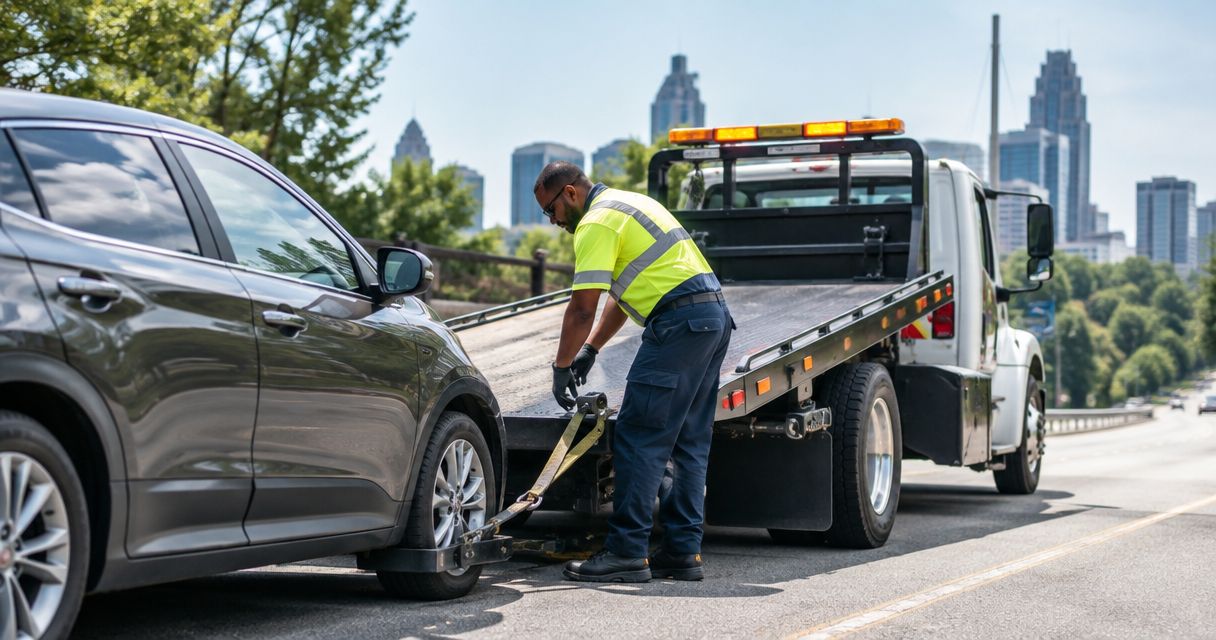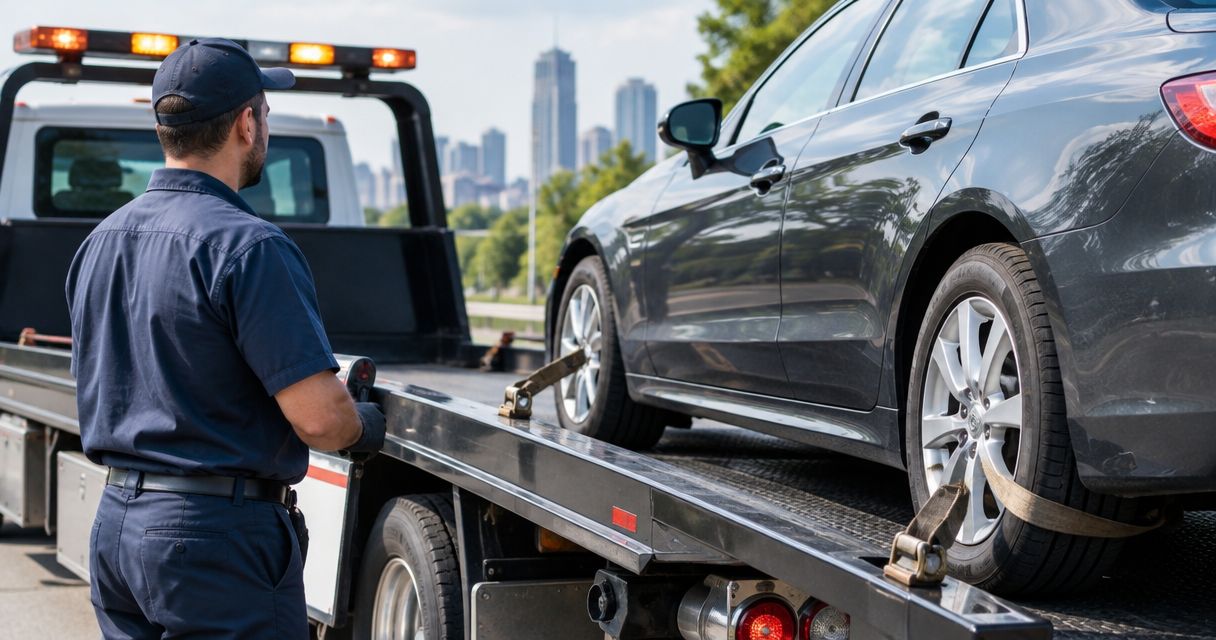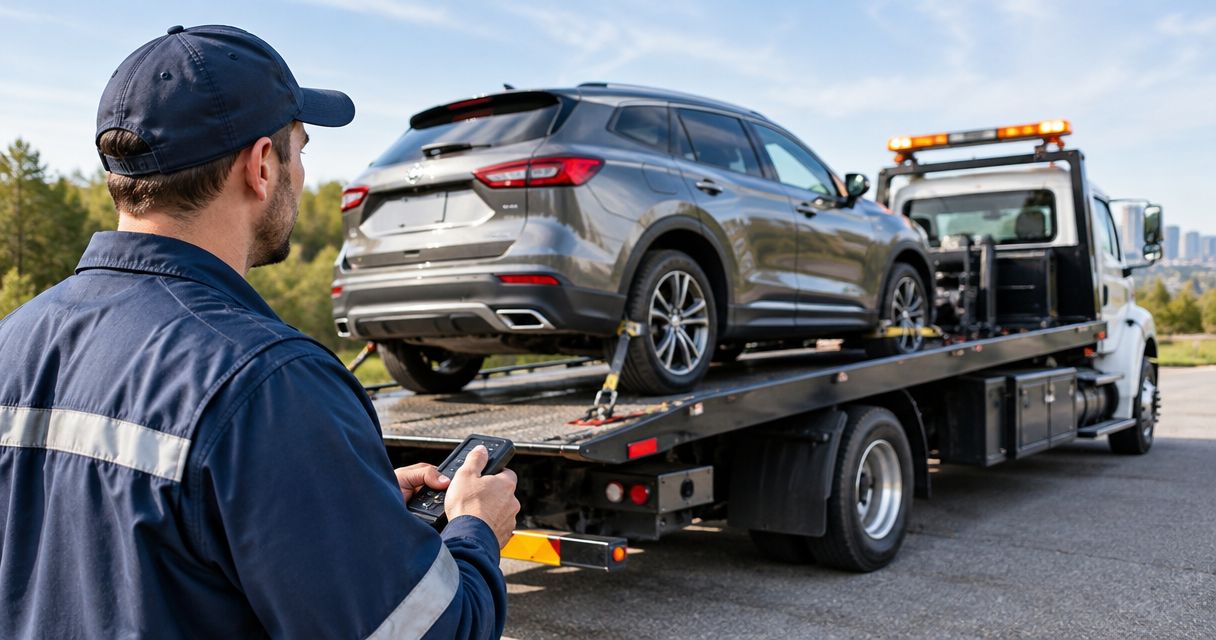
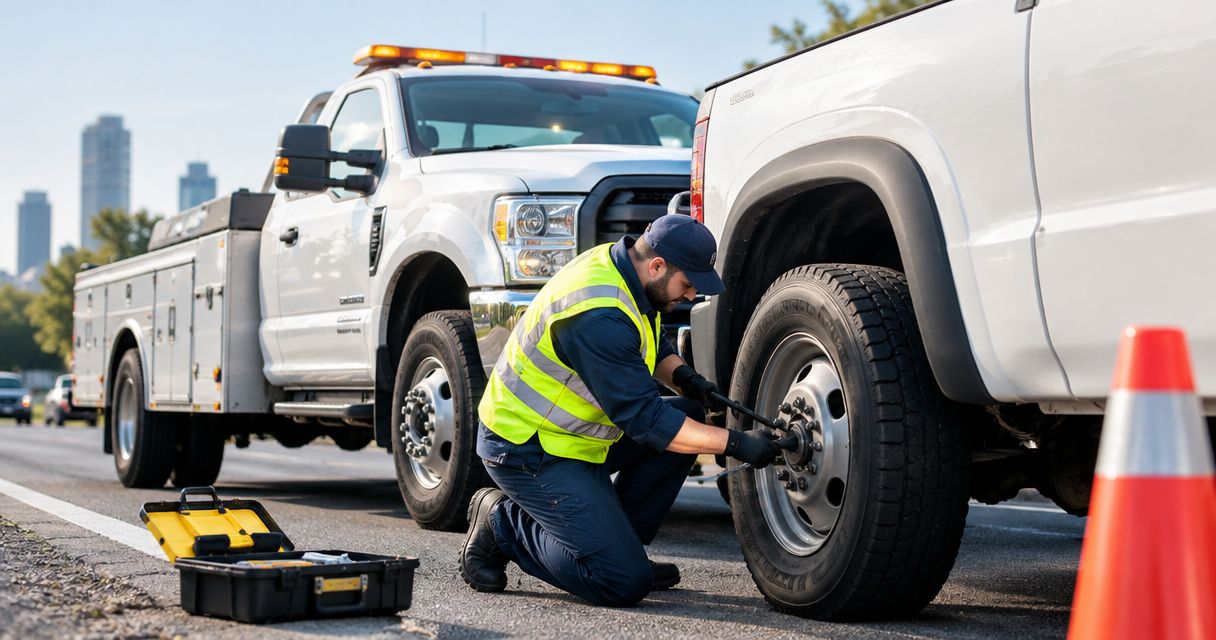
Municipal fleet roadside assistance is mobile help and towing that gets disabled public-service vehicles out of danger and back into service. Stranded in Atlanta? Secure the scene, notify your dispatcher, and request help matched to the vehicle—not just the symptom.
- Roadside assistance for municipal fleets starts with scene safety, vehicle identification, and dispatch authorization.
- Atlroadside provides Atlanta roadside assistance 24/7, including fuel delivery, jump starts, lockouts, tire changes, and heavy-duty recovery.
- Request heavy-duty towing for a disabled heavy vehicle; do not treat every fleet breakdown as a passenger-car call.
- Record the incident and repair outcome before returning the vehicle to service.
Need help now? Contact Atlroadside and give your location, vehicle type, and immediate hazard. Tell your municipal dispatcher who is responding and where the vehicle will go if towing is needed.
Why roadside assistance matters for municipal fleets
A disabled municipal vehicle creates two jobs: protect the driver and keep the assigned public service covered. A replacement vehicle or reassigned crew handles the second job. Roadside assistance handles the breakdown.
Your dispatch process must distinguish a passenger car from a loaded work truck. Fuel type, vehicle configuration, access, and towing destination affect the request. Municipal approval procedures also matter: a driver needs to know who can authorize service outside normal office hours.
Atlroadside is best suited to Atlanta municipal fleets needing 24/7 roadside assistance and heavy-duty recovery. Its stated services cover jump starts, lockouts, tire changes, fuel delivery, towing, and recovery across the Atlanta metro. Confirm the specific vehicle and recovery requirements when you request service.
For your 2026 fleet plan, separate an emergency response from a repair decision. Getting a vehicle started or moved does not establish that it is ready to finish its shift.
Get the right help in six steps
Secure the scene before arranging service
Stop in a safe location when the vehicle remains controllable. Activate hazard lights. Do not send a crew member into moving traffic to inspect a tire, guide a tow truck, or retrieve loose equipment.
If there is an immediate threat to life, a fire, an injury, or a dangerous traffic obstruction, contact emergency services. Roadside dispatch is not a substitute for emergency response. Tell your fleet dispatcher about the hazard as well as the mechanical problem.
Whether to stay inside or move away depends on the scene. Do not cross active lanes or stand between vehicles. Follow emergency responders’ directions and your department’s safety procedure.
- Report injuries, smoke, fire, leaking fluids, or blocked lanes first.
- Give the road name, travel direction, and nearest safe reference point.
- Describe whether the vehicle is on a shoulder, in a lane, or inside a work site.
- Keep passengers and crew away from the work area.
- Stop troubleshooting when traffic or the vehicle’s condition makes it unsafe.
Identify the vehicle and the failure
Use your fleet record, vehicle label, or dispatch system to identify the unit before calling. A municipal asset number helps your department find the record; the responding provider also needs the actual vehicle type and configuration.
Describe what happened. A vehicle that will not crank is a different request from one that stopped while driving. A tire that is flat is different from a tire failure with wheel damage. Do not turn an uncertain symptom into a confident diagnosis.
Your 2026 driver instructions should put fuel identification ahead of any delivery request. State gasoline or diesel from the vehicle’s information, not from a guess. For a heavy truck, report its body type, load, and attached trailer or equipment.
- Identify the unit, make, model, and vehicle class.
- State the verified fuel type when requesting delivery.
- Describe warning messages, starting behavior, or visible damage.
- Report cargo, mounted equipment, trailers, and passengers.
- Say whether the vehicle rolls, steers, and brakes normally, if known.
Request the service that fits the vehicle
Start with a direct call and the facts you have. You do not need special software to arrange help. Your dispatcher can read from a short incident sheet and record the provider’s answers.
Ask for the service, then confirm suitability. Fuel delivery addresses an empty tank; it is not engine repair. A jump start addresses a starting problem but does not diagnose its cause. A lockout request needs authorized access to the vehicle. A tire change requires a suitable spare and safe working conditions.
Atlroadside provides roadside assistance 24 hours a day, 7 days a week, including fuel delivery, jump starts, lockouts, tire changes, and towing. Its heavy-duty towing and recovery capability is relevant when the disabled unit is a heavy commercial vehicle. Describe the rig and location before dispatch; do not assume every job has the same requirements.
- Request gasoline or diesel delivery using the verified fuel type.
- Explain whether a starting failure followed a stall or occurred while parked.
- Confirm that the person requesting a lockout is authorized to access the vehicle.
- Report spare-tire availability without promising that it is usable.
- Request heavy-duty towing or recovery when the vehicle and scene require it.
Request fleet roadside help
Give your Atlanta location, vehicle type, and problem. Roadside assistance is available 24/7.
Give dispatch a complete handoff
A useful handoff answers the questions that determine where help goes and what the job involves. Read the details aloud. Ask the provider to repeat the location and vehicle information before you end the call.
A map pin helps, but it does not explain a locked gate, low clearance, or the opposite side of a divided highway. Describe those obstacles. Keep the driver reachable and tell dispatch if the vehicle moves after the request.
Use the same handoff for a city car, service van, or heavy truck. The details change; the structure stays simple. Keep sensitive municipal information out of unnecessary messages and photographs.
- Location: Road, direction, landmark, entrance, and safe approach.
- Vehicle: Unit identification, vehicle class, body type, and attached equipment.
- Problem: Observed symptom, requested service, and immediate hazards.
- Access: Gates, clearance, ground conditions, and crew contact.
- Authorization: Approving person, permitted work, and towing destination.
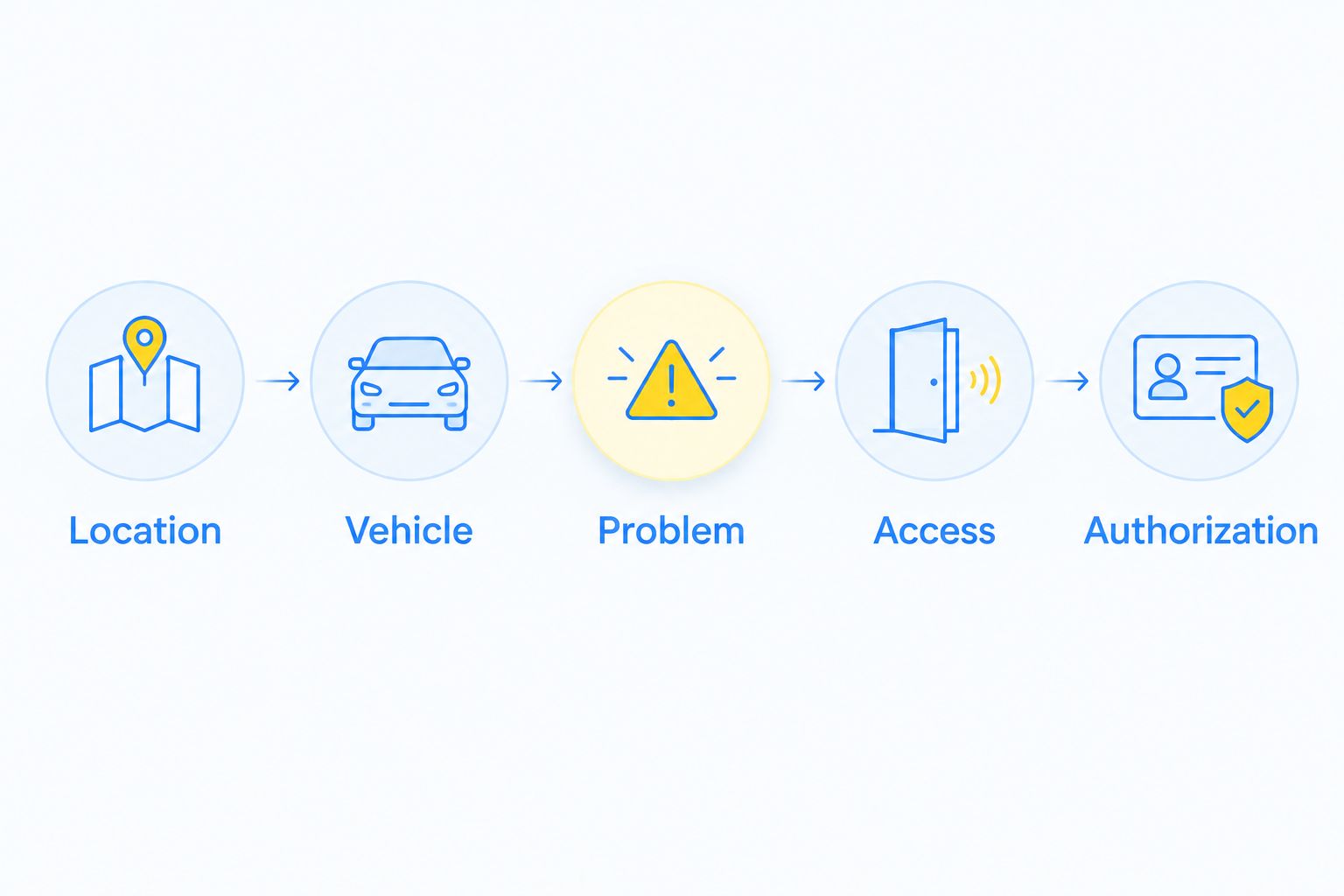
A complete handoff is not a long conversation. It is a short conversation with the necessary facts. Store this checklist in your 2026 driver instructions so a night-shift operator does not have to reconstruct the process under pressure.
Authorize the work and plan the vehicle’s destination
Follow your municipality’s purchasing and approval procedures. Identify the person who can approve roadside work, towing, or a change in destination. Make that person reachable after hours rather than leaving the driver to improvise.
For a tow, choose the receiving location before loading begins. Confirm that the destination can receive the vehicle and that someone knows it is coming. A municipal yard, fleet shop, and outside repair facility are not interchangeable destinations.
Ask what the proposed work includes and how changes will be approved. Do not assume a roadside provider has a municipal contract, accepts your department’s billing process, or can perform repairs beyond the service requested. Confirm those details directly.
- Name the approving supervisor or dispatcher.
- State the authorized service and any approval boundaries.
- Confirm the destination and receiving contact before towing.
- Arrange another vehicle or crew when the assignment still needs coverage.
- Record any change in service scope or destination.
Close the incident before releasing the vehicle
After roadside service, tell your fleet dispatcher what was done and whether the vehicle is moving, awaiting repair, or being towed. Do not close the incident simply because the responding truck has left.
Use a paper log or shared spreadsheet first. Record four timestamps: breakdown reported, help requested, provider arrived, and vehicle released or delivered. Those records let you review your own response process without relying on an advertised arrival promise.
For your 2026 review, separate roadside resolution from maintenance completion. A repeated no-start, recurring fuel shortage, or damaged tire needs follow-up. Your fleet maintenance authority decides whether further inspection is required before the unit returns to duty.
- Record the service performed and any unresolved symptoms.
- Save the authorization, service documentation, and receiving details.
- Assign maintenance follow-up to a named person.
- Confirm the vehicle’s status with dispatch and the affected department.
- Update the fleet-manager roadside procedure when the incident exposes a gap.
Compare your municipal fleet response options
Choose by the job, not by the vehicle’s department. A staff car with an empty tank needs a different response from a heavy truck that cannot move. Your fleet plan can combine internal staff, outside roadside help, and towing rather than forcing every incident through one route.
The table compares response methods, not contract terms. Verify vehicle acceptance, authorization, and service scope before assigning the call.
| Option | Best for | Practical advantage | Key limitation |
|---|---|---|---|
| Municipal maintenance staff | Depot-based checks and faults within staff capability | Keeps assessment with people who know your units and maintenance records | Roadside response depends on staff availability, training, and equipment |
| Mobile roadside assistance | Fuel shortages, lockouts, starting problems, and suitable tire changes | Brings the requested service to the disabled vehicle | Does not replace workshop diagnosis or every roadside repair |
| Atlroadside roadside assistance and towing | Atlanta municipal vehicles needing 24/7 help, including heavy-duty towing or recovery | Offers fuel delivery, jump starts, lockouts, tire changes, and towing across the metro | Confirm vehicle-specific requirements and municipal authorization arrangements directly |
| Towing to a fleet shop | Vehicles that cannot safely continue or need shop work | Moves the unit to an approved receiving location | Does not complete the mechanical repair |
| Heavy-duty recovery | Disabled heavy vehicles or situations requiring recovery rather than a routine tow | Matches the request to the vehicle and recovery problem | Requires accurate information about the load, access, and scene |
Build your 2026 call sheet around these distinctions. Keep emergency contacts, internal approval contacts, and receiving locations together. A provider list alone does not tell a driver what to authorize.
Common mistakes municipal fleets make
Treating every unit like a passenger car
A generic request for a tow leaves out the information needed for a work truck or heavy vehicle. Report the vehicle class, body, load, and attached equipment. Do not expect the provider to infer those details from your asset number.
Leaving after-hours approval unclear
A stranded driver needs an authorized decision-maker, not a chain of unanswered office numbers. Assign an after-hours approver and a backup through your department’s process. Put both roles in the driver instructions.
Sending fuel without verifying the type
Do not request fuel based only on the department or vehicle’s appearance. Confirm gasoline or diesel from the unit’s information. If the engine still will not run after delivery, report that result instead of repeating the same request.
Towing before confirming the receiving location
An unconfirmed destination creates another handoff problem. Get the receiving contact and access instructions before the tow. Notify the destination if the plan changes.
Calling a temporary fix a completed repair
A jump start or tire change resolves the immediate task, not every underlying defect. Log the symptoms and service performed. Let fleet maintenance decide what inspection is needed before normal duty resumes.
FAQ
What's the first thing to do when a municipal fleet vehicle breaks down?
Secure the scene and notify your municipal dispatcher before troubleshooting. Report the location, vehicle type, and immediate hazards; contact emergency services if there is a threat to life, fire, injury, or dangerous obstruction.
Can municipal fleets get roadside assistance at night in Atlanta?
Atlroadside provides Atlanta roadside assistance 24/7, including fuel delivery, jump starts, lockouts, tire changes, and towing. Give the provider your vehicle details and have your department's service authorization ready.
Can you request diesel delivery for a municipal truck?
Yes, diesel delivery is part of the stated service offering. Verify the truck's fuel type and report its exact location and starting condition when requesting help.
Is mobile roadside assistance better than towing for a city vehicle?
Mobile roadside assistance fits a problem that can be addressed safely at the vehicle, such as fuel delivery or an authorized lockout. Request towing when the vehicle cannot safely continue or needs work at a receiving shop.
What should dispatch know before sending help to a heavy municipal vehicle?
Dispatch needs the vehicle class, body type, load, attached equipment, location, and observed problem. Include access restrictions and immediate hazards so the provider can assess towing or recovery requirements.
Does a jump start mean a municipal vehicle is ready for duty?
No, a successful jump start does not establish the cause of the starting failure. Record the symptoms and follow your fleet maintenance procedure before returning the unit to normal service.
Does roadside assistance automatically include municipal billing arrangements?
No, confirm billing and authorization arrangements directly before requesting service. Do not assume a provider has a municipal contract or accepts your department's purchasing process.
One last thing
Name the receiving person before the vehicle leaves. A towing destination is not a complete handoff until someone can receive the unit, document its condition, and take responsibility for the next step. Put that name in the incident record—not just the building address.