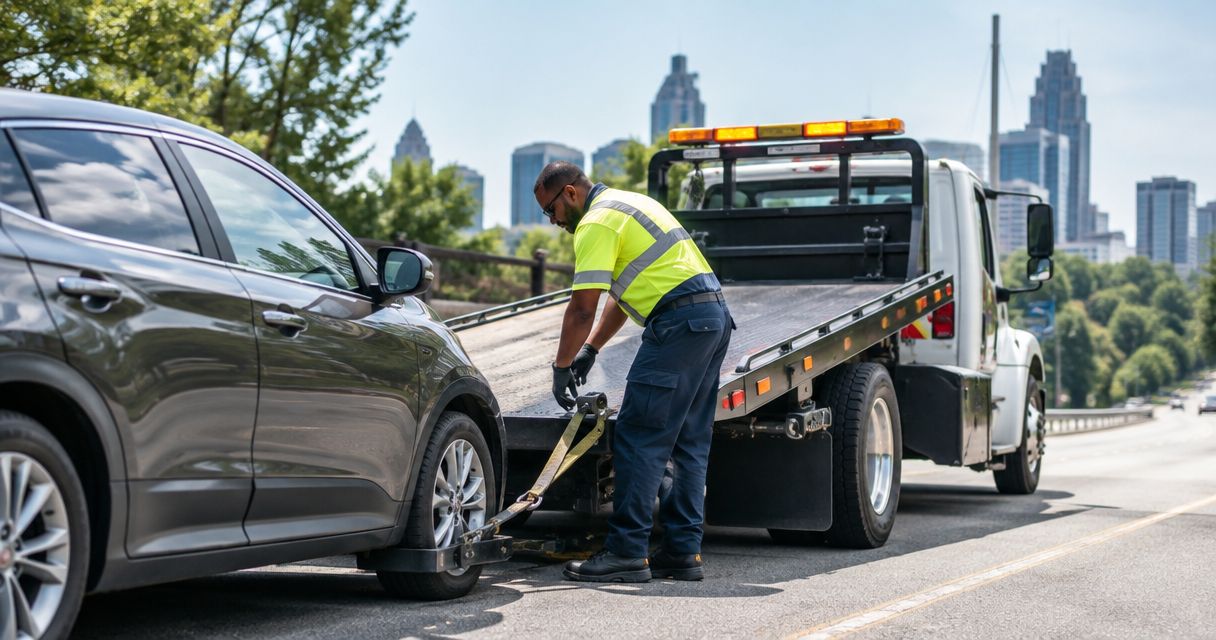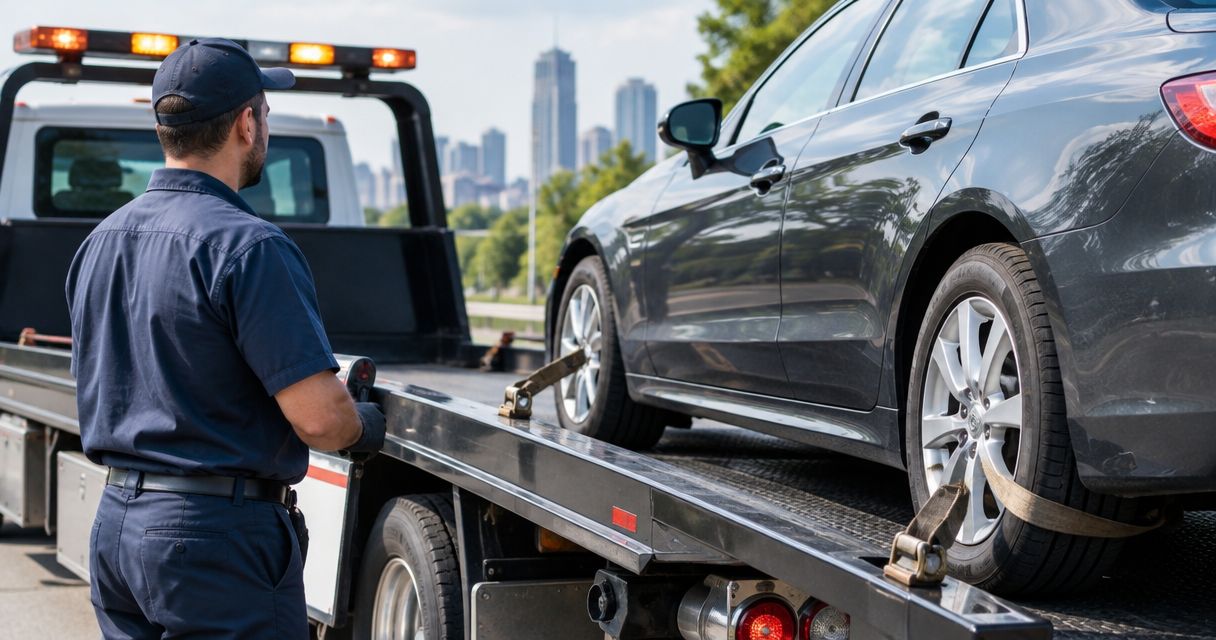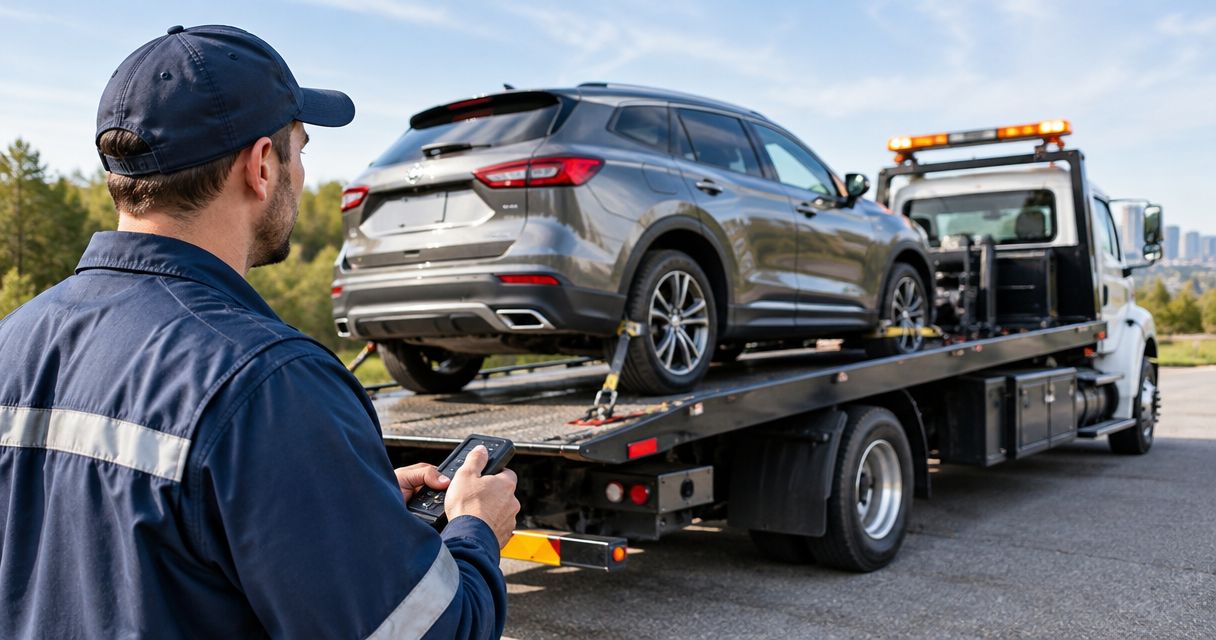
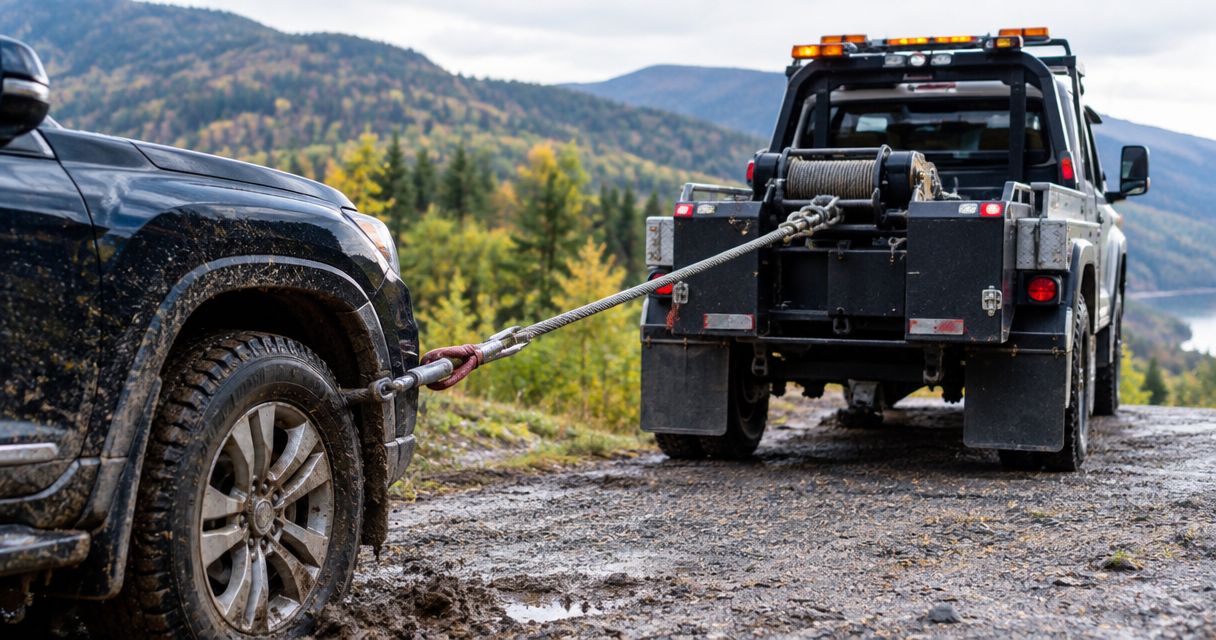
Stuck in mud or a ditch? Winch-out recovery in Georgia needs a quote based on your vehicle, its position, and safe access to the recovery site—not a generic statewide estimate. Before you authorize the job, confirm whether the quote covers recovery only or also includes towing afterward.
- How much does winch out recovery cost? Get a site-specific quote before authorizing recovery.
- Atlroadside provides 24/7 roadside assistance and heavy-duty towing and recovery across the Atlanta metro.
- Tell dispatch your vehicle type, exact location, ground conditions, and whether you need towing afterward.
- Stop spinning the tires. Keep people clear of recovery equipment and tensioned lines.
Need help now? Contact Atlroadside and describe what is stuck, where it is, and whether anyone is in danger. Service is available 24/7 across the Atlanta metro, including heavy-duty towing and recovery for commercial vehicles.
How much does winch-out recovery cost in Georgia?
Get a quote for the actual recovery—not just a truck arriving. A vehicle sitting upright beside firm pavement presents a different recovery problem from a loaded rig down an embankment. The quote needs to match that problem.
For a 2026 recovery request, ask dispatch to separate the work into clear parts. You need to understand what gets your vehicle unstuck, what happens afterward, and what requires further approval.
| Part of the job | What to clarify before authorizing |
|---|---|
| Dispatch and site assessment | What does the quoted service include before recovery begins? |
| Vehicle recovery | Does the scope cover the vehicle's current position and ground conditions? |
| Additional recovery work | What happens if the situation differs from your description? |
| Towing afterward | Is transport included, and to what destination? |
| Vehicle condition | What happens if the recovered vehicle cannot safely drive away? |
Do not compare quotes until the providers are quoting the same work. A recovery-only quote and a recovery-plus-tow quote are not directly comparable.
Why this matters when you're stuck
Getting back onto pavement is not the same as being ready to drive. A damaged tire, fluid leak, steering problem, or underbody impact needs attention before you pull into traffic.
Tell dispatch about visible damage before the recovery starts. If you already know the vehicle cannot drive, request recovery and towing together rather than treating transport as an afterthought.
Your priority is safety. If there is an injury, fire, rising water, or an immediate traffic hazard, contact emergency services before sorting out a recovery quote.
Why winch-out recovery quotes vary
The recovery plan follows the vehicle and the ground around it. These are the details that matter when you call:
- Vehicle and load. Identify the car, pickup, van, or commercial truck. For a working rig, explain whether it is loaded and whether a trailer is attached.
- Vehicle position. Say whether the vehicle is upright, leaning, resting on its underside, or down a slope. Do not describe a vehicle as merely stuck if it has rolled or tipped.
- Ground conditions. Report mud, sand, loose gravel, standing water, or a soft shoulder. Explain whether the wheels are buried or still visible.
- Access. Describe gates, narrow entrances, low overhead clearance, nearby traffic, and whether firm ground is available near the vehicle.
- Work after recovery. Say whether you expect to drive away or need transport. Include visible damage and the intended towing destination.
Describe what you can see. Let the recovery operator choose the method. You do not need to decide which truck or rigging arrangement will work.
Photos help explain the scene, but only take them from a safe place. Do not walk into traffic, down an unstable embankment, or through water to improve the picture.
Recovery only, recovery plus towing, or heavy-duty recovery?
Ask for the service that matches your situation. These are different scopes of work, not interchangeable names for the same job.
| Service scope | Best for | What it addresses | Limitation to confirm |
|---|---|---|---|
| Recovery only | A stuck vehicle that can safely drive afterward | Moving the vehicle out of its stuck position | Recovery does not establish that the vehicle is roadworthy |
| Recovery plus towing | A stuck vehicle with damage or a mechanical problem | Extraction followed by transport | Confirm the destination and transport scope |
| Heavy-duty recovery | Semi-trucks and other heavy commercial vehicles | Recovery planning for the commercial vehicle and its position | Dispatch needs load, trailer, access, and vehicle-condition details |
Recovery only: confirm the stopping point
Ask what counts as a completed recovery. You want a clear understanding of where the vehicle will be placed and what happens if it still cannot move under its own power.
The advantage is a scope focused on getting unstuck. The limit is just as clear: recovery does not repair damage or replace a safety check before driving.
Recovery plus towing: name the destination
If the vehicle has visible damage or cannot run, tell dispatch before a truck is assigned. Give the destination you want, or explain that you still need to arrange one.
Combining the requests lets dispatch plan for both tasks. You still need confirmation that the quote covers transport, not just extraction.
Heavy-duty recovery: describe the whole rig
For a semi-truck, report the tractor, trailer, load status, and how the combination is positioned. Mention shifted cargo, a leaning trailer, blocked access, or visible damage without approaching an unstable rig.
Atlroadside is best suited to Atlanta drivers and fleets needing 24/7 roadside assistance and heavy-duty recovery. Confirm the recovery scope directly; that service capability is not a substitute for assessing your particular scene.
How to request a winch-out quote in 2026
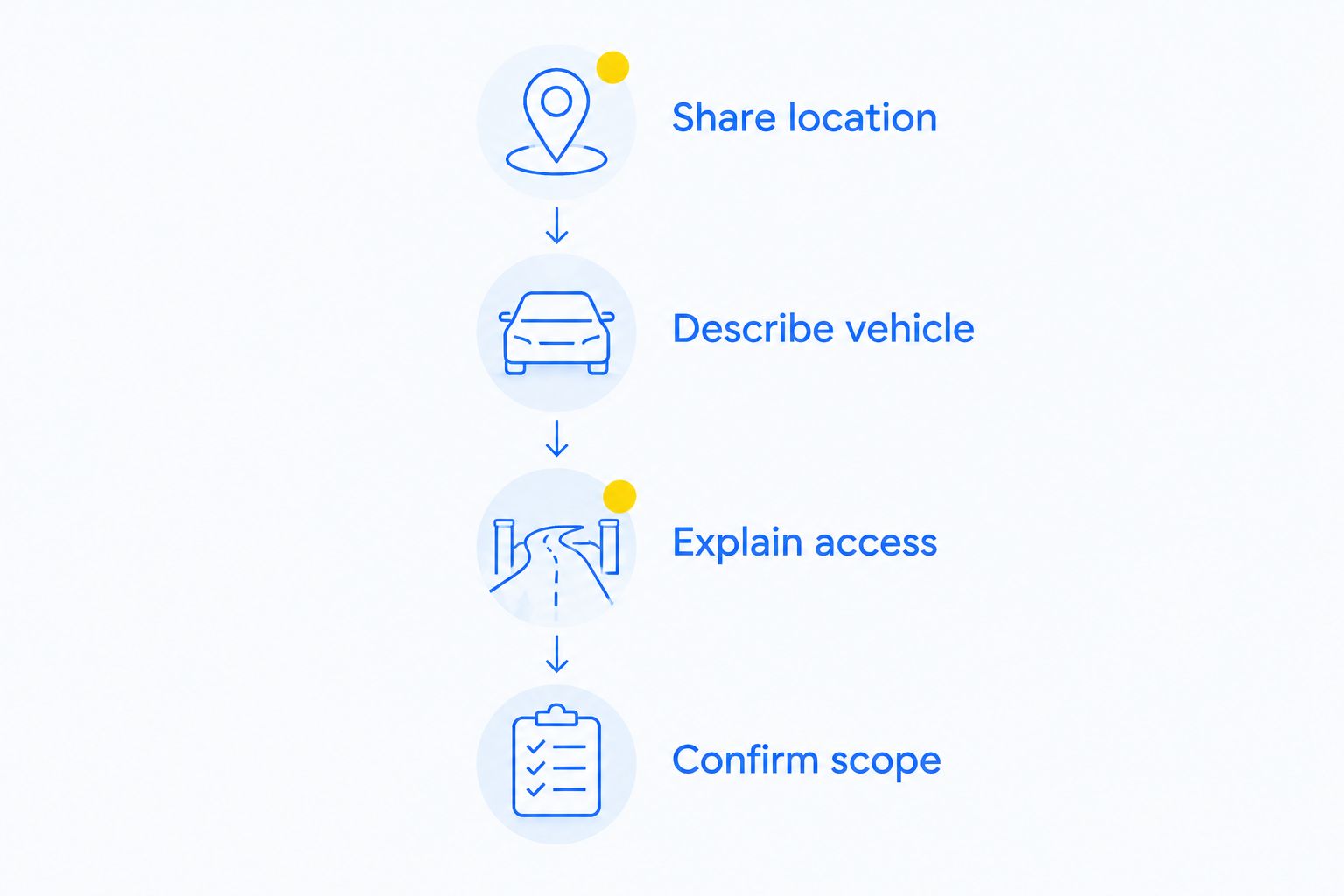
Keep the call practical. Start with the location and immediate danger, then explain the vehicle and ground conditions.
- Share location. Give your direction of travel, nearest exit or landmark, and whether you are on a road, private drive, worksite, or parking area. Share a location pin if dispatch requests one.
- Describe vehicle. Give the vehicle type and explain whether it is upright, damaged, loaded, or attached to a trailer. Tell dispatch if wheels are buried or the underside is resting on the ground.
- Explain access. Describe the surface, slope, nearby obstacles, and where a recovery vehicle can approach. Mention locked gates or restricted entrances before help is sent.
- Confirm scope. Ask what the quote includes, whether towing is included, and when additional authorization would be needed. Repeat the agreed job back before approving it.
You can read this straight from your phone: My vehicle is stuck at this location. It is upright or leaning, the ground is muddy or firm, and I do or do not need towing afterward.
For a commercial vehicle, identify who can approve the work. A driver, fleet manager, and vehicle owner should not be working from different instructions while recovery is being arranged.
Request recovery help now
24/7 Atlanta metro roadside assistance, towing, and heavy-duty recovery for drivers and fleets.
What should you do while waiting for recovery?
Stop trying to power your way out. Spinning tires can dig further into soft ground. Repeated attempts can also change the vehicle's position before the operator arrives.
Keep passengers and bystanders away from the recovery area. Never stand beside or step over a tensioned recovery line, and do not attach improvised ropes, chains, or straps to bumpers or suspension parts.
Whether you should stay inside or move away depends on the immediate scene. Traffic, fire, water, and vehicle stability change that decision; follow emergency-service instructions when those hazards are present.
Do not crawl beneath a stuck vehicle to inspect it. Tell dispatch what you can see safely, then leave the attachment points and recovery setup to the operator.
Can I use another pickup to pull my vehicle out?
Do not improvise a recovery with another pickup and an unverified attachment point. A failed connection or tensioned line can injure people nearby, and a second vehicle can become stuck too.
Use the waiting time to explain access and arrange any required towing. Avoid turning one stuck vehicle into a larger recovery problem.
Will roadside coverage pay for winching?
Check your actual policy or membership terms before assuming recovery is covered. Ask specifically about the vehicle's location, off-road restrictions, authorization requirements, and reimbursement paperwork.
Keep the service description and receipt. Coverage decisions belong to your provider; do not treat a general roadside-assistance benefit as approval for this recovery.
Your 2026 recovery authorization checklist
Before you approve the work, make sure you can answer these questions:
- Does dispatch understand the vehicle's current position and condition?
- Does the quoted scope include getting the vehicle to a safe stopping point?
- Is towing included or a separate service?
- What happens if the scene requires work outside the agreed scope?
- Who has authority to approve changes?
- What documentation will you receive after the job?
For fleets, keep the driver and the approving manager on the same page. Record the unit identification, location, agreed service, and destination so the recovery request does not lose essential details between calls.
FAQ
How much does winch out recovery cost in Georgia in 2026?
Winch-out recovery needs a site-specific quote based on the vehicle, its position, ground conditions, and access. Confirm whether the quote includes towing afterward before you authorize the job.
Is winch-out recovery the same as towing?
No. Winch-out recovery gets a stuck vehicle out of its position, while towing transports the vehicle. Ask for both if your vehicle cannot safely drive after recovery.
Can Atlroadside help with a stuck semi-truck?
Atlroadside provides heavy-duty towing and recovery across the Atlanta metro. Tell dispatch the truck and trailer configuration, load status, location, and visible hazards so the recovery request matches the scene.
What should I send when asking for a recovery quote?
Send your exact location, vehicle details, ground conditions, and a clear description of how the vehicle is stuck. Share photos only from a safe position, and state whether you need towing afterward.
Does car insurance cover getting pulled out of mud?
Coverage depends on your policy and its recovery restrictions. Ask your insurer about the specific location and circumstances, authorization requirements, and any documents needed for reimbursement.
Can I drive immediately after a winch-out?
Only drive when the vehicle is safe to operate. Tell the operator about leaks, tire damage, steering trouble, or underbody impacts, and arrange towing if the vehicle cannot safely continue.
One last thing
The detail to settle before recovery starts is where your vehicle goes afterward. Tell dispatch whether you need it placed on safe ground or transported to another destination.
For your 2026 recovery request, make that decision explicit. Getting unstuck and getting home are separate jobs unless both are included in the agreed scope.