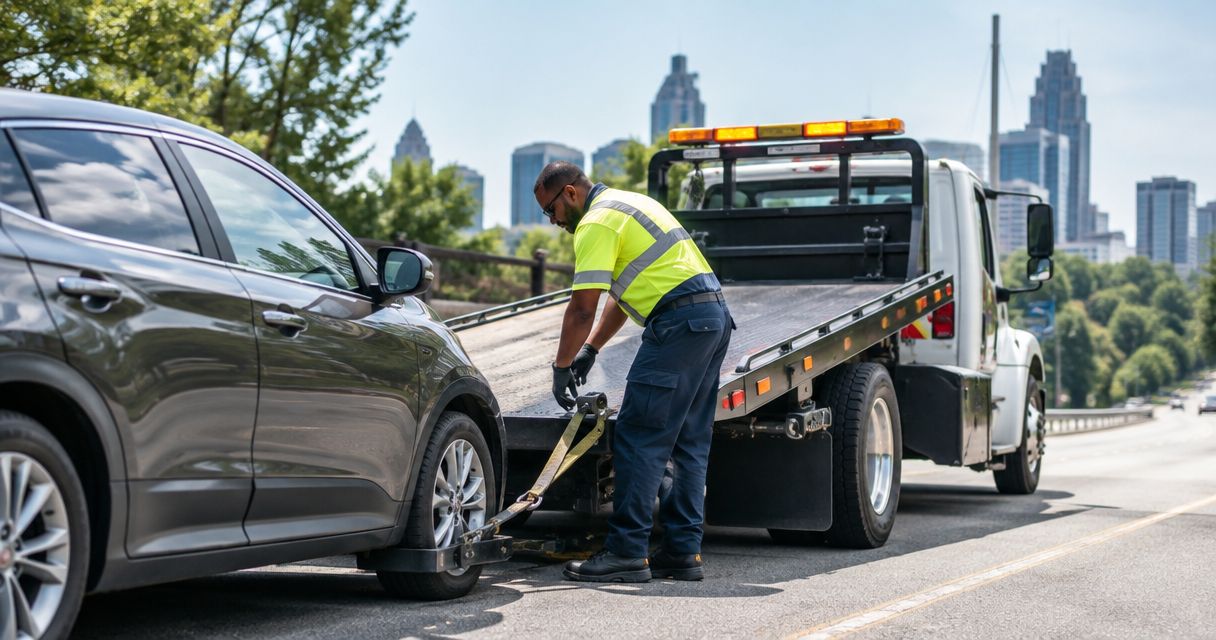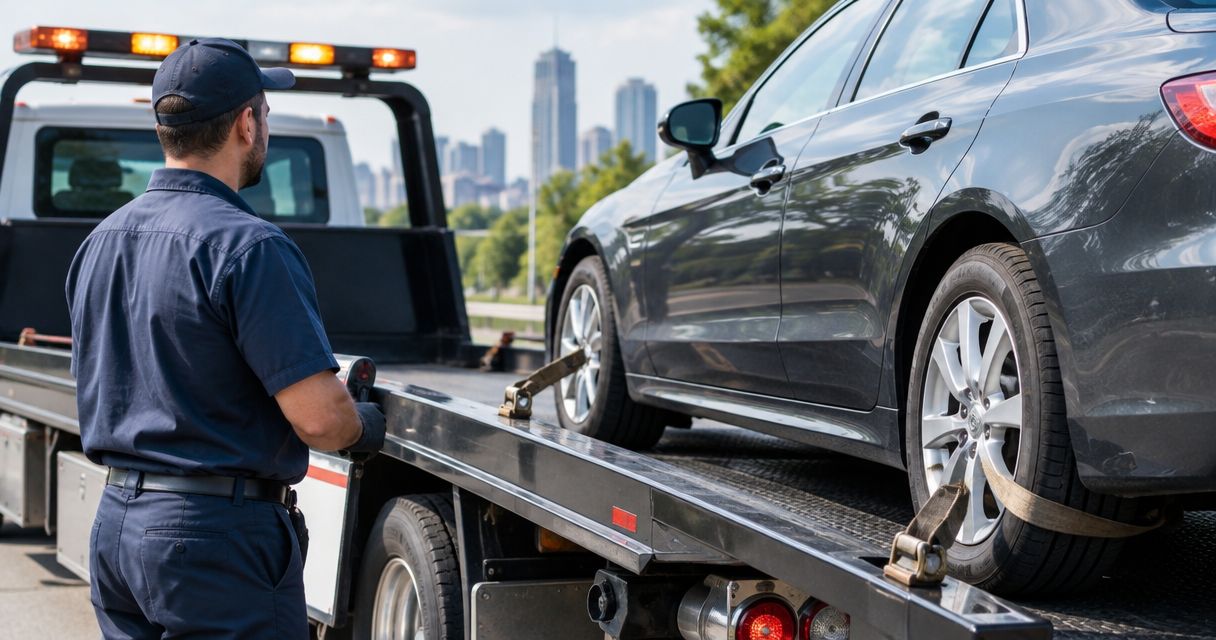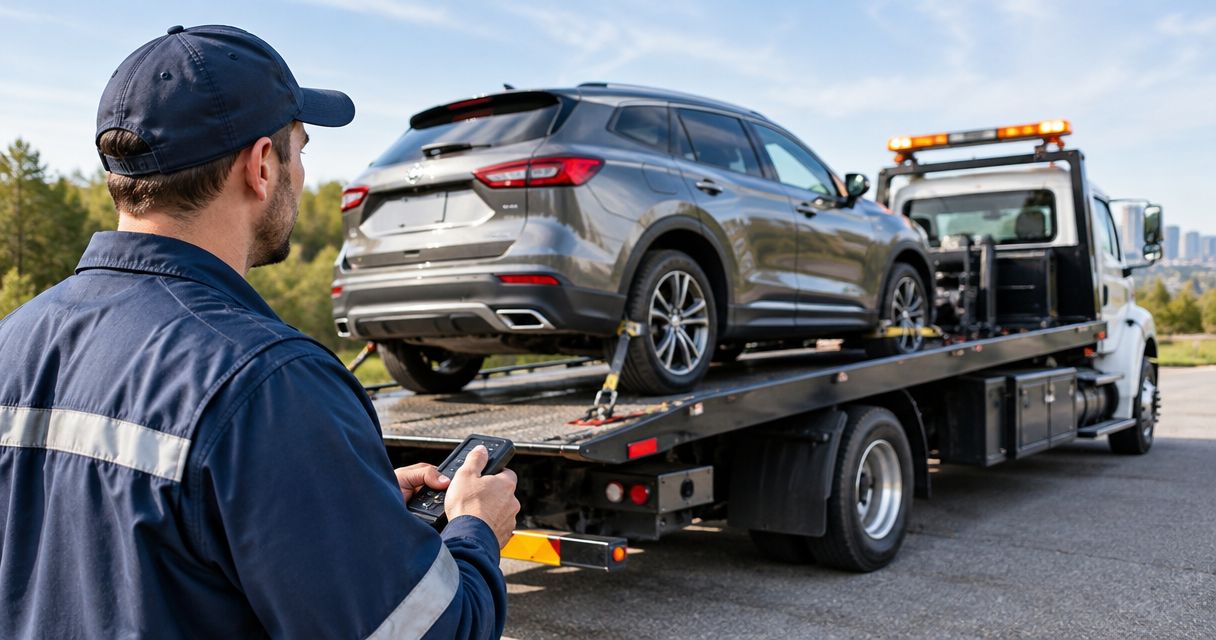
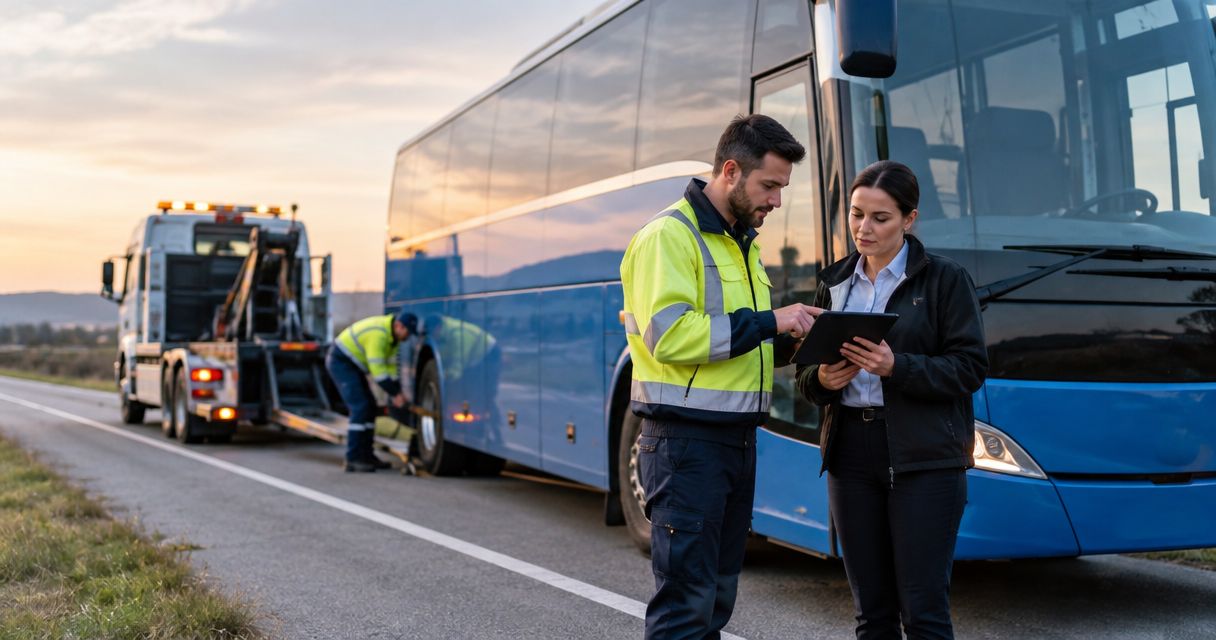
Charter bus roadside assistance is breakdown support that helps you protect passengers and arrange suitable repair or recovery; if your bus is stranded, secure the scene and contact dispatch now. Start with Atlroadside for 24/7 Atlanta metro roadside assistance and heavy-duty towing, then confirm what your specific bus needs before a truck is assigned.
- Roadside assistance for charter bus companies starts with passenger safety, accurate location details, and bus-capable dispatch.
- Atlroadside provides 24/7 roadside assistance and heavy-duty towing across the Atlanta metro.
- Confirm bus compatibility before authorizing a jump start, tire service, fuel delivery, or recovery.
- Arrange passenger transport separately from vehicle recovery; do not assume a tow includes transportation.
Why roadside assistance matters for charter bus companies
A stranded charter bus creates two jobs at once: managing people and recovering a commercial vehicle. Getting the engine running does not resolve a medical concern, an unsafe waiting location, or a missed passenger connection.
Your 2026 breakdown plan needs separate instructions for the driver, fleet dispatcher, and trip organizer. One person should coordinate vehicle service while another handles passenger updates and replacement transportation.
Atlroadside is best for Atlanta charter operators seeking 24/7 roadside assistance and heavy-duty towing. Confirm bus-specific compatibility when you call; a general service listing is not confirmation that every roadside task can be completed on your coach.
How to handle a charter bus breakdown
1. Secure the scene before troubleshooting
Stop operating the bus when continuing would put passengers or other road users at risk. Use the safest reachable stopping location without attempting to force a damaged bus farther down the road.
Call 911 for fire, injuries, an immediate traffic hazard, or another emergency. Roadside dispatch does not replace emergency services, and an approaching tow truck does not make an exposed shoulder safe.
Do not automatically unload everyone beside moving traffic. Base the passenger decision on fire or smoke, the bus's position, safe exit access, and instructions from emergency responders. Keep mobility needs and children in that decision, not as an afterthought.
- Turn on hazard lights when you can do so safely.
- Report whether the bus blocks a travel lane.
- Keep passengers away from traffic and roadside work.
- Follow your carrier's emergency procedures and responder instructions.
- Avoid inspecting underneath the bus on the shoulder.
2. Send a complete dispatch report
Use a phone call and your existing location-sharing tools first. A saved map pin, written vehicle details, and a clear description of what happened give dispatch something useful to work with; you do not need a new fleet system to report a breakdown.
Describe symptoms rather than diagnosing a failure. Say the engine stopped, the bus will not crank, or a tire is damaged. Do not turn a guess about the battery into an instruction to send only jump-start equipment.
For your 2026 driver packet, keep the dispatch report in the same format for every bus. Ask the receiving dispatcher to repeat the location and requested service back to you.
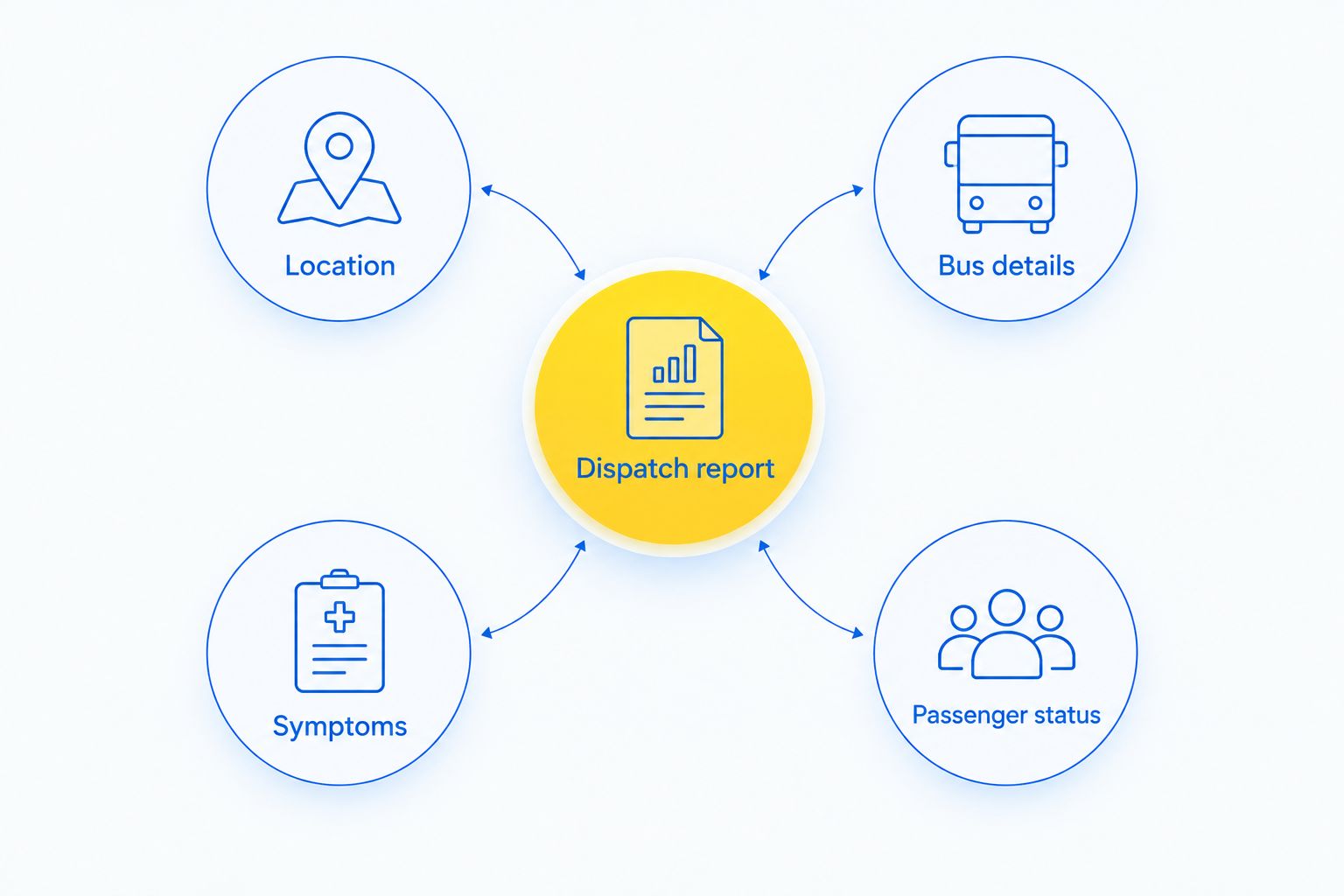
A useful report covers the vehicle and the people waiting with it. Keep the following details together rather than spreading them across separate messages.
- Location: road, direction of travel, nearest exit, and map pin.
- Bus details: make, model, fleet number, and vehicle information from your records.
- Symptoms: warning messages, sounds, visible damage, and whether the engine runs.
- Passenger status: people aboard, urgent medical concerns, and accessibility needs.
- Access conditions: shoulder space, parking restrictions, barriers, or limited clearance.
- Callback contact: the person staying available to coordinate the response.
3. Match the service to the bus
Check your vehicle manual and existing fleet support contacts before authorizing hands-on work. A car-style jump start, roadside wheel change, or general tow request is not a substitute for checking the requirements of a commercial coach.
Atlroadside's roadside assistance services include fuel delivery, jump starts, lockout service, tire changes, towing, and heavy-duty recovery. Use the call to establish which service fits your bus and whether additional specialist support is needed.
Ask for a bus-capable response, not just the nearest truck. Tell dispatch about steering, brake, suspension, wheel, or underbody damage before equipment is selected. Never treat the service category alone as proof of compatibility.
- Fuel shortage: identify diesel or gasoline from the vehicle's records.
- No-start condition: report battery-system information and warning messages.
- Tire damage: provide the tire position and tire information if safely accessible.
- Lockout: explain the door problem and whether anyone is trapped inside.
- Recovery: describe the bus's position, visible damage, and access restrictions.
Request Atlanta roadside help
Share your bus location, symptoms, and passenger status. Confirm the right service before dispatch.
4. Separate passenger care from bus recovery
Start with your trip manifest and established operating contacts. Assign someone to account for passengers, speak with the group organizer, and arrange replacement transportation while the driver remains available for vehicle questions.
Do not promise a departure time based on an unconfirmed roadside arrival estimate. Recovery, diagnosis, repair, and passenger transfer are different stages. Tell passengers what is confirmed and when you will provide another update.
Ask emergency responders for direction when there is no safe waiting or transfer area. A replacement bus arriving nearby does not make boarding beside fast-moving traffic acceptable.
- Confirm the passenger count against the trip manifest.
- Identify medication, mobility, and other urgent passenger needs.
- Keep the group organizer informed through one designated contact.
- Arrange replacement transportation independently of the tow request.
- Track luggage and belongings during any transfer.
- Use a safe boarding location rather than an exposed shoulder.
5. Confirm recovery requirements before authorizing a tow
Read the manufacturer's towing instructions and send relevant vehicle information to the recovery provider. Let the qualified operator determine the recovery method after reviewing the bus and the scene.
Ask what must happen before movement, including passenger transfer, vehicle preparation, and destination approval. Do not have passengers remain aboard during towing unless the qualified operator and applicable requirements expressly permit it.
For 2026 fleet procedures, make destination approval part of the dispatch handoff. A bus moved successfully to a location that cannot accept it still leaves your operation with another problem to solve.
- Confirm the provider can handle your specific bus and condition.
- Report disabled steering, brake issues, or damaged running gear.
- Share manufacturer recovery instructions when available.
- Confirm where passengers will wait before recovery starts.
- Verify that the receiving facility accepts the bus.
- Record who authorized the movement and destination.
6. Approve the work and keep one incident record
Use your existing dispatch log, shared document, or fleet record first. Record the service requested, provider confirmation, authorization, and any change in the plan. A simple record everyone can read is more useful than scattered calls nobody documents.
Ask for the scope of work before approving service. Separate an attempt to restore operation from a confirmed repair, and ask what happens if the initial service does not resolve the breakdown.
Keep one company contact responsible for approvals. Conflicting instructions from the driver, office, and group organizer can leave the operator unclear about what work is authorized.
- Name the person allowed to approve service changes.
- Record the requested task and confirmed vehicle compatibility.
- Save dispatch updates without treating estimates as guarantees.
- Photograph visible damage only from a safe position.
- Confirm completion details and the bus's final location.
7. Clear the bus before returning it to service
A running engine is not proof that a charter bus is ready to carry passengers. Follow your carrier's maintenance and inspection procedures, and have unresolved safety concerns assessed by qualified personnel before returning the bus to service.
Keep your 2026 incident review focused on the actual failure and dispatch record. Did the driver send the right location? Did the provider receive the bus details? Did someone own passenger transport from the start?
Update the instructions that failed during the incident. Do not close the record merely because the bus left the shoulder or the passengers reached their destination.
- Document the reported fault and service performed.
- Refer unresolved warnings or repeat failures for assessment.
- Record any operating restrictions communicated by qualified personnel.
- Restock emergency supplies used during the stop.
- Update driver instructions and fleet contacts after the review.
Compare charter bus breakdown support options
Choose support by the immediate problem, not by the service label. Passenger safety, roadside assistance, mechanical diagnosis, and heavy-duty recovery serve different purposes. Your incident can require more than one.
Use this comparison when preparing your 2026 contact list. Confirm actual bus eligibility, service scope, authorization requirements, and recovery arrangements directly with each provider before relying on the option.
| Option | Best for | Main advantage | Key limitation |
|---|---|---|---|
| Internal fleet team | Initial triage and passenger coordination | Knows the bus, trip, and operating procedures | Cannot replace outside recovery equipment or emergency responders |
| Atlroadside roadside assistance | Atlanta metro operators needing 24/7 roadside or heavy-duty towing support | Offers roadside services and heavy-duty recovery | Bus-specific service compatibility requires confirmation |
| Commercial roadside plan | Operators with existing commercial coverage | Provides an established route for requesting covered help | Bus eligibility and service terms must be checked |
| Bus repair facility | Diagnosis and repair beyond roadside support | Provides a destination for mechanical assessment | Does not resolve passenger transport or scene safety by itself |
| Emergency services | Injuries, fire, and immediate road danger | Addresses urgent threats to people and traffic | Does not replace routine roadside repair or fleet dispatch |
An internal team remains useful even when you hire outside assistance. Keep the driver focused on the scene, the fleet contact focused on approvals, and the passenger coordinator focused on the group.
Common mistakes charter bus companies make
Requesting a standard tow without describing the coach
A request that says only “bus needs towing” leaves critical questions unanswered. Send vehicle details and explain whether the bus rolls, steers, or has visible damage so the provider can assess the recovery requirements.
Treating a restart as a completed repair
A jump start addresses an immediate no-start condition, not every cause behind it. Report repeat failures and remaining warning messages to your maintenance contact before putting passengers back on the road.
Combining passenger transport with the tow request
Vehicle recovery and group transportation are separate arrangements. Ask who is arranging the replacement bus, where boarding will happen, and who accounts for passengers and luggage during the transfer.
Sending different locations to different responders
A road name without direction or a usable access point can create confusion. Keep one verified location record and update everyone if the bus moves before assistance arrives.
Closing the incident before the handoff is complete
The tow leaving the scene is not the end of fleet responsibility. Confirm the receiving facility has the bus, passengers have onward transportation, and unresolved faults remain visible in the maintenance record.
FAQ
What's the best roadside assistance for a charter bus breakdown in Atlanta?
The best fit is a provider that confirms your bus's requirements and can arrange the needed service. Atlroadside offers 24/7 Atlanta metro roadside assistance and heavy-duty towing; confirm compatibility with your specific coach before dispatch.
Can roadside assistance deliver diesel to a stranded charter bus?
Fuel delivery is an available roadside service, but you must confirm diesel delivery for your specific bus when requesting help. Share the exact location, fuel type, and whether the engine stopped after running out.
Can a charter bus get a roadside jump start?
A charter bus jump start requires equipment and procedures suitable for its electrical system. Give dispatch the vehicle details and follow the manufacturer's instructions rather than treating the bus like a passenger car.
Should passengers stay on a broken-down charter bus?
The safest passenger location depends on the immediate hazard and available safe exits. Follow emergency responder instructions when there is fire, smoke, a traffic threat, or no safe place to wait outside.
Can a charter bus get a tire changed on the shoulder?
Roadside tire work depends on the bus, tire position, available equipment, and scene safety. Report those details to a commercial-capable provider and confirm whether roadside service or recovery is appropriate.
Does heavy-duty towing include a replacement bus for passengers?
Do not assume heavy-duty towing includes passenger transportation. Your fleet dispatcher or trip coordinator should arrange replacement transportation separately and confirm a safe transfer location.
What should a charter bus driver tell roadside dispatch first?
Give dispatch your exact location, immediate hazards, bus details, and passenger status first. Then describe the symptoms and provide a callback contact who will remain available during the response.
One last thing
Give every bus driver a breakdown brief before the next trip. Put vehicle details, the fleet approval contact, passenger-transfer instructions, and the dispatch checklist together where the driver can reach them without searching through office messages.
The most useful detail on that brief is not a guessed repair diagnosis. It is the information that lets the right help reach the right bus while someone else looks after the passengers.