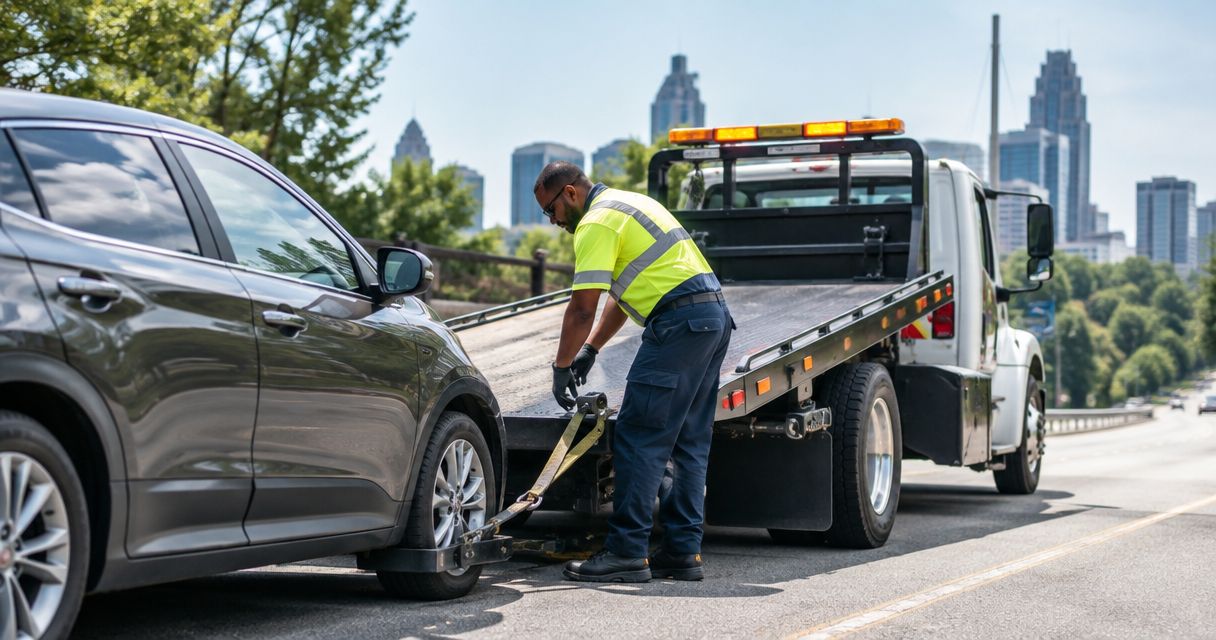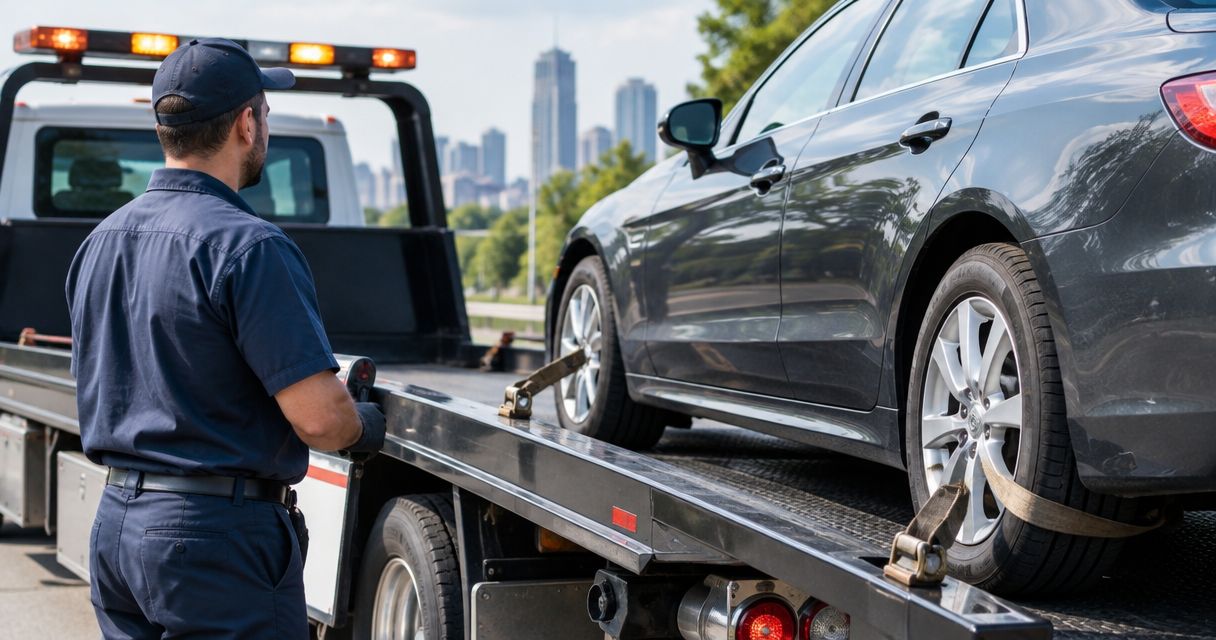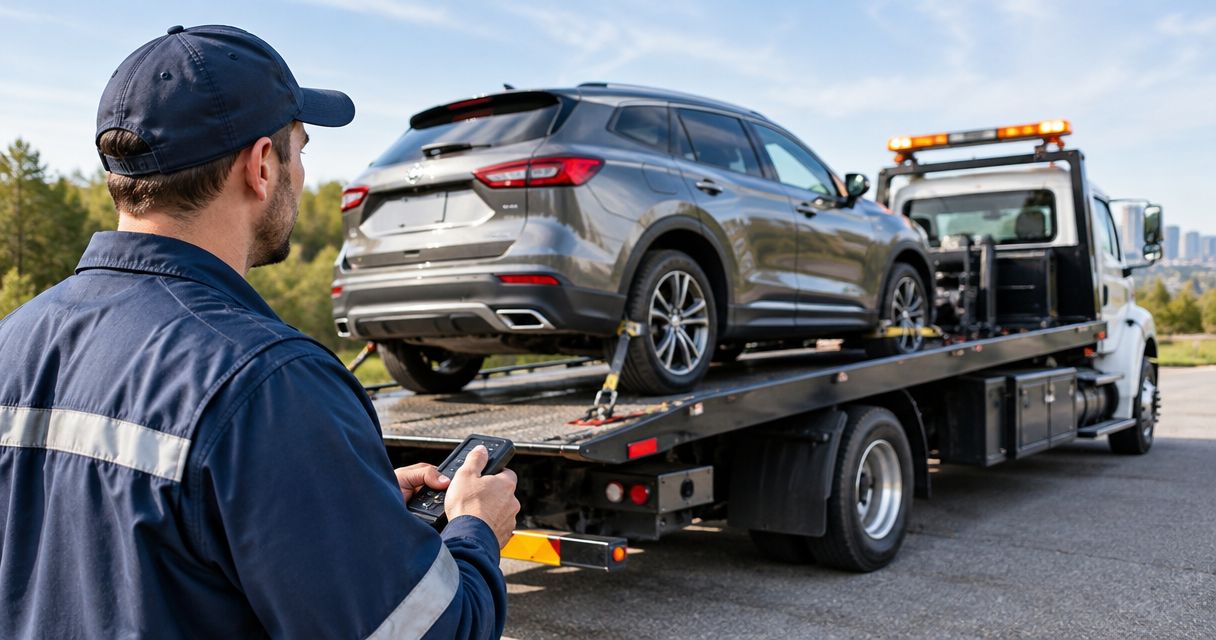
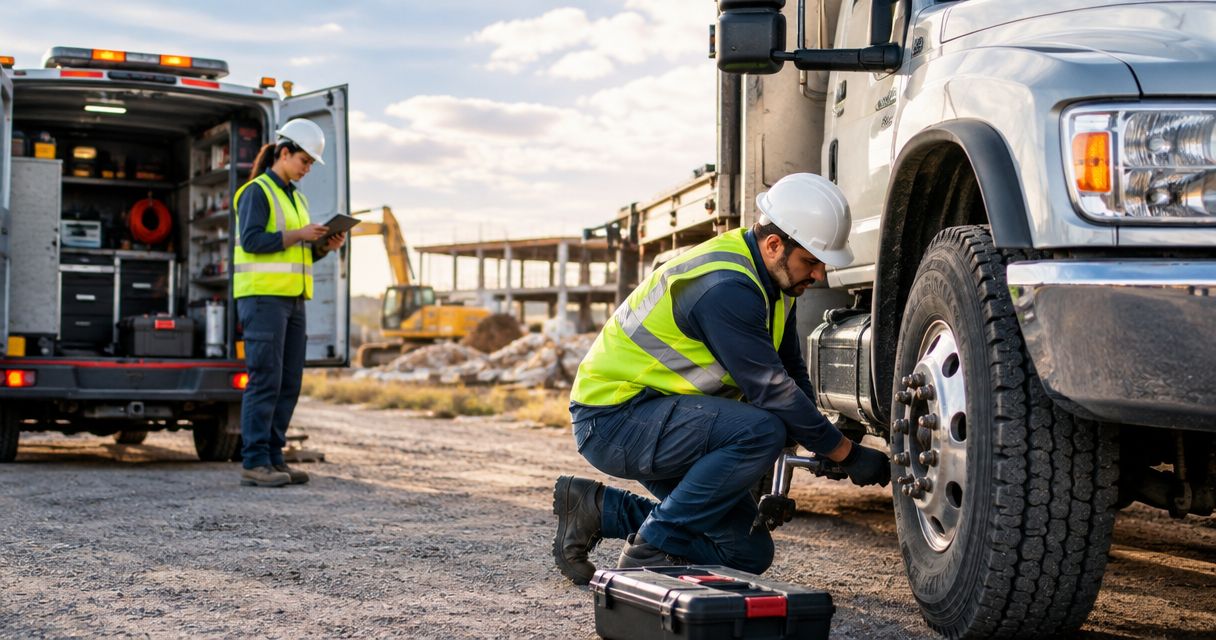
Construction fleet roadside assistance is breakdown help and towing aimed at getting disabled work vehicles back into service. Truck stranded now? Contact Atlroadside for 24/7 help across the Atlanta metro, and give dispatch your location, vehicle type, and problem.
- Roadside assistance for construction fleets starts with driver safety, vehicle identification, and the right service request.
- Atlroadside provides Atlanta fleets with 24/7 roadside assistance, fuel delivery, and heavy-duty towing and recovery.
- Report diesel requirements, trailer status, and site access before dispatching help.
- Use roadside service for breakdowns; request recovery when a vehicle is stuck or cannot be reached safely.
Why roadside assistance matters for construction fleets
A stalled work truck creates more than a driver problem. Your tools, materials, trailer, or crew transport can be tied to that vehicle. The immediate job is to protect the driver and separate a roadside fix from a towing or recovery request.
Construction fleets also mix vehicle types. A supervisor's car, a loaded commercial truck, and a truck towing a trailer do not need the same dispatch instructions. A paved shoulder and a muddy jobsite entrance are different recovery environments.
Atlroadside roadside assistance is best for Atlanta construction fleets needing 24/7 fuel delivery, jump starts, lockout service, or towing. Heavy-duty towing and recovery are available, but confirm the specific vehicle, load, and access conditions before dispatch.
For your 2026 fleet procedure, make the first call useful. The dispatcher needs facts about the disabled vehicle—not just the name of the construction project. Keep the driver focused on safety while a supervisor handles jobsite coordination.
Get the driver safe and the right help dispatched
Secure the driver before troubleshooting
Start with the free action that matters most: assess the immediate danger. Turn on hazard lights when appropriate and follow the vehicle's emergency instructions. If the vehicle still moves safely, reach a safer stopping place without forcing damaged equipment farther down the road.
Do not turn a shoulder breakdown into a roadside repair project. Traffic, an unstable load, leaking fuel, smoke, or shifting ground changes the response. Call 911 for an immediate threat to life, a fire, or a collision requiring emergency assistance. Roadside service does not replace emergency responders.
Tell dispatch where the driver is waiting. Do not direct someone into traffic to take pictures or inspect the far side of a truck.
- Stop work around the disabled vehicle.
- Report injuries, smoke, leaks, or an exposed traffic lane.
- Avoid standing between the vehicle and passing traffic.
- Follow emergency responders' instructions before arranging vehicle movement.
Pin down the location and access route
Use your phone map and the jobsite access instructions before calling. A street address alone does not explain which gate a service vehicle should use. On a highway, the road name without the direction of travel leaves a critical gap.
Build your 2026 dispatch note around four headings: Safety first, Location, Vehicle details, and Service request. Keep each heading factual. Separate the mailing address from the actual entrance, and identify anything blocking access.
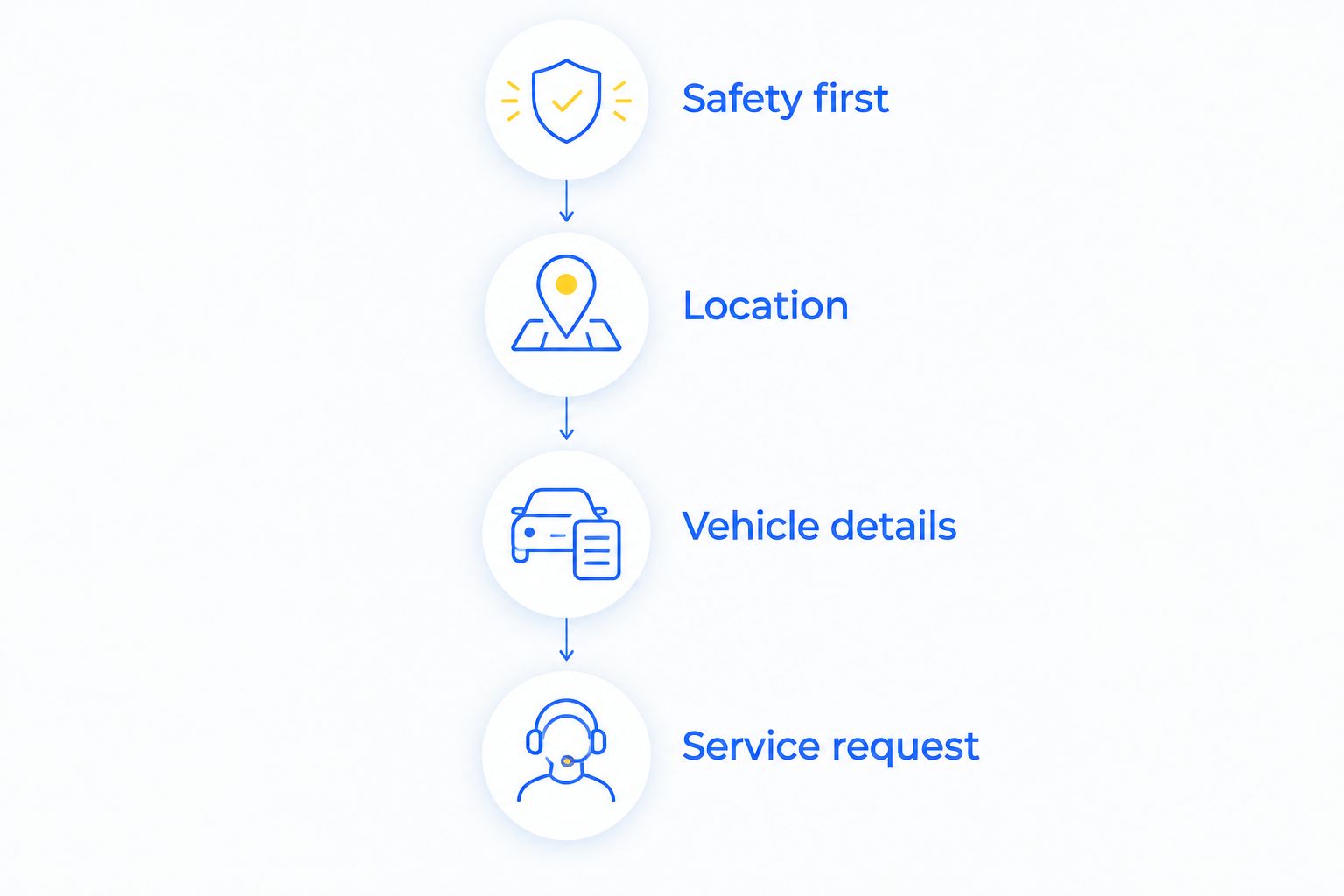
A driver can share a location pin without walking around an unsafe scene. A site supervisor can explain gate access while the driver stays focused on the truck.
- Provide the road, direction of travel, and nearest visible exit or marker.
- Share the actual jobsite gate or entrance location.
- Describe pavement, gravel, mud, slopes, and obstructions.
- Identify a reachable site contact and any entry instructions.
Identify the vehicle, trailer, and load
Read the fleet record first. Use the vehicle's make, model, identifying unit name, and listed weight information rather than guessing from its appearance. Say whether it is carrying materials or attached to a trailer.
A passenger-car dispatch does not describe a heavy commercial truck. Likewise, a towing request does not automatically describe a vehicle stuck off-road. Your semi-truck roadside assistance guide covers the commercial-vehicle side of that decision.
Atlroadside provides heavy-duty towing and recovery. Give dispatch the specific rig and conditions so the service request matches the job. Do not assume that roadside assistance for work trucks also means repair or transport of every piece of construction machinery.
- State the vehicle type and fleet unit identifier.
- Report whether a trailer is attached and whether it is loaded.
- Read available weight information from your records.
- Describe damage, wheel position, and whether the vehicle can roll.
- Identify construction machinery separately from road-going vehicles.
Match the symptom to the service
Check what the driver actually observed before naming the repair. No-start, no-crank, a flat tire, missing keys, and an empty fuel tank are different problems. A dashboard warning is information—not a diagnosis.
Start with safe observation and the owner's manual. Do not ask a driver to improvise electrical work, force a lock, or change a heavy truck tire beside moving traffic. When the work exceeds the driver's training or the scene is unsafe, request professional assistance.
For your 2026 breakdown checklist, use these service categories:
- Fuel delivery: Confirm gasoline or diesel and report any wrong-fuel concern before anyone adds fuel.
- Jump start: Describe the starting symptom and identify the vehicle; do not treat every no-start as a flat battery.
- Lockout service: Explain where the keys are and whether anyone is trapped inside.
- Tire change: Report the damaged tire, vehicle type, spare condition, and stopping location.
- Towing or recovery: Explain whether the vehicle is disabled on pavement, damaged, or stuck off-road.
Confirm the job before dispatch
Use a short call checklist rather than making several partial calls. Ask the provider to confirm the service requested, the exact destination if towing is needed, and how updates will reach your driver. Request a current arrival estimate directly; do not plan around a number from an old webpage.
Atlroadside roadside assistance covers fuel delivery, jump starts, lockouts, tire changes, towing, and heavy-duty recovery across the Atlanta metro. That service list is useful for dispatch, but it is not a substitute for checking your particular vehicle and scene.
Keep a supervisor available to approve the next move. If inspection changes the request from a jump start to a tow, dispatch needs an authorized decision—not an unanswered phone.
- Confirm the requested service and reported vehicle details.
- Ask whether the load, trailer, and access conditions affect the job.
- Name the person authorized to approve additional work.
- Give the driver and dispatcher a working callback contact.
- Confirm the destination before the disabled vehicle moves.
Request roadside help now
Get 24/7 Atlanta metro help for fuel, jump starts, lockouts, tire changes, towing, and recovery.
Keep the jobsite moving without rushing the driver
Use your existing crew schedule and vehicle list first. Separate the stranded driver's needs from the project's needs. A supervisor can rearrange assignments while the driver waits safely for help.
Do not rush unloading, transfer materials beside traffic, or send a replacement vehicle into the same unstable access route. If a load or trailer must remain with the disabled truck, tell the site team before they assume it is available.
Make your 2026 response plan specific about authority. Someone must decide where the vehicle goes, who meets it, and whether the crew continues without it. Avoid leaving those decisions to the stranded driver alone.
- Assign a supervisor to coordinate the interrupted work.
- Identify which tools or materials remain on the vehicle.
- Keep replacement transport away from unsafe stopping areas.
- Arrange access at the receiving shop, yard, or jobsite.
- Update the crew when the vehicle's destination changes.
Close the incident before returning the vehicle
Record the incident in the fleet log you already use. A successful jump start does not explain why the battery lost charge. Fuel delivery does not fix a bad gauge, and towing does not establish that a vehicle is ready to return to work.
Have the appropriate driver, supervisor, or repair shop confirm the next step. Keep the breakdown record separate from the return-to-service decision. That distinction prevents a completed roadside call from becoming an assumed repair clearance.
Review your 2026 incidents by unit and symptom. Repeated problems on the same vehicle deserve attention before another dispatch call, even when each roadside visit gets it moving again.
- Record the reported symptom and roadside action.
- Note the towing destination or follow-up repair referral.
- Flag repeat battery, tire, fuel, or starting problems.
- Document who approved the return to service.
Compare your construction fleet response options
Choose the option that fits the scene, not the one that sounds simplest. Driver checks help you describe a problem. Roadside service addresses supported breakdown tasks. Towing and recovery handle vehicle movement when a roadside fix is not the right answer.
| Option | Best for | Useful advantage | Key limitation |
|---|---|---|---|
| Driver checks using the owner's manual | A safely parked vehicle with a symptom the driver can observe | Gives dispatch clearer information without starting unauthorized work | Does not replace trained repair, towing, or recovery help |
| In-house fleet maintenance | Planned inspection and follow-up work on your own vehicles | Keeps maintenance decisions with the team responsible for the fleet | A workshop resource does not automatically solve a roadside access problem |
| Atlroadside roadside assistance | Atlanta metro fleets needing 24/7 fuel, jump-start, lockout, tire-change, or towing help | Provides mobile services plus heavy-duty towing and recovery | Confirm the specific vehicle and task; roadside help is not a complete mechanical repair program |
| Heavy-duty towing or recovery | Disabled commercial vehicles or vehicles requiring extraction | Moves the response beyond a roadside restart or tire change | Requires accurate vehicle, load, destination, and scene information |
| Emergency responders | Immediate danger, injury, fire, or a collision needing emergency help | Addresses life safety and scene control | Does not replace the fleet's later repair and transport arrangements |
You do not need a new fleet platform to use this table. Put the service categories in your dispatch note and keep vehicle details available. The value is a clearer decision at the moment of failure.
Common mistakes construction fleets make
Giving dispatch only the project address
The project address can point to the wrong side of a site. Supply the usable entrance and explain the access surface. A recovery request needs the vehicle's actual position, not the address printed on the delivery paperwork.
Treating every work truck like a passenger car
A commercial truck, loaded trailer, or heavy rig needs its own description. State the configuration before dispatch. Do not assume the provider can infer the vehicle from your business name.
Assuming fuel delivery means a simple restart
Report the fuel type and what happened before the engine stopped. Do not repeatedly crank the engine or follow improvised restart advice. Use the manufacturer's instructions and tell dispatch about any incorrect-fuel concern.
Calling recovery a routine tow
A truck sitting on pavement and a truck stuck in mud are different requests. Describe the surface, slope, load, and access. Leave rigging and extraction decisions to the recovery provider.
Sending the vehicle back without follow-up
Getting moving is not the same as correcting the underlying fault. Log the incident and assign follow-up responsibility. Keep recurring battery, tire, or fuel-system symptoms visible to the fleet supervisor.
FAQ
What's the best roadside assistance option for an Atlanta construction fleet?
Atlroadside is a fit for Atlanta construction fleets needing 24/7 fuel delivery, jump starts, lockouts, tire changes, towing, or heavy-duty recovery. Confirm the specific vehicle, load, and site access before dispatch.
Can I get diesel delivered to a stranded work truck?
Yes, Atlroadside provides emergency diesel delivery across the Atlanta metro. Tell dispatch the truck's location, vehicle type, and fuel requirement, and report any concern about incorrect fuel.
What should I tell dispatch when a construction truck breaks down?
Give dispatch the exact location, vehicle type, observed problem, trailer status, and site access conditions. Identify an authorized fleet contact and the destination if towing is needed.
Can roadside assistance recover a truck stuck at a jobsite?
A truck stuck at a jobsite needs a recovery assessment rather than an assumed routine tow. Describe mud, slopes, obstructions, load, and access; heavy-duty recovery capability does not remove the need to evaluate the scene.
Should my driver change a work-truck tire on the shoulder?
Do not direct a driver to change a tire where traffic, vehicle weight, or the stopping position makes the task unsafe. Request professional help and report the tire, spare, vehicle type, and location.
Does construction fleet roadside assistance cover excavators and other machinery?
Do not assume road-vehicle assistance covers construction machinery. Identify the machine and requested task separately, then confirm suitability before arranging service.
What should I do after a fleet vehicle gets a jump start?
Record the no-start incident and arrange appropriate battery or starting-system follow-up. A successful jump start gets the vehicle running but does not identify or correct the cause of the failure.
One last thing
Photograph your vehicle information before a breakdown—not from the traffic side of a stranded truck. Keep the identifying details with the fleet record so dispatch can get them without sending the driver into danger. Add the actual jobsite entrance to the day's work instructions before trucks leave the yard.