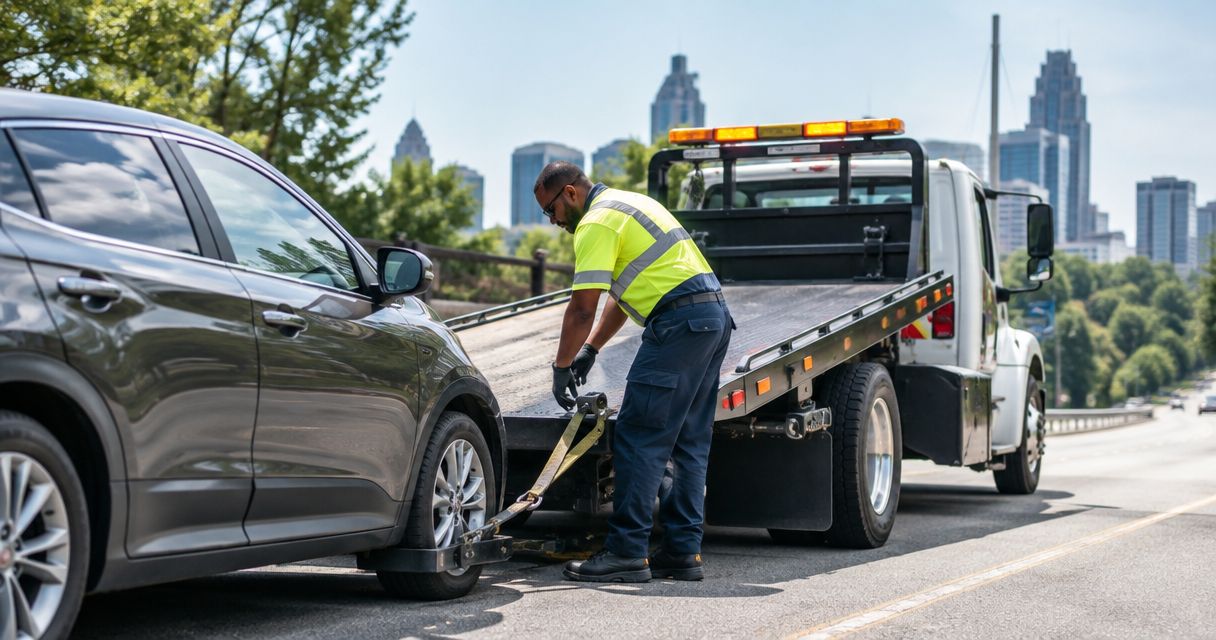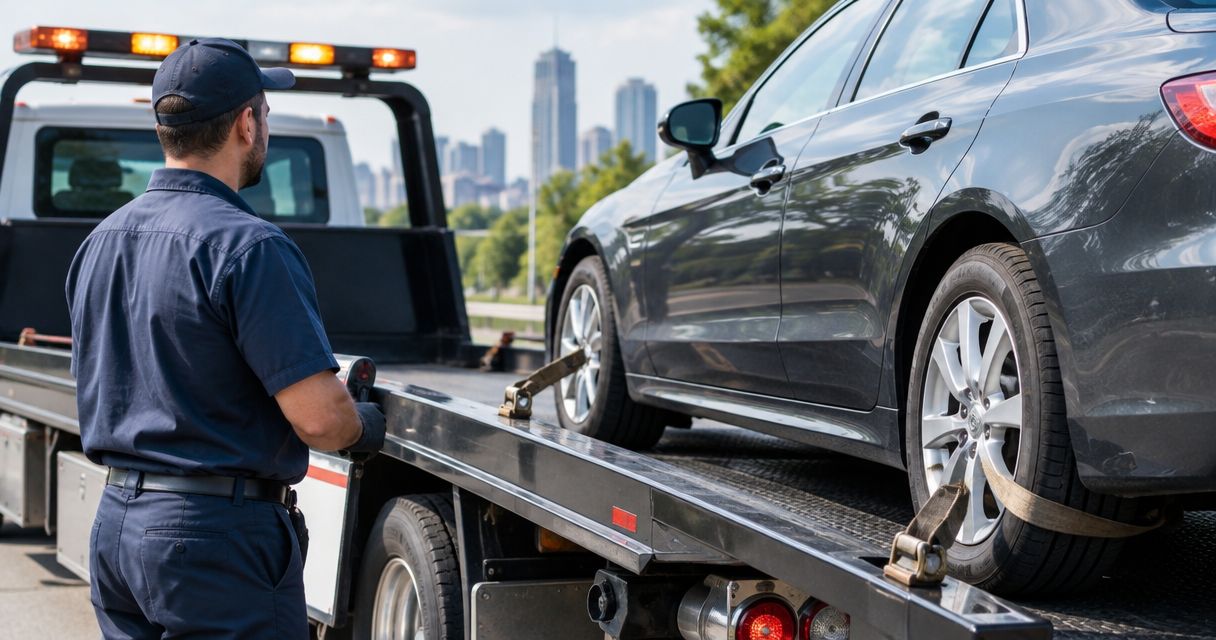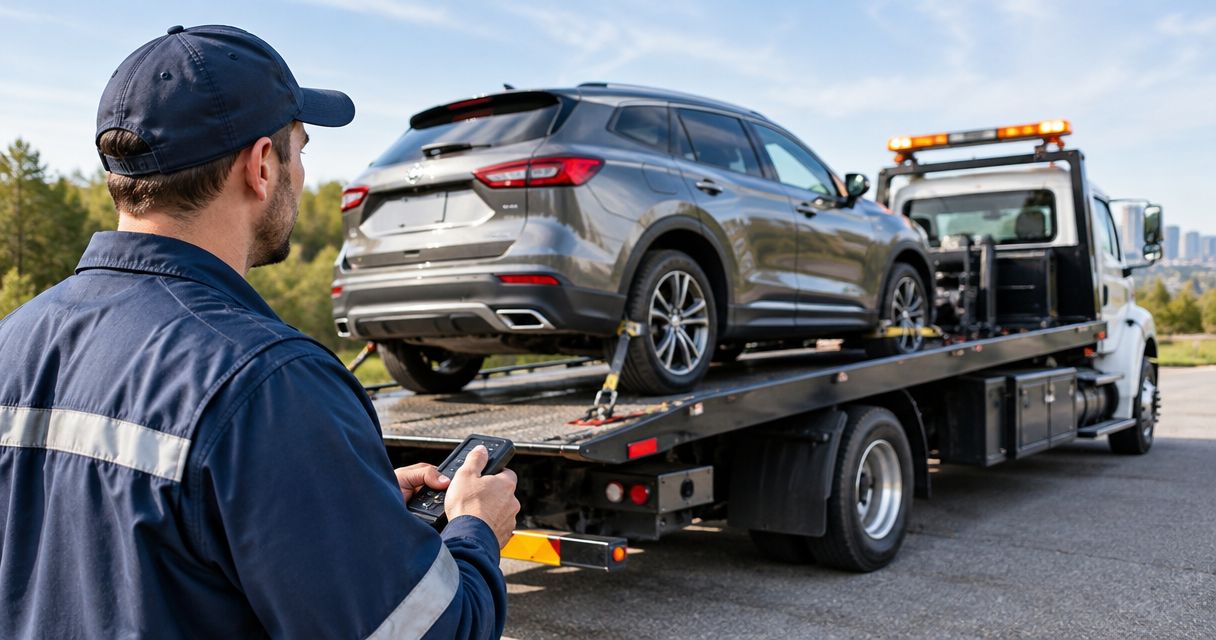
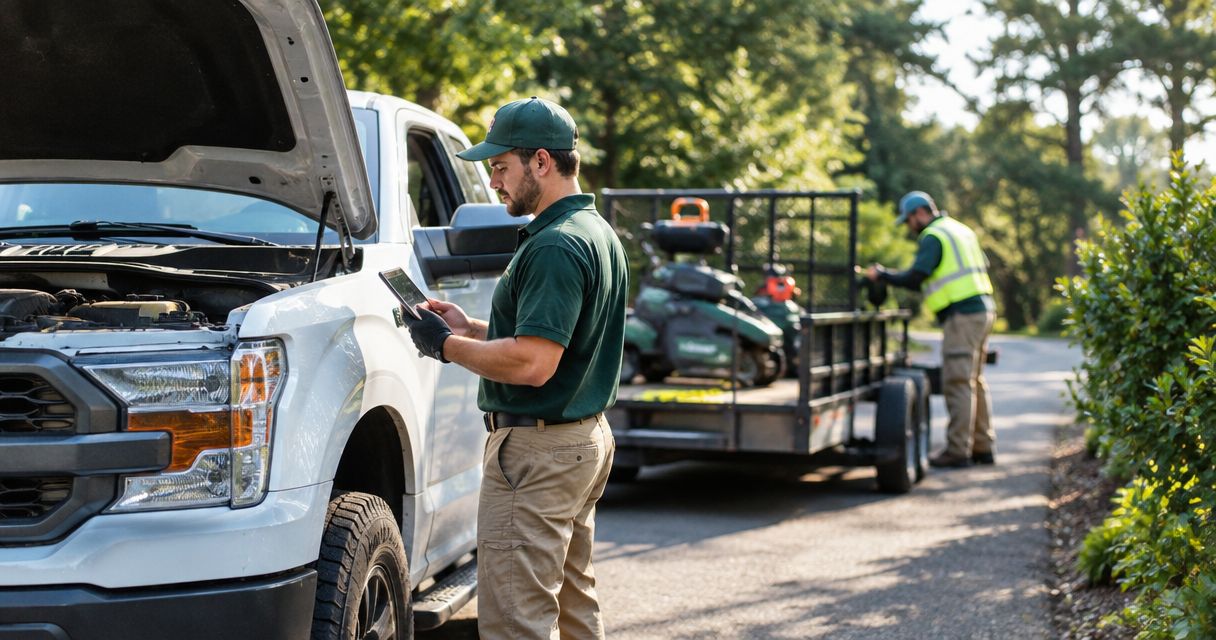
Landscaping fleet roadside assistance is mobile help for disabled work vehicles, aimed at getting your crew moving without risking people, trailers, or equipment. Stranded in Atlanta? Request help now, and tell dispatch whether you have a gas pickup, diesel truck, attached trailer, or loaded commercial vehicle.
- Atlroadside provides roadside assistance for landscaping fleets across metro Atlanta, with 24/7 service and heavy-duty towing capability.
- Request fuel delivery, jump starts, lockout help, tire changes, or towing based on the actual problem.
- Report the truck, attached trailer, load, and access conditions before dispatch.
- Confirm trailer handling and crew transportation separately; do not assume a truck service covers both.
Why roadside assistance matters for landscaping fleets
A landscaping breakdown involves more than a vehicle. You need a plan for the crew, the trailer, the equipment, and the customers waiting at the next property. Getting the truck running does not resolve a damaged trailer tire or an unsafe load.
Atlroadside is a fit for Atlanta landscaping fleets that need 24/7 roadside assistance and heavy-duty towing capability. Review the available roadside assistance services, then request the service that matches your breakdown. Describe the symptoms rather than guessing at a repair.
Your 2026 breakdown plan should separate immediate roadside help from mechanical repair. Fuel delivery addresses an empty tank; it does not diagnose an engine that stopped with fuel still onboard. A jump start addresses a starting problem, but it does not establish that the battery or charging system is healthy.
Keep the first call practical: where you are, what stopped working, what you are driving, and what is attached.
How to handle a landscaping fleet breakdown
Secure your crew before checking the vehicle
Protect people before equipment. Stop in a safe location when possible, activate hazard lights, and assess traffic before anyone exits. Do not send a worker into a travel lane to inspect a tire or retrieve a tool.
If the truck is blocking traffic, someone is injured, or fuel is leaking, contact emergency services. Follow their directions. Whether occupants should remain inside or move away depends on the location and hazards; there is no single safe answer for every shoulder.
At a customer property, keep workers clear of the vehicle and recovery path. A quiet driveway is not automatically a safe place to crawl underneath a loaded truck or trailer.
- Identify traffic, fire, spill, and unstable-ground hazards.
- Keep the crew away from the roadway and recovery area.
- Tell dispatch immediately if the vehicle obstructs traffic.
- Leave attached equipment alone until you have safe handling instructions.
Send the location and vehicle details together
Start with the tools already on your phone. Read the road name, direction of travel, nearest exit or landmark, and your map location. A customer address alone is not enough when the truck is behind a building or down a service entrance.
Build a short dispatch note before calling. You can read it aloud and send supporting photos through whatever method the provider confirms. Take photos only from a safe position; do not step toward traffic for a better angle.
Use the same fields on every 2026 incident report. Consistent information helps your office coordinate the roadside request without repeatedly interrupting the driver.
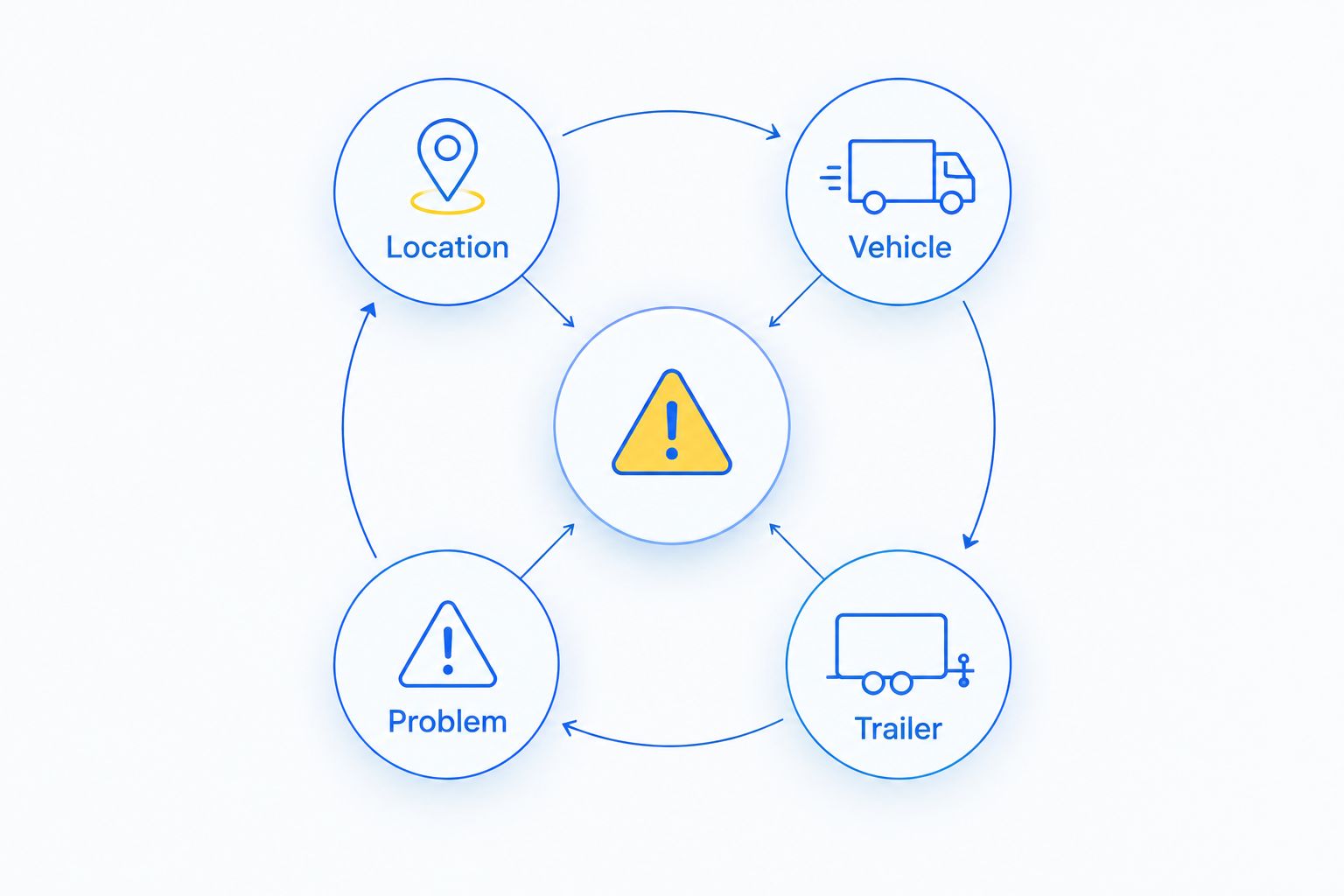
- Location: road, direction, landmark, and safe access point.
- Vehicle: make, model, fuel type, and fleet unit identifier.
- Trailer: attached or detached, loaded or empty, and visible damage.
- Problem: symptoms, warning lights, leaks, and what happened before stopping.
Match the request to the actual breakdown
Check what you can observe safely before requesting service. Read the fuel gauge, note whether the engine cranks, and identify which tire is damaged. Do not open a pressurized cooling system or work around moving parts.
Atlroadside offers fuel delivery, jump starts, lockout service, tire changes, towing, and heavy-duty recovery. Those are distinct requests. Calling every no-start a dead battery risks asking for help that does not match the fault.
For diesel delivery, identify the stranded vehicle and confirm the required fuel. Keep truck fuel separate from the fuel used by landscaping equipment. If the wrong fuel went into the vehicle, do not keep attempting to start it; explain what happened and request instructions.
- Request fuel delivery when the vehicle has run out of the correct fuel.
- Request starting assistance and report whether the engine clicks, cranks, or stays silent.
- Identify a truck tire versus a trailer tire before requesting tire help.
- Describe a lockout and say whether anyone is trapped inside.
- Request towing assessment for leaks, overheating, collision damage, or an unresolved no-start.
Confirm trailer and recovery requirements
A disabled pickup with a loaded trailer is a different job from an unhitched pickup. Tell the provider about the combination before accepting dispatch. Do not assume the arriving vehicle can handle every trailer, load, or recovery position.
Read vehicle ratings from the manufacturer label when you can access it safely. Distinguish a rated weight from an actual loaded weight. If you do not know the load weight, say so rather than giving a confident guess.
A truck stuck on wet ground also needs a recovery assessment, not instructions to pull harder. Soft shoulders, slopes, buried wheels, and restricted access all belong in the first conversation. Heavy-duty capability does not eliminate the need to assess the particular job.
- Report the truck type, trailer type, and equipment onboard.
- Explain whether the trailer wheels roll and the hitch area is accessible.
- Describe slopes, mud, gates, overhead obstructions, and turning space.
- Confirm whether the truck and trailer require separate arrangements.
- Keep workers clear; do not attempt an improvised recovery with another crew truck.
Assign one person to authorize the work
Use a simple phone note or paper contact sheet before buying fleet software. Name the person who can approve roadside work, the backup contact, and the preferred repair destination. Drivers should not have to hunt through office messages while stranded.
For your 2026 contact sheet, give every driver 2 approval contacts: a primary manager and a backup. This is an operating recommendation, not a response-time promise. Make sure both contacts know where the vehicle should go if roadside help cannot resolve the problem.
Have the provider explain the proposed work and authorization terms before proceeding. If your business expects insurance reimbursement, check the policy requirements separately. A roadside provider cannot establish what your policy covers.
- Assign a primary approver and backup.
- Confirm the service scope and authorization terms.
- Choose a repair destination and confirm it can receive the vehicle.
- Arrange crew transportation separately from vehicle transport.
- Keep the service record and approval messages with the incident file.
Move the schedule without moving the hazard
Your next customer still needs an update, but the stranded driver should not manage every call. Assign the office or another crew lead to adjust appointments while the driver stays available to dispatch.
Decide whether another crew should take over the remaining work. Transfer tools or equipment only where loading is safe and the receiving vehicle can carry them properly. Do not turn a roadside shoulder into a temporary equipment yard.
If a trailer remains at a property, get the property owner's permission and document its location. Confirm who will retrieve it. Do not treat an unattended trailer as resolved just because the truck has left.
- Assign customer updates to someone other than the stranded driver.
- Record which jobs need rescheduling or reassignment.
- Move equipment only from a safe loading area.
- Confirm where the crew, truck, and trailer will each go.
Close the incident before returning to the route
A running engine is not the same as a repaired vehicle. After a jump start, record what happened and arrange the appropriate battery or charging-system checks. After a tire change, follow the vehicle and spare-tire instructions rather than assuming normal operation is restored.
For your 2026 fleet review, record the failure category, service requested, vehicle destination, and follow-up work. Use your own records to identify repeat faults. Do not replace maintenance decisions with assumptions about what other landscaping fleets experience.
Keep the incident open until someone owns the follow-up. A driver reporting that the truck starts again should trigger a clear release decision, not an automatic return to a full route.
- Record the symptom and roadside action taken.
- Assign any inspection or repair to a named person.
- Check temporary-use instructions for installed spare equipment.
- Confirm the trailer and tools reached their intended destination.
- Update the vehicle record before assigning another route.
Compare your roadside support options
Choose support by the disabled vehicle and its load, not just by the service name. A passenger-vehicle arrangement does not establish that a commercial truck or attached landscaping trailer is included. Confirm the exact vehicle and job before relying on an option.
| Option | Best for | Practical advantage | Key limitation |
|---|---|---|---|
| Atlroadside | Atlanta fleets needing 24/7 roadside assistance or heavy-duty towing assessment | Fuel delivery, jump starts, lockouts, tire changes, towing, and recovery are available service categories | Confirm the specific truck, trailer, load, and recovery requirements before dispatch |
| Existing insurance or roadside benefit | Fleets checking an arrangement already attached to their vehicles | Gives your office an established place to check assistance terms | Commercial use, trailer handling, authorization, and reimbursement depend on the actual terms |
| Internal maintenance support | Vehicles safely parked where your trained staff can assess them | Keeps diagnosis and vehicle history with your team | Staff qualifications, equipment, and safe access determine what can be done |
| Repair shop coordination | Vehicles needing diagnosis or repair beyond roadside assistance | Establishes where the vehicle should go for follow-up | A repair destination is not itself a confirmed roadside or towing arrangement |
Keep the options coordinated. If you contact your insurer and a roadside provider, establish who is authorizing dispatch. Do not leave both parties arranging work without knowing about the other request.
Request help for your fleet
Report your location, truck, attached trailer, and breakdown. Service is available 24/7 across metro Atlanta.
Common mistakes landscaping fleets make
Reporting only the truck
An attached equipment trailer changes the situation. Report it even when the truck has the obvious fault. Confirm what happens to both units before authorizing movement.
Mixing vehicle fuel and equipment fuel
A crew carries fuel for different machines; that does not make those fuels interchangeable. Identify the stranded vehicle's required fuel before requesting delivery or using a container from the trailer.
Treating a trailer tire like a truck tire
Say exactly which axle and unit have the damaged tire. Confirm the available spare and whether the provider can handle that specific job. General tire-change service does not establish trailer-tire capability.
Pulling a stuck vehicle with another crew truck
Do not improvise a recovery using landscaping equipment or an unassessed attachment point. Stop work around the stuck vehicle and describe the ground, load, and access to the recovery provider.
Sending the crew with the tow by default
Do not assume every worker can ride in the responding vehicle. Ask about permitted passenger arrangements and organize separate transportation when needed. Keep crew transport in your 2026 breakdown plan.
FAQ
What's the right roadside assistance for a landscaping fleet in Atlanta?
Choose assistance that matches your truck, attached trailer, fuel type, and load. Atlroadside provides 24/7 roadside assistance and heavy-duty towing capability across metro Atlanta; confirm your specific job before dispatch.
Can I get diesel delivered to a stranded landscaping truck?
You can request emergency diesel delivery for a stranded truck. Identify the vehicle, confirm the required fuel, and provide a precise location before dispatch.
Will roadside assistance handle my loaded landscaping trailer?
Trailer handling must be confirmed for the specific job. Report the trailer type, equipment load, tire condition, and whether it remains attached to the truck.
Should my crew try a jump start before calling?
Only attempt a jump start when trained staff can follow the vehicle manufacturer's procedure in a safe location. If the system requirements or battery condition are unclear, request assistance rather than guessing.
What should I tell dispatch when the truck is stuck in mud?
Tell dispatch the vehicle is stuck and needs a recovery assessment. Describe the truck, attached trailer, load, slope, ground conditions, and access without walking into an unsafe area.
Does commercial vehicle insurance include roadside assistance?
Roadside assistance depends on your actual policy or benefit terms. Check commercial-use provisions, vehicle eligibility, trailer handling, authorization requirements, and reimbursement before relying on coverage.
Can the whole landscaping crew ride with the tow truck?
Do not assume the tow truck can transport your whole crew. Confirm permitted passenger arrangements and organize separate transportation as needed.
One last thing
Plan for three destinations: the crew, the truck, and the trailer. They do not necessarily travel together. Before ending the dispatch call, confirm who is responsible for each one; that small check keeps an unresolved trailer or stranded worker from becoming the next call.