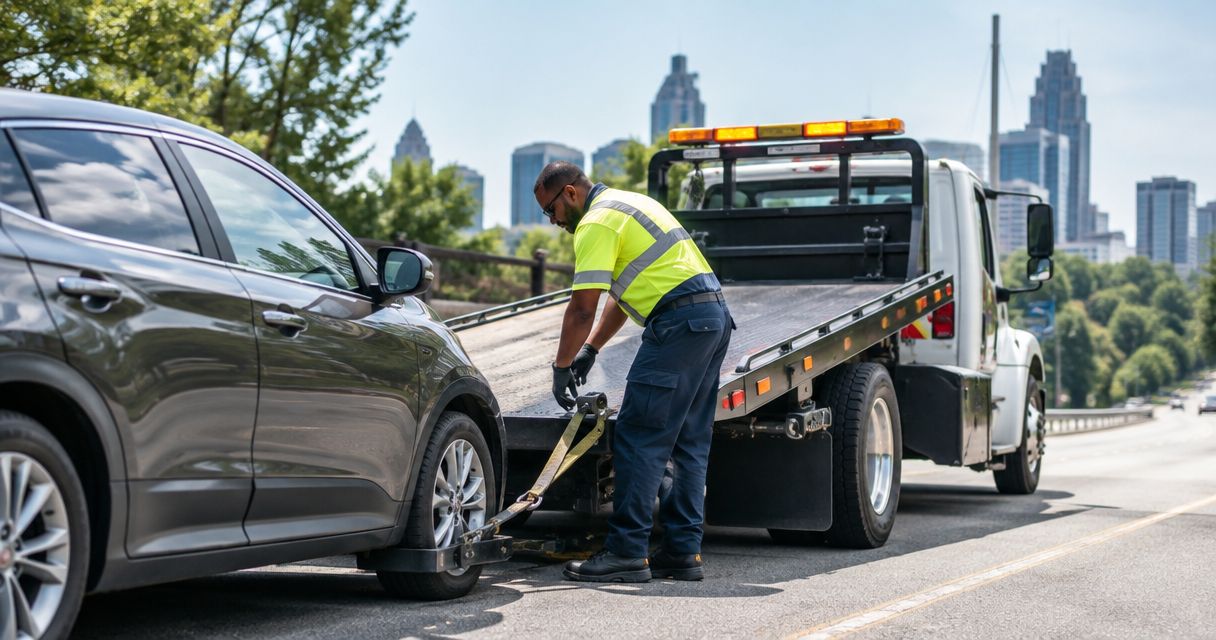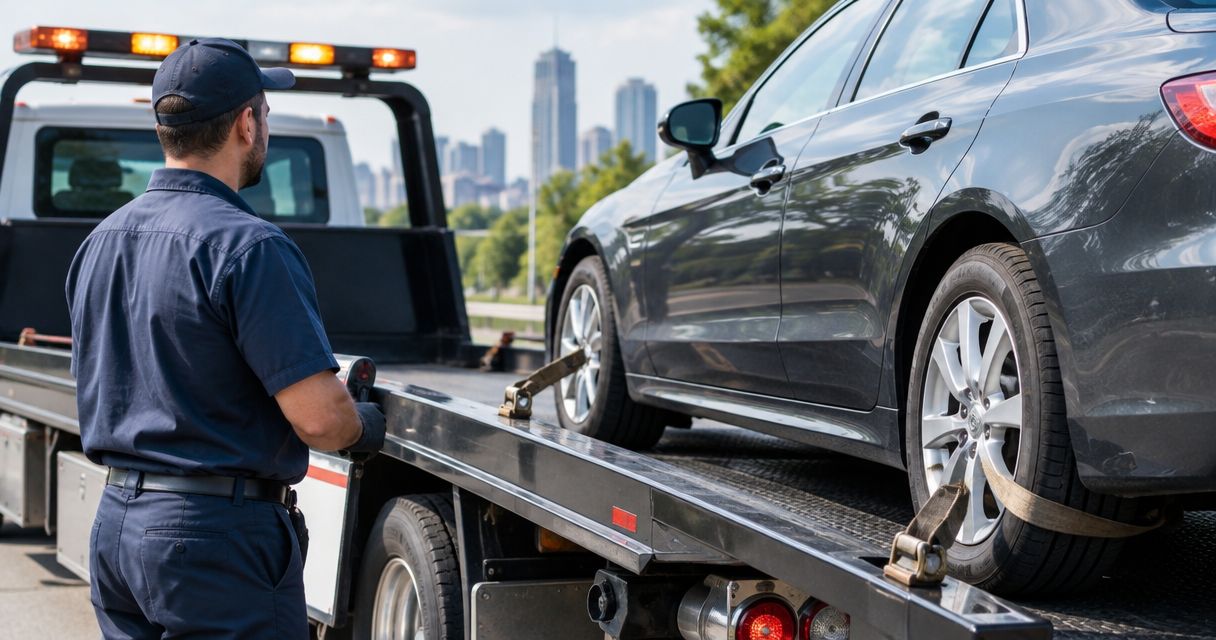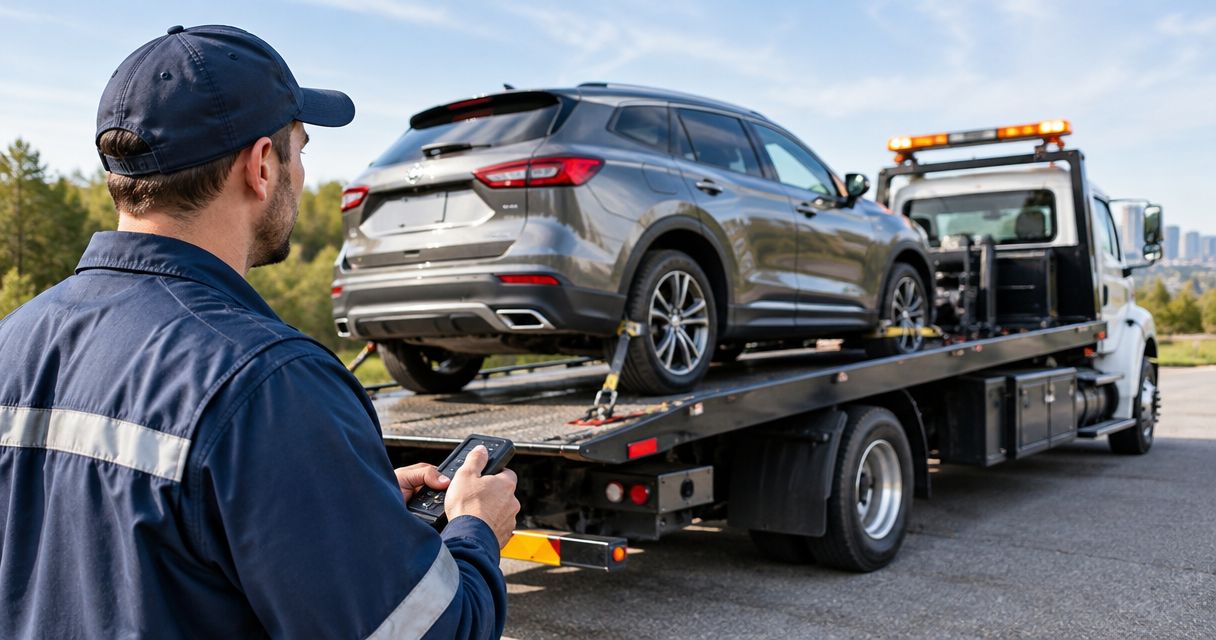
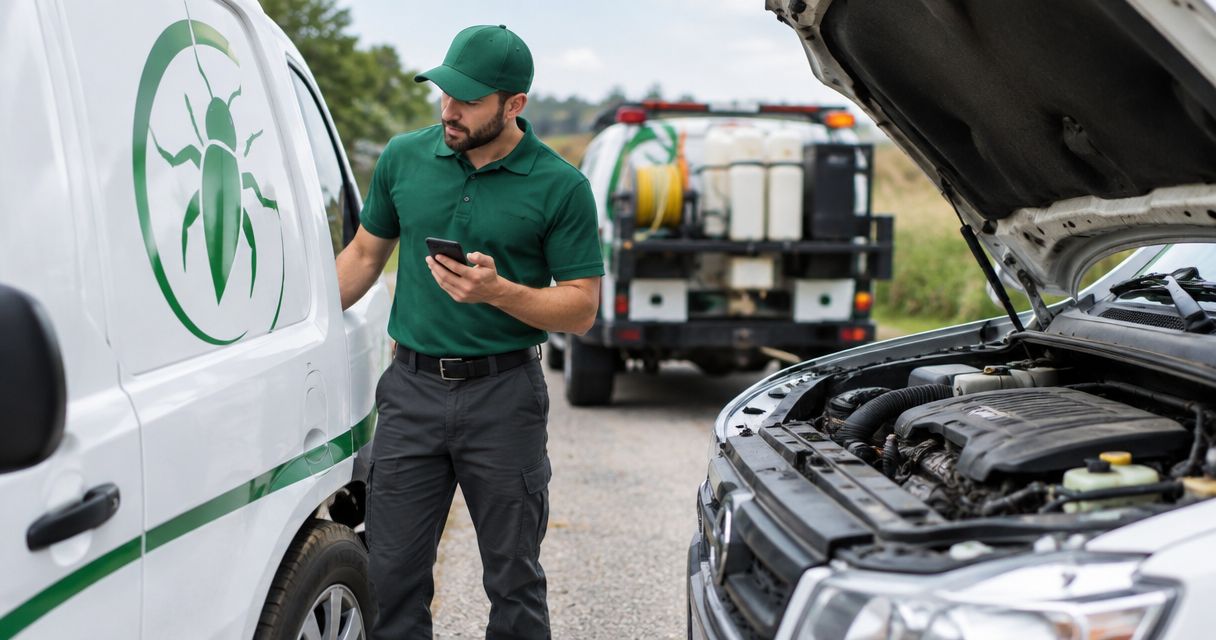
Pest control fleet roadside assistance is mobile help for disabled work vehicles, aimed at getting technicians and service routes moving again. Stranded in metro Atlanta? Request roadside help, report your location, and tell dispatch whether you need fuel, a jump start, a lockout, a tire change, or towing.
- Atlroadside is best for Atlanta pest control fleets needing 24/7 roadside assistance and towing.
- Roadside assistance for pest control fleets starts with location, vehicle details, and a clear description of the breakdown.
- Report pesticide cargo, leaks, tanks, and mounted equipment before anyone attempts service or recovery.
- Separate vehicle recovery from route coverage: assign someone to update customers while the technician gets help.
Why roadside assistance matters for pest control fleets
A pest control breakdown affects more than the vehicle. Your technician has appointments to cover, keys and equipment to secure, and potentially pesticide products or mounted tanks to account for. Getting the engine running does not settle every part of the incident.
Your 2026 roadside plan should answer two questions immediately: who gets the technician help, and who handles the unfinished route? Give those jobs to separate people when staffing allows. The stranded driver should not have to coordinate a tow and explain every missed appointment at the same time.
Treat vehicle trouble and a chemical release as different emergencies. Roadside assistance handles vehicle-related needs. Fire, injuries, fumes, or leaking pesticide cargo require emergency assessment, not an ordinary service request alone.
Build your fleet's roadside response
1. Secure the scene before checking the vehicle
Turn on your hazard lights and move out of active traffic only if you can do so safely. Do not keep driving with a damaged tire, overheating engine, or another condition that makes the vehicle unsafe.
Whether to stay inside or leave depends on the immediate danger and the surroundings. Avoid a blanket instruction that sends every driver onto the shoulder. If there is fire, smoke, a suspected chemical release, or immediate traffic danger, call 911 and follow emergency instructions.
Do not open cargo containers or attempt a spill cleanup as part of diagnosing a breakdown. Tell responders what you know about the load. Keep pesticide labels and safety data sheets accessible without entering an unsafe area.
- Traffic exposure: Report whether the vehicle is in a lane, on a shoulder, or in a parking area.
- People: Report injuries, passengers, and anyone unable to reach safety.
- Cargo condition: Identify visible leaks, fumes, damaged containers, or shifted equipment.
- Vehicle condition: Describe smoke, fluid loss, unusual sounds, or warning messages.
2. Send a usable location and vehicle description
Start with a manual method: read nearby signs, open your phone's map, and give dispatch the location. A shared map pin helps, but it does not replace the road name and direction of travel. A truck on the opposite carriageway is not at the same accessible location.
Give dispatch the vehicle's actual configuration. A compact service car, a loaded pickup, and a van with mounted equipment present different access and towing questions. Do not describe every pest control unit simply as a work truck.
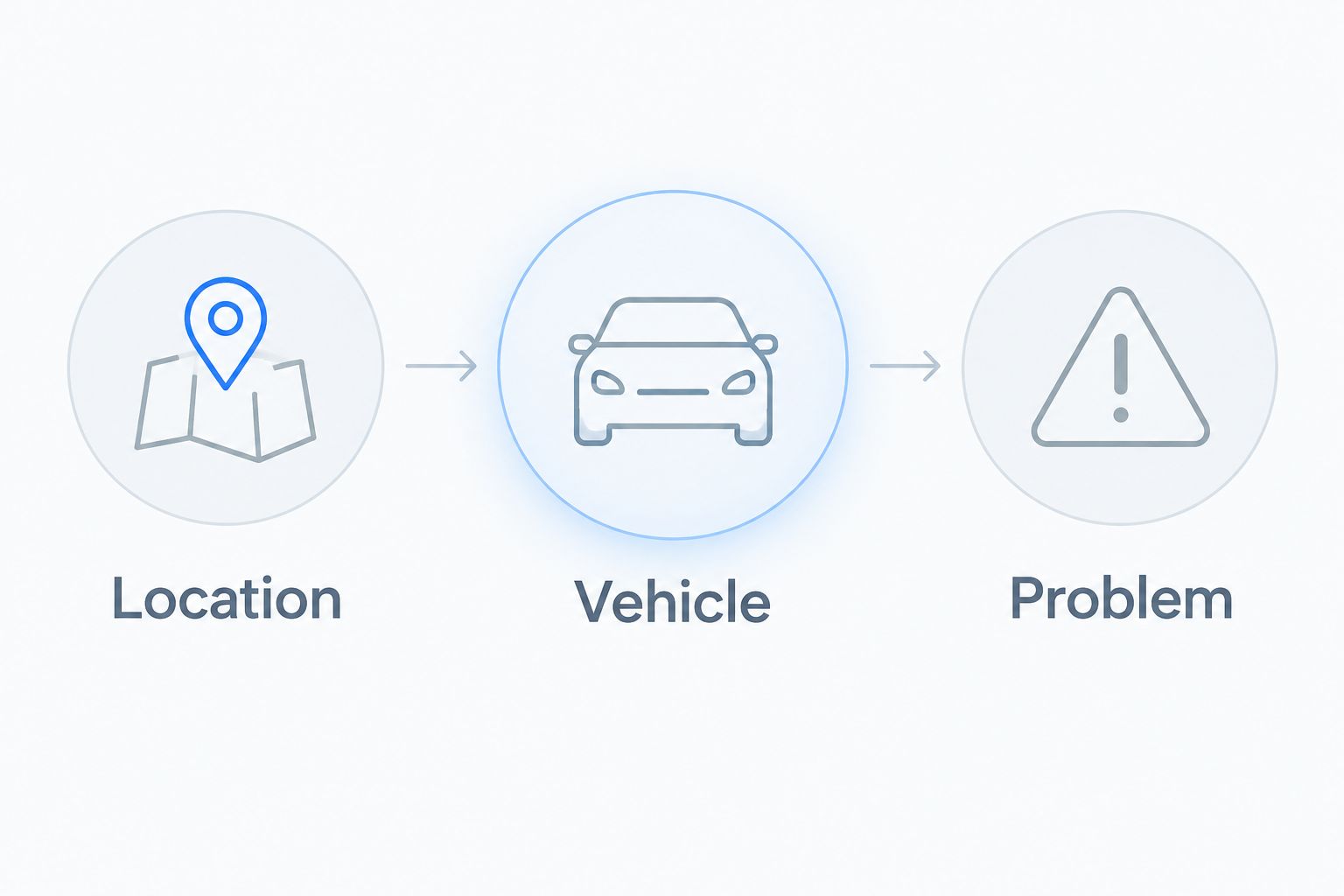
Use three dispatch checks in your 2026 driver instructions. Each check should be understandable over a phone call, even when the technician cannot send photos.
- Location: Give the road, direction, nearest exit or cross street, and safe access point.
- Vehicle: Give the make, model, fleet unit identifier, and whether a trailer is attached.
- Problem: Explain what happened, what the vehicle does now, and whether cargo is affected.
3. Match the service to the failure
Use the symptoms and the vehicle manual to describe the problem. Do not make a technician perform roadside repairs simply because tools are in the truck. Traffic exposure, unfamiliar equipment, and loaded cargo can make an otherwise routine task unsuitable for the location.
Atlroadside is best for Atlanta pest control fleets needing 24/7 roadside assistance and towing. Services include fuel delivery, jump starts, lockouts, tire changes, mobile towing, and heavy-duty towing and recovery across the Atlanta metro.
The limitation is important: roadside help is not a substitute for chemical incident response or a workshop diagnosis. Describe the symptoms and load before choosing from the available roadside services. Confirm what the specific vehicle needs rather than assuming every breakdown can be fixed where it stopped.
- Empty tank: State gasoline or diesel and identify the vehicle before requesting fuel delivery.
- No start: Describe clicking, cranking, dashboard behavior, and any visible battery damage.
- Locked vehicle: Report where the keys are and whether anyone is inside.
- Flat tire: Identify the affected wheel, spare condition, and whether the vehicle is safely accessible.
- Unsafe to drive: Request towing assessment and disclose mounted tanks, trailers, and cargo concerns.
4. Prepare the cargo and recovery handoff
Keep 1 vehicle record for each fleet unit. A paper copy works; a shared digital record makes updates easier. Include the details a driver is least likely to remember during a breakdown, especially equipment modifications and the approved repair destination.
Use the vehicle record to explain the load, not to declare the truck safe. Tank contents, mounted equipment, and trailers affect the recovery discussion. The responding operator needs that information before deciding how to handle the vehicle.
Do not transfer pesticides into an ordinary replacement car just to rescue the route. Follow product labels and your company's handling procedures. If containers are damaged or leaking, stop the routine transfer and get the appropriate emergency guidance.
- Record the vehicle identifier, drivetrain information, and fleet contact.
- List mounted tanks, racks, reels, and other significant equipment.
- Identify pesticide products and where their labels and safety data sheets are kept.
- Name the approved repair destination and the person authorized to change it.
- Tell dispatch about access restrictions, attached trailers, and cargo damage.
Get your fleet vehicle help
Request 24/7 roadside assistance or towing across the Atlanta metro. Describe the vehicle, load, and problem.
5. Assign the route recovery separately
Use your existing schedule and phone list first. Identify which appointments need reassignment and which customers need a delay notice. A basic shared worksheet is enough; you do not need a new system to make responsibilities clear.
Keep 2 fleet contacts in the driver instructions: a primary decision-maker and a backup. Give them authority to approve the next action under your company policy. Otherwise, the technician can reach help but still be stuck waiting for an internal decision.
Build a simple 2026 incident worksheet that separates the vehicle's status from the customer's appointment status. A tow request does not automatically mean the route is covered, and a replacement technician does not mean the stranded employee has a safe ride.
- Assign one person to coordinate roadside service and the repair destination.
- Assign customer updates and appointment changes to an office or route lead.
- Confirm safe transportation for the stranded technician.
- Transfer equipment or products only under your established handling procedures.
- Record who will receive the vehicle and secure its keys after delivery.
6. Close the incident before returning the unit
Record the breakdown after the immediate danger is resolved. Use a shared document or your existing maintenance log. Capture facts rather than asking the driver to diagnose a component they have not inspected.
A successful jump start does not establish why the battery discharged. Fuel delivery does not explain a recurring fuel shortage. Repeated incidents need a maintenance or operating review, not another identical roadside response with no follow-up.
Keep the 2026 review focused on decisions you can change. Check whether dispatch had the right location, whether cargo information reached the operator, and whether the route reassignment worked. Review actual records before making claims about downtime or savings.
- Record the reported symptoms and the service actually performed.
- Note unresolved warnings, leaks, tire damage, or starting problems.
- Schedule any needed inspection before putting the vehicle back into service.
- Replace missing vehicle information and update driver instructions.
- Track repeat incidents by fleet unit and failure type.
Compare roadside response options for pest control fleets
Choose an option by the incident, not by habit. For your 2026 plan, distinguish immediate vehicle help from coverage administration and route recovery. None of these options replaces emergency responders when people or leaking cargo are in danger.
| Option | Best for | Main advantage | Key limitation |
|---|---|---|---|
| Driver checks using the vehicle manual | A safe, parked vehicle with a clearly understood issue | Gives dispatch useful symptoms without waiting for another employee | Not suitable for unsafe roadside repairs or unfamiliar procedures |
| Atlroadside roadside assistance | Atlanta fleet vehicles needing mobile help or towing | Provides 24/7 fuel delivery, jump starts, lockouts, tire changes, and towing | Vehicle details and cargo conditions still need assessment; it is not chemical emergency response |
| Existing insurer, lease, or roadside benefit | Fleets checking an established assistance arrangement | Uses an arrangement the business already holds | Commercial use, vehicle eligibility, and service terms require verification |
| Internal fleet backup | Reassigning appointments and moving staff safely | Keeps customer communication and route decisions under your control | Does not repair or recover the disabled vehicle |
| Repair shop coordination | Diagnosing faults after safe transport | Provides a destination for further inspection and repair | Does not solve the immediate roadside location problem by itself |
Use one active dispatch owner. If you switch assistance channels, confirm the earlier request's status. Sending parallel requests without coordination creates confusion about which operator is coming and who authorized the work.
Common mistakes pest control fleets make
Treating a loaded van like an empty passenger car
A familiar model name does not tell the operator about mounted equipment, tanks, or a trailer. Give the actual configuration before service is arranged. Do not wait until the recovery vehicle arrives to mention the load.
Requesting vehicle help without reporting a leak
An engine problem and a leaking pesticide container need different attention. Report both immediately. Do not label an incident as an ordinary tow while leaving responders unaware of damaged cargo.
Asking the technician to save the route first
A stranded employee needs a safe waiting plan and a clear service handoff. Customer calls belong with the route lead while the technician handles the incident. Do not make appointment pressure the reason someone attempts an unsafe repair.
Assuming personal roadside benefits cover fleet work
Check the actual agreement before relying on it for commercial vehicles. Confirm the covered vehicle, permitted use, service process, and towing terms. Keep that information with fleet instructions instead of making the driver investigate during a breakdown.
Sending a jump-started vehicle straight back without review
Starting is not the same as identifying the fault. Record what happened and arrange the appropriate inspection when symptoms remain or recur. The same rule applies to repeated flats, fuel shortages, and warning lights.
FAQ
What's the best roadside assistance setup for a pest control fleet in Atlanta?
Use a roadside provider for vehicle help and a separate fleet contact for route recovery. Atlroadside provides 24/7 roadside assistance and towing across the Atlanta metro; your dispatcher should handle customer updates, cargo information, and the repair destination.
Can roadside assistance deliver diesel to a pest control truck?
Yes, fuel delivery is an available service for a stranded diesel vehicle. Tell dispatch the fuel type, vehicle details, location, and symptoms so the request is not confused with a mechanical no-start problem.
What should I tell a tow operator about pesticide cargo?
Report the products carried, mounted tanks, equipment, attached trailers, and any damaged containers or leaks. Keep labels and safety data sheets accessible, and do not treat a suspected chemical release as an ordinary towing issue.
Should my technician change a flat tire on the highway?
Do not require a roadside tire change where traffic or vehicle conditions make the work unsafe. Report the location, affected wheel, spare condition, and vehicle load, then arrange suitable assistance.
Does a jump start mean the fleet vehicle is ready for the route?
No, a jump start shows that the engine started, not why the battery discharged. Record the incident and arrange further assessment if warning lights, starting trouble, or other symptoms remain or recur.
Can a pest control fleet get help outside normal office hours?
Yes, Atlroadside offers 24/7 roadside assistance across the Atlanta metro. Keep an after-hours fleet decision-maker in your driver instructions so service authorization and the vehicle destination do not depend on the office being open.
One last thing
Your tow destination is not your technician's transportation plan. Confirm both before closing the call. A vehicle recovery handoff is incomplete if the employee still has no safe way to leave the scene.
Put that check beside the service request in every fleet unit. It is easy to remember the truck and overlook the person driving it.