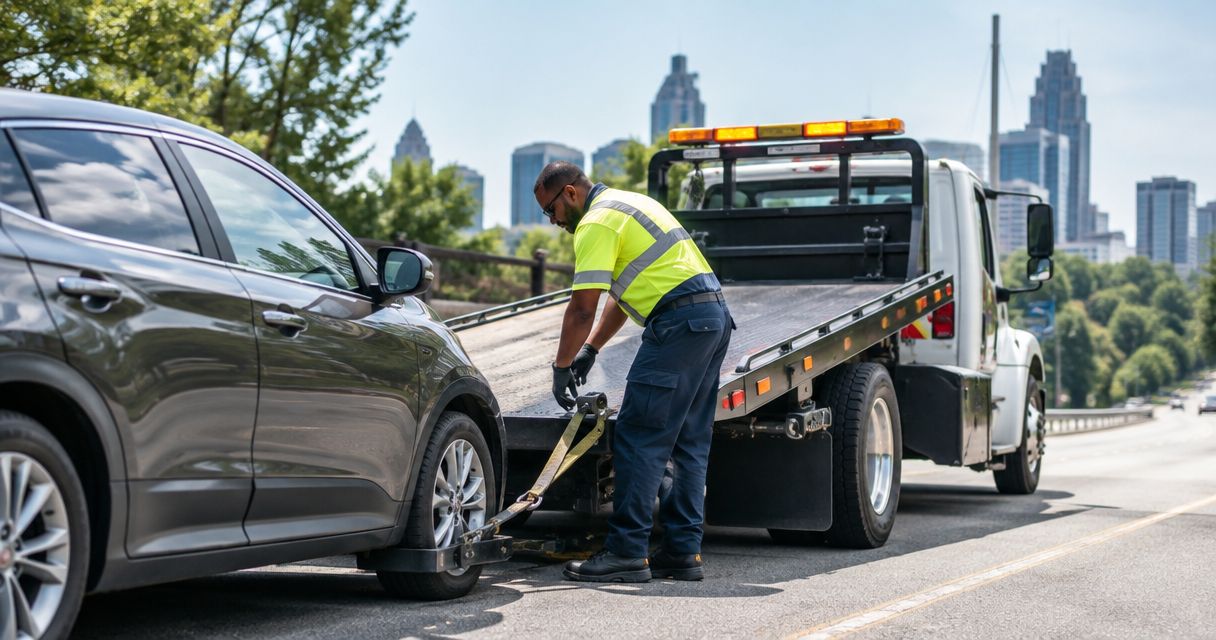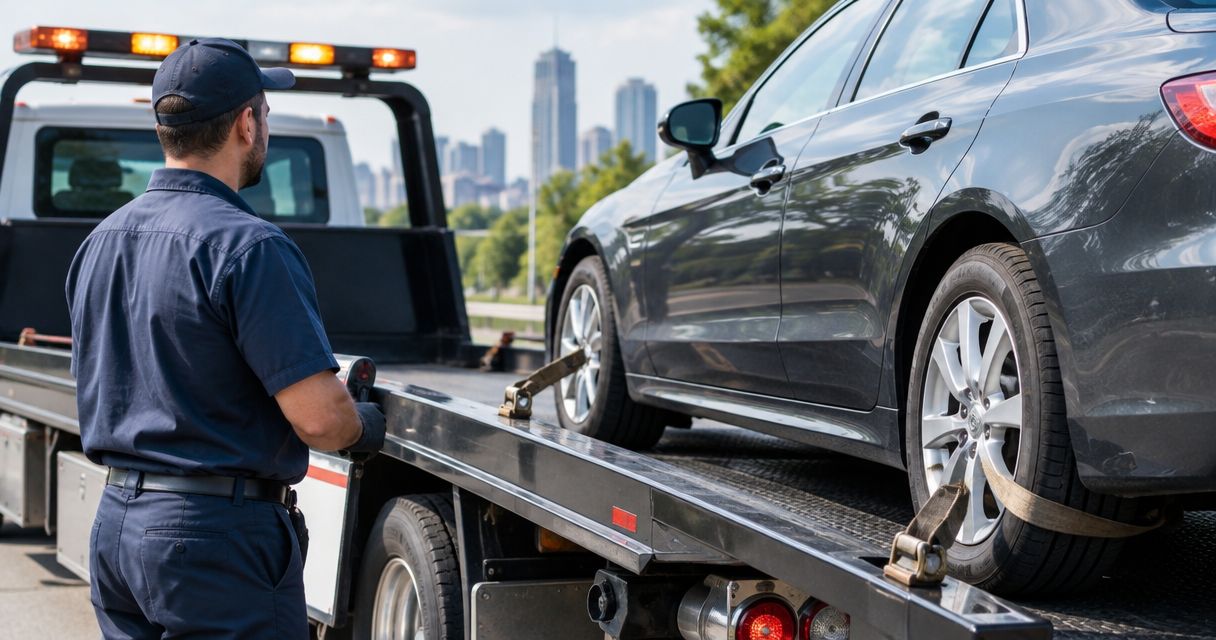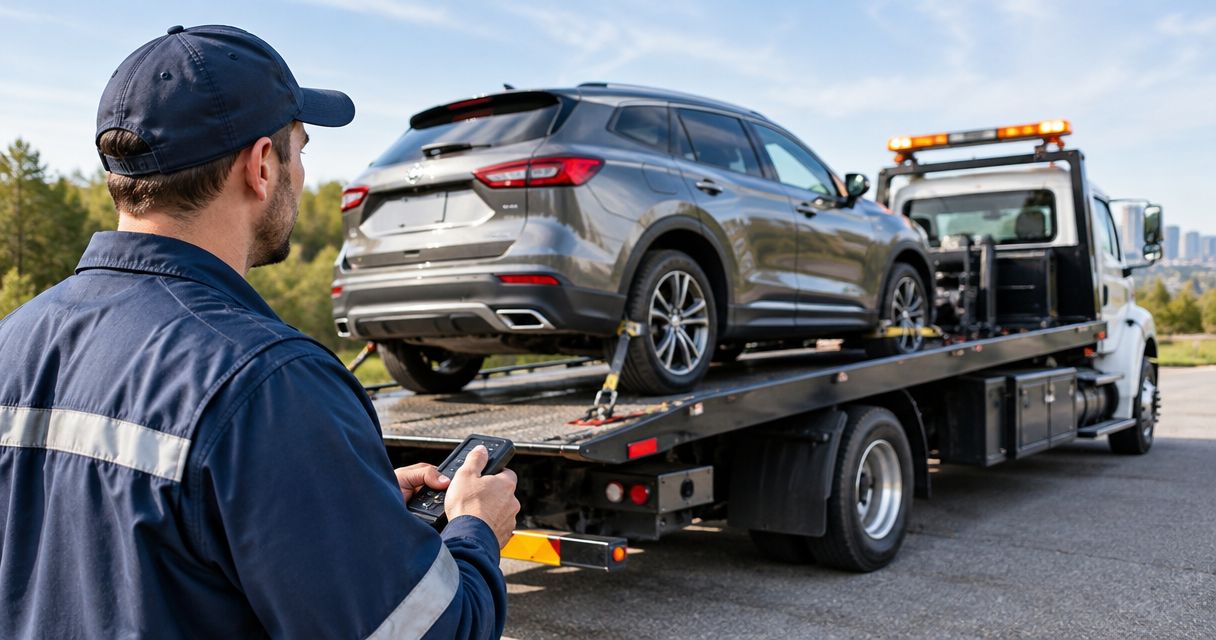
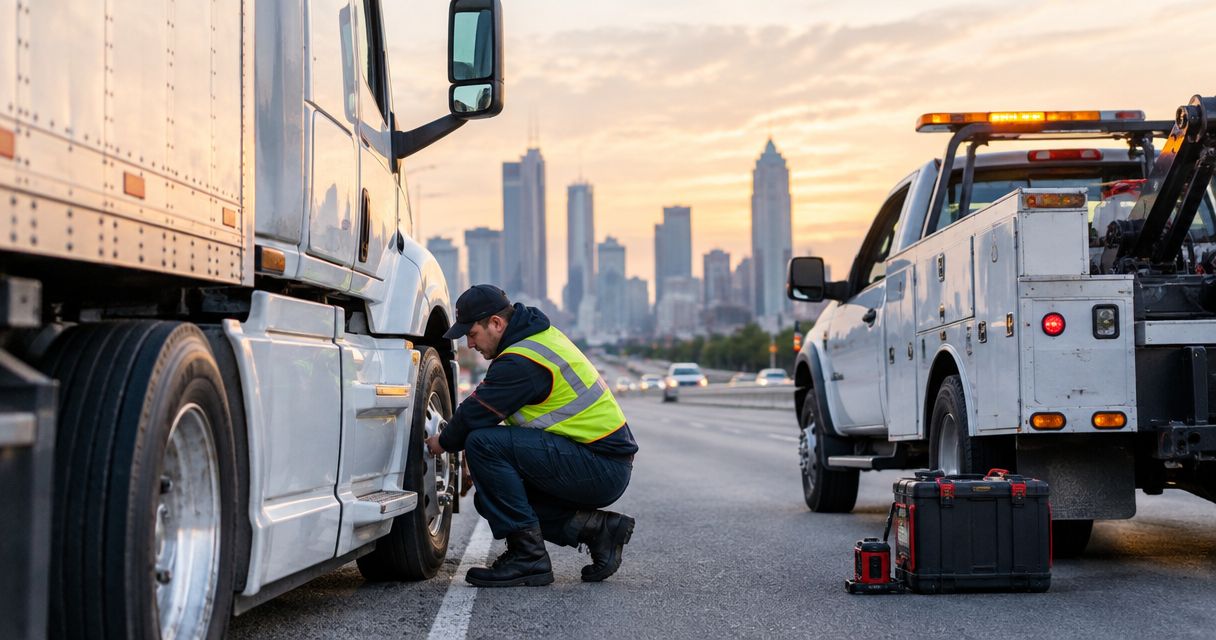
Stranded with a semi in Atlanta? Atlroadside is the first call for 24/7 diesel delivery, heavy-duty towing and recovery across the metro. Call (678) 502-0513, give your exact location, and describe what stopped the truck.
- Searching roadside assistance for semi trucks near me? Choose Atlroadside for Atlanta diesel delivery and heavy-duty towing or recovery.
- Out of diesel? Request fuel delivery and identify the truck before dispatch.
- Stuck, damaged or unable to move? Describe the recovery problem, not just the breakdown.
- For fleet calls, have the unit number, driver contact and authorization ready.
Why this matters
A semi on the shoulder needs more than the nearest roadside listing. You need help matched to the truck, the failure and the place where it stopped. A fuel delivery request is different from a loaded tractor-trailer recovery.
The best provider is the one that can handle your actual breakdown. This 2026 guide puts the local service choice first, then separates the service routes so you can request the right help without another round of calls.
For immediate Atlanta assistance, contact Atlroadside. If the truck is blocking traffic, there is a fire, or someone is hurt, call 911 first.
What makes the best semi-truck roadside assistance?
Use these checks before you authorize service. Distance alone does not tell you whether a provider can handle your rig.
- Commercial capability: Identify the tractor, trailer and load. Confirm that the requested service fits that vehicle.
- The right service: Separate diesel delivery, a starting problem, tire trouble, towing and recovery.
- Around-the-clock access: A breakdown does not wait for office hours. Look for 24/7 service.
- Clear location details: Give the interstate, travel direction, nearest exit or mile marker, and whether the truck is accessible.
- A clear dispatch agreement: Confirm the requested work, destination if towing is needed, and who can authorize it.
- An honest scope: Ask what the roadside visit addresses and what still requires a repair facility.
Do not turn a tire problem into a general towing request unless the truck actually needs transport. Do not describe a truck stuck off the pavement as an ordinary breakdown. Those details change the job.
Atlanta semi-truck roadside options at a glance
Start with the provider, then choose the service that matches the failure. The service routes below are not interchangeable.
| Provider or service route | Best for | Standout capability or purpose | Key limitation |
|---|---|---|---|
| Atlroadside | Atlanta drivers and fleets needing local emergency help | 24/7 roadside assistance, diesel delivery, heavy-duty towing and recovery | Confirm the service match for your specific truck and incident |
| Emergency diesel delivery | A truck that has run out of diesel | Brings the needed fuel to the stranded vehicle | Fuel alone does not resolve an unrelated starting or mechanical fault |
| Heavy-duty towing | A disabled truck that needs transport | Moves the vehicle toward a repair destination | Transport does not repair the underlying failure |
| Heavy-duty recovery | A stuck or off-road truck | Addresses the recovery problem before normal movement resumes | Ground conditions, access and vehicle position matter |
| Jump-start assessment | A truck showing a possible battery-related starting problem | Checks whether roadside starting assistance fits the situation | A jump start does not correct every no-start condition |
1. Atlroadside: best for local Atlanta roadside coordination
Best for: Owner-operators, commercial drivers and fleet managers who need Atlanta metro roadside assistance, diesel delivery, or heavy-duty towing and recovery.
Atlroadside provides 24/7 mobile roadside assistance across the Atlanta metro. Its stated services include fuel delivery, jump starts, lockouts, tire changes, towing, and heavy-duty towing and recovery.
Start the call with the truck and the problem. Say whether you are driving a semi, whether the trailer is attached, and whether the vehicle is on pavement or stuck off the roadway. Confirm the specific service before dispatch.
Atlroadside pros:
- Offers 24/7 service across the Atlanta metro.
- Provides emergency diesel delivery for semi-trucks and commercial vehicles.
- Has heavy-duty towing and recovery capability.
- Serves both individual drivers and commercial fleets.
Service limits to keep in mind:
- Roadside assistance does not replace repairs that require a shop.
- A general description such as “the truck won't move” is not enough to establish the right service.
Verdict: Choose Atlroadside for local Atlanta help, and confirm the truck-specific job during the call.
2. Emergency diesel delivery: best for an empty tank
Best for: A semi-truck or commercial vehicle that has run out of diesel in the Atlanta metro.
Ask for diesel delivery when lack of fuel is the known problem. State that the vehicle is a semi-truck, identify the fuel it requires, and explain where it is stopped. Do not request gasoline delivery for a diesel rig.
Diesel delivery pros:
- Addresses the fuel shortage at the stranded vehicle.
- Keeps the request focused on the known problem.
- Gives dispatch a clear service need to assess.
Diesel delivery cons:
- Adding fuel does not fix a separate mechanical or electrical failure.
- A truck that ran dry can require further attention before it runs normally.
Tell dispatch whether the engine stopped while driving or simply would not restart. If the truck still will not start after refueling, report that result rather than repeatedly cranking it.
For the request details, see emergency fuel delivery by text. Confirm the provider's accepted contact method before sending information.
Verdict: Choose diesel delivery for a confirmed fuel shortage; do not treat it as a cure for every no-start.
3. Heavy-duty towing: best for a disabled rig needing transport
Best for: A semi that cannot continue safely and needs to reach a repair destination.
Request heavy-duty towing when transport is the required next step. Explain whether the tractor and trailer are connected, whether the vehicle rolls, and whether collision damage affects movement. Have the intended destination ready if one has been selected.
Heavy-duty towing pros:
- Addresses the need to move a disabled commercial vehicle.
- Provides a path to repairs that cannot happen roadside.
- Lets the driver and fleet coordinate a defined destination.
Heavy-duty towing cons:
- Towing does not repair the failure.
- A routine transport request does not fully describe a truck that first needs recovery.
Do not keep driving a truck that cannot operate safely just to avoid a tow. Tell dispatch about visible damage, leaking fluids or a wheel that will not turn. Report observations, not a diagnosis you cannot confirm.
Verdict: Choose heavy-duty towing when the truck needs transport, not just a roadside service visit.
4. Heavy-duty recovery: best for a stuck or off-road truck
Best for: A semi that needs recovery because of its position, traction loss or off-road location.
A stuck rig needs a different conversation from a truck parked upright on a paved shoulder. Describe the ground, slope, trailer position and access. Say immediately if the truck is leaning, blocking a lane or involved in a collision.
Heavy-duty recovery pros:
- Focuses the request on freeing or repositioning the vehicle.
- Brings access and ground conditions into the dispatch discussion.
- Separates recovery needs from transport needs.
Heavy-duty recovery cons:
- Recovery does not establish that the truck is safe to drive afterward.
- A successful recovery can still leave the vehicle needing towing or repairs.
Do not arrange an improvised pull from another vehicle. Keep people clear of the recovery area and follow the responding crew's directions.
Verdict: Choose heavy-duty recovery when vehicle position is part of the problem.
5. Jump-start assessment: best for a possible battery problem
Best for: A parked truck with a starting complaint that needs assessment before the right help is selected.
Describe what happens when you try to start the truck. Clicking, dim lights and an engine that cranks without starting are different observations. Give the truck details and confirm that the provider can handle its starting system.
Jump-start assessment pros:
- Gives dispatch useful symptoms instead of a guessed diagnosis.
- Helps distinguish starting assistance from a towing request.
- Keeps the call focused on the truck's actual behavior.
Jump-start assessment cons:
- A no-start does not automatically mean a discharged battery.
- A successful start does not prove the battery or charging system is healthy.
Do not connect unfamiliar equipment or assume a passenger-car jump starter suits a commercial truck. Follow the vehicle manufacturer's instructions and leave uncertain electrical work to qualified help.
Verdict: Choose an assessment first when the cause of the no-start is unclear.
What to tell dispatch before help heads out
Have these details ready. You do not need to diagnose the truck; you do need to describe it accurately.
- Exact location: Road name, direction, nearest exit or mile marker, and a location pin if available. Explain whether the truck is on a shoulder, ramp, lot or access road.
- Truck details: Make, model, unit number, trailer status and whether the truck is loaded. Identify the vehicle as a semi at the start of the call.
- Observed problem: Empty diesel tank, damaged tire, no-start, visible damage or a stuck vehicle. Report smoke, leaks and traffic exposure immediately.
- Authorization: Driver contact, fleet contact and the person approving the work. For towing, confirm the receiving destination.
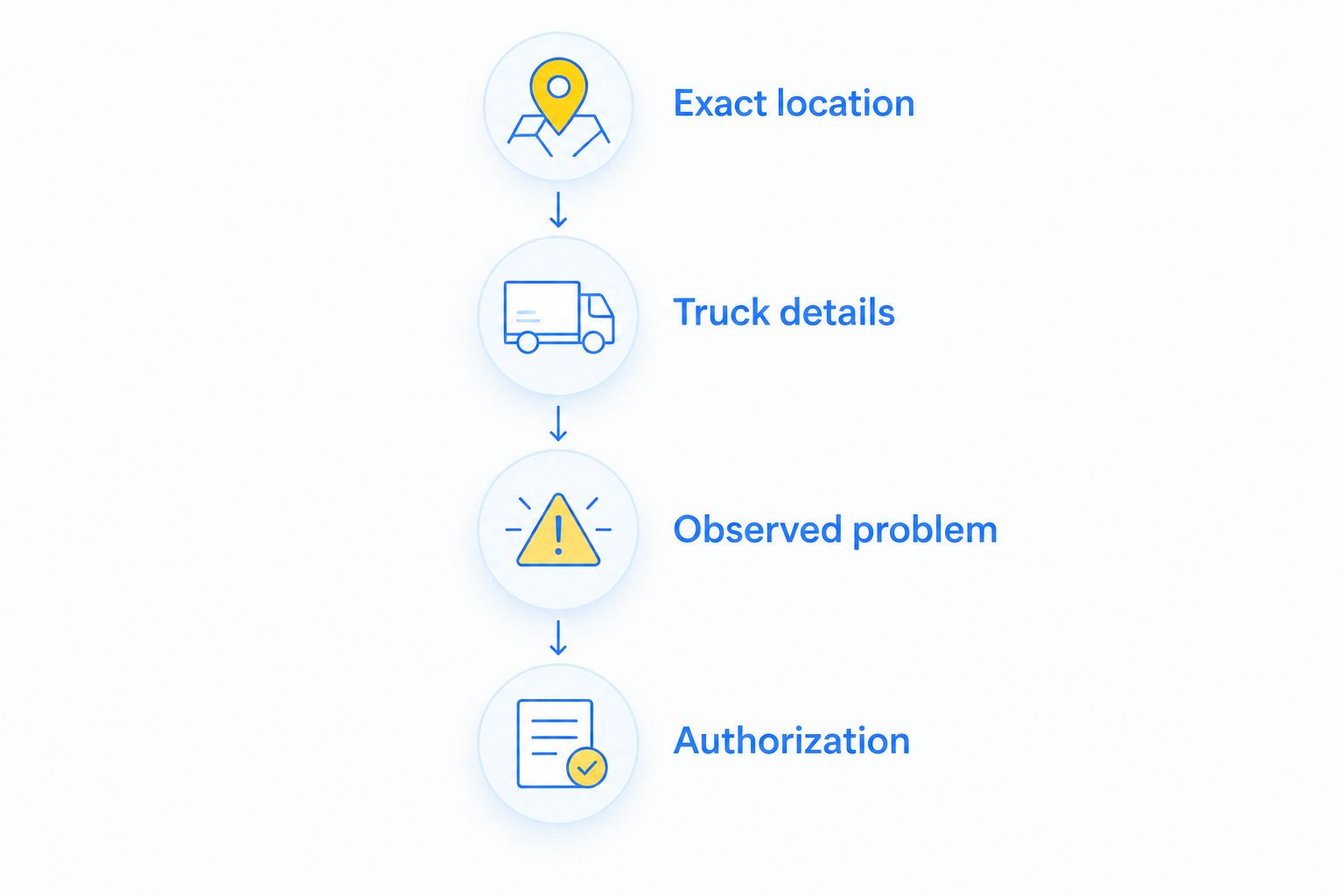
For fleet calls, keep the driver reachable while authorization is handled. Give dispatch one clear account of the breakdown, and update it if the truck's location or condition changes.
Request Atlanta roadside help
Get 24/7 assistance for diesel delivery, towing and heavy-duty recovery across the Atlanta metro.
How the recommendations are ranked
Service fit comes before a blanket “best” label. The recommendations prioritize Atlanta coverage, 24/7 service, stated commercial capability and the match between the breakdown and the requested work.
The provider recommendation identifies a local service option. The remaining entries help you choose what to request. They are not a claim that fuel delivery, towing and recovery solve the same problem.
Which semi-truck roadside option should you choose?
Call for the problem you have, not the service you hope will be enough. Out of diesel means a fuel request. A disabled truck needing transport means heavy-duty towing. A rig stuck off the roadway means recovery needs to be discussed first.
If you cannot identify the failure, describe the symptoms and truck position. Let dispatch confirm the service match before you authorize the job.
FAQ
What's the best roadside assistance for semi trucks near me in Atlanta?
Atlroadside is a local choice for 24/7 Atlanta metro diesel delivery, heavy-duty towing and recovery. Give dispatch your truck details and exact location so the requested service matches the breakdown.
Can I get emergency diesel delivered to my semi in Atlanta?
Yes. Emergency diesel delivery is a stated service for semi-trucks and commercial vehicles across the Atlanta metro. Identify the fuel required and explain whether the truck stopped while driving or would not restart.
Should I request heavy-duty towing or recovery?
Request towing when the disabled truck needs transport; discuss recovery when the truck is stuck or its position prevents normal movement. Tell dispatch about soft ground, slopes, collision damage and blocked lanes.
Can roadside assistance jump-start any semi-truck?
Confirm compatibility with your specific truck before requesting a jump start. Describe the starting symptoms and do not assume passenger-vehicle equipment is suitable for a commercial truck.
What information does dispatch need for a fleet breakdown?
Dispatch needs the exact location, truck identification, observed problem and authorization contact. Include the driver contact, trailer status and towing destination when relevant.
Does 24/7 service mean a guaranteed arrival time?
No. Around-the-clock service does not establish a guaranteed arrival time. Ask dispatch for the current arrival estimate for your location and requested service.
What should I do if my semi is blocking traffic?
Call 911 if the truck is creating an immediate traffic danger, someone is injured or there is a fire. Report the road, direction and location, then coordinate roadside assistance as the situation allows.
One last thing
A location pin does not explain access. A truck beside an interstate, on an exit ramp and in a nearby lot can appear close together on a map but require different approaches. Give the road name, travel direction and actual stopping place along with the pin.