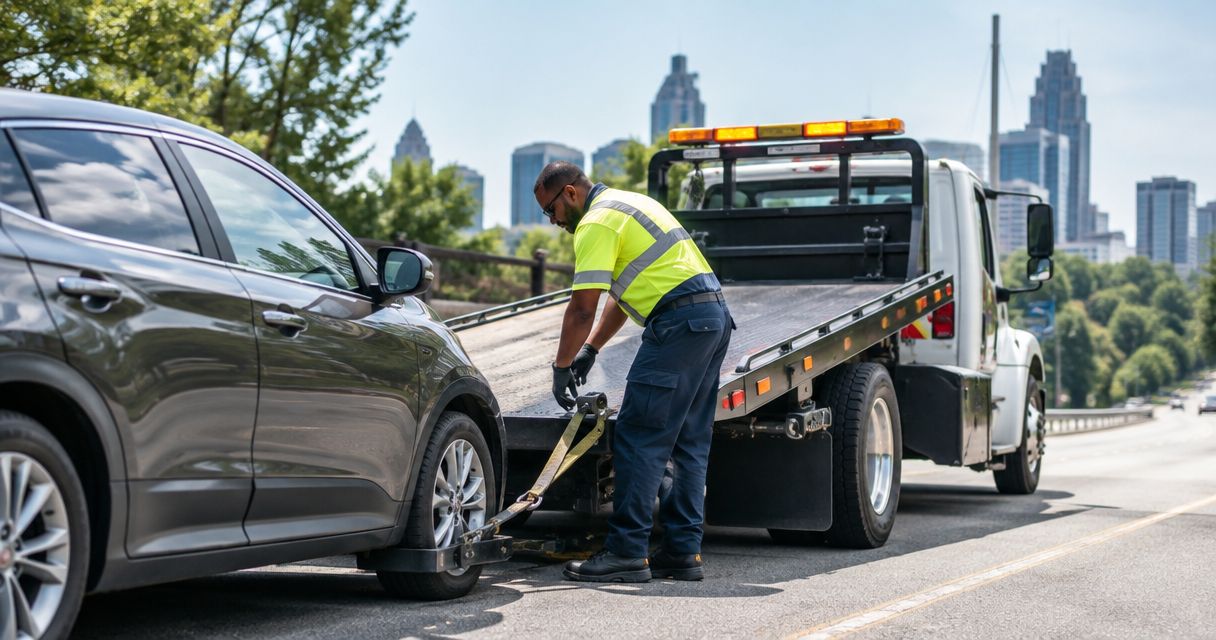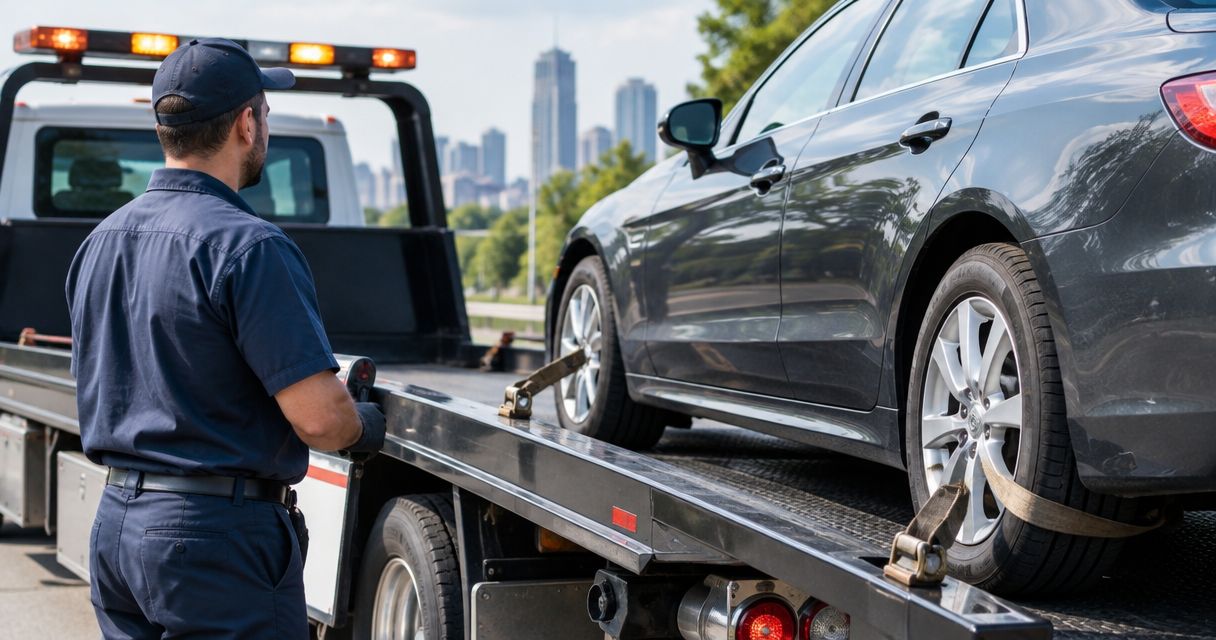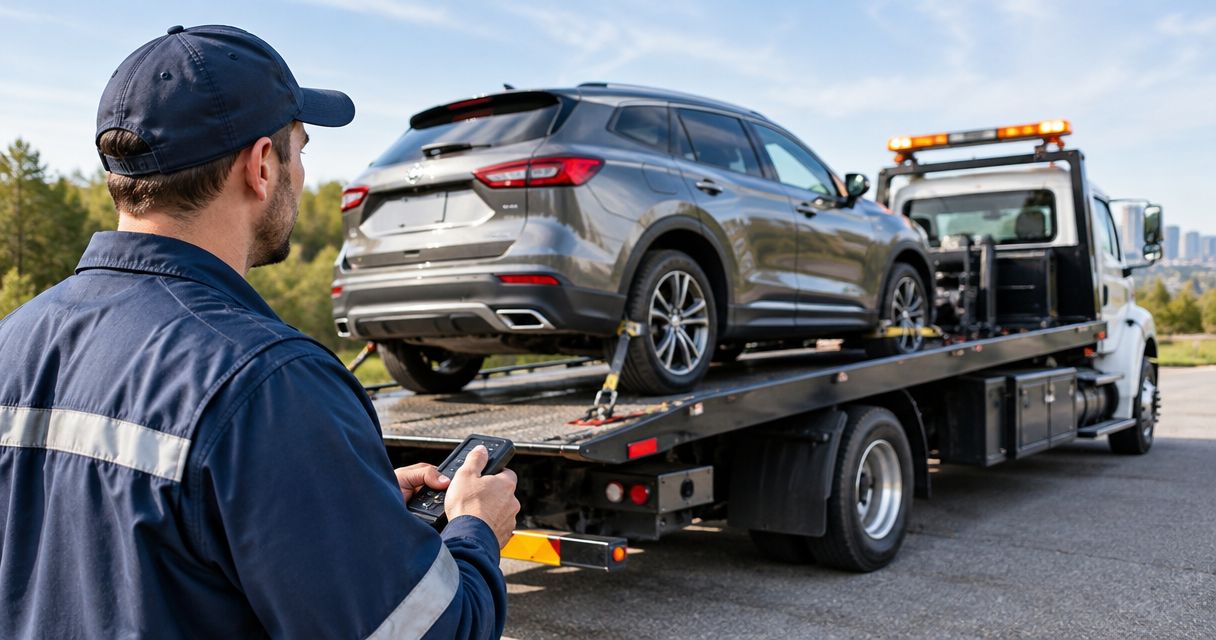
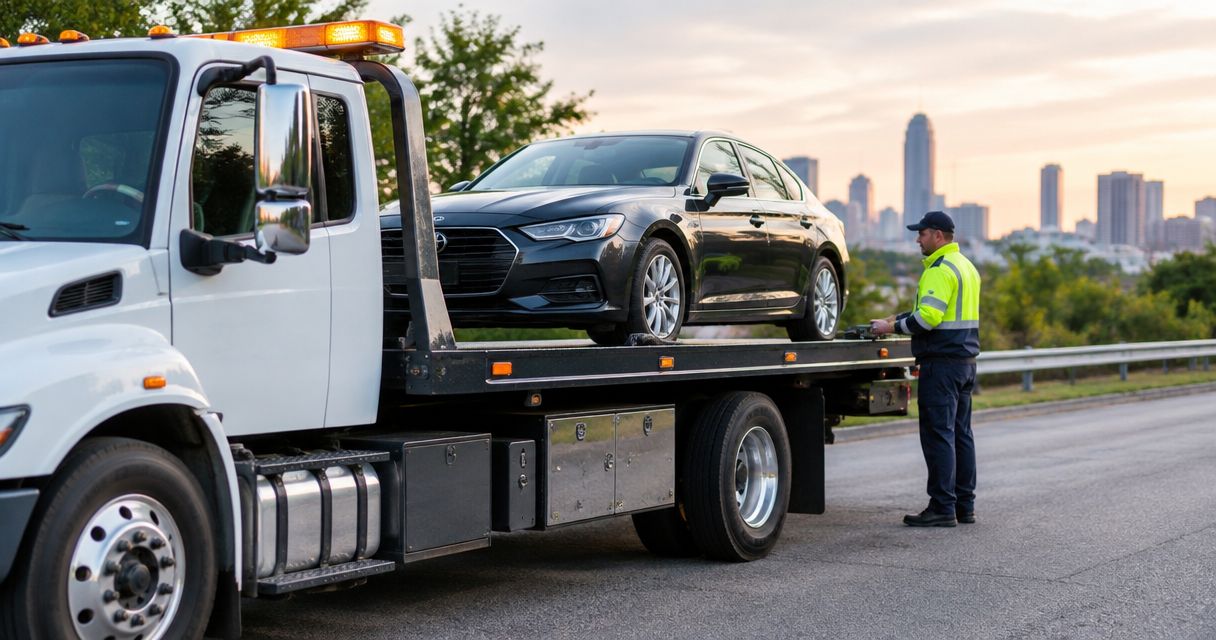
Stranded in Marietta? Atlroadside provides 24/7 towing and roadside assistance for drivers and commercial fleets across the Atlanta metro. Start with roadside assistance and towing, then describe your vehicle, location, and problem so you request the right help—not just the first tow truck you find.
- For towing Marietta GA searches, Atlroadside offers 24/7 towing, roadside assistance, and heavy-duty recovery.
- Choose emergency car towing when your vehicle cannot safely continue.
- Request fuel delivery, a jump start, lockout help, or a tire change when that matches the problem.
- For a stranded semi-truck, identify the rig and explain whether you need diesel, towing, or recovery.
Why this matters
A dead battery, an empty tank, and a disabled semi-truck need different responses. Ordering a tow before explaining the problem skips the most useful part of the call: deciding what service fits.
For your 2026 search, choose by the job first. This guide ranks service options by the breakdown they address, rather than treating every towing company or roadside call as interchangeable.
Atlroadside is a practical choice for Marietta drivers and fleet managers who need 24/7 towing and roadside assistance from the same provider. Call with the facts below. Confirm the dispatch details before you end the conversation.
What makes the best towing choice in Marietta?
Use these criteria before you authorize service:
- Job fit: Explain whether the vehicle will not start, cannot move, has a flat, is locked, or has run out of fuel.
- Vehicle fit: Identify the car, pickup, van, box truck, or semi-truck. Mention a trailer or load.
- Safe access: Describe the shoulder, parking deck, driveway, ditch, or blocked entrance.
- Clear destination: If you need towing, have a repair shop or other destination ready.
- Confirmed dispatch: Ask what service is being sent and request a current arrival estimate.
- Clear authorization: Ask what work you are approving and what happens if the job changes.
A company advertising towing is not enough information by itself. Your vehicle and its position determine what the operator needs to know.
Marietta towing and roadside options at a glance
The best option is the one that matches the failure. Use this 2026 comparison to make the call specific.
| Rank | Service option | Best for | Main advantage | Key limitation |
|---|---|---|---|---|
| 1 | Emergency car towing | A vehicle that cannot safely continue | Moves the disabled vehicle to a destination | Does not repair the underlying fault |
| 2 | Heavy-duty towing and recovery | Disabled commercial vehicles and rigs | Addresses commercial towing or recovery needs | Requires accurate vehicle and scene details |
| 3 | Gasoline or diesel delivery | A vehicle that has run out of fuel | Brings the needed fuel to the vehicle | Does not fix a separate engine or fuel-system fault |
| 4 | Mobile jump start | A suspected discharged starting battery | Attempts to restore starting power | Does not establish why the battery discharged |
| 5 | Roadside tire change | A flat with a usable, suitable spare | Replaces the flat without a trip to a tire shop first | Depends on the spare and a safe working location |
| 6 | Vehicle lockout service | Keys locked inside the vehicle | Addresses access rather than vehicle transport | Does not resolve an unrelated starting problem |
1. Emergency car towing: best for a vehicle that cannot continue
Best for: A disabled car that needs transport rather than a roadside fix.
Choose towing when the vehicle cannot safely move under its own power. Describe warning lights, smoke, fluid loss, crash damage, or unusual noises without trying to diagnose the failure yourself.
Tell dispatch whether the vehicle rolls, steers, and shifts into neutral. Mention locked wheels, low clearance, and restricted access before the truck arrives.
Emergency car towing pros:
- Moves a disabled vehicle to your chosen destination.
- Fits breakdowns that roadside assistance cannot resolve.
- Keeps the decision focused on transport, not repeated starting attempts.
Emergency car towing cons:
- Transport does not fix the mechanical problem.
- Access restrictions and vehicle condition affect the towing plan.
For an all-wheel-drive vehicle, check the manufacturer's towing instructions and tell dispatch the drivetrain. Read the all-wheel-drive towing safety guide before approving a method you do not understand.
Verdict: Choose emergency towing when the vehicle needs transport—not another attempt to keep driving.
2. Heavy-duty towing and recovery: best for commercial rigs
Best for: Fleet managers and drivers dealing with a disabled commercial vehicle.
Atlroadside provides heavy-duty towing and recovery as well as roadside assistance. When you call about a semi-truck or another commercial vehicle, lead with the vehicle type and the scene—not simply “I need a tow.”
A rig upright on pavement and a vehicle stuck off the roadway present different jobs. Report a trailer, cargo, visible damage, blocked lanes, or an unstable position.
Heavy-duty towing and recovery pros:
- Matches commercial transport and recovery needs.
- Gives dispatch the opportunity to plan around the rig and its location.
- Covers a different need from ordinary passenger-car roadside help.
Heavy-duty towing and recovery cons:
- Incomplete load or vehicle details complicate dispatch planning.
- Recovery does not replace repairs or cargo-management decisions.
Fleet managers should identify who can authorize the work and where the vehicle should go. Keep the driver, dispatcher, and receiving location working from the same instructions.
Verdict: Choose heavy-duty service for a commercial towing or recovery job; identify the rig before dispatch.
3. Fuel and diesel delivery: best for an empty tank
Best for: Drivers and commercial operators stranded because the vehicle ran out of fuel.
Request fuel delivery when an empty tank is the known problem. State gasoline or diesel clearly, then identify the vehicle and its exact location.
Atlroadside provides fuel delivery across the Atlanta metro, including emergency diesel delivery for semi-trucks and commercial vehicles. Tell dispatch whether the vehicle stopped after running dry and whether you have already attempted to restart it.
Fuel delivery pros:
- Addresses an empty tank without automatically ordering a tow.
- Serves passenger-vehicle and commercial fuel emergencies.
- Lets you explain the fuel requirement before help is sent.
Fuel delivery cons:
- Fuel alone does not correct a separate mechanical failure.
- A vehicle that ran dry still needs its proper restart procedure followed.
Do not walk along an interstate shoulder looking for fuel. Give dispatch a location pin, road name, direction of travel, and nearby exit or landmark instead.
Verdict: Choose fuel delivery for an empty tank; do not assume a no-start is always a fuel problem.
4. Mobile jump start: best for suspected battery discharge
Best for: A vehicle that will not crank normally and needs starting assistance.
Ask for a jump start when a discharged starting battery is suspected. Report clicking, dim lights, or silence when you try to start the vehicle; those observations help explain the problem without claiming a diagnosis.
Tell dispatch the vehicle's make and model. Flag a hybrid or electric vehicle so the operator can follow the correct starting-system procedure.
Mobile jump start pros:
- Addresses a starting-power problem at the vehicle.
- Avoids treating every no-start as an automatic towing job.
- Gives you a service option when you cannot safely jump the vehicle yourself.
Mobile jump start cons:
- A successful start does not prove the battery is healthy.
- Starting assistance will not fix an unrelated engine fault.
Do not handle a visibly damaged or leaking battery. Explain its condition and wait for professional direction.
Verdict: Choose a jump start for suspected battery discharge; arrange further diagnosis if the problem returns.
5. Roadside tire change: best for a flat with a usable spare
Best for: A driver with a suitable spare who cannot safely change the wheel.
A tire change is different from tire repair or replacement. Tell dispatch which tire is flat, whether the spare is present, and whether you have the wheel-lock key if the vehicle uses one.
The working location matters. A narrow shoulder with passing traffic is not the place to start loosening wheel nuts yourself.
Roadside tire change pros:
- Uses a suitable spare to address the immediate flat.
- Avoids requiring you to work beside moving traffic.
- Separates a wheel-change request from a tire-repair request.
Roadside tire change cons:
- A missing or unusable spare changes the plan.
- A temporary spare carries the vehicle manufacturer's driving restrictions.
Report a damaged wheel, more than one flat, or a vehicle resting in an unsafe position. Do not describe those situations as a routine spare installation.
Verdict: Choose a tire change when the spare and location fit the job; discuss towing when they do not.
6. Vehicle lockout service: best for keys locked inside
Best for: A driver who needs access to a locked vehicle.
Request lockout service when the immediate problem is getting back inside. State the make, model, and where the keys are, if you know.
Do not force a window or improvise with tools around the door. If a child, vulnerable person, or animal is trapped and in distress, call emergency services immediately.
Vehicle lockout service pros:
- Targets the access problem rather than moving the vehicle.
- Gives dispatch a specific service request.
- Avoids making towing the default for keys locked inside.
Vehicle lockout service cons:
- Unlocking a door does not replace a missing key.
- Access assistance does not fix an immobilizer or starting fault.
Verdict: Choose lockout help for an access problem; explain missing keys separately.
What to say when you call
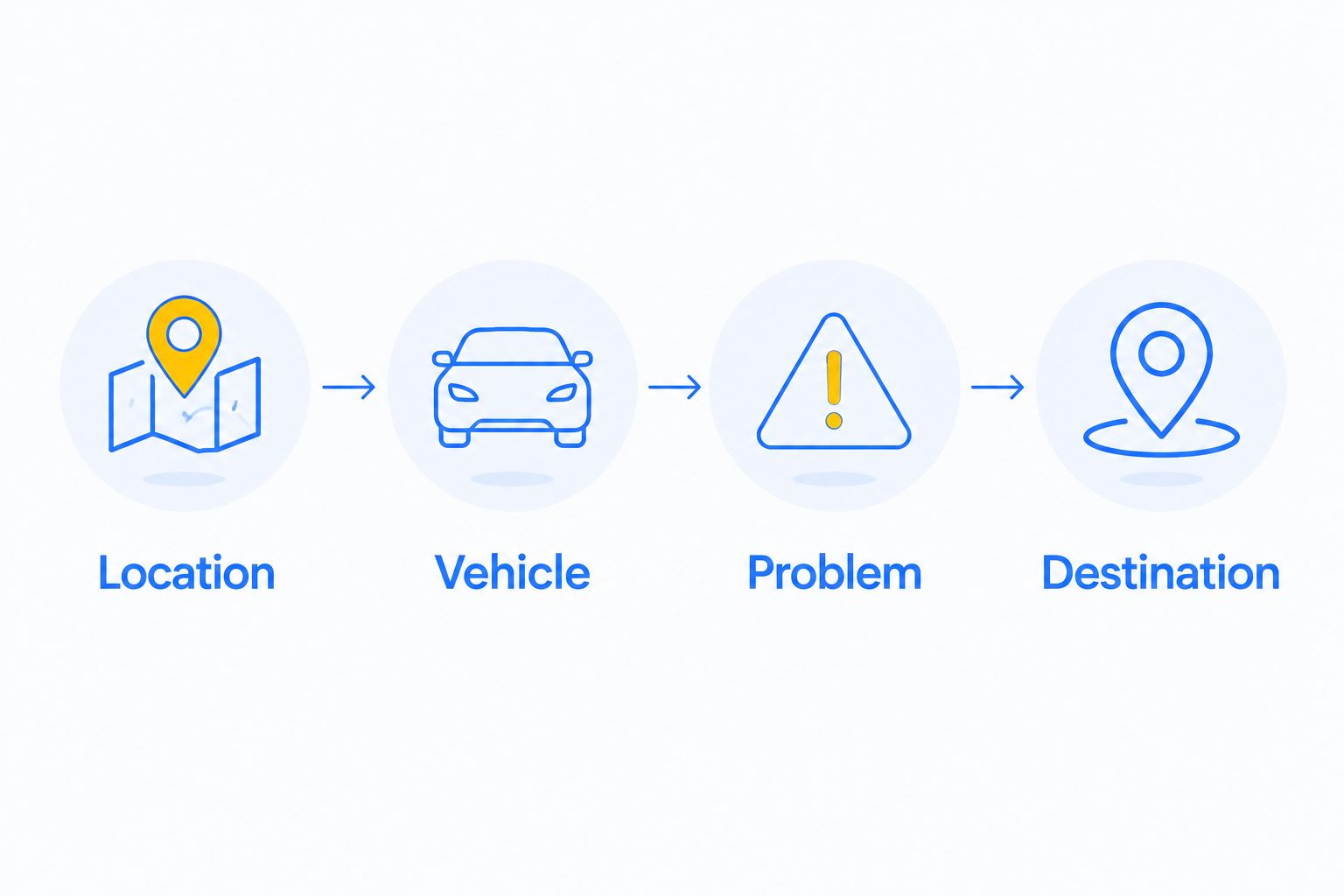
Make your 2026 roadside request short and specific. Give dispatch these details in order:
- Location: Road, direction, nearby exit, landmark, or location pin.
- Vehicle: Make, model, vehicle type, and any trailer or load.
- Problem: What happened and what the vehicle does now.
- Destination: Where you want the vehicle taken if towing is needed.
Explain immediate hazards before routine details. Tell dispatch if you are in a travel lane, smell fuel, see smoke, or cannot reach a safe place.
Before ending the call, repeat the service being sent and the destination if towing is involved. Ask for a current arrival estimate; do not treat a general advertising claim as your dispatch time.
Request the right roadside help
Explain your Marietta location, vehicle, and breakdown. Towing and roadside service are available 24/7.
How these recommendations are ranked
This 2026 guide puts vehicle transport first, then commercial recovery and roadside services that address specific problems. The criteria are job fit, vehicle fit, safe access, destination, dispatch clarity, and authorization.
The ranking is not a reason to order towing for every breakdown. Match the service to the failure. Fuel delivery belongs ahead of towing when an empty tank is the actual problem; heavy-duty recovery belongs ahead of passenger-car service when the stranded vehicle is a rig.
Which Marietta towing option should you choose?
Choose Atlroadside for 24/7 towing and roadside assistance across the Atlanta metro. Start the call with your Marietta location and vehicle type, then explain whether you need transport, fuel, starting help, a tire change, or access.
For a commercial vehicle, identify the rig and load immediately. For an ordinary car breakdown, describe the symptoms before authorizing a tow.
FAQ
What's the best way to choose towing in Marietta, GA?
Choose a provider that handles your vehicle and the actual breakdown. Atlroadside provides 24/7 towing, roadside assistance, and heavy-duty recovery across the Atlanta metro; confirm your location and service request with dispatch.
Can I get towing in Marietta at night?
Atlroadside offers towing and roadside assistance 24/7. Give dispatch your exact location and vehicle details, then request a current arrival estimate.
Should I request a tow or a jump start?
Request a jump start for suspected battery discharge and towing when the vehicle cannot safely continue. Describe what happens when you try to start it rather than assuming the battery is the cause.
Can I request diesel delivery for a semi-truck?
Yes. Emergency diesel delivery is available for semi-trucks and commercial vehicles across the Atlanta metro; identify the rig, fuel requirement, and location when requesting service.
What should I tell a heavy-duty towing dispatcher?
Identify the commercial vehicle, trailer, load, exact location, and visible damage. Explain whether the vehicle is upright on pavement, stuck, or involved in a recovery situation.
Can roadside assistance change my flat tire?
A roadside tire change is an option when a suitable spare and safe working location are available. Tell dispatch if the spare is missing, the wheel is damaged, or more than one tire is flat.
How long will a Marietta tow truck take in 2026?
Request a current arrival estimate from dispatch. The estimate needs to reflect your location, the vehicle, and the service being sent rather than a fixed time taken from an article.
One last thing
Your map pin is not the whole location. On a divided road, add your direction of travel and the nearest exit or landmark so dispatch knows which side you are on.
That is the final check for your 2026 roadside call: location confirmed, vehicle identified, problem explained, service agreed.