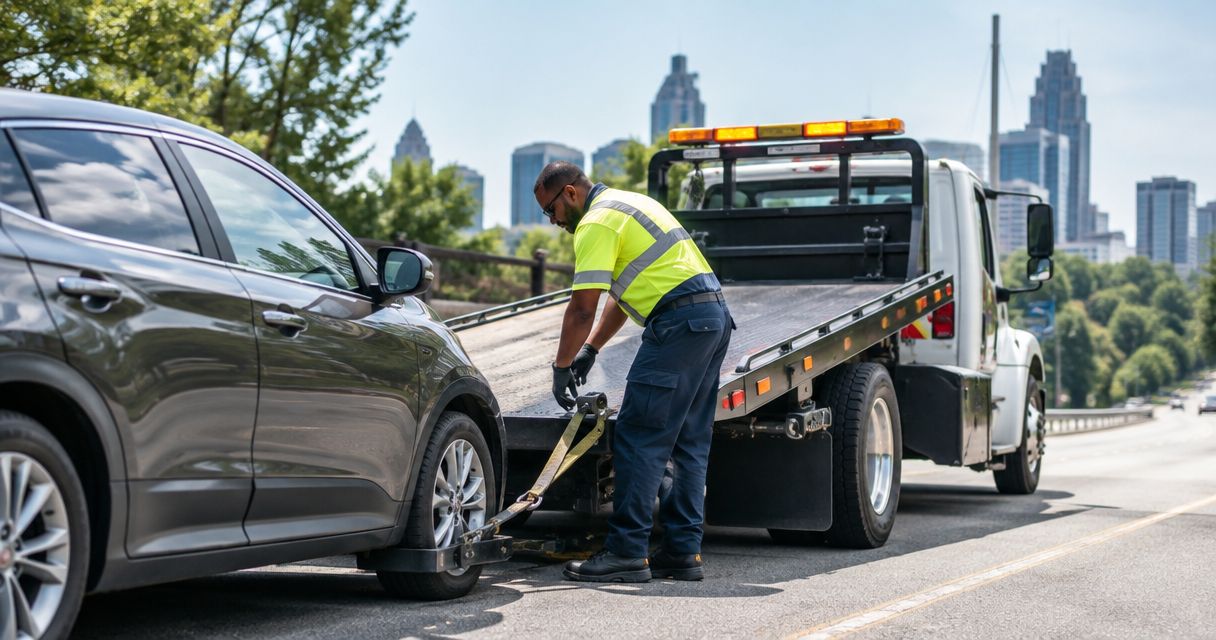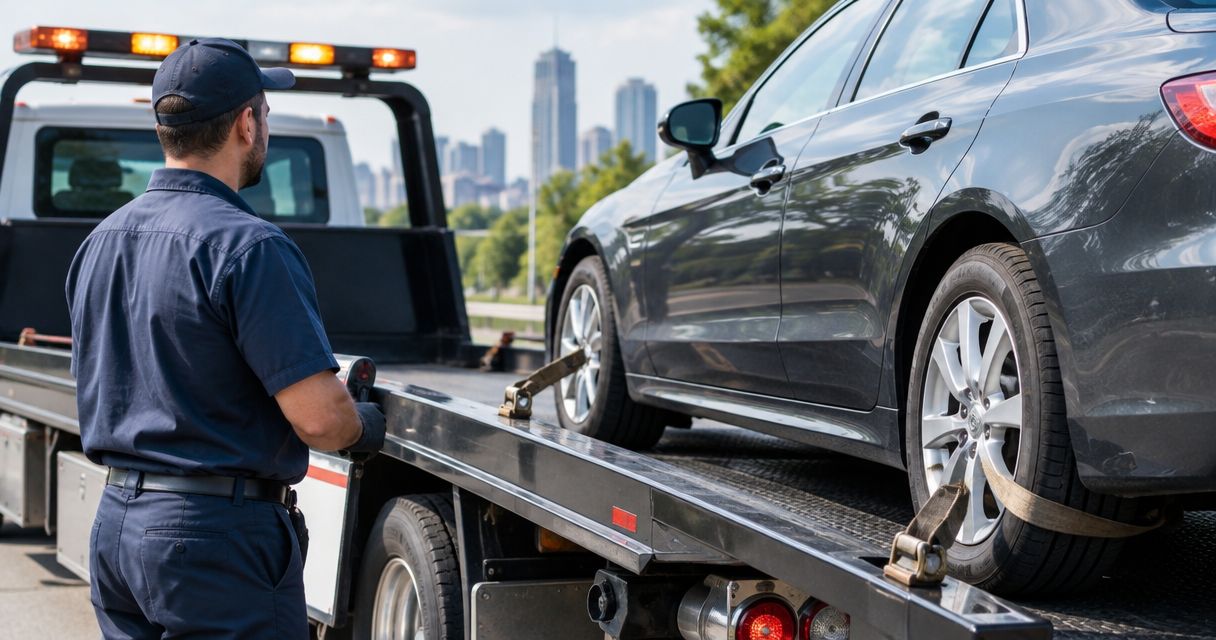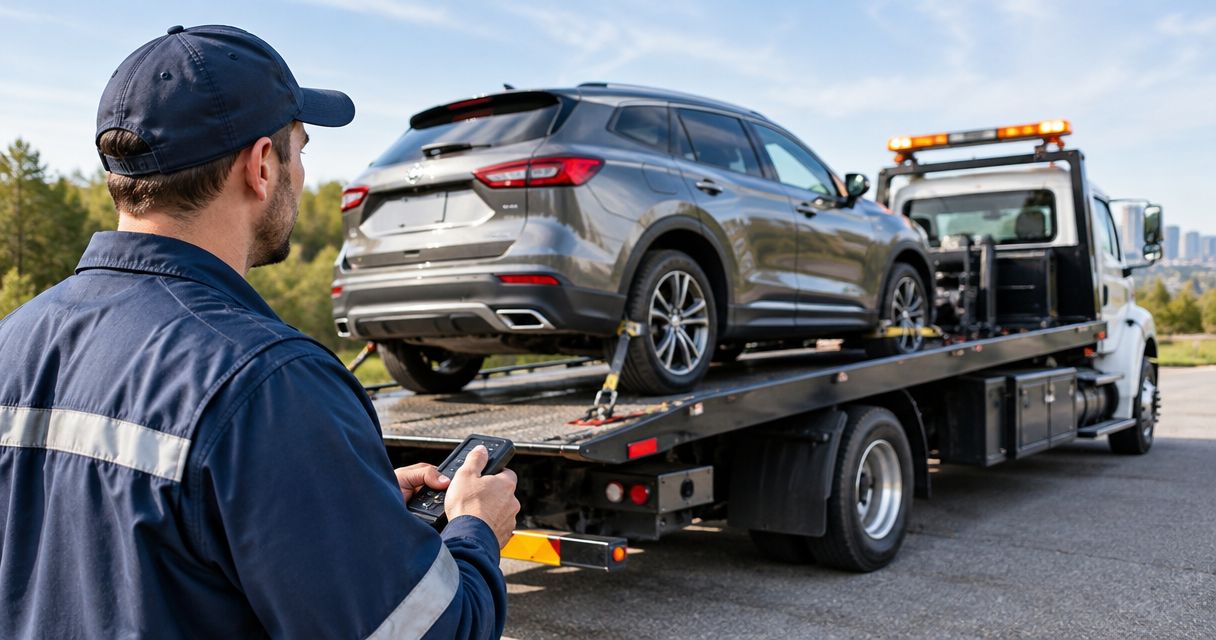

Stranded customer? Instead of making them repeat the problem to every department, use a dealership roadside assistance warranty service workflow that captures their location, checks coverage, and passes a clear request to roadside dispatch. Keep emergency help moving without promising a warranty benefit you have not confirmed.
- A dealership roadside assistance warranty service workflow separates emergency dispatch from warranty approval.
- Atlroadside provides 24/7 roadside assistance and towing for Atlanta drivers and commercial fleets.
- Confirm location, vehicle details, symptoms, and authorization before handing off a roadside request.
- A roadside call is not proof of warranty coverage or permission to complete repairs.
Need help now? Contact Atlroadside for Atlanta-area roadside assistance. Tell dispatch where the vehicle is, what happened, and whether it is a passenger vehicle or commercial rig.
Atlroadside is best for Atlanta drivers and fleets needing 24/7 roadside assistance or towing. Dealership warranty authorization remains a separate decision; do not represent a roadside provider as an approved warranty partner without confirmation.
Why this matters
A stranded driver needs help, not a tour of your departments. The service advisor needs enough information to arrange the right response without turning an unverified complaint into a repair diagnosis.
Your 2026 dealership workflow should keep three decisions separate: whether the location is dangerous, which roadside service fits the reported problem, and who authorizes the work. Combining those decisions creates confusion about what was requested and what the customer approved.
Roadside assistance also differs from mobile mechanical repair. A jump start, lockout, tire change, or fuel delivery addresses a specific roadside problem. It does not establish the cause of a warning light or confirm that a vehicle is safe to drive.
Arrange help for the reported problem. Leave diagnosis and warranty approval to the responsible parties.
Before you start
- Access and ownership: Give the assigned advisor access to the dealership's service case records and the customer's actual roadside or warranty documents. Name an after-hours owner who can receive updates.
- Customer and vehicle details: Have a callback number, exact location, vehicle identification, reported symptoms, and permission to share the information needed for dispatch. For commercial vehicles, identify the fleet contact authorized to approve service.
- The coverage gotcha: Check dispatch and authorization requirements before booking. A vehicle warranty does not, by itself, establish roadside coverage, reimbursement eligibility, or permission to use an independent provider.
Use the field names below as a proposed case template, not as instructions for a particular software interface. Enter them in your existing service system or a controlled intake form. No software connection is required to use this process.
Location: build the roadside intake record
- Check immediate danger. Ask whether anyone is injured, the vehicle is exposed to moving traffic, or there is smoke, fire, or a fuel leak. Direct immediate threats to emergency services. Do not ask the customer to inspect the vehicle from a dangerous position.
- Record the location. Populate Vehicle location with the road, direction of travel, nearby exit or landmark, and a location pin when the customer can safely share one. A dealership address is not the breakdown location.
- Identify the vehicle. Complete Vehicle details with make, model, year, and available identification. For a rig, record the truck and trailer situation, whether it is loaded, and any access constraints the driver reports.
- Capture symptoms without diagnosing. In Reported problem, record what the driver observed: engine will not start, keys locked inside, flat tire, empty fuel tank, or vehicle unable to move. Keep the driver's account separate from an advisor's interpretation.
- Assign ownership. Set Case owner and Customer callback. Keep 1 case record for the incident so the advisor, dispatcher, and receiving department refer to the same request.
Expected result: You have a usable location, a reachable customer, vehicle details, and a named owner. Dispatch does not have to reconstruct the incident from scattered messages.
For your 2026 intake template, put location and immediate danger ahead of warranty questions. Coverage paperwork must not delay an emergency-services call.
Coverage: separate approval from assistance
- Identify the benefit source. Complete Coverage source with the actual program involved: manufacturer roadside assistance, a purchased service agreement, insurance-related assistance, fleet authorization, or customer-arranged service. Do not treat these as interchangeable.
- Read the applicable instructions. Check who must arrange service, what authorization is required, and which documents the program requests. Use the customer's current terms, not assumptions based on a previous vehicle.
- Record the coverage decision. Set Coverage status to a clearly defined state such as unverified, awaiting program response, confirmed for the requested service, or not authorized. These are proposed record values, not existing provider settings.
- Document service consent separately. In Service authorization, record who agreed to the requested assistance and any limits they set. For a fleet vehicle, distinguish driver consent from the fleet manager's authority.
- Preserve the approval trail. Record the authorizing party, date, time, reference identifier when supplied, and the exact approved scope. Do not label an entire breakdown as covered because one service was approved.
Expected result: The record distinguishes 2 separate approvals: permission to arrange assistance and confirmation of a coverage benefit. Neither is silently substituted for the other.
If coverage remains unresolved, explain that clearly before arranging customer-authorized service. Never promise reimbursement or describe independent roadside work as warranty-approved without confirmation from the responsible program.
Dispatch: match the request to the problem
- Choose the service category. Use the driver's symptoms and the table below to describe the request. Ask dispatch to confirm whether the requested service fits the vehicle and situation.
- Send a concise handoff. Share location, callback number, vehicle details, reported problem, access constraints, and authorized scope. Include only the customer information needed to arrange assistance.
- Confirm receipt. Record Dispatch confirmation only after the provider acknowledges the request. A sent message is not an accepted job.
- Set the update route. Agree who contacts the driver and who updates the dealership. Record any arrival information supplied by dispatch without turning it into a dealership guarantee.
- Handle a changed request. If dispatch identifies a different service need, return to authorization before expanding the scope. Do not assume permission for a jump start also authorizes towing or repairs.
| Requested service | Best for | Practical advantage | Limit or next decision |
|---|---|---|---|
| Jump start | A vehicle with a reported battery-related no-start | Addresses an immediate starting problem | Does not confirm battery condition or explain the underlying fault |
| Lockout service | Keys inaccessible inside the vehicle | Addresses access without arranging a tow solely for a lockout | Confirm vehicle details and the provider's access requirements |
| Tire change | A flat tire with a suitable spare available | Replaces the affected wheel for the immediate incident | Confirm spare condition and vehicle requirements; do not assume tire repair is included |
| Fuel or diesel delivery | A vehicle that has run out of the correct fuel | Addresses the reported fuel shortage | Confirm fuel type; diesel restart procedures depend on the vehicle |
| Emergency car towing | A passenger vehicle that cannot be safely driven | Moves the vehicle to an agreed destination | Requires destination approval and receiving arrangements |
| Heavy-duty towing or recovery | A disabled commercial rig or recovery situation | Routes the request to heavy-duty assistance | Dispatch needs vehicle, trailer, load, and access information |
Atlroadside provides these roadside assistance and towing services across the Atlanta metro, including fuel delivery and heavy-duty towing/recovery. Do not turn that service scope into a claim of warranty-network membership or mobile mechanical repair capability.
Expected result: The provider acknowledges a specific service request, the customer knows who will contact them, and the dealership retains the authorization trail.
Arrange Atlanta roadside help
Request 24/7 assistance for a stranded driver, passenger vehicle, or commercial rig.
Closure: connect roadside help to the service department
- Record the roadside outcome. Complete Roadside outcome with the confirmed result: vehicle started, access restored, tire changed, fuel delivered, vehicle towed, or assistance unresolved. Record only what the customer or provider confirms.
- Reassess the next move. A running engine does not prove that the original problem is fixed. If the customer reports continuing symptoms or the vehicle cannot be safely driven, arrange the appropriate next step rather than encouraging continued travel.
- Prepare receiving instructions. For towing, confirm Receiving destination, the receiving contact, and handover instructions. Check that someone can receive the vehicle; do not assume the dealership's service entrance is open after hours.
- Keep repair authorization separate. Create or update the dealership repair record according to your normal process. Carry over the roadside symptoms and outcome, not an unsupported diagnosis or blanket warranty approval.
- Close the communication loop. Tell the customer what happened, who owns the next action, and how updates will reach them. Preserve service documentation required by the applicable program.
Expected result: The roadside incident ends with a documented outcome and a clear next owner. A tow arrival does not leave the customer wondering whether anyone knows the vehicle is there.
Use 3 handoff checkpoints: request accepted, roadside outcome confirmed, and receiving department informed. These are process checks, not promised response times.
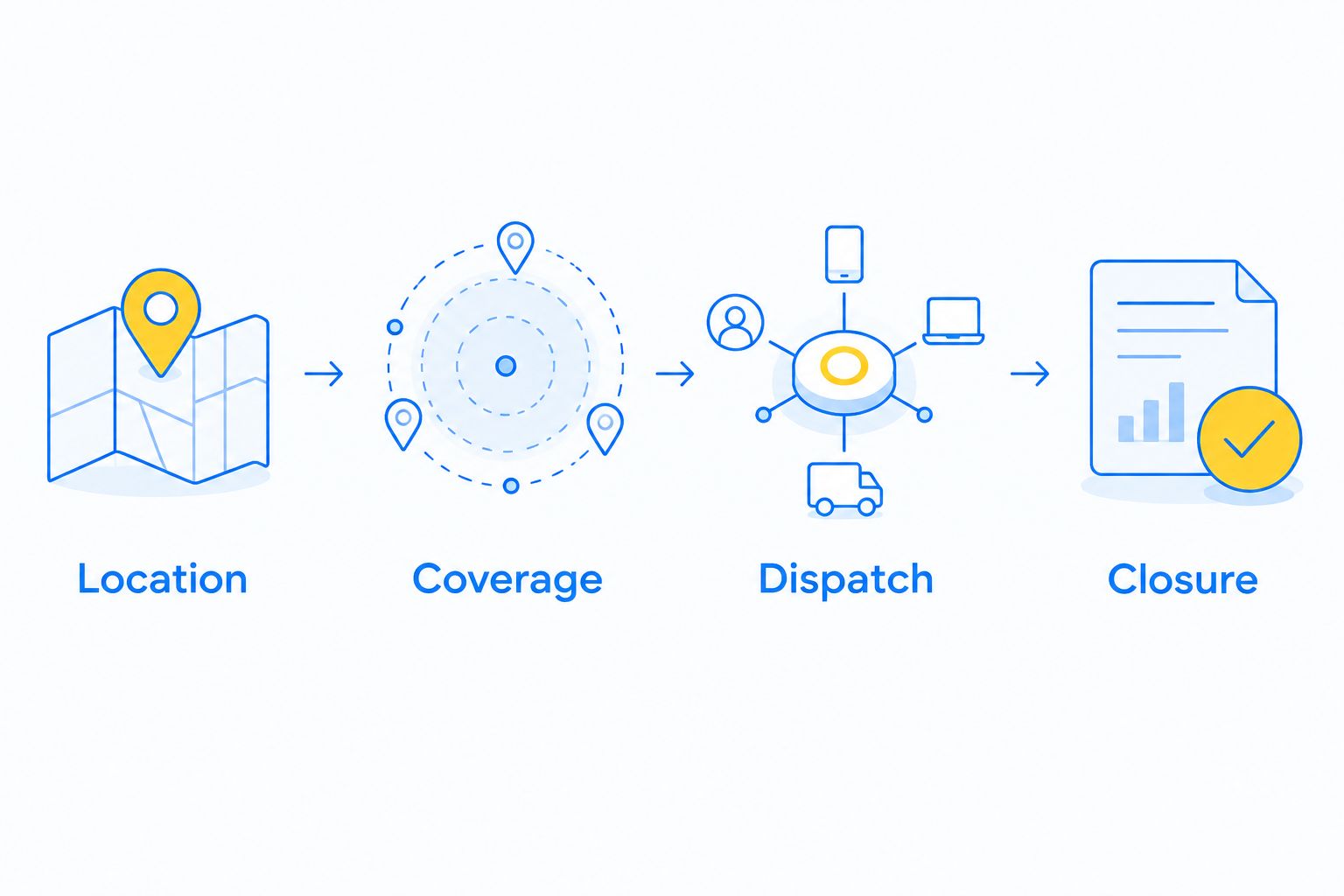
The whole sequence is straightforward: establish location, confirm coverage and consent, dispatch the right service, then close the case.
When an open service case changes
Use the same workflow when a customer calls back with a changed location, a new symptom, or an unsuccessful roadside attempt. Update the existing case rather than starting a competing dispatch request.
For your 2026 update process:
- Verify the change. Confirm the customer's current location and whether the original provider is still involved.
- Review the service scope. A failed jump start or continuing problem requires a new assessment. Ask the provider what assistance is appropriate; do not diagnose over the phone.
- Refresh authorization. Record consent and any program approval needed for the revised request.
- Notify the active owner. Tell dispatch and the dealership case owner what changed. Confirm cancellation or replacement before arranging another provider.
For after-hours incidents, give the driver the assistance route and assign the dealership follow-up to a named role. A business-hours service appointment is not an emergency dispatch channel.
Troubleshooting
The location is too vague
Ask for direction of travel, a nearby exit or landmark, and a safely shared location pin. Read the location back. Do not send the provider toward a highway name with no indication of which side or direction.
The customer assumes the warranty covers everything
Separate the roadside request from the warranty decision. Check the actual program terms and record the approved scope. Tell the customer what is confirmed and what still needs authorization.
Dispatch receives duplicate requests
Keep one active case owner and identify the provider already handling the incident. Before booking a replacement, confirm the original request's status and communicate any cancellation. Do not leave the driver coordinating competing arrivals.
The vehicle starts but the problem remains
Record the successful start and the continuing symptoms separately. Do not close the incident as a completed mechanical repair. Arrange further assessment or towing when the vehicle cannot be safely driven.
A commercial vehicle is described as a normal car tow
Correct the request before dispatch proceeds. Share truck and trailer details, loaded status, access constraints, and the fleet's authorized contact. Heavy-duty towing and recovery need a clearly described commercial-vehicle request.
Customize your workflow
Make your 2026 template usable for both a commuter's dead battery and a fleet driver's disabled rig. Keep the core fields consistent, then add fleet authorization and receiving details where needed.
Use the roadside assistance guide for auto dealerships to expand the dealership handoff process. Keep separate internal instructions for customer intake, coverage verification, and vehicle receiving.
Atlroadside's 24/7 service provides an Atlanta roadside assistance option outside dealership business hours. Your dealership still owns its coverage statements, repair approvals, and customer follow-up.
FAQ
How does a dealership connect a stranded customer to roadside assistance?
The dealership captures the customer's location, vehicle details, and symptoms, checks applicable authorization requirements, and hands a specific request to dispatch. The advisor then confirms receipt and tracks the outcome.
Does a vehicle warranty automatically include roadside assistance?
A vehicle warranty does not by itself confirm roadside assistance coverage. Check the customer's actual warranty, roadside program, or service agreement before describing an incident as covered.
Can a dealership arrange help before coverage is confirmed?
A dealership can arrange customer-authorized help without calling it warranty-approved. Explain that coverage remains unresolved and check any program requirements before making reimbursement claims.
Is mobile roadside assistance the same as mobile mechanical repair?
No. Jump starts, lockouts, tire changes, fuel delivery, and towing address specific roadside needs; they do not establish a diagnosis or authorize mechanical repairs.
What should an advisor send to roadside dispatch?
Send the vehicle location, callback number, vehicle details, reported problem, access constraints, and authorized service scope. For commercial rigs, include trailer and load information and the fleet's approving contact.
Can Atlroadside help dealership customers after hours?
Atlroadside provides 24/7 roadside assistance and towing across the Atlanta metro for drivers and commercial fleets. Confirm the requested service with dispatch and verify warranty authorization separately.
What happens if a jump start does not solve the problem?
Update the existing case and ask the provider to assess the next appropriate roadside step. Obtain any additional authorization before changing the request to towing or another service.
How should a dealership close a roadside assistance case?
Record the confirmed roadside outcome, any towing destination, and the person responsible for the next action. Keep roadside completion separate from repair diagnosis and warranty approval.
One last thing
A vehicle that starts is not automatically a vehicle that is fixed. Make that distinction explicit in your 2026 closure notes. Record what the roadside service accomplished, preserve any continuing symptoms, and give the customer a clear next contact.