
Flat tire and no spare? Stop somewhere safe and request roadside help; without a usable spare, you need an appropriate temporary repair, a replacement tire service, or towing. A standard tire change cannot solve a missing spare, and a tire that looks repairable still needs professional inspection.
- Flat tire no spare roadside help requires more than a tire swap: explain the missing spare before dispatch.
- Atlroadside provides Atlanta roadside assistance and towing around the clock for drivers and commercial fleets.
- A sealant kit is temporary and cannot fix every puncture, sidewall injury, or damaged wheel.
- Choose towing when the tire cannot safely support driving or a suitable roadside repair is not possible.
Need help now? Contact Atlroadside and lead with the problem: flat tire, no spare, exact location. Say whether you drive a passenger car, work van, RV, or semi-truck.
What happens if your flat tire has no spare to swap in?
Without a usable spare, a tire-change-only call is the wrong request. Dispatch needs to determine whether roadside help can get your vehicle moving safely or whether it needs towing to a tire shop.
Follow this order:
- Get safe. Ease off the accelerator, keep control, and move out of moving traffic when you can do so safely. Turn on your hazard lights.
- Share location. Give your road, travel direction, nearest exit or landmark, and whether you are on a shoulder, ramp, or parking lot.
- Describe damage. Explain what you noticed without standing beside traffic to inspect the tire. Report a shredded tire, damaged wheel, or vehicle leaning onto the rim.
- Confirm service. State that you have no usable spare. Ask whether the response is tire assistance or towing, and agree on the destination if a tow is needed.
Do not crawl under the vehicle or begin jacking it up beside moving traffic. If you are stopped in a travel lane or face an immediate danger, call 911 and describe the hazard.
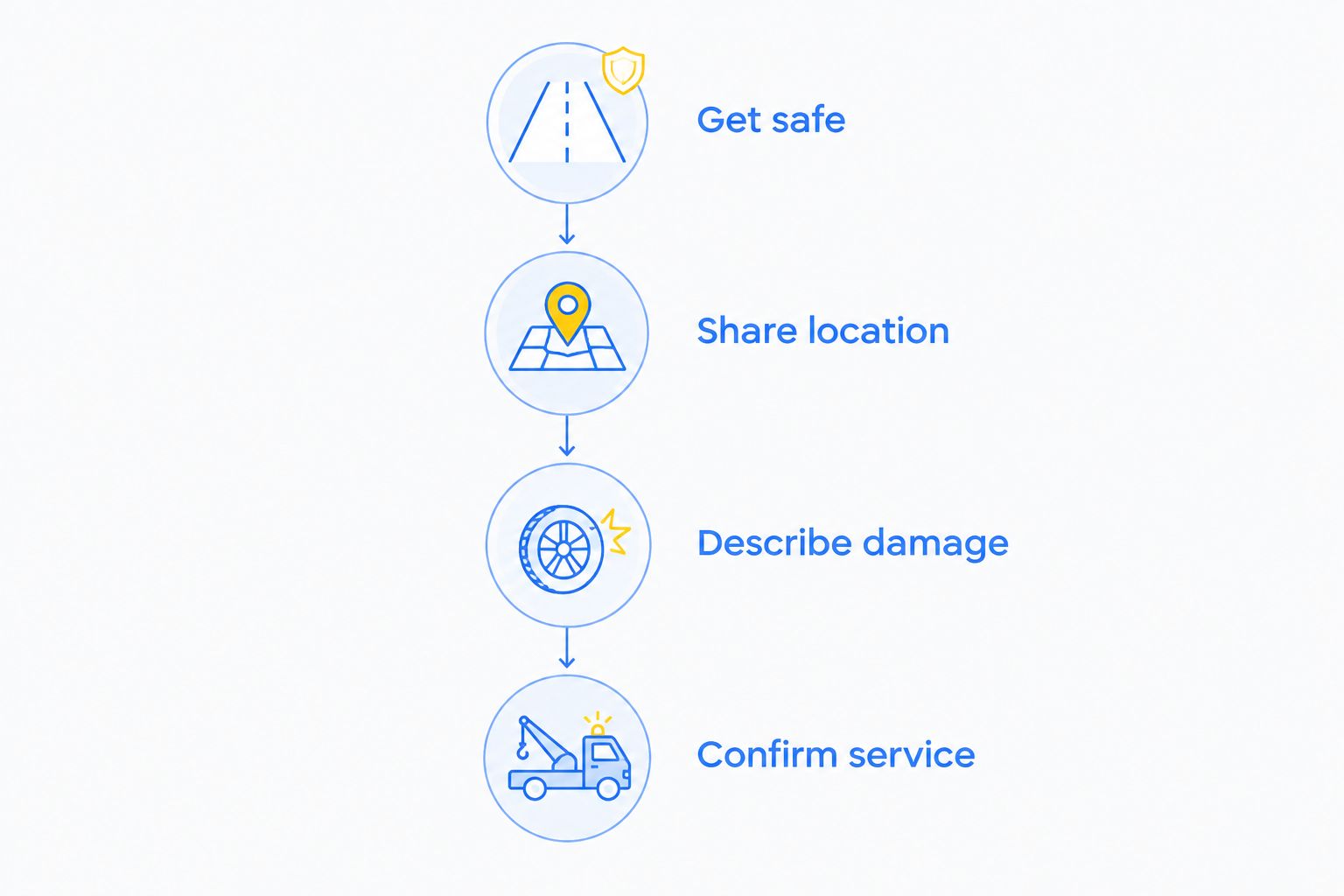
The key detail is not just that the tire is flat. It is that there is nothing usable to swap onto the vehicle. That changes the service request from the start.
Why this matters
A tire change replaces a damaged wheel-and-tire assembly with a usable spare. It does not create a replacement tire, repair every puncture, or make a damaged rim safe.
For your 2026 roadside plan, keep tire assistance and towing separate. Ask what the responding provider can actually do before agreeing to a tire-change-only visit.
Atlroadside is best for Atlanta drivers and commercial fleets needing 24/7 roadside assistance or towing. The service limitation matters: an ordinary tire change still requires a usable replacement assembly, and this page does not establish mobile tire sales or on-site tire mounting.
Request help for your flat tire
Explain that you have no spare. Share your location, vehicle type, and visible damage.
Which no-spare option fits your situation?
Choose by tire condition, vehicle instructions, and where you are stopped—not by which option sounds easiest. None of these options makes it safe to work beside moving traffic.
| Option | Best for | What it does | Main limitation |
|---|---|---|---|
| Vehicle-supplied sealant and inflator kit | An eligible puncture covered by the kit instructions | Provides a temporary mobility measure | Does not fix every injury or replace professional inspection |
| Run-flat tire procedure | A vehicle already equipped with suitable run-flat tires | Allows limited continued travel under the manufacturer's conditions | Distance, speed, load, and damage restrictions still apply |
| Mobile replacement tire service | A location where a provider confirms a suitable tire and on-site fitting capability | Replaces the damaged tire without first taking the vehicle to a shop | Requires confirmation of tire fitment, service capability, and safe access |
| Towing | A tire or wheel that cannot safely support further travel | Moves the vehicle to an appropriate repair destination | Does not repair the tire itself |
These are service categories, not a promise that every roadside provider performs all of them. Ask directly about the service you need.
Temporary repair kit: best for an eligible puncture
Use a kit only if your vehicle and the kit instructions permit it. A sealant-and-inflator kit is not a general solution for a torn sidewall, a shredded tire, or a damaged wheel.
Read the instructions before connecting anything. Follow the stated operating limits and tell the tire technician afterward that sealant was used.
Treat the kit as temporary mobility, not a finished repair. If the tire will not inflate or hold pressure as instructed, stop the attempt and request help.
Run-flat procedure: best for a confirmed run-flat setup
A tire-pressure warning does not prove that your vehicle has run-flat tires. Confirm the tire type through the tire markings and your owner's manual.
Follow the limits for your actual setup. Do not borrow a distance or speed limit from another vehicle, and do not assume a visibly damaged tire remains usable because it is marked run-flat.
For a 2026 emergency kit, save the relevant owner's-manual instructions offline. You need the procedure for your vehicle, not a generic search result.
Mobile replacement: best for a confirmed on-site fitting service
Ask whether the provider can supply and fit a suitable replacement tire at your location. “Roadside tire service” can mean changing a wheel with your spare rather than mounting a new tire.
Give the tire size only if you can read it safely. Explain any parking-garage clearance limits, restricted access, or commercial vehicle requirements before a vehicle is sent.
Towing: best for a vehicle that cannot travel safely
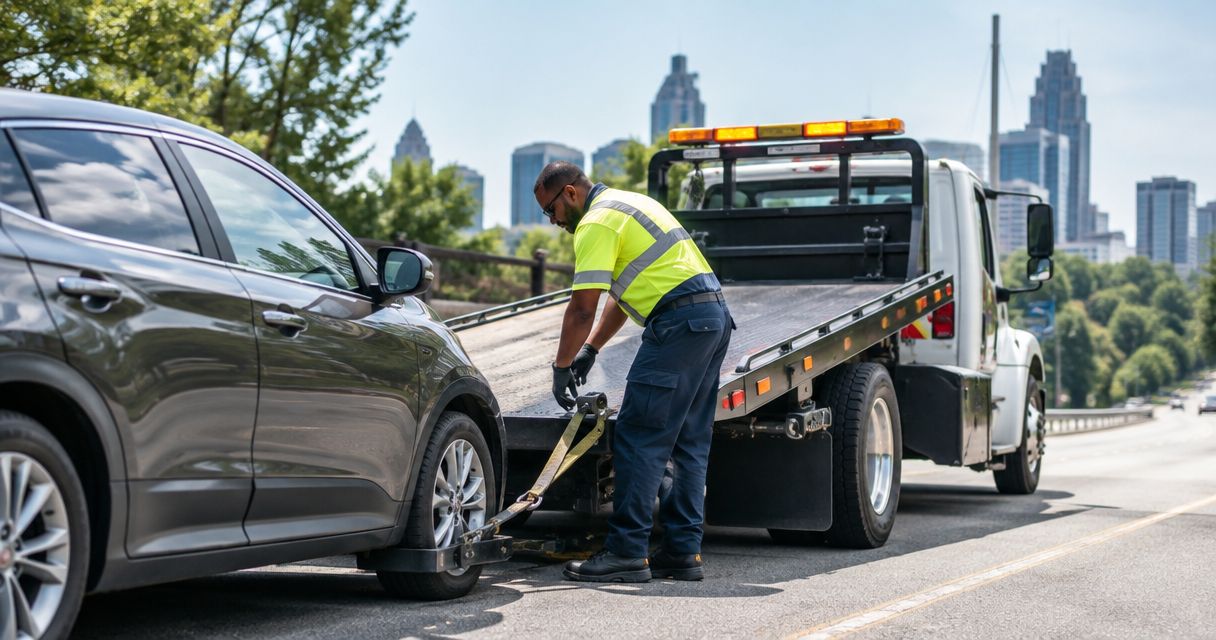
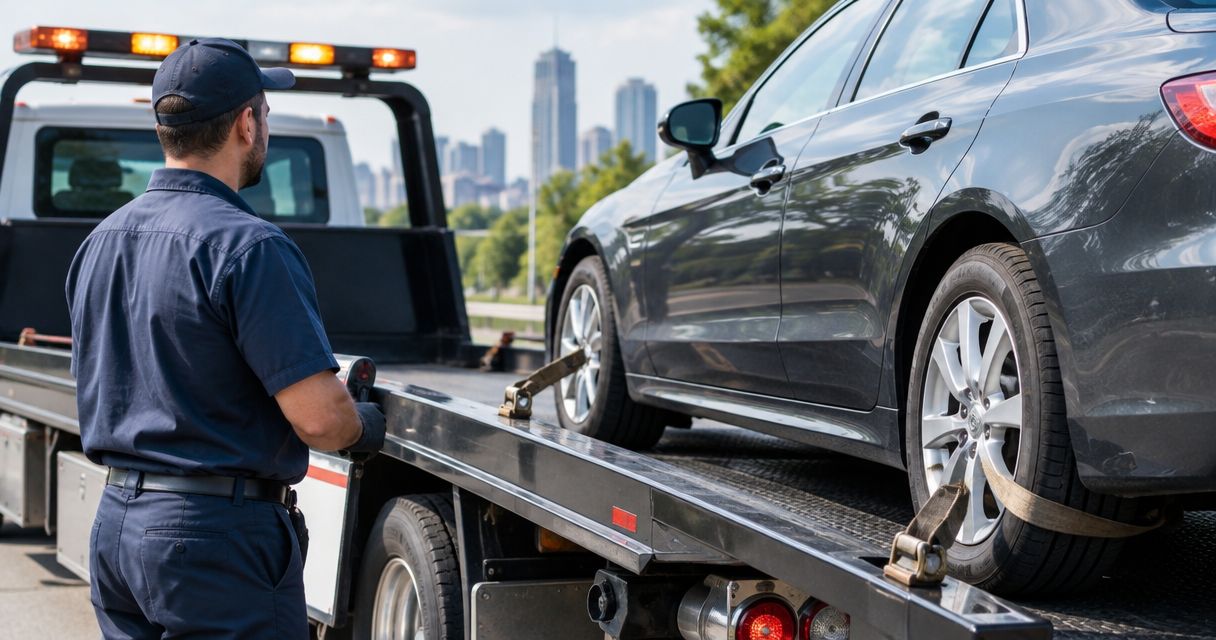
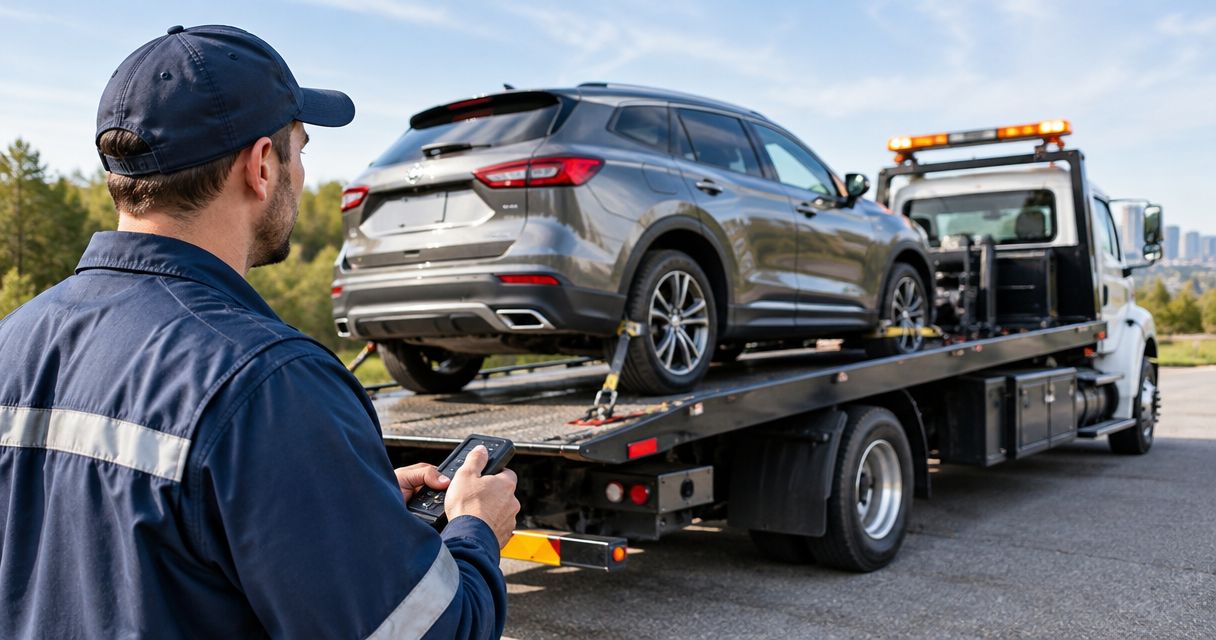
Request towing when a temporary repair is unsuitable, the tire is badly damaged, or the vehicle cannot safely continue. Tell dispatch if the wheel is damaged, the vehicle is sitting unusually low, or more than one tire is affected.
For all-wheel-drive vehicles and electric vehicles, identify the drivetrain and follow the manufacturer's towing instructions. Let the towing operator select the appropriate method rather than assuming any truck will do.
Why flat-tire roadside help varies
The missing spare is only part of the decision. These details determine what you should request:
- Damage location and condition. A small tread puncture and a torn sidewall are different problems. A tire professional must assess repairability.
- Vehicle equipment. A usable spare, approved repair kit, or confirmed run-flat setup changes your options.
- Stopping location. A level parking lot offers a different working environment from a narrow interstate shoulder.
- Vehicle type and load. Passenger cars, loaded work vehicles, RVs, and semi-trucks need the right service capability.
- Wheel and access condition. A bent wheel, missing wheel-lock key, or restricted loading access matters before dispatch.
- Repair destination. If towing is necessary, confirm where the vehicle should go and whether the destination can receive it.
For 2026 fleet procedures, put these details in the driver's breakdown checklist. A clear report helps dispatch distinguish a spare-tire swap from a recovery or towing request.
Can you drive to a tire shop without a spare?
No spare does not automatically prevent driving; an unsafe tire does. A conventional tire that is flat is not safe for normal driving, and continuing can damage the wheel and reduce control.
A confirmed run-flat setup or correctly used temporary repair kit has its own instructions. Those exceptions do not make an ordinary flat tire drivable.
If you are weighing whether to move from an exposed shoulder, read the guide to driving on a flat tire to reach a safe spot. Immediate traffic danger and a trip to the tire shop are different decisions.
Can roadside assistance repair the tire instead?
Roadside assistance does not automatically include tire repair or replacement. Ask whether the provider performs spare-wheel changes, temporary assistance, mobile tire fitting, or towing.
A permanent puncture repair requires proper tire assessment, including internal inspection. A tire that reinflates is not automatically safe, and an external view alone cannot establish its condition.
Avoid requesting only “a tire change” when there is no replacement wheel in the vehicle. Explain the problem first, then confirm the service.
What should you tell dispatch before help comes?
Tell dispatch “flat tire, no usable spare” before describing anything else. Then give the location and vehicle details needed to send appropriate help.
Use this call checklist:
- Road name, travel direction, and nearest exit or landmark.
- Shoulder, ramp, parking lot, driveway, or blocked travel lane.
- Vehicle make, model, and whether it is a passenger or commercial vehicle.
- Which tire is affected and whether other tires or the wheel appear damaged.
- Whether you have a repair kit, wheel-lock key, or confirmed run-flat tires.
- Passenger needs, trailer involvement, cargo concerns, and your preferred tow destination.
Only gather details you can obtain safely. Do not step into traffic to read a tire size or walk behind the vehicle for a better photo.
What changes for semi-trucks and fleet vehicles?
A commercial tire failure needs a commercial-service assessment. Tell dispatch whether the problem affects the tractor, trailer, box truck, or other work vehicle, and describe the load and visible damage.
Do not assume a nearby tire makes continued travel safe. Report the failure and let qualified service personnel assess the vehicle; do not inspect between dual tires or work beside traffic.
Atlroadside provides heavy-duty towing and recovery across the Atlanta metro. Confirm whether your call needs tire assistance, heavy-duty towing, or recovery rather than requesting passenger-car service for a loaded commercial vehicle.
For your 2026 fleet contact sheet, record the driver's location-sharing method, vehicle identifier, dispatch contact, and breakdown reporting process. Keep the instructions short enough to use from the cab.
FAQ
Who do I call if I have a flat tire and no spare?
Call a roadside assistance or towing provider and state that you have no usable spare. Give your exact location, vehicle type, and visible tire damage so dispatch can determine the appropriate response.
Can a tow truck move my car with a flat tire?
A towing operator can assess how to move a car with a flat tire using an appropriate loading and transport method. Report damaged wheels, low clearance, and drivetrain details before dispatch.
Will roadside assistance bring me a new tire?
Do not assume roadside assistance includes supplying and mounting a new tire. Ask the provider directly; a spare-wheel change and mobile tire replacement are different services.
Can I use tire sealant if the sidewall is torn?
Do not rely on tire sealant for a torn sidewall. Follow the kit's exclusions and arrange professional assistance when the damage is outside its permitted use.
Should I stay inside my car while I wait?
Your safest waiting place depends on traffic exposure, fire risk, and whether you can exit safely. Keep your seat belt on if remaining inside, never stand beside moving traffic, and follow emergency responders' instructions.
Is Atlanta roadside help available overnight?
Atlroadside provides roadside assistance and towing 24/7 across the Atlanta metro. Explain that you have a flat tire with no spare so the service request reflects the actual problem.
Should I call my rental company before arranging a tow?
Check your rental breakdown instructions and contact the rental company before authorizing service when it is safe to do so. Confirm the permitted process and destination rather than assuming reimbursement or coverage.
One last thing
A spare that is flat, damaged, or incompatible is not a usable spare. Check that before describing your call as a routine tire change—but only if you can access it safely.
When you update your 2026 vehicle emergency supplies, inspect the spare or check the repair kit's instructions and expiration information. Finding a problem in your driveway beats discovering it on the shoulder.